



Silver and Glass Inkstand
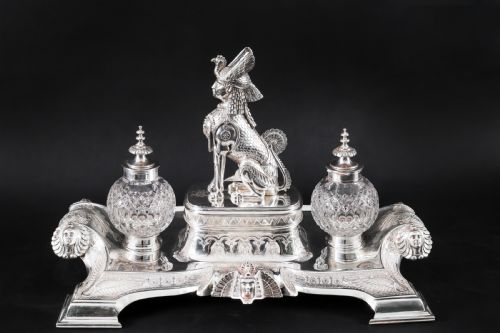
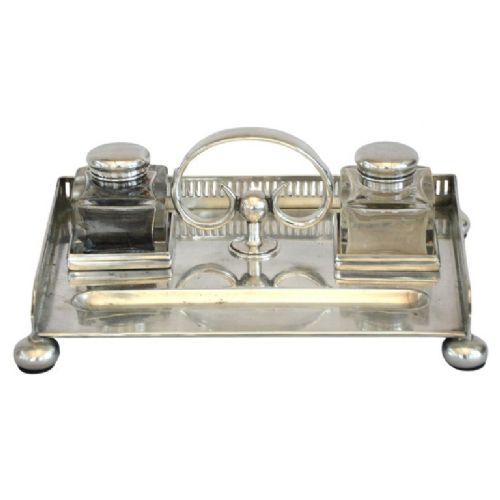
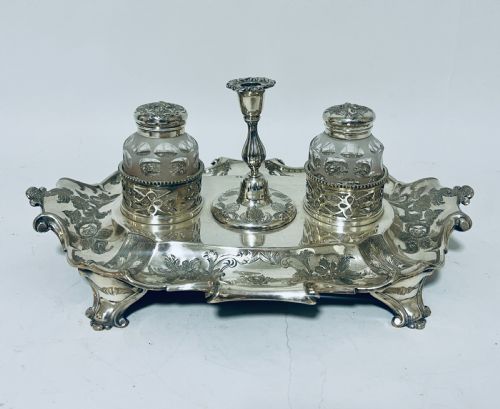
These silver and glass inkstands combine heavy cut crystal bottles with fitted metal mounts for writing desks.
Silver and Glass Inkstand
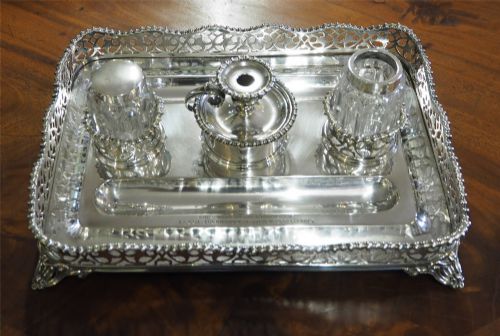
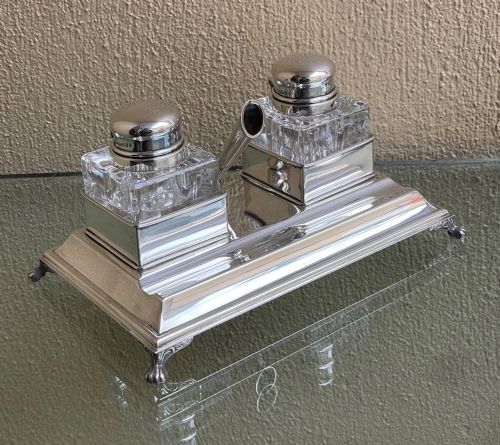
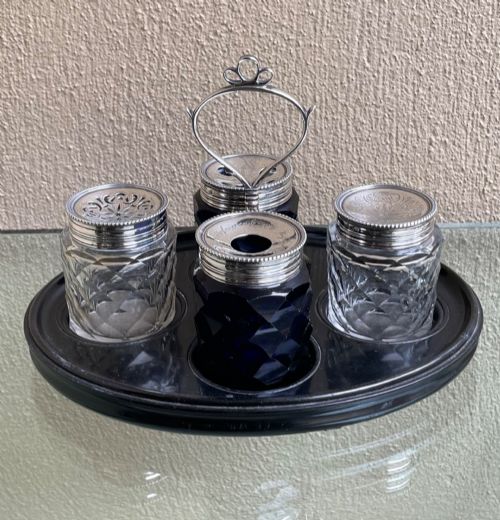
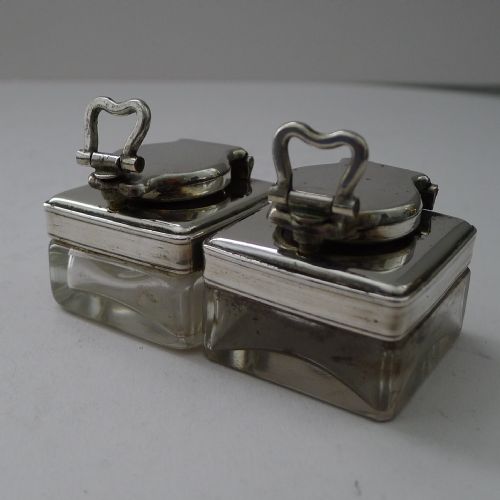
When you search for a silver and glass inkstand, you are looking at desk accessories that range from single portable inkwells to large desk sets with multiple glass bottles and chambersticks. The most common versions on this page are Victorian and Edwardian desk stands featuring cut glass reservoirs mounted in sterling silver, silver plate, or Sheffield plate.
Makers designed these pieces to hold liquid ink securely while offering pen rests and trays. Many include hinged silver lids that protect the ink from drying out during daily writing tasks in study rooms and offices.
Materials and Construction
Cut glass and crystal form the heavy reservoirs, often shaped with deep facets to catch the light on a desktop. Silversmiths mounted these glass bodies into shaped trays made from sterling silver, silver plate, or Sheffield plate, sometimes adding oak or exotic woods for extra stability.
Metal components show hallmarks or plating marks stamped near the rims, while glass bases rely on hand-polishing and thick walls to prevent tipping during use.
Markers of Quality
The weight of the silver mount and the depth of the glass cutting separate standard desk accessories from finer pieces. Heavier gauge metal resists bending around the hinges, and thick-walled crystal bottles sit squarely without rocking in their mounts.
Subtle details such as matching hallmarks across lids and trays, crisp casting on decorative feet, and undamaged glass rims indicate superior workshop standards.
Elkington·Wilkinson And Co·Walker And Hall·Tiffany And Co·Daniel Holy·Henry Wilkinson And Co·Hawksworth Eyre And Co·J Dixon·Peter Henderson Deere·Frederik Haberling
The Silver and Glass Inkstand Glossary
- Standish
- An antique desk stand that holds inkwells, pen trays, and sometimes sanders or sealing wax compartments. These portable writing cabinets were essential fixtures on high-status writing desks.
- Sheffield plate
- An early form of composite metal made by fusing a thin sheet of sterling silver to a thicker copper base. This technique preceded modern electroplating and leaves characteristic silver edges where the base metal shows through wear.
- Hallmark
- A series of official stamps applied to precious metals indicating the maker, assay office, and year of testing. These marks provide reliable dating for Victorian and Georgian pieces.
- Cut glass
- Glassware shaped and patterned by holding the vessel against a rotating abrasive wheel. Deep cutting creates sharp geometric facets typical of nineteenth-century desk bottles.
Silver and Glass Inkstand: Frequently Asked Questions
How do I clean the glass inkwells?
Wash the glass reservoirs gently in warm soapy water using a soft brush to remove dried ink residue inside. Avoid submerging metal mounts or hinged silver lids in water to protect vintage solders and pins.
Dry the glass thoroughly before placing the bottles back into their silver stands to prevent moisture buildup against the metal.
Were these used at home or in offices?
These desk stands served both domestic writing tables and professional offices where correspondence required daily pen and ink use. Larger pieces stayed permanently on library desks, while smaller travel versions accompanied writers on journeys.
The inclusion of stationery boxes, sand shakers, and chambersticks indicates where a piece belonged within a household.
How can I tell Victorian pieces from Edwardian ones?
Victorian desk stands often feature heavier, ornate styling such as Egyptian Revival motifs or deep floral embossing in the silver. Edwardian examples tend to show lighter construction with cleaner lines reflecting changing tastes at the turn of the twentieth century.
Assay office date letters stamped on the silver provide the exact year of manufacture.
Why do some inkstands have wooden bases?
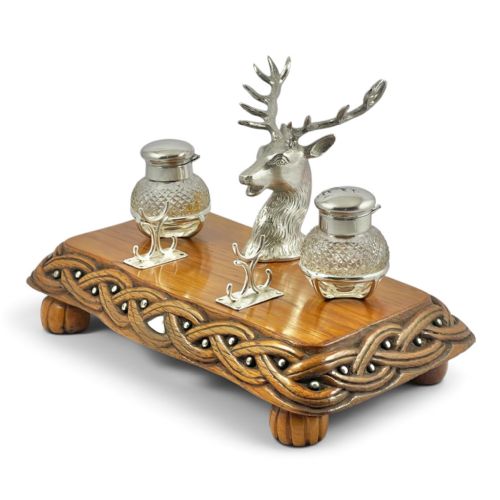
Oak or exotic woods provided a sturdy, heavy foundation for large glass inkwells without adding excessive metal weight to the desk set. Wood bases also offered a warm contrast to bright silver mounts and clear cut glass.
Cabinet makers fitted these wooden trays with custom silver feet and mounts to secure the glass bottles.