


Silver Ink Stand
A silver ink stand is the quintessential desk centrepiece, designed to hold inkwells and pens for correspondence.
Silver Ink Stand
A silver ink stand forms the architectural anchor of a traditional desk, holding inkwells and pen rests in an orderly arrangement. These pieces span from the Georgian period through to the early twentieth century, reflecting shifting tastes in domestic administration.
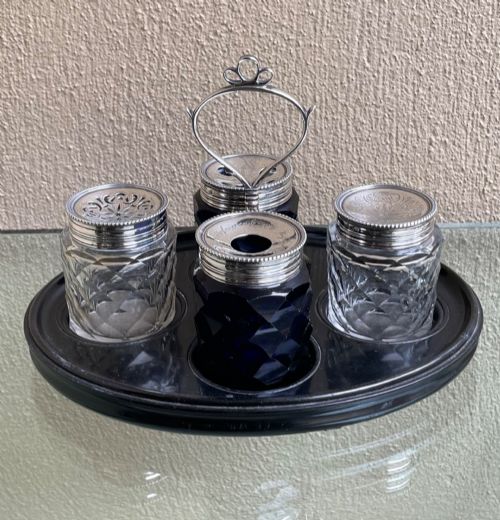
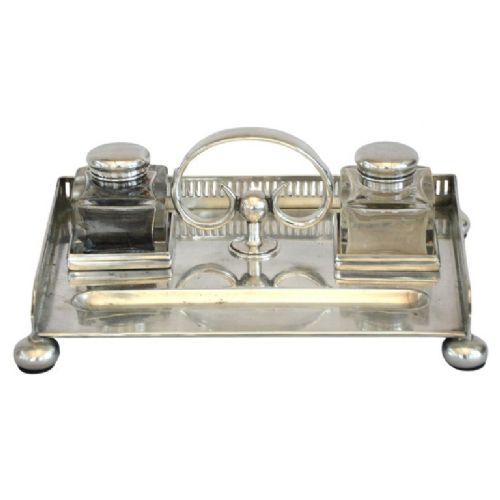
The most common forms encountered on this page are Victorian and Edwardian desk stands, often combining silver or silver plate with heavy cut glass bottles. Simpler capstan designs and novelty pieces also appear frequently alongside larger multi-bottle stands.
Makers utilised various media to mount these accessories, incorporating exotic woods like coromandel and oak, alongside stone bases such as onyx and lapis lazuli. The presence of pen rests and integrated stamp boxes marks them out as complete desk tidies.
Materials and construction
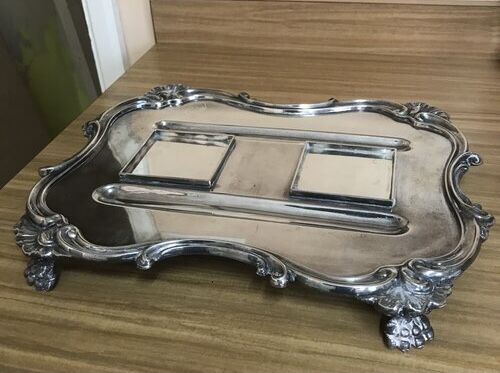
Silversmiths constructed these stands using sterling silver, Sheffield plate, or silver plate on copper and brass foundations. Cast mounts and chased borders supplied the decorative detail, while turned wooden trays provided stable weight.
Glasscutters produced thick, heavy-walled bottles to withstand the pressure of steel nibs, often fitting them with hinged sterling silver collars and lids. Internal glass liners prevented corrosive ink from eating into the outer metal housing.
Listings feature items from the Georgian era through to the Art Deco period, utilising sterling silver, silver plate, cut glass, onyx, and oak.
Determinants of quality
The distinction between standard desk pieces and superior examples lies in the weight of the metal and the crispness of the chasing. Substantial gauge silver and fully integrated fittings indicate a workshop producing for a discerning clientele.
Material combination also defines the tier of the piece, with works incorporating exotic hardwoods, hardstones, or quality rock crystal commanding greater presence. Maker marks from established firms guarantee a higher standard of structural integrity.
Walker And Hall·Rupert Favell·Zimmermann·Maurice Dufrene·Elkington·The Wilmot Manufacturing Co·George Fox·Henry Wilkinson & Co·Goldsmiths & Silversmiths·William Hutton & Sons·Grinsell & Sons·Emile Puiforcat·C.S. Harris·Edward Ker Reid
The Silver Ink Stand Glossary
- Capstan
- A desk inkwell shaped like a ship's capstan, featuring a wide circular base tapering towards the top. This profile prevented the ink stand from tipping over during use.
- Standish
- An alternative historic term for an ink stand or ink tray that incorporates bells, sanders, and pen compartments. It served as a portable writing set on large library desks.
- Cut glass
- Glass decorated by cutting facets or patterns into the surface using a rotating wheel. This technique added weight and refractive brilliance to the inkwell inserts.
- Silver plate
- A layer of silver fused or electroplated onto a base metal such as copper, brass, or nickel silver. It offered the appearance of solid silver at a lower cost.
- Novelty silver
- Silver items modelled into whimsical shapes unrelated to their practical function. Desk accessories of this type often took the form of bells, marine bollards, or animal hooves.
Silver Ink Stand: Frequently Asked Questions
What is a silver ink stand?
A silver ink stand is a fitted desk tray designed to hold one or more inkwells, pen rests, and sometimes sanders or stamp boxes. They were essential desk accessories for correspondence in literate households and offices.
These pieces combine metals like sterling silver or silver plate with glass, stone, or wood. They ranged from simple single-bottle desk tidies to elaborate multi-piece presentation stands.
How do I date a silver ink stand?
Dating relies primarily on hallmarks stamped into the silver components, which indicate the assay office, date letter, and maker. Stylistic cues such as Rococo revival scrolls or clean Art Deco lines also narrow down the period of manufacture.
Matching the glass insert to the silver frame helps confirm originality, as replacements alter the piece. Registration numbers on plated items provide an exact year when patent details were logged.
How were ink stands used?
Writers dipped their quills or steel nibs into the glass inkwells housed within the tray. The stand kept the ink accessible while protecting the desktop from spills and stray drips.
Auxiliary wells often held fine sand for blotting wet ink before envelopes were sealed. Dedicated grooves prevented pens from rolling off the writing surface.
How do I live with a silver ink stand?
Place the stand on a stable desk away from direct sunlight to preserve any fitted woods or stones. Gentle cleaning with appropriate silver polish maintains the metal finish without wearing down fine chasing.
Glass liners should be removed and washed carefully to prevent dried ink residue from staining the interior. Avoid using harsh chemical dips on pieces with weighted felt bases or glued hardstones.