
Antique Silver Desk Stand
An antique silver desk stand organises writing equipment with substance, bringing polished metal, glass and stone to the working surface.
Antique Silver Desk Stand
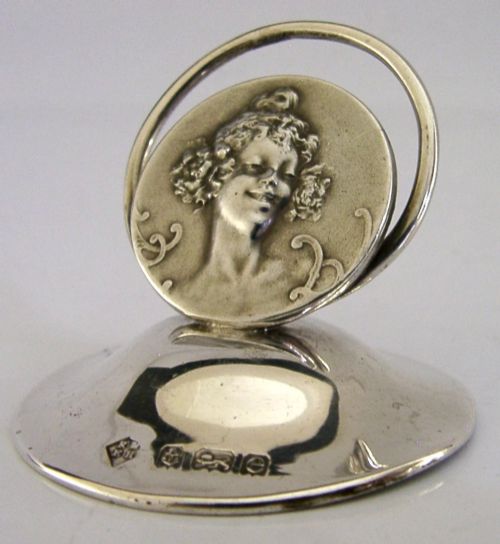
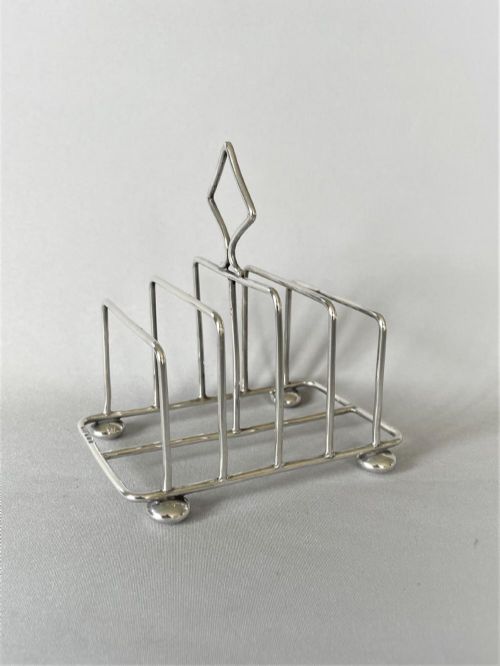
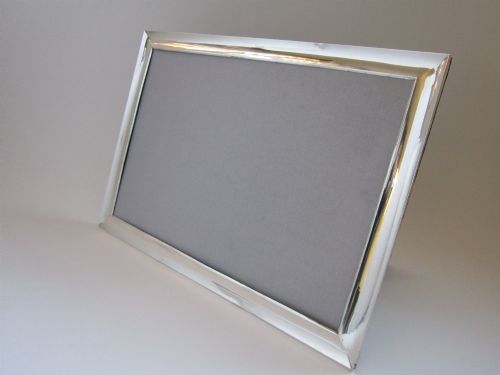
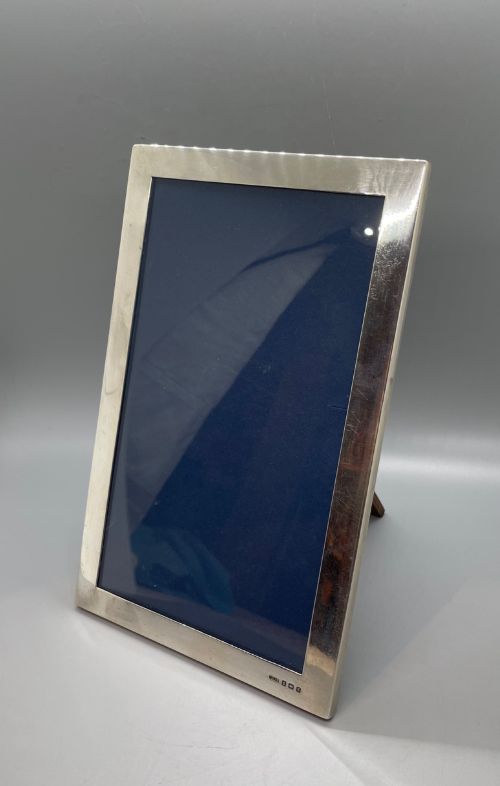
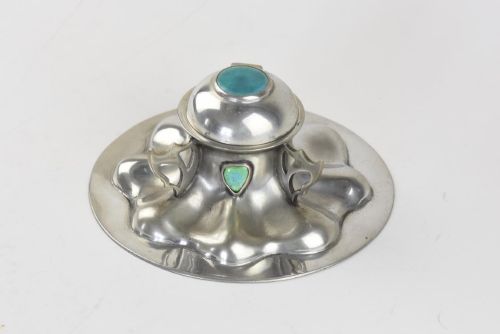
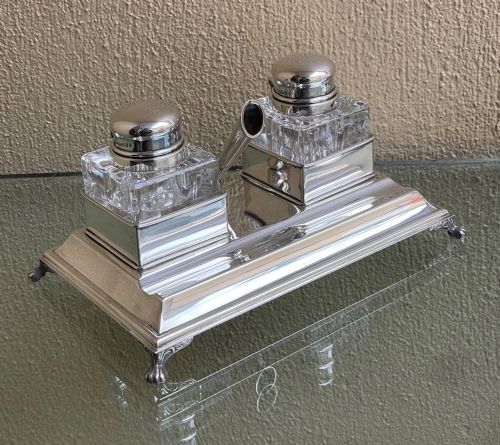
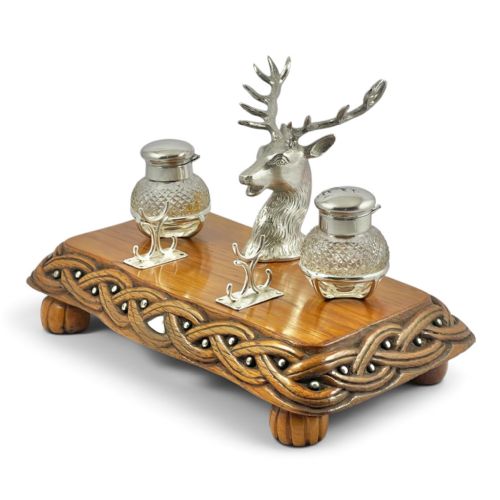
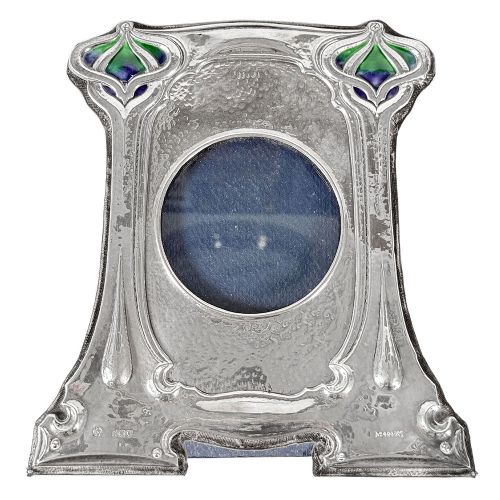
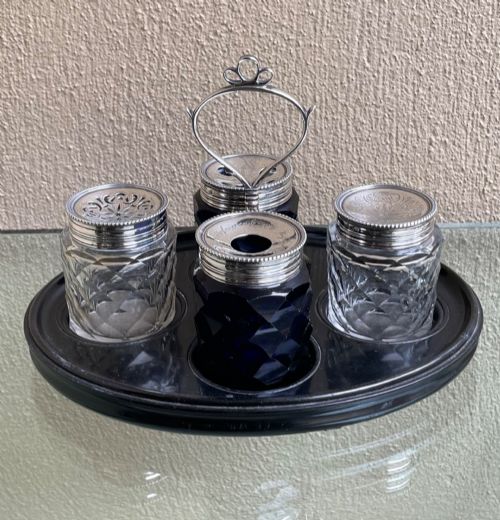
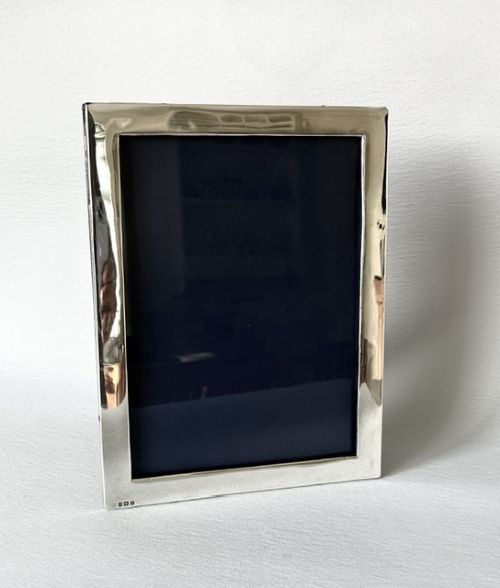
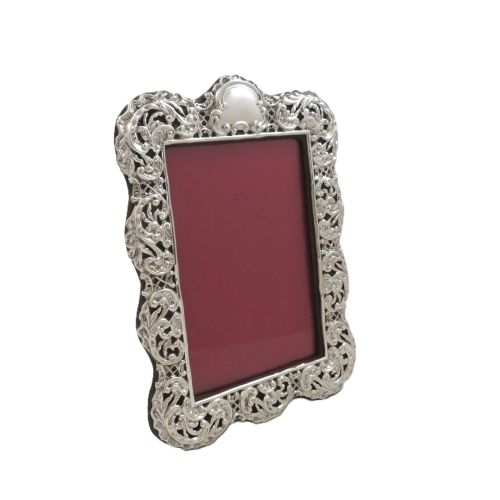
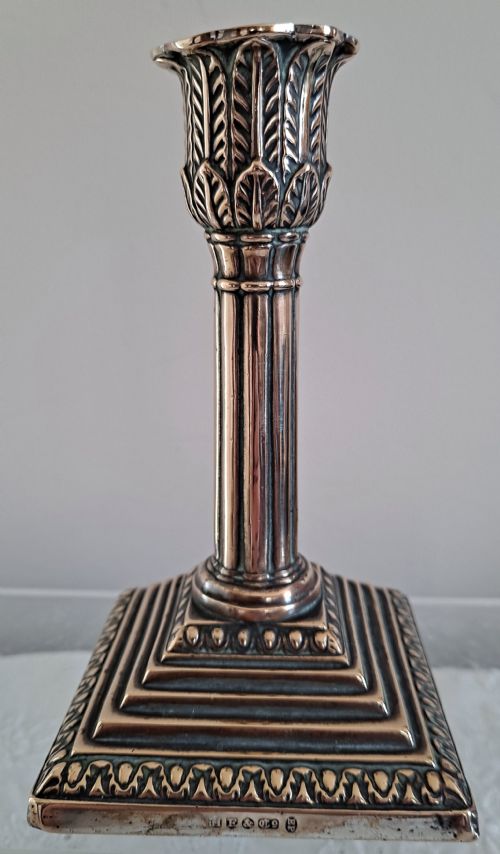
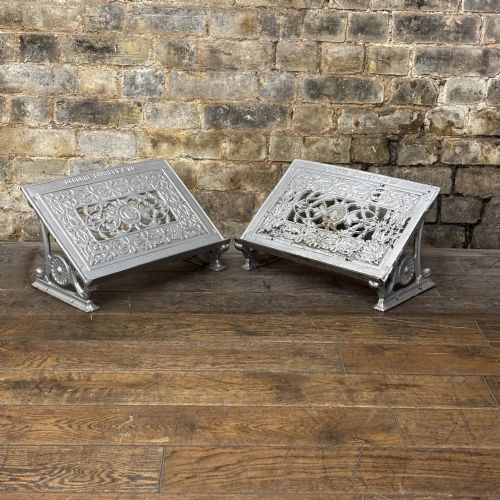
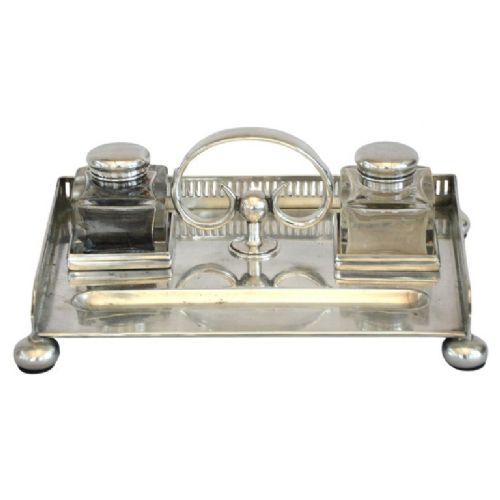
An antique silver desk stand encompasses inkstands, inkwells, photograph frames and novelty desk accessories produced across the Victorian, Edwardian and mid twentieth century periods. Buyers encountering this selection will find pieces ranging from simple silver plated ink stands to large double inkstands fitted with chambersticks and cut glass reservoirs.
Materials extend beyond sterling silver to incorporate glass, wood, enamel, pewter, horn and tortoiseshell, reflecting the varied requirements of period writing spaces. Origins span English assay offices alongside Scottish provincial makers, demonstrating regional preferences in desk ornamentation.
Materials and Construction
Construction relies heavily on sterling silver and silver plate combined with structural elements of wood, oak, onyx and lapis lazuli to provide weight and stability. Metalwork techniques include casting, embossing and polishing, frequently paired with fitted glass or cut glass inkwells.
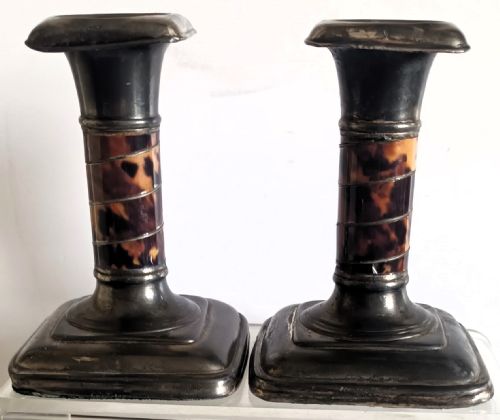
Makers integrated natural media such as cow horn, tortoiseshell and enamel decoration alongside pewter and cast iron, securing components with pins, mounts and wooden backs.
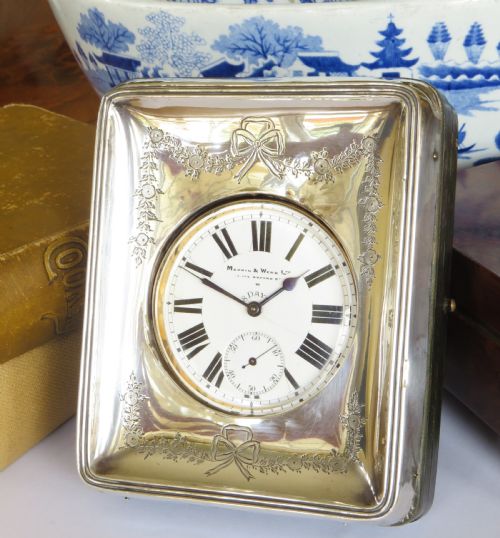
Several desk accessories abandon mere utility entirely, taking the form of miniature silver furniture, pocket watch holders and novelty dogs.
Judging Quality
Quality rests upon the weight of the metal, the crispness of embossed or cast decoration and the integrity of fitted glass and stone elements. Superior examples display harmonious proportions between the metal plinth and its inkwells, pen rests or frames.
The integration of secondary materials like wood backs, enamel cabochons or horn mounts distinguishes finer workshops from mass production, showing careful assembly and durable joinery.
William Hutton and Sons·Walker And Hall·Mappin And Webb·Osborne Garrett And Co·Robert Garrard·William Comyns
The Antique Silver Desk Stand Glossary
- Inkstand
- A fitted tray or stand designed to hold one or more inkwells, pen rests and sometimes a taperstick or chamberstick.
- Sterling silver
- An alloy containing specified proportions of silver and other metals, commonly hallmarked to denote standard and origin.
- Capstan inkwell
- An inkwell shaped like a ship's capstan, typically featuring a wide base tapering upwards to a hinged lid.
- Chamberstick
- A small portable candlestick with a pan base and a handle, frequently incorporated into larger Victorian desk stands.
Antique Silver Desk Stand: Frequently Asked Questions
How do I clean a silver desk stand?
Use a soft cloth and a reputable silver polish, taking care to avoid abrasive scrubbing around mounted stones, glass inserts or wooden bases. Gentle application preserves hallmarks and embossed detail.
Keep moisture away from wooden backs and fabric linings during cleaning to prevent warping or staining.
Are period inkstands still practical for daily use?
Many inkstands function adequately for modern writing desks, provided glass liners remain intact and free from chips. Fountain pens and dip pens fit comfortably into original pen rests.
Care should be taken with vintage hinged lids and glass reservoirs to prevent leaks and staining on fine surfaces.
How do I identify the date of my desk stand?
Examine the piece for stamped assay office marks, maker's marks and date letters, which indicate the exact year and location of manufacture. Style indicators such as Art Nouveau curves or Edwardian proportions also help narrow the period.
Comparing construction methods and secondary materials provides further context when hallmarks are rubbed or missing.
What materials were commonly used alongside silver?
Manufacturers frequently paired silver with cut glass, oak, mahogany, onyx and lapis lazuli to add colour and structural weight. Pewter, brass and tortoiseshell also appear in alternative desk accessories.
Leather and velvet often lined the backs of photograph frames and the undersides of heavy inkstands.