



Silver and Glass Dishes
When you handle silver and glass dishes, you touch a tangible history of refined dining and dressing table elegance from the nineteenth and twentieth centuries.
Silver and Glass Dishes
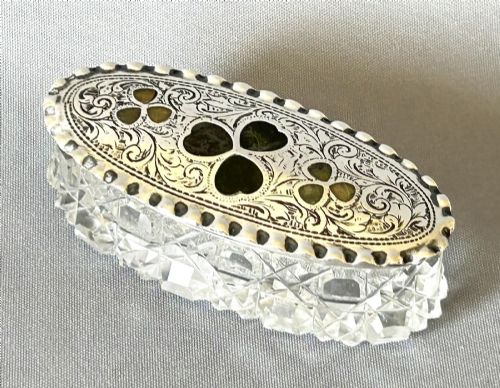
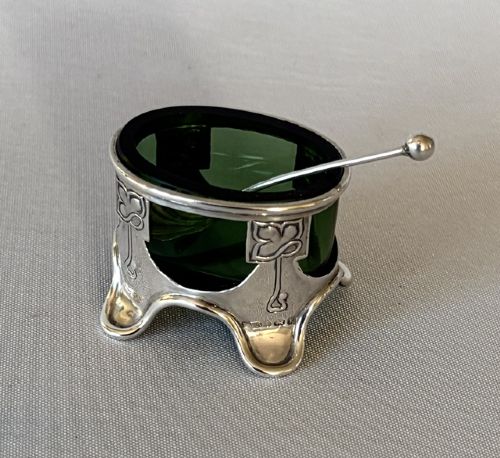
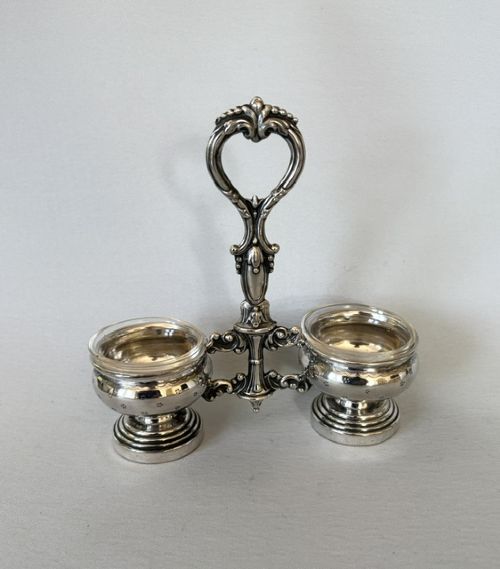
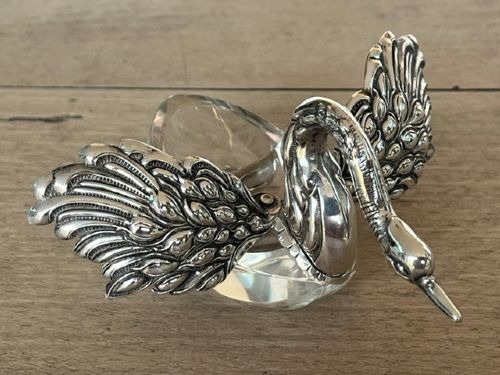
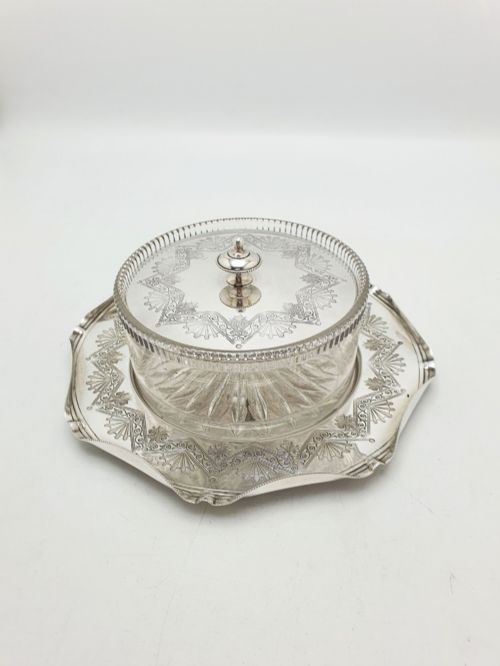
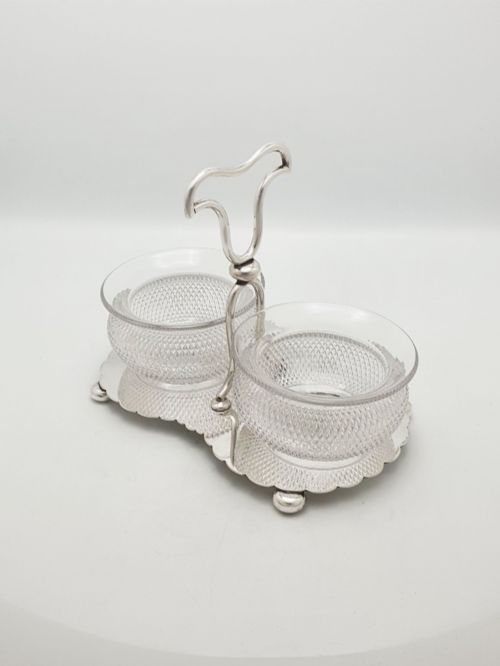
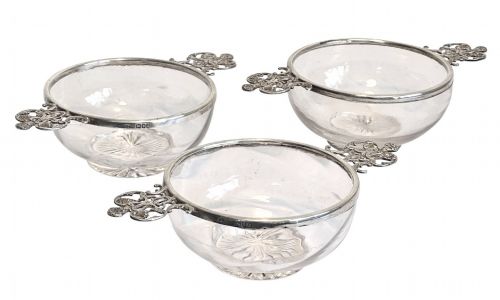
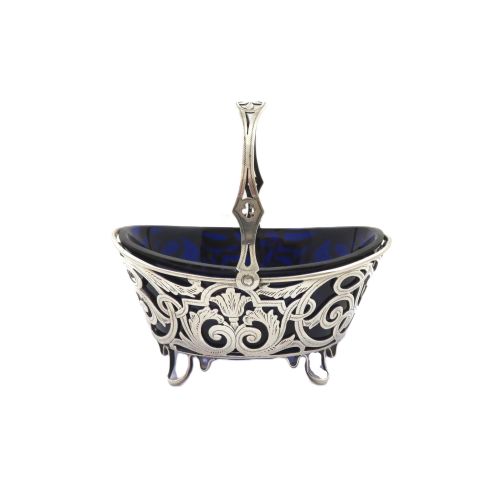
Silver and glass dishes encompass a diverse range of functional and decorative tablewares, including salt cellars, sugar baskets, condiment stands, trinket boxes, and centrepieces. These items combine precious or plated metalwork with blown, pressed, cut, or coloured glass vessels to create pieces designed for utility and display.
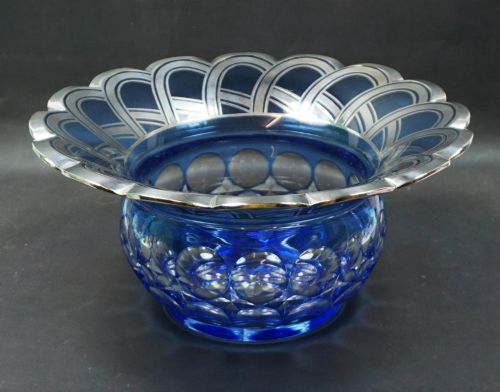
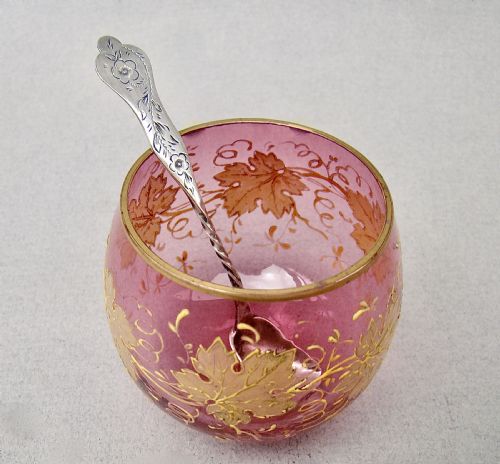
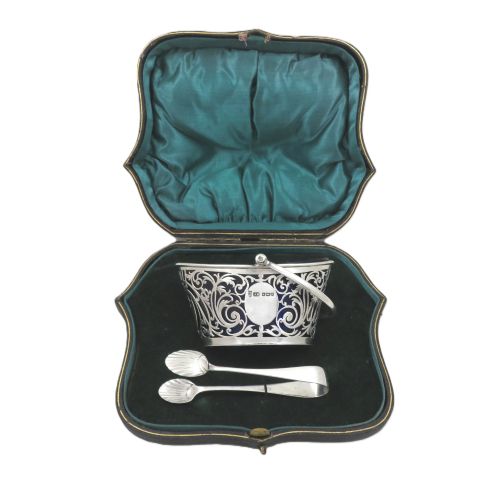
You are most likely to encounter Edwardian and Victorian examples on this page, alongside pieces from the 1920s and 1930s featuring Art Deco and Art Nouveau styling. Common configurations pair sterling silver or silver plate mounts with contrasting inserts of cobalt, cranberry, vaseline, or crystal glass.
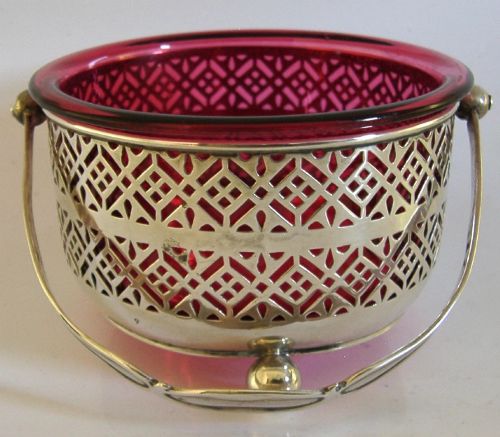
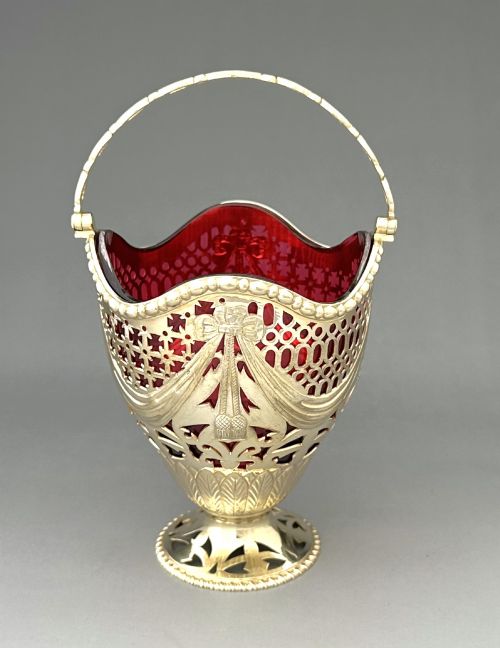
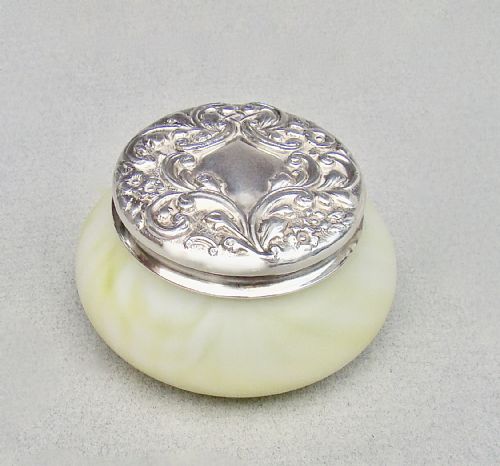
The forms range from small, lidded trinket jars for the dressing table to substantial swing-handled baskets and hors d'oeuvres stands intended for the dining table. Many survive with their original coloured glass liners intact, reflecting the decorative tastes of periods spanning from the nineteenth century through the mid-twentieth century.
How they were made
Makers utilised techniques such as silver plating and sterling silversmithing to construct pierced frames, mounts, and swing handles, frequently incorporating cast floral motifs or geometric borders. Glass liners and bowls were shaped through blowing, moulding, or deep cutting to produce starburst patterns and smooth facets that caught the light.
Coloured glass effects were achieved by adding metallic oxides to the molten batch, creating distinct hues including deep blue cobalt, rich red cranberry, and pale yellow vaseline glass. Metal components were often hallmarked in manufacturing hubs like Birmingham and Sheffield, recording the specific assay office and year of production.
Silver and Glass Dishes Retail Price Guide 2026
Typical asking prices for silver and glass dishes among the pieces listed under this phrase on Sellingantiques today, from the lower quarter to the upper quarter. They describe what is for sale here now, not the wider market.
What varies in quality
The distinction between standard production and the top of the range rests upon the weight of the silver, the crispness of any piercing, and the depth of the glass cutting. Heavier gauges of sterling silver and intricate hand-pierced mounts indicate superior craftsmanship compared to thinner plated alternatives.
The quality of the glass insert is equally significant, with hand-blown and deeply wheel-cut vessels demonstrating greater clarity and precision than mass-pressed equivalents. Pieces retaining matching, undamaged coloured glass liners alongside clear maker marks command greater attention from collectors.
A. J. Pepper & Co·A. Bromet & Co·Tiffany & Co·William Comyns·WMF·Hukin and Heath·William Hutton & Sons
The Silver and Glass Dishes Glossary
- Sterling silver
- A silver alloy containing 92.5 percent pure silver by mass and 7.5 percent other metals, usually copper. This standard alloy provides the durability required for functional tableware and decorative mounts.
- Silver plate
- A layer of silver applied to a base metal core, such as copper or nickel brass. This method offered an accessible alternative to solid sterling silver during the Victorian and Edwardian periods.
- Cranberry glass
- A transparent, pinkish-red glass coloured by the addition of gold chloride to the molten batch. It is frequently seen in Victorian and Edwardian sugar baskets and salt cellars.
- Cobalt glass
- A deep blue glass produced by incorporating cobalt oxide into the glass mixture. It provides a striking contrast when used for glass liners within pierced silver salt cellars.
- Vaseline glass
- A transparent yellow-green glass containing small amounts of uranium dioxide to achieve its characteristic colour. It glows under ultraviolet light and typifies pieces made around the turn of the twentieth century.
- Swing handle
- A movable arched handle attached to the sides of a basket or bowl via pivots. It allows the handle to lie flat when the dish is placed on a table.
Silver and Glass Dishes: Frequently Asked Questions
What were glass and silver baskets used for?
These baskets served multiple dining purposes, holding sugar cubes, sweetmeats, jams, or small cakes during formal teas and dinner parties. The removable glass liners protected the silver metalwork from moisture and sticky contents.
Their swing handles allowed servants or guests to pass them easily around the table. Today, they function primarily as decorative centrepieces or display items.
How do I clean silver mounts safely?
Cleaning requires a soft cloth and a gentle silver polish formulated to remove tarnish without abrading the metal surface. Care must be taken to avoid getting polish on any enamel work or into the crevices of pierced designs.
Glass liners should be removed and washed separately in warm, soapy water. Harsh chemical dips can ruin the finish on antique silver plate and should be avoided.
Are coloured glass liners original?
Original liners fit the contours of the silver mount precisely, accounting for minor handmade variations in both the metal frame and the blown glass. Matching the colour and period of the glass to the silver hallmarks helps confirm authenticity.
Replacement liners are common due to accidental breakage over the decades. Inspecting the rim finish and glass density helps determine if an insert is period-correct.
How do I identify the date of a piece?
British pieces typically feature hallmarks stamped directly onto the silver mount, including a date letter that corresponds to a specific year and assay office. Birmingham, Sheffield, and Chester marks are frequently found on these items.
Stylistic cues, such as Art Nouveau floral whiplash lines or Art Deco geometric symmetry, also narrow down the era of manufacture when hallmarks are absent or rubbed.