



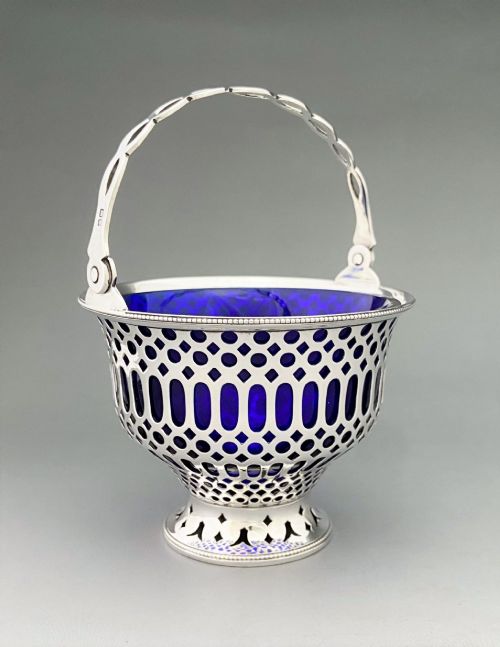


Silver and Glass Basket
A silver and glass basket brings together bright metalwork and colourful vessels to hold sugar, fruit or sweets on a dining table.
Silver and Glass Basket
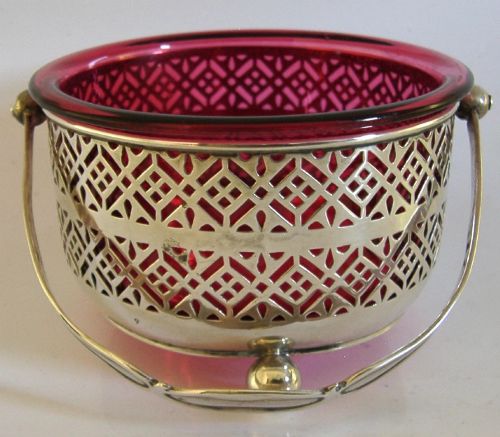
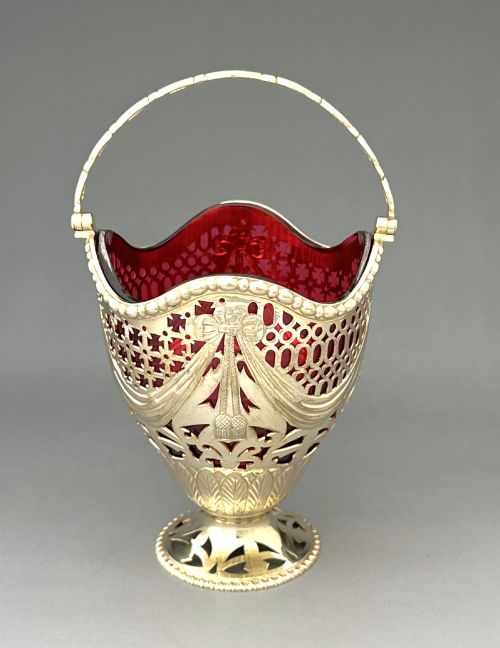
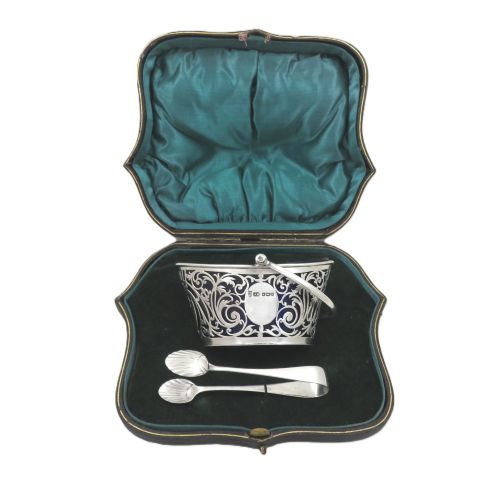
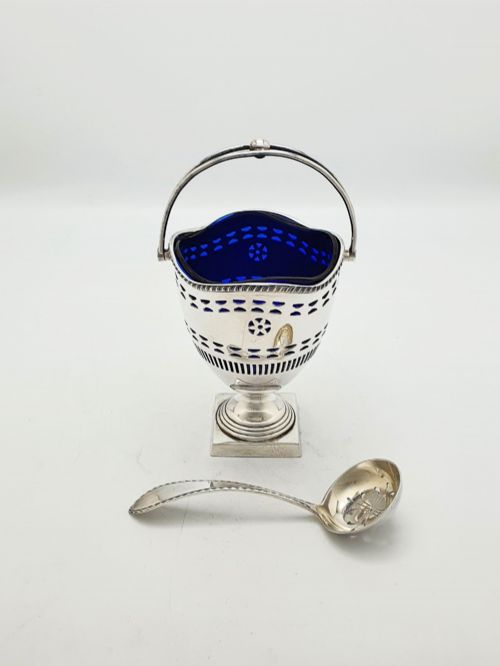
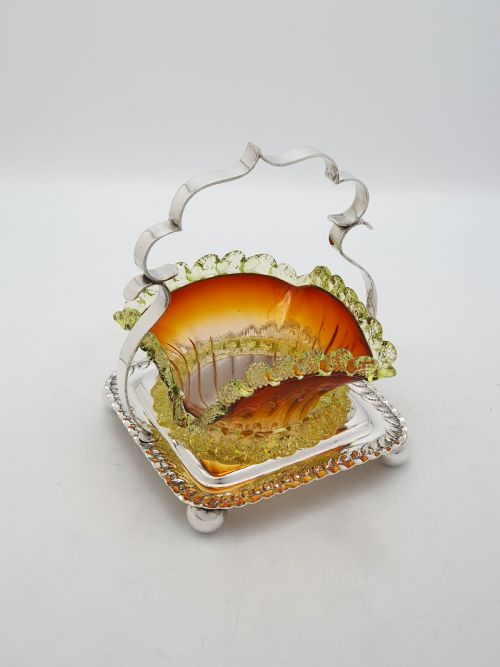
A silver and glass basket combines a metallic frame with a brightly coloured glass liner or bowl. These pieces primarily function as sugar baskets, cream pails, preserve dishes or table centrepieces.
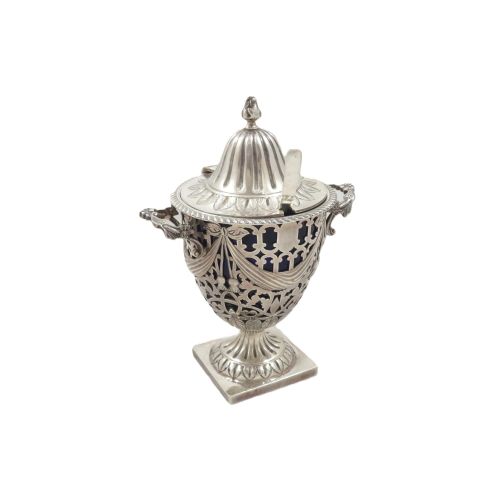
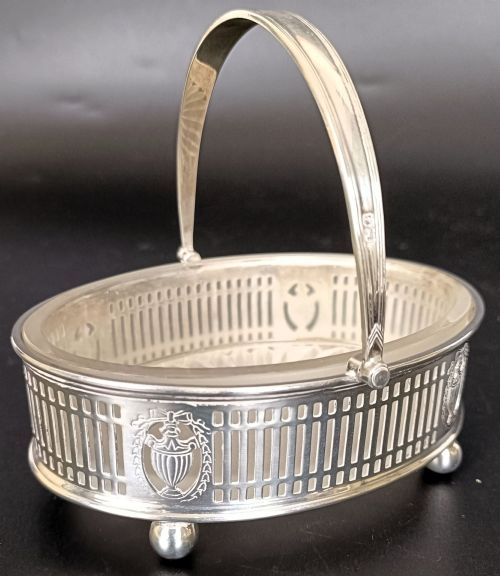
The selections span from the eighteenth century through the Victorian and Edwardian eras up to the nineteen thirties. Common forms include swing-handled vessels, pierced stands and pedestal urns with fitted glass inserts.
Makers utilised both sterling silver and silver plate for the frames, pairing them with distinct glass types. The overall aesthetic ranges from restrained Georgian wirework to flowing Art Nouveau designs.
How they were made
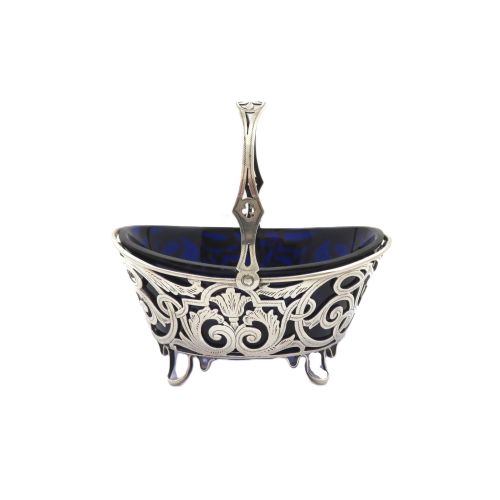
Silversmiths constructed the metal frames using techniques such as piercing, casting and wirework. Pierced patterns often featured geometric or floral motifs, while swing handles were attached with pins or hinged mounts.
Glass liners were blown or moulded to fit the specific contours of each metal basket. Many pieces incorporate coloured glass varieties including cranberry, vaseline, cobalt and ruby hues.
Some nineteenth-century glass glows bright green when the lights go out.
What varies in quality
Quality rests in the weight of the silver and the crispness of the pierced or cast decoration on the frame. Finer examples display meticulous hand-piercing and substantial gauge metal rather than thin pressed sheet.
The integration between the metal mount and the glass liner determines the standard of the piece. An original glass insert that fits securely without excessive movement distinguishes superior specimens.
Aldridge and Green·William Comyns·George Fox·WMF
The Silver and Glass Basket Glossary
- Swing handle
- A movable arched handle attached to the rim of a basket by pivots or hinges. This feature allowed the vessel to be easily passed around a table.
- Pierced work
- A decorative technique involving the cutting or piercing of openings through sheet metal to create intricate patterns. It lightened the weight of silver objects while maintaining structural integrity.
- Cranberry glass
- A transparent pinkish-red glass produced by adding gold chloride to the molten batch. It gained immense popularity during the Victorian period for tableware liners.
- Vaseline glass
- A yellow-green glass containing uranium dioxide that exhibits a distinctive fluorescent glow under ultraviolet light. It was frequently utilised in late nineteenth-century decorative items.
- Sugar basket
- A small open container designed to hold lump or granulated sugar on the tea table. They often included matching tongs and removable glass liners to protect the metal from moisture.
Silver and Glass Basket: Frequently Asked Questions
What were silver and glass baskets used for?
These vessels primarily served formal dining and tea rituals by holding sugar, preserves, sweetmeats or small fruits.
Their open construction allowed guests to view the colourful glass liners while selecting treats from the table.
How do I clean the glass liners?
Liners should be removed gently from their metal frames before washing in lukewarm water with mild soap.
Avoid hot water or harsh scrubbing to protect nineteenth-century glass and delicate silver-gilt surfaces.
Are the glass liners usually original?
Many surviving pieces retain their fitted glass inserts, which match the exact contours and period of the metal frame.
Replacement liners do occur due to accidental breakage over the centuries, so close inspection of the fit is sensible.
How do I tell Victorian from Edwardian pieces?
Victorian examples often display heavier cast mounts, vibrant cranberry glass and intricate floral or vine motifs.
Edwardian and later pieces frequently incorporate lighter neoclassical revival styling, pierced geometric borders and delicate swing handles.