


Silk Prayer Rug
A silk prayer rug brings centuries of textile artistry into a room, offering intricate designs shaped by traditional regional weaving and embroidery techniques.
Silk Prayer Rug
A silk prayer rug is a textile designed with a specific niche or architectural format traditionally used for personal devotion. Buyers seeking a silk prayer rug will encounter pieces originating from diverse regions including Turkey, Persia, Central Asia, and India. The selection spans the nineteenth century through the mid-twentieth century, encompassing both woven carpets and embroidered formats.
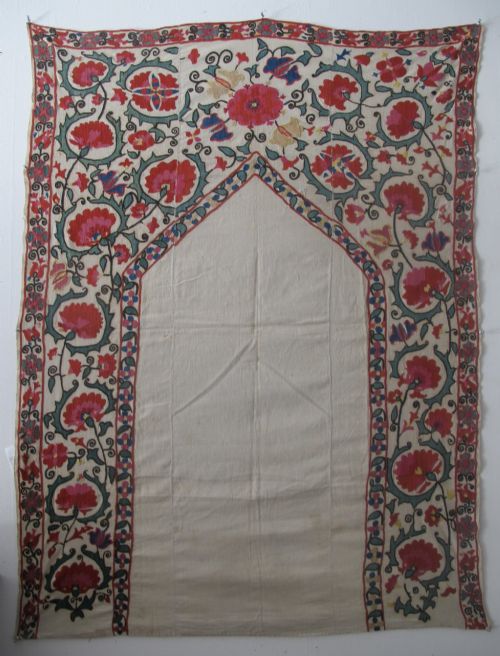
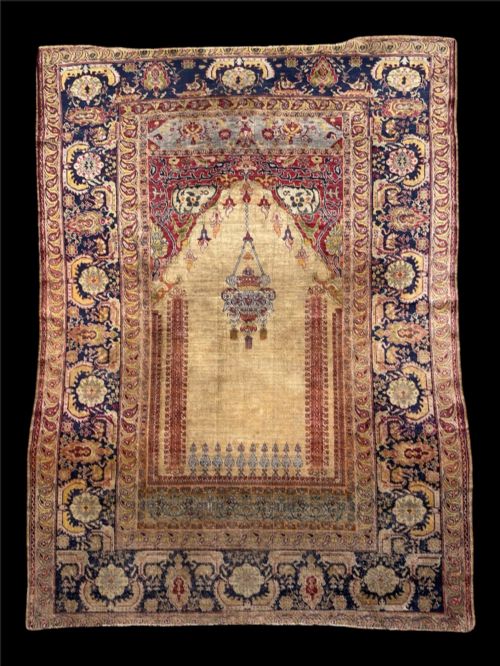
The most prevalent examples on this page include Uzbek suzanis worked in prayer formats on cotton grounds alongside Turkish Kayseri rugs and Persian Kashan pieces. These works display distinct regional motifs such as architectural columns, tree of life patterns, and traditional prayer arches. Each piece reflects the specific decorative vocabulary of its origin, whether Anatolian, Ottoman, or Central Asian.
Materials and construction methods
Construction relies heavily on silk materials, frequently utilised as pile or embroidery thread upon cotton foundations. Uzbek suzani examples employ silk thread hand-embroidered onto yellow or red cotton grounds. Woven Turkish and Persian varieties utilise pure silk pile or part-silk combinations to create detailed surface textures.
Weaving and embroidery techniques vary by region, from the hand-knotted pile of Kayseri and Kashan carpets to the needlework employed in Central Asian suzanis. Art silk and silk highlights also appear in specific regional pieces, adding contrasting sheen to wool or cotton foundations.
Several textiles surprise observers by substituting embroidered floral panels and animals for standard geometric prayer arches.
Factors determining quality
Quality differences stem from the fineness of the execution and the clarity of the design motifs. Pieces featuring precise needlework or tight knotting display superior structural integrity and visual definition. The richness and preservation of the colour palette also distinguish finer examples from standard production.
Material composition plays a significant role, with pure silk foundations and piles representing a different tier of craftsmanship compared to part-silk or art silk alternatives. The complexity of the design, such as elaborate architectural double columns or multi-tiered prayer arches, further separates standard examples from exceptional ones.
The Silk Prayer Rug Glossary
- Suzani
- A type of embroidered textile originating from Central Asia, often worked in silk thread on a cotton ground.
- Prayer format
- A textile design featuring an arch or niche that traditionally indicates the direction of prayer.
- Kayseri
- A central Turkish town renowned for the production of fine woven rugs and carpets.
- Tree of life
- A traditional motif depicting a stylized tree, symbolizing growth and eternity.
- Souf
- A technique involving flat-woven background areas that contrast with raised silk pile patterns.
Silk Prayer Rug: Frequently Asked Questions
What defines a silk prayer rug?
A silk prayer rug is distinguished by its architectural niche design and the inclusion of silk materials, either as woven pile or surface embroidery. These textiles were traditionally created for devotional use across various regions in the Middle East and Central Asia.
Examples range from hand-knotted Kayseri and Kashan carpets to embroidered Uzbek suzanis on cotton grounds. The defining visual element is the prayer arch format.
Where were these rugs made?
Production centres span Turkey, Persia, Central Asia, and North West India. Each region developed distinct stylistic characteristics based on local weaving and embroidery traditions.
Turkish pieces often display Anatolian or Ottoman influences, while Persian examples feature Kashan or Tabriz designs. Central Asian suzanis originate primarily from Uzbekistan.
How should I care for a silk prayer rug?
These textiles require gentle handling due to the delicate nature of silk fibres and historical cotton foundations. Professional cleaning suited for antique textiles is recommended to preserve the material and dyes.
Placement away from direct sunlight prevents fading of the natural and dyed silk threads. Wall hanging mountings or low-traffic floor areas protect the structural integrity of older pieces.
How do I identify the period of a rug?
Dating relies on stylistic analysis, material examination, and structural characteristics. Pieces from the nineteenth century often display specific regional colour palettes and traditional motifs that evolved by the mid-twentieth century.
Documentation associated with specific workshops or regional weaving traditions helps narrow down the era of production.