


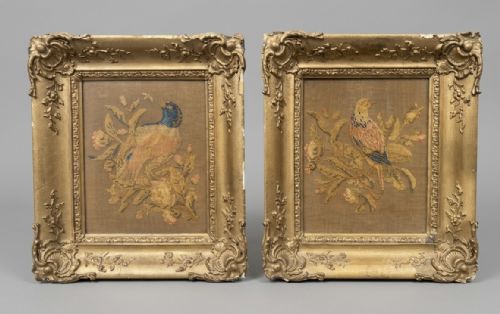

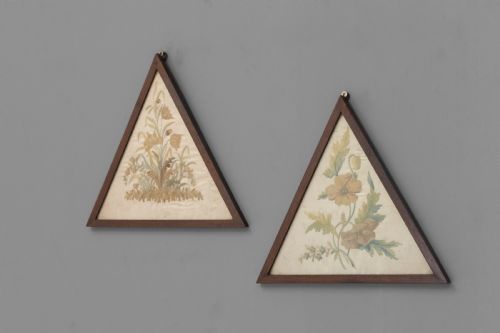


Silk Needlework Picture
These silk needlework picture panels bring centuries of textile art into rooms through framed historical needlepoint and embroidery.
Silk Needlework Picture
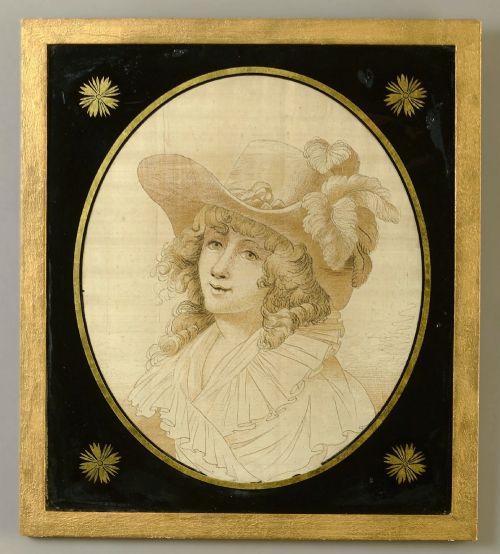
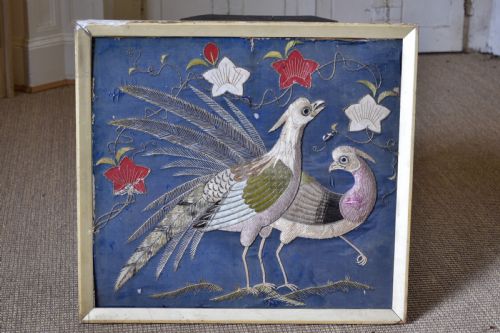
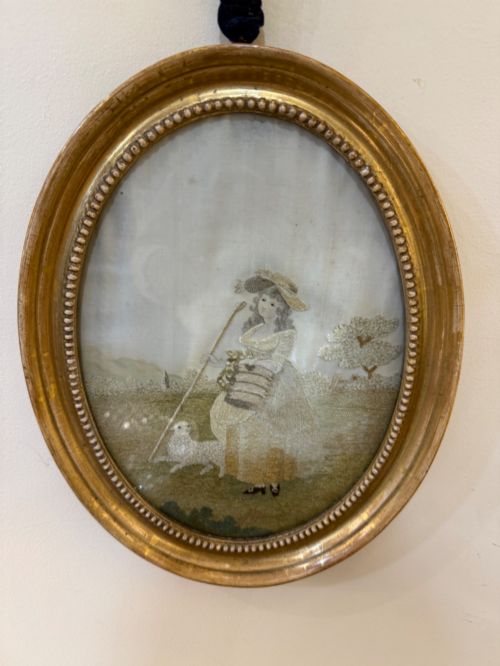
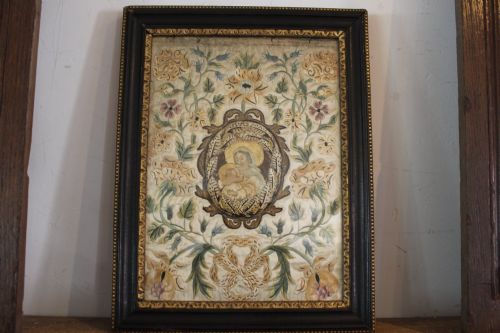
A silk needlework picture spans centuries of textile artistry, appearing in formats from small framed wall panels to large embroidered scenes. Pieces on this page originate primarily across the seventeenth, eighteenth, and nineteenth centuries, including Georgian and Regency periods.
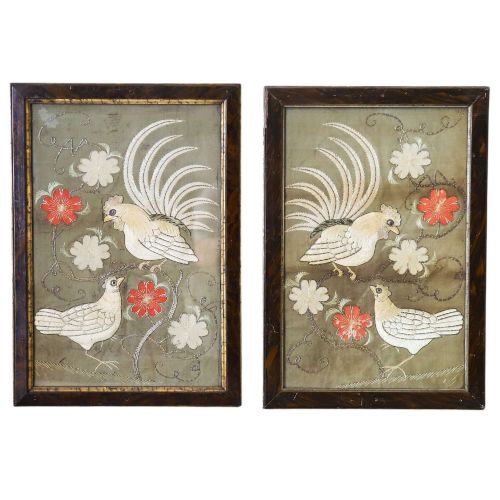
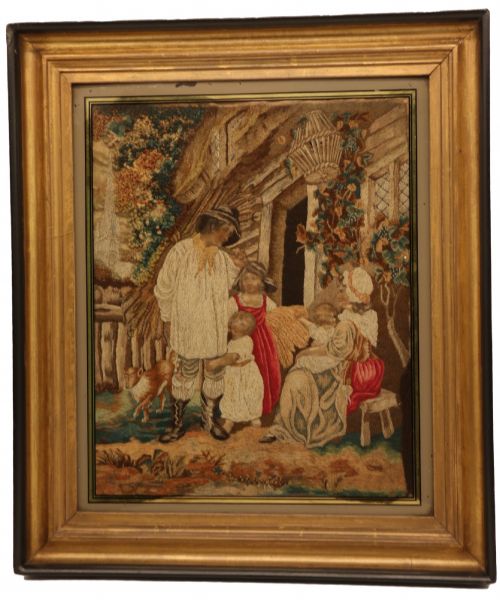
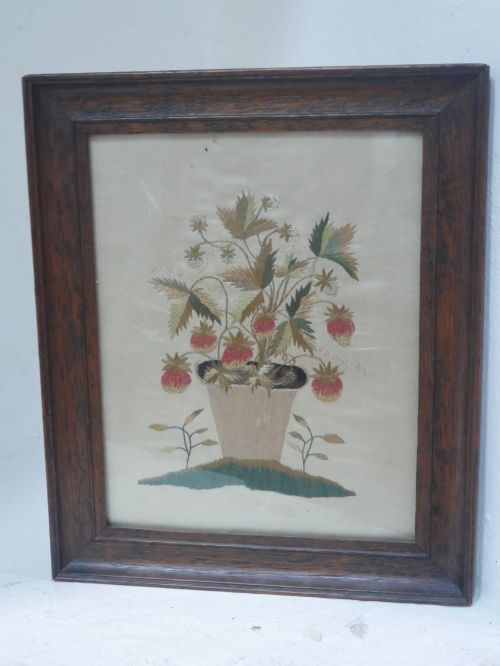
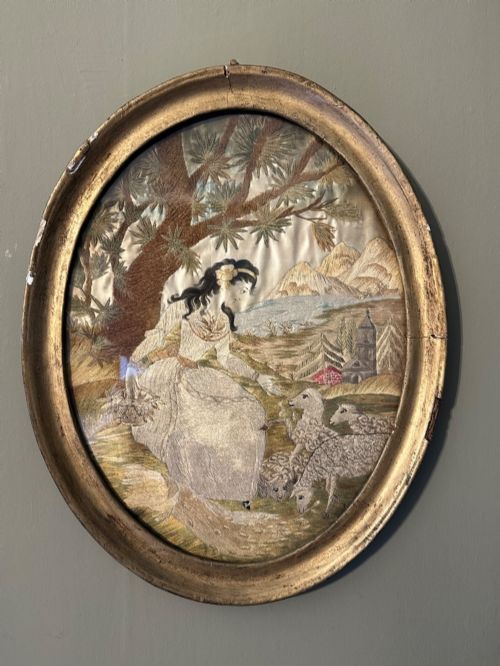
Makers produced diverse pictorial subjects utilising silk, wool, and metallic thread on linen or silk grounds. Common pictorial themes include pastoral farming, garden birds, portraits, map samplers, and theatrical or literary scenes.
How they were made
Craftspeople combined silk floss, wool, and metallic thread with hand-painted watercolour details on linen and silk grounds. Stitches varied from long stitch and crewel work to raised stumpwork embroidery.
Finished textiles found protection within period enclosures such as giltwood frames, faux tortoiseshell borders, and verre églomisé glass settings.
Stumpwork panels from the 17th century often feature tiny padded kings gazing out over remarkably plump embroidered caterpillars.
What varies in quality
The sophistication of the needlework technique dictates the visual depth of each picture, separating simple domestic embroidery from finely detailed pictorial compositions. Complex stitch combinations and integrated hand-painted elements demand greater skill from the maker.
The survival of original framing, including period giltwood and verre églomisé glass, preserves the integrity of the textile and influences the overall presence of the piece.
The Silk Needlework Picture Glossary
- Stumpwork
- A raised embroidery style popular in the seventeenth century, utilising padding over wooden moulds or threads to create three-dimensional figures.
- Verre Églomisé
- A process of applying cold gilding and painting on the reverse side of glass, frequently used for framing antique pictures.
- Long stitch
- An embroidery technique where straight stitches span significant distances across the fabric ground to build smooth pictorial areas.
- Sampler
- A piece of cloth embroidered to demonstrate a maker's proficiency in various stitches, alphabets, or patterns.
Silk Needlework Picture: Frequently Asked Questions
How are antique silk pictures framed?
Many examples survive in their original giltwood, faux tortoiseshell, or verre églomisé glass frames. These historic housings protect the delicate silk and wool threads from environmental damage.
Collectors prefer pieces that retain their period frames, as alterations can affect the historical context of the textile artwork.
How do I care for silk embroidery?
Display textile art away from direct sunlight to prevent the silk floss and wool threads from fading over time. Maintaining stable indoor humidity protects both the fabric ground and any wooden or giltwood framing.
Professional mounting behind glass prevents dust accumulation and structural sagging of the linen or silk foundation.
Can I date a needlework picture?
Stylistic markers, framing techniques, and material usage help assign pieces to periods such as the Georgian, Regency, or seventeenth-century Stuart eras. Samplers often include specific dates and the age of the maker stitched directly into the cloth.
Needlework styles evolved from raised stumpwork in the 1600s toward flat silk and wool pastoral pictures by the nineteenth century.