
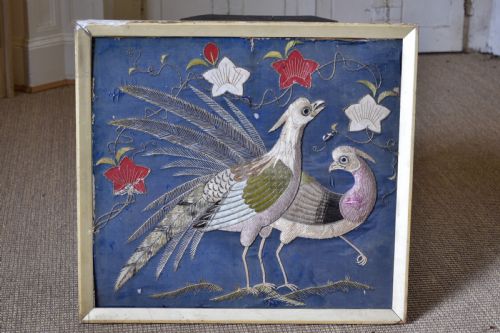


Oriental Silk Picture
An oriental silk picture brings intricate needlework and painted textile artistry from Asian traditions into your home.
Oriental Silk Picture
An oriental silk picture encompasses detailed textile art, framed wall panels, and painted works created across various Asian traditions. Buyers searching for an oriental silk picture will encounter pieces ranging from the nineteenth century up to nineteen fifty.
The selections available here include traditional Chinese ancestral portraits, Japanese textile panels featuring birds in flight, and Indian miniature paintings on silk. Many examples depict nature scenes with garden birds, mandarin ducks, or wild birds among plum blossoms.
The forms extend beyond simple wall art to include framed textiles and carved table screens with wooden stands. These works display distinct cultural styles, including Qing Dynasty aesthetics and the Japanese Meiji period.
How they were made
Maker construction relies heavily on fine silk fabric as a base, combined with pigment, ink, and mineral pigment for painted elements. Artisans employed metallic thread to add glistening detail to embroidered sections such as pheasant and goose feathers.
Framing utilised wood and glass to protect the delicate textiles and paper components from environmental damage. Carved wooden stands accompanied table screens, showcasing intricate woodworking alongside the fabric panels.
Listings feature works spanning the nineteenth century, nineteen hundred, and nineteen fifty, utilising silk, pigment, paper, and metallic thread.
What varies in quality
Quality differences lie in the precision of the brushwork and the complexity of the needlework. Pieces featuring stamped signatures or intricate carving on accompanying stands often represent superior craftsmanship.
The vibrancy and condition of the pigments and silk dictate the visual impact of the work. Brighter, well-preserved dyes and tightly woven threads distinguish the finest examples from simpler decorative items.
Iida Takashimaya Company
The Oriental Silk Picture Glossary
- Meiji Period
- A Japanese historical era lasting from eighteen sixty-eight to nineteen twelve noted for skilled textile production and painting. Works from this time often show remarkable natural detail.
- Qing Dynasty
- The last imperial dynasty of China, spanning from sixteen forty-four to nineteen eleven. Pieces from this era display traditional court and scholarly motifs.
- Table Screen
- A decorative panel supported by a carved wooden stand designed for tabletop display. These items combine textile or painted artistry with woodwork.
- Ancestor Painting
- A formal portrait created to honour family lineage in Chinese tradition. These works often capture subjects in rigid, dignified poses.
Oriental Silk Picture: Frequently Asked Questions
How should I hang an oriental silk picture safely?
Protect silk from direct sunlight and high humidity to prevent fading and fibre degradation over time. Use appropriate glass framing that keeps the fabric from touching the surface directly.
Ensure the hanging wall is structurally sound to support the weight of the wooden frame and glass enclosure.
What periods do these silk artworks come from?
The pieces span the late nineteenth century through to the mid-twentieth century. Examples include nineteenth-century works and items dated around nineteen hundred.
Stylistic markers help identify the era, ranging from Meiji period Japanese textiles to Qing dynasty Chinese paintings.
Are these works painted or embroidered?
Artisans utilised both techniques, sometimes combining painting and embroidery on a single silk ground. Pigments and inks created fine lines for birds and figures, while metallic threads added texture.
Distinguishing between the two involves examining the surface under gentle magnification to see brush strokes versus thread loops.
How do I care for antique silk art?
Dust frames gently with a soft, dry cloth and avoid using any liquid cleaners near the exposed textile. Professional conservation is recommended for any major structural issues.
Keep the room temperature stable to prevent the silk from expanding and contracting.