




Silk Embroidery Pair
A silk embroidery pair brings matched historical needlework into a room, offering balanced symmetry through textile art framed for the wall or table.
Silk Embroidery Pair
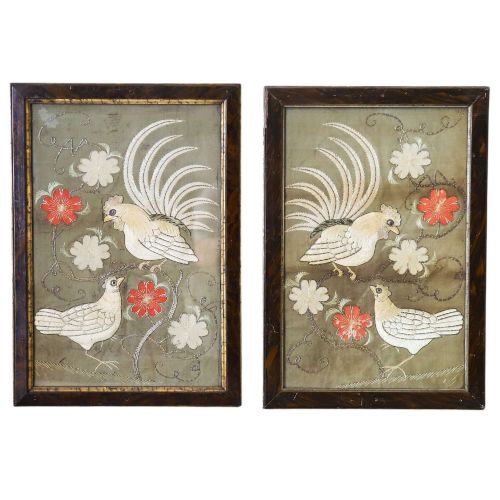
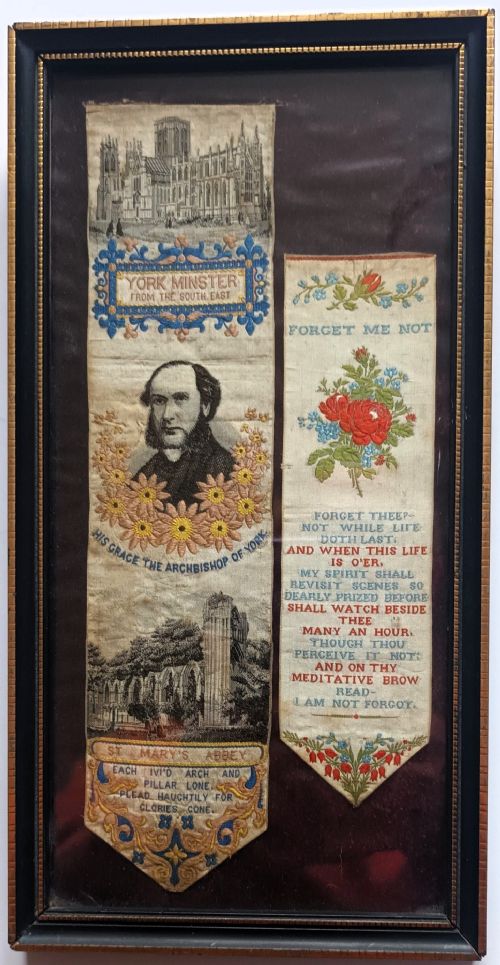
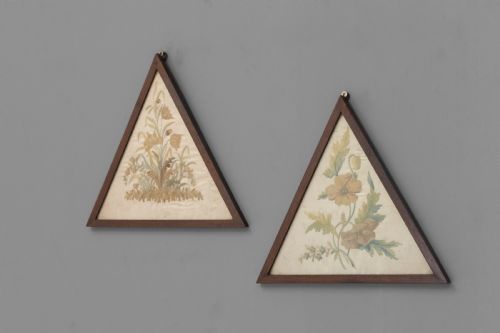
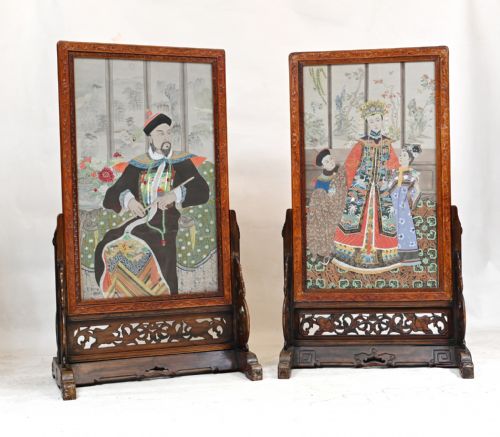
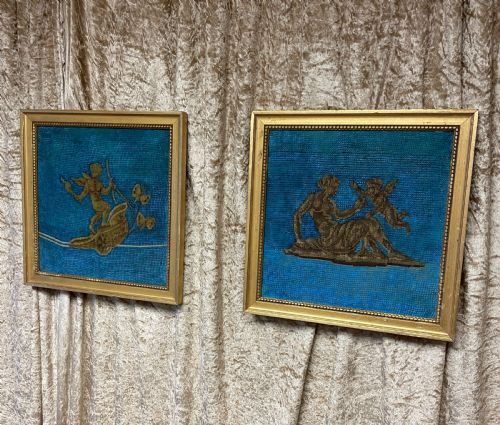
A silk embroidery pair consists of matched textile works executed in fine threads and presented together as a decorative set. These pieces take the form of framed wall art, needlework pictures, and tabletop screens designed to balance a wall or interior space.
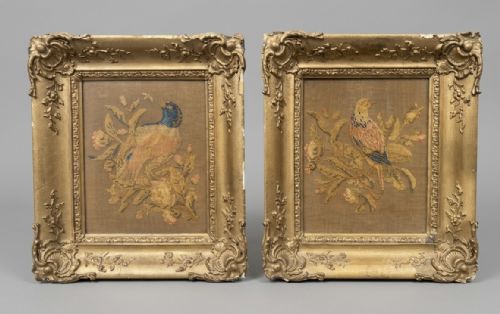
The pieces appearing on this page span the eighteenth and nineteenth centuries, taking in Regency, Georgian, and Victorian aesthetics alongside Chinese Qing dynasty works. Buyers frequently encounter framed English and French needlework depicting birds, theatrical scenes, or botanical subjects.
Makers and workshops across Europe and Asia produced these matched panels for domestic display, often utilising specialised stitches like long stitch to render pictorial detail. Finding them as a surviving pair is the primary appeal for collectors seeking symmetrical wall decoration.
What Varies in Quality
Quality rests in the finesse of the needlework and the preservation of the silk threads against fading or fraying. Finer execution shows in the intricate shading of plumage and foliage, where the silk catches the light differently from the background ground.
The enclosure matters equally, with original gilt wood frames, black glass mounts, and faux tortoiseshell surrounds commanding greater interest than later replacements. The integrity of the matching pair depends on both panels retaining their original proportions and framing materials.
Listings feature silk embroidery pairs spanning the eighteenth and nineteenth centuries, incorporating English, French, and Chinese origins.
Stevens of Coventry·Qianlong Emperor
The Silk Embroidery Pair Glossary
- Long stitch
- A needlework technique where threads are laid long across the canvas to form smooth pictorial areas. This method creates the flowing lines seen in historic silk pictures.
- Mezzotint glass
- Dark or black glass used as a border mat in framing, popular in Regency and Georgian framing. It provides high contrast to gilt wood frames and embroidered panels.
- Giltwood
- Wood treated with gold leaf or gilding preparation to form decorative frames. Period frames often show hand-carved details suited to the textile inside.
- Table screen
- A decorative panel mounted on a stand for tabletop use, frequently seen in Chinese Qing dynasty works. They allow textile art to be viewed upright without wall hanging.
Silk Embroidery Pair: Frequently Asked Questions
How do I hang a silk embroidery pair?
These framed textile works require careful placement away from direct sunlight to protect the delicate silk threads from fading.
Hang them at eye level with adequate spacing to preserve the balanced symmetry that defines a matched pair.
Are these pieces fragile?
Historic silk needlework is sensitive to environmental changes, particularly excessive light and moisture. Keeping them behind original glass provides essential protection for the fibres.
Handle the frames rather than the glazing and avoid damp spaces when displaying textile art.
How can I tell a Regency pair from a Victorian one?
Regency and Georgian pieces frequently utilise black glass mounts and delicate gilt wood frames around classical or pastoral subjects. Victorian examples often introduce richer revival styles and alternative framing materials like faux tortoiseshell.
Examining the framing technique alongside the stitching style helps establish the period of origin.
Why do these works survive in pairs?
Needlework panels were frequently commissioned or worked as matched sets intended to flank a fireplace, door, or mirror in period interiors.
Surviving together as a pair indicates they remained in the same domestic setting throughout their history.