

Silk Embroidered Tapestry
Silk embroidered tapestry brings together intricate needlework and textile art, offering rich historical depth and decorative presence for interiors.
Silk Embroidered Tapestry
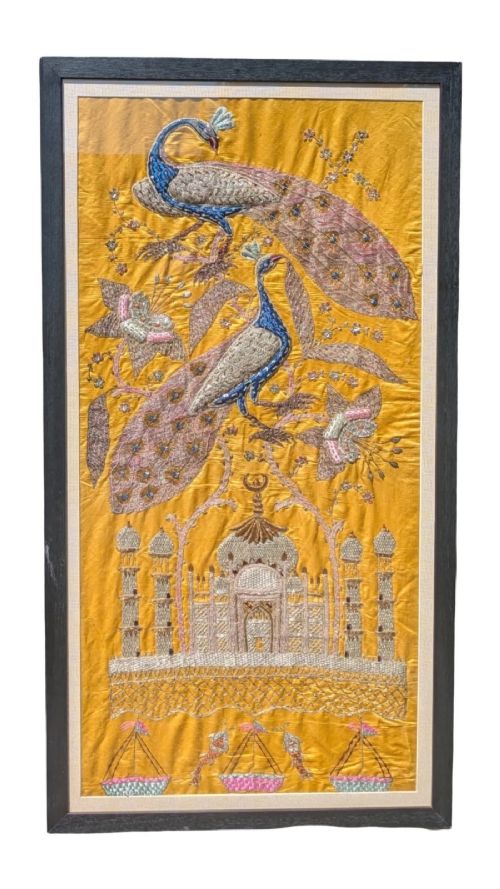
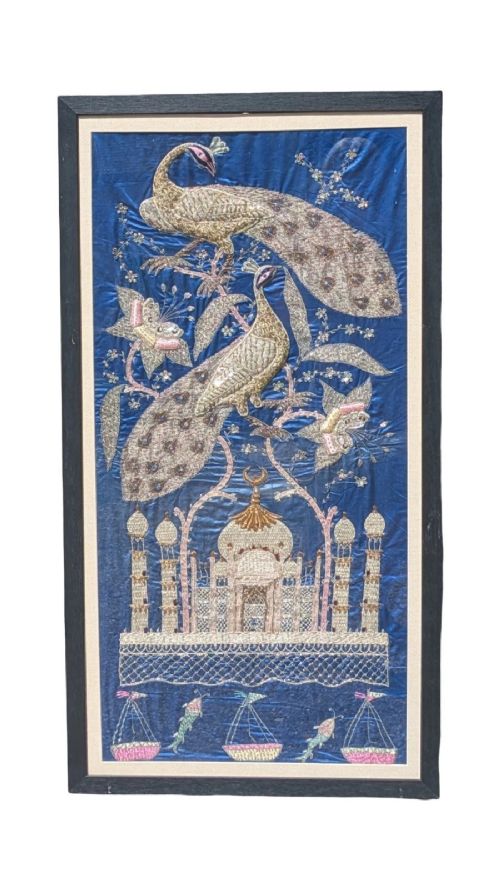
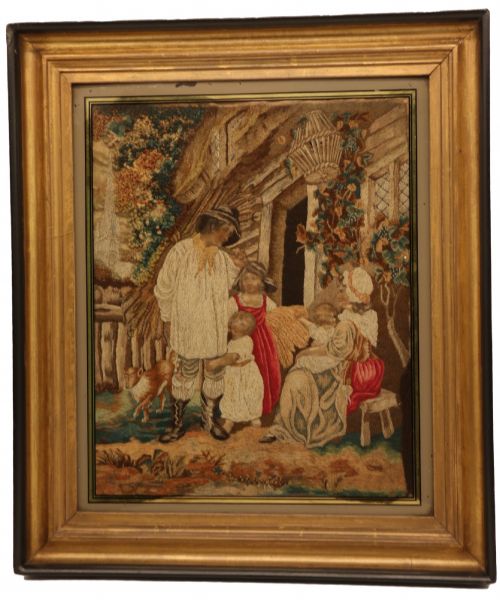
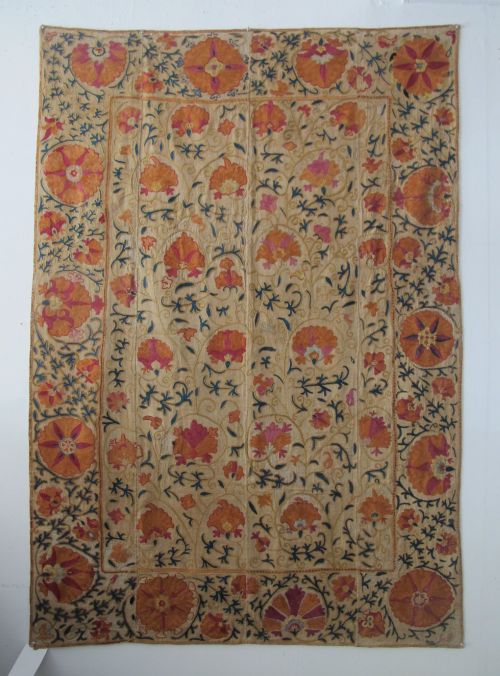
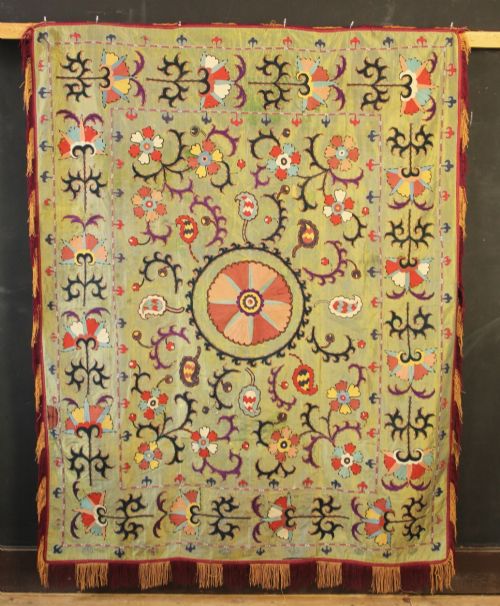
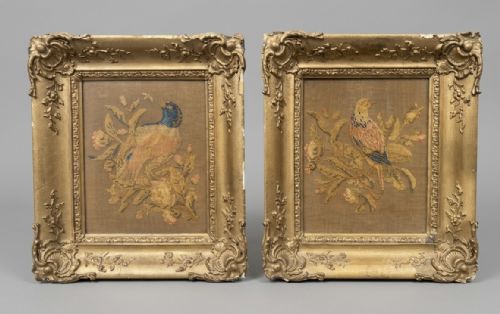
A silk embroidered tapestry encompasses a diverse range of historic textile art, featuring wall hangings, framed panels, and domestic furnishings from various cultural traditions. Buyers searching for a silk embroidered tapestry will encounter both English needlework pictures and vibrant Central Asian embroideries.
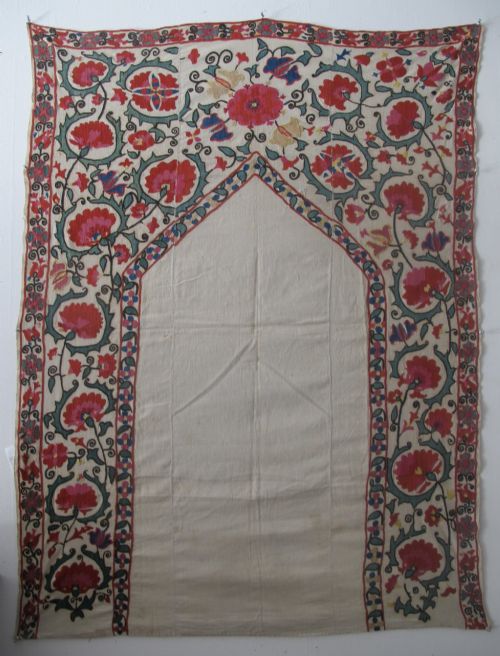
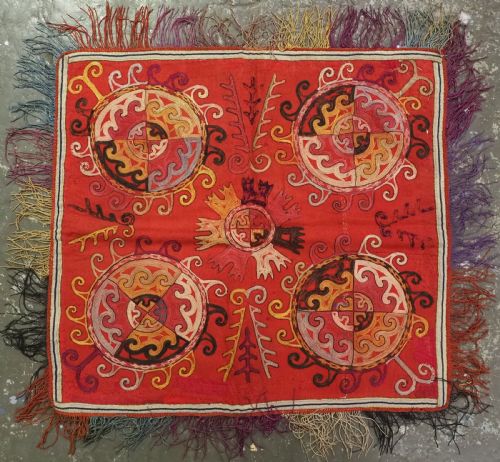
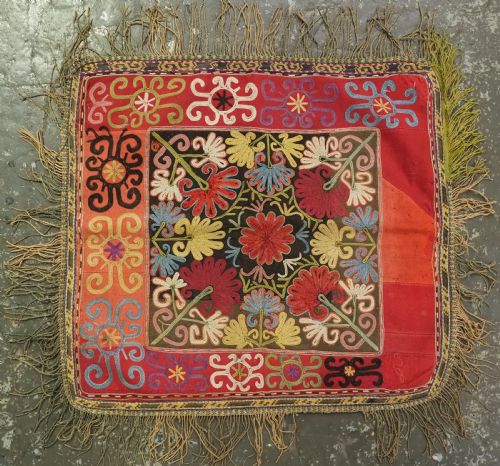
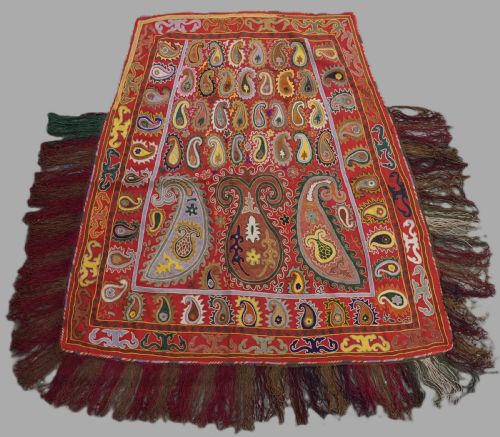
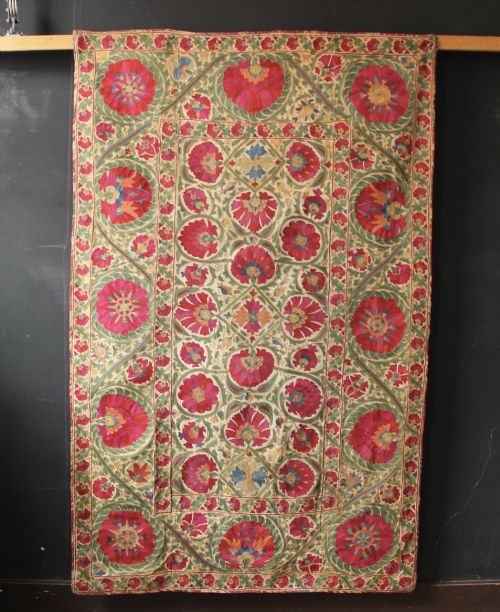
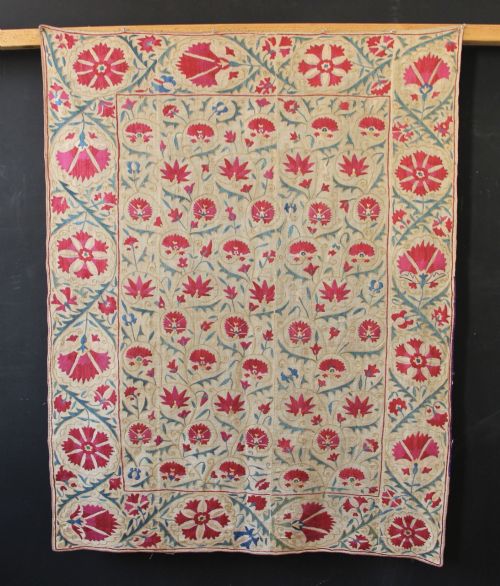
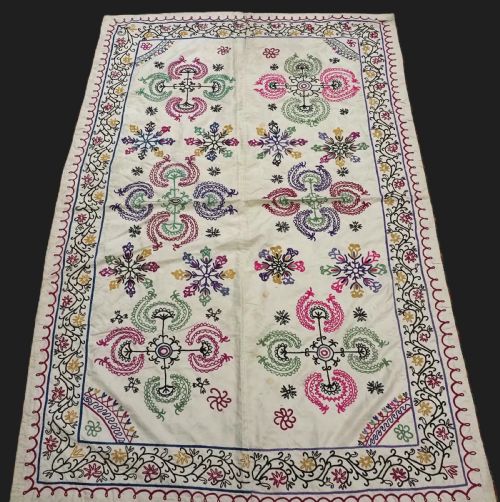
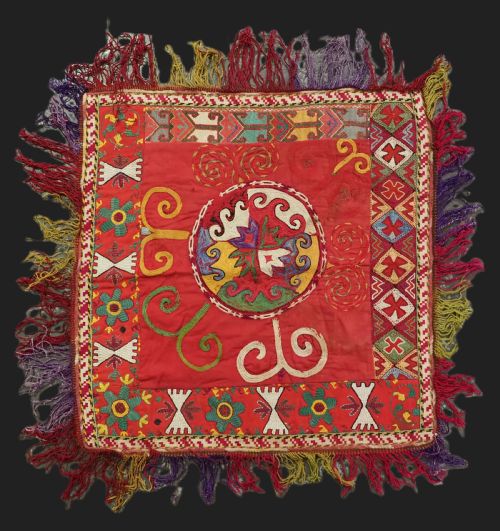
The selection on this page frequently includes Central Asian suzanis, Lakai tribal dowry pieces, and ceremonial horse covers alongside British needlework panels depicting landscapes and figures. These textiles range in date from the nineteenth century into the early twentieth century.
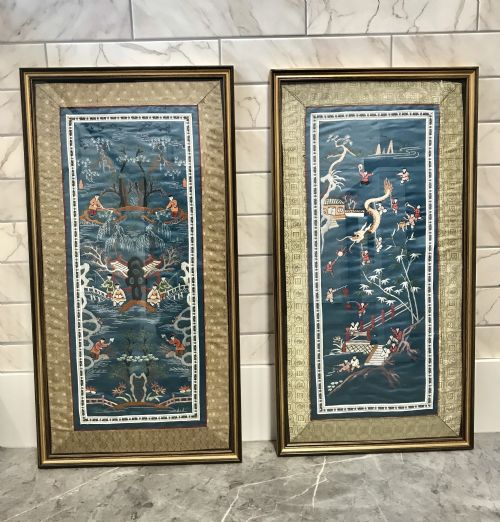
Forms vary from large wall hangings and bed covers to smaller framed works under glass or within specialist frames. Each piece represents traditional hand-sewn craftsmanship intended for display or ceremonial use.
Materials and Techniques
Maker construction relies heavily on fine silk threads worked onto grounds of cotton, linen, wool, or felt, occasionally enhanced with metallic thread or gold leaf. Artisans employed hand-sewing techniques, including long stitch and needlework, to build dense pictorial or geometric surfaces.
Framed examples frequently incorporate protective glass or specialist surrounds such as verre églomisé frames. Central Asian suzanis and tribal items utilise specialised regional embroidery stitches on woven foundations, sometimes combining appliqué work with direct needle embroidery.
Several items double as historic horse furniture, proving that nomadic aesthetics occasionally involved dressing the family pony in full silk regalia.
Assessing Quality and Execution
Quality in these textiles rests upon the fineness of the needlework, the complexity of the design, and the integrity of the ground fabric. Superior examples display tight, precise stitch work and well-balanced compositions, whether depicting architectural motifs or natural scenes.
The choice and preservation of materials also distinguish superior items, such as the vibrant retention of dyed silk threads and the quality of associated framing or backing materials. Finer tribal and regional pieces demonstrate exceptional skill in colour blending and traditional patterning.
The Silk Embroidered Tapestry Glossary
- Lakai
- Referring to a Central Asian Turkic tribe known for dynamic, smaller-scale dowry embroideries and utilitarian hangings. Lakai work often employs asymmetric designs and vibrant silk application.
- Verre Églomisé
- A decorative technique involving the application of gold or silver leaf onto glass, combined with etching and painting on the reverse side. It frequently appears as a framing method for period needlework pictures.
- Nim Suzani
- A smaller half-scale version of a traditional Central Asian suzani wall hanging or cover. These pieces provide a more compact format while retaining the intricate needlework of larger examples.
- Bell Pull
- A long, narrow ornamental strap historically suspended beside a fireplace or wall to operate a mechanical summoning bell. They were frequently worked in elaborate silk embroidery and beadwork during the nineteenth century.
Silk Embroidered Tapestry: Frequently Asked Questions
What is a suzani?
A suzani is a large embroidered textile originating from Central Asia, traditionally made by brides as part of their dowry.
These pieces feature bold botanical or geometric motifs stitched in silk on cotton or linen foundations.
How were wall hangings displayed?
Historic wall hangings and suzanis served as decorative interior coverings, domestic furnishings, or ceremonial items within homes and yurts.
Modern interiors typically mount them flat on walls or frame them behind glass to protect the delicate silk threads.
How do I date a textile?
Dating relies on stylistic markers, regional design traditions, materials, and the structural characteristics of the ground fabric.
Nineteenth-century and early twentieth-century pieces show specific shifts in synthetic versus natural dye use and regional motif evolution.
What is Lakai tribal work?
Lakai work originates from a specific Central Asian nomadic group recognised for energetic and unconventional embroidery designs.
Their dowry pieces and horse covers utilise distinctive geometric shapes and vivid silk application.