
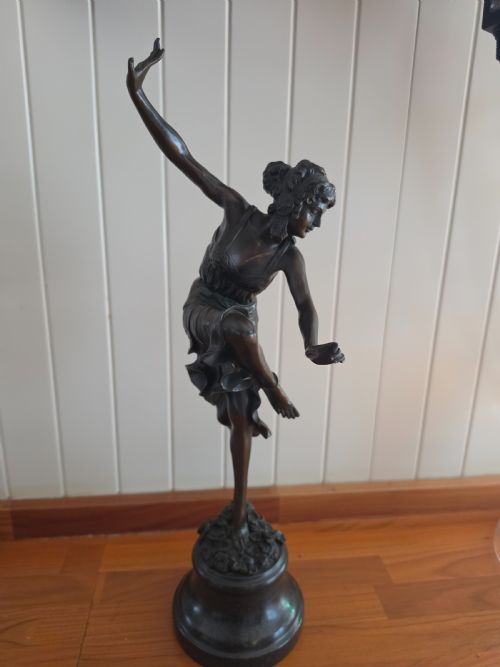


Signed Bronze Figure
A signed bronze figure brings tangible narrative and fine foundry work into a room, spanning nineteenth-century classical subjects and twentieth-century modernism.
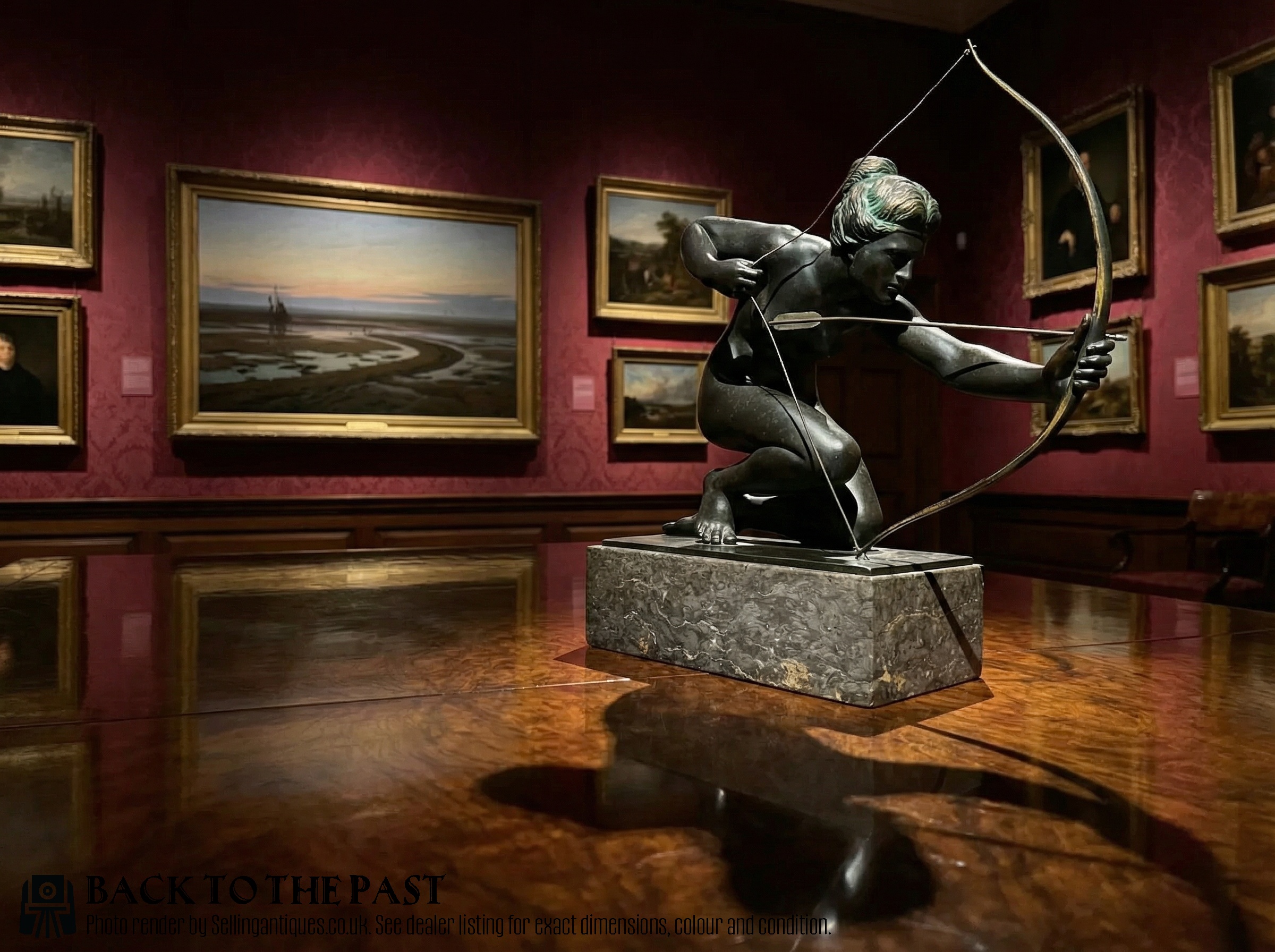
Signed Bronze Figure
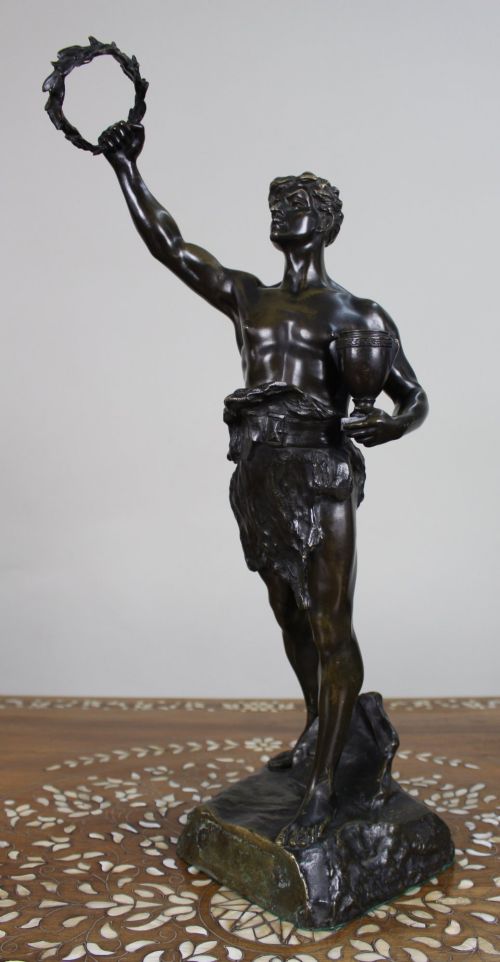
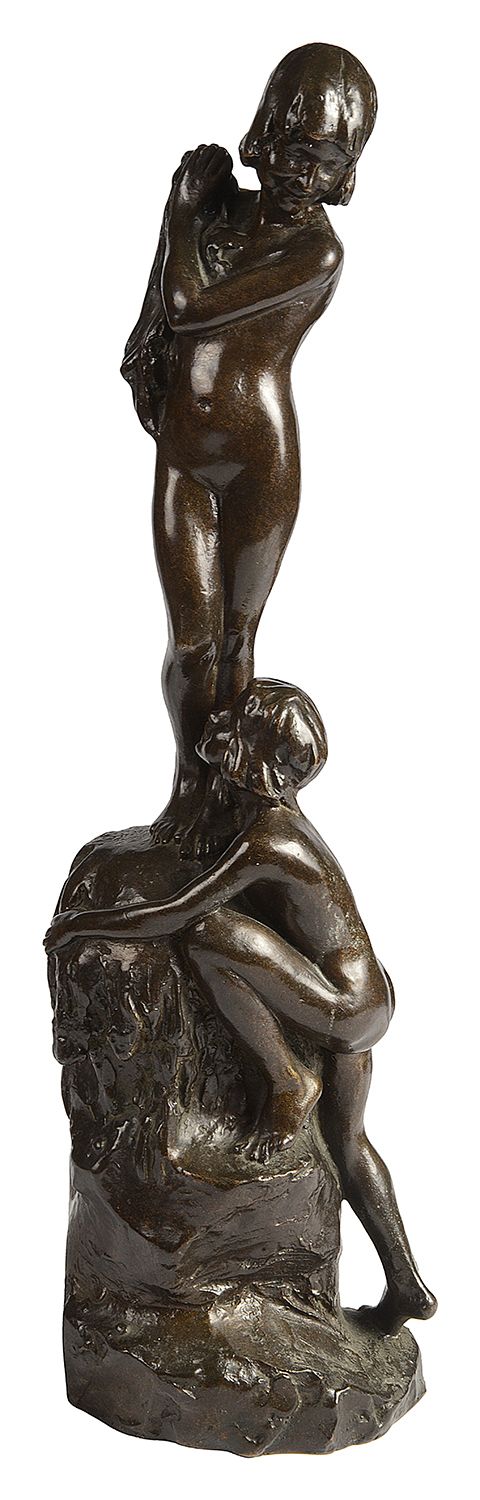
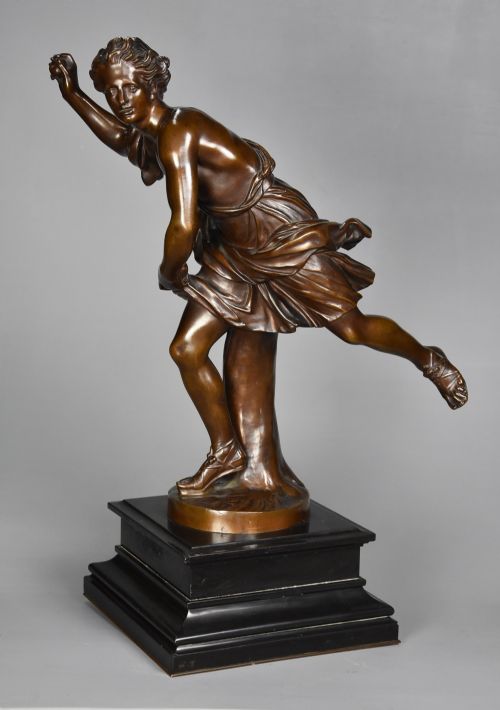
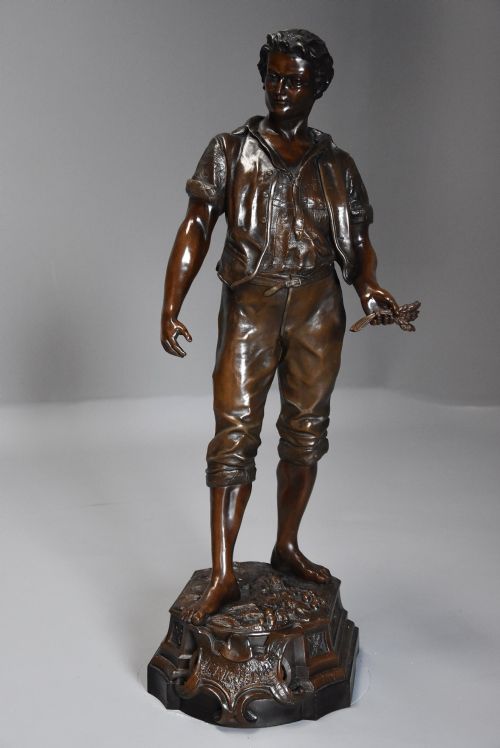
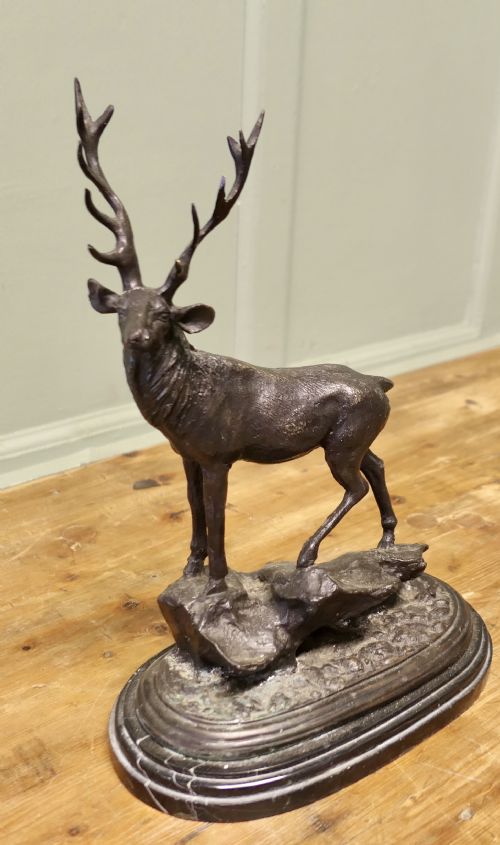
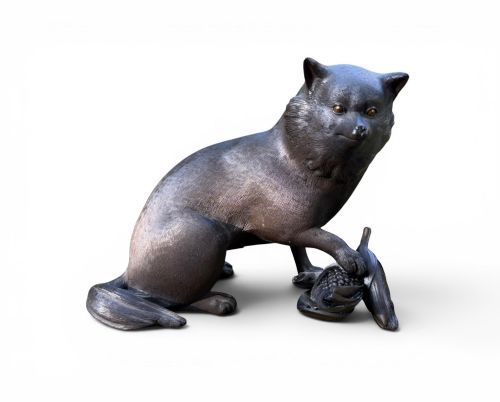
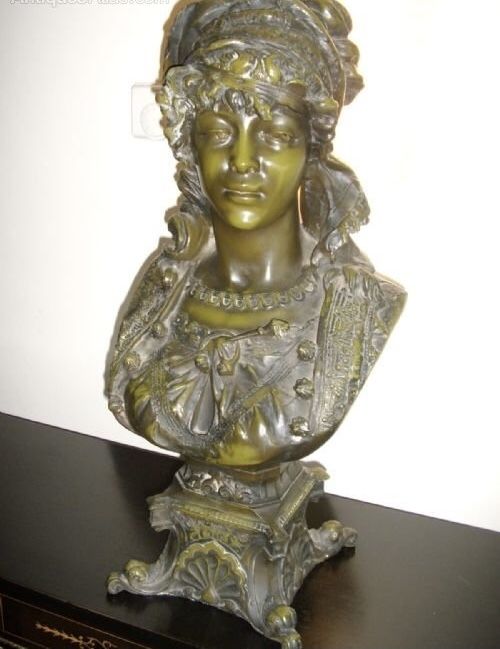
When searching for a signed bronze figure, a buyer encounters cast metal sculptures bearing signatures of European and Japanese makers from the nineteenth and early twentieth centuries. These works range from small animalier studies and mythological subjects to grand decorative figures set on marble plinths.
The pieces most frequently met on this page include French nineteenth-century neoclassical and realist casts alongside Art Deco dancers and Japanese Meiji period okimono. Figures often depict literary characters, mythological deities, or daily scenes such as children bathing and farm labourers.
Originating largely from European foundries and Japanese workshops, these sculptures function as desk ornaments, floor standing lamps, and cabinet pieces. Their presence anchors a room with established historical foundry marks and modelled detail.
Materials and Casting Techniques
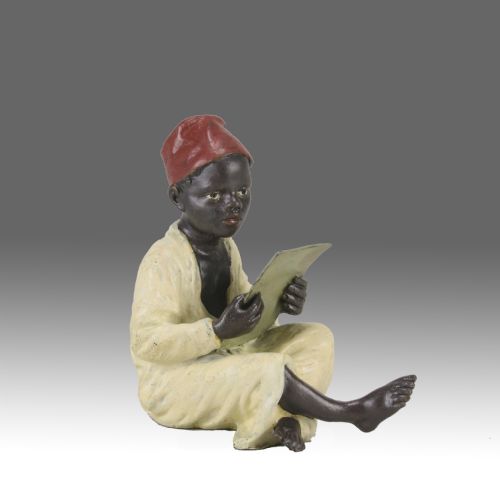
Foundries primarily utilised the lost-wax method or sand casting to shape molten bronze into complex figural compositions. Cold-painting was frequently applied afterwards to works by makers such as Franz Bergman, laying pigment directly onto the metal surface without secondary firing.
Bases and mounts often incorporate contrasting materials like carved marble, ebonised wood, or root wood to support heavier casts. Patination was achieved through chemical treatments that produced dark brown, green, or bright metallic surfaces across the completed sculpture.
Materials documented across the inventory include patinated bronze, carved marble, ebonised wood, and cold-painted finishes.
Assessing Quality in Cast Bronzes
The depth and stability of the patination, alongside the integrity of the signature stamp or foundry mark, distinguish finer studio productions from standard commercial editions. Heavier metal gauge and secure mounting to original marble or wooden plinths further indicate superior workshop standards.
Barbedienne·Franz Bergman·D.H. Chiparus·Auguste Moreau
The Signed Bronze Figure Glossary
- Animalier
- A nineteenth-century artistic style focusing on realistic depictions of animals. These sculptures frequently capture beasts in motion or resting upon naturalistic bases.
- Cold-painted bronze
- A metal sculpture painted with oil or enamel colours after casting, without undergoing a high-temperature kiln firing. This technique gained popularity through Viennese workshops around nineteen hundred.
- Lost-wax casting
- A historic method where a molten metal is poured into a mould created by melting away a wax model. This process allows for intricate undercuts and delicate surface details.
- Okimono
- A traditional Japanese decorative figurine designed for display on a tokonoma alcove or shelf. These pieces are often cast in bronze or carved from ivory and wood during the Meiji period.
- Patination
- The chemical or natural colouring of a metal surface resulting from age or applied treatments. Common finishes range from deep brown to polished highlights.
- Spelter
- A zinc alloy frequently used as a cheaper substitute for bronze in decorative figures. It is often given a bronze finish to mimic the appearance of heavier metal.
Signed Bronze Figure: Frequently Asked Questions
How do I identify a signature?
Signatures on these sculptures appear either as cast-in facsimiles or as hand-engraved inscriptions directly into the bronze surface near the base. They often correspond to the sculptor who modelled the original piece rather than the foundry worker who cast it.
Foundry stamps and publisher marks sometimes accompany the artist signature, providing additional context regarding where and when the metal was poured.
What is the difference between bronze and spelter?
Bronze is a durable alloy primarily composed of copper and tin, prized for its strength and ability to hold fine foundry detail over centuries. Spelter is a softer, zinc-based substitute that feels lighter and shows a different texture beneath any surface finish.
Many nineteenth-century figures were cast in bronzed spelter as an affordable alternative to solid bronze, requiring more gentle handling to prevent surface damage.
How should I clean a bronze figure?
Dust the sculpture regularly with a soft, dry lint-free cloth to prevent particulate buildup from settling into the crevices of the cast. Avoid using commercial metal polishes, water, or chemical cleaners, as these substances will strip away the original patination.
Applying a very light microcrystalline wax can help protect historical surfaces, provided the application is done sparingly and buffed gently.
Why are some figures mounted on marble?
Marble bases provide structural stability for top-heavy or slender figures that might otherwise tip over on a flat surface. They also functioned as an aesthetic choice during the Victorian and Art Deco periods, framing the metalwork effectively.
These plinths are frequently integrated directly into the sculpture design, housing the signature or foundry plaques along their margins.