
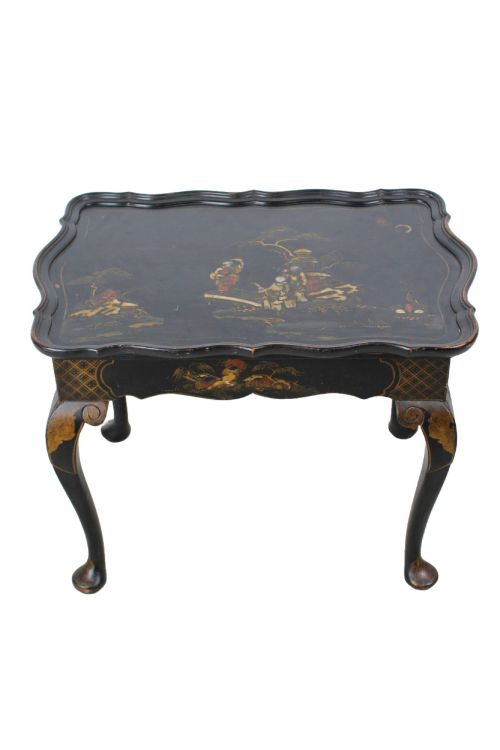
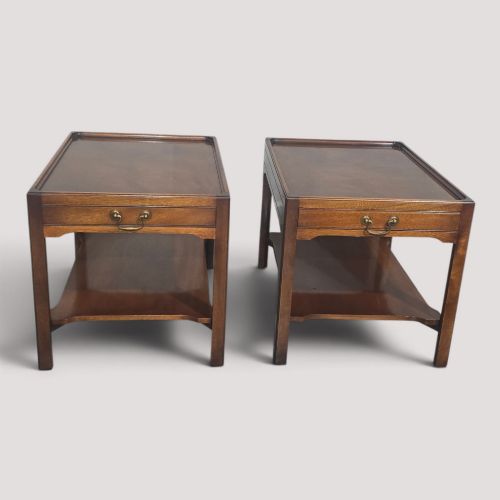


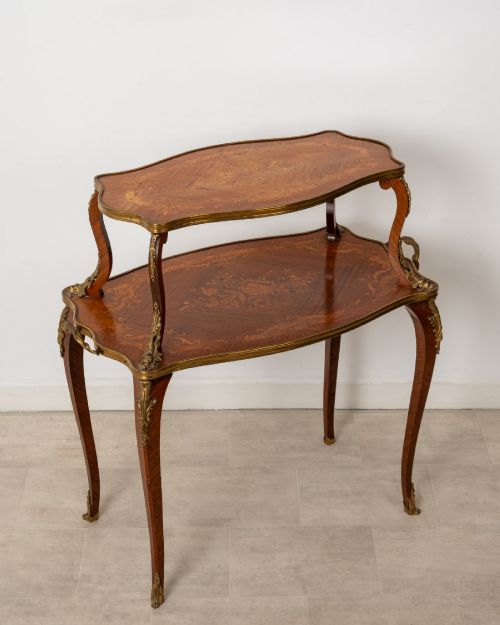
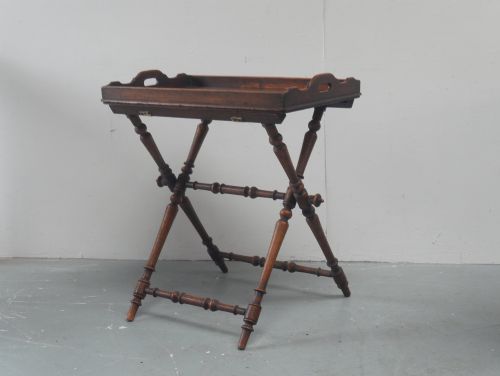
Side Tray Table
When you search for a side tray table, you are looking at adaptable furniture designed for serving and display.
Materials and Construction
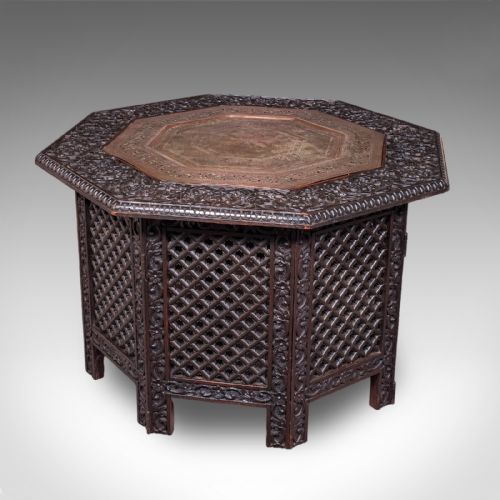
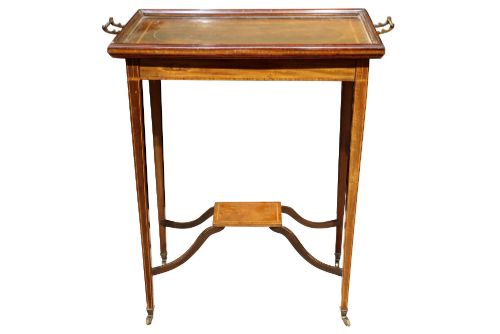
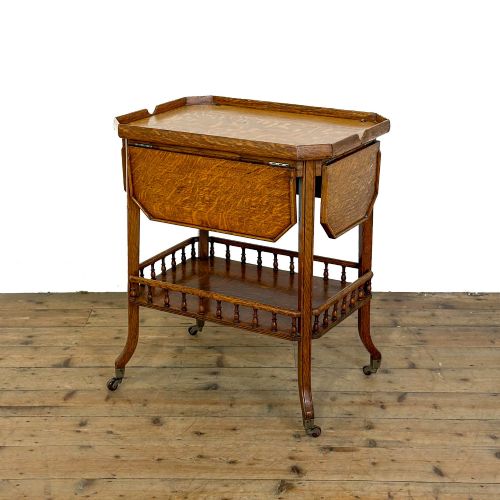
Cabinetmakers utilised solid mahogany, walnut, and oak, frequently employing flame grain veneers and marquetry inlay for decorative surface enrichment.
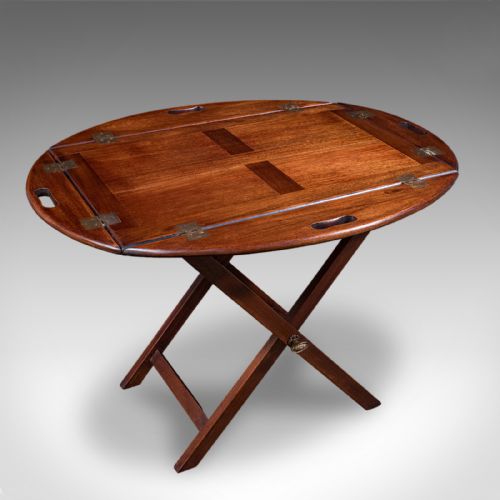
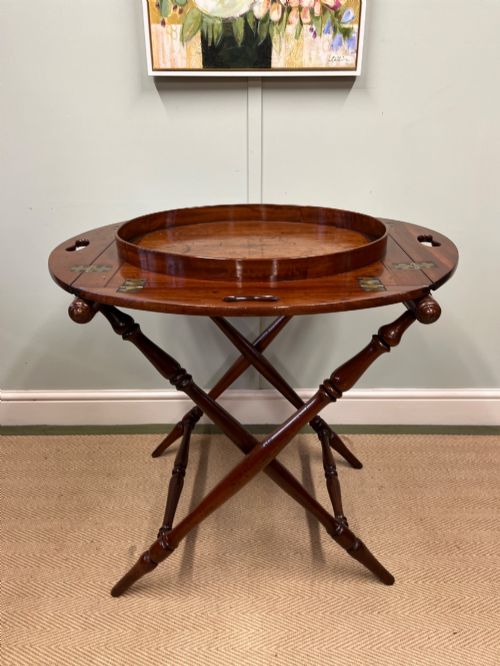
Brass fittings, including handles and bound edges, provide both structural reinforcement and functional detail on campaign and butler styles.
Markers of Distinction
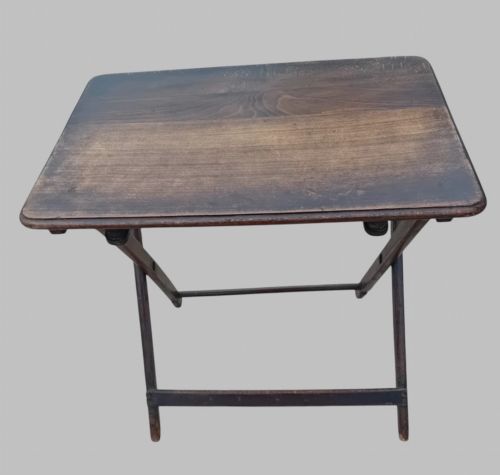
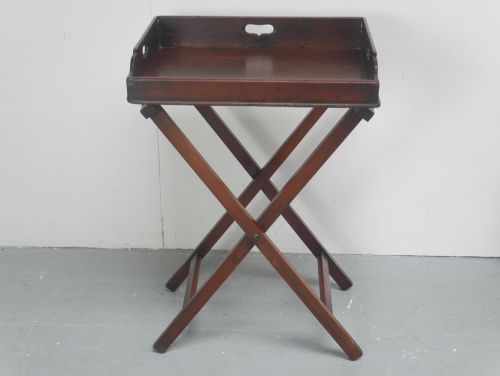
Construction methods dictate standing stability, particularly where folding X-frames or removable trays meet their supports.
Subtlety of timber selection, hand-cut dovetailing in drawers, and crispness of carved mouldings or inlay separate standard production from superior examples.
Listings feature timbers including mahogany, walnut, oak, satinwood, and beech across the Georgian, Victorian, and Edwardian periods.
The Side Tray Table Glossary
- Tray Top
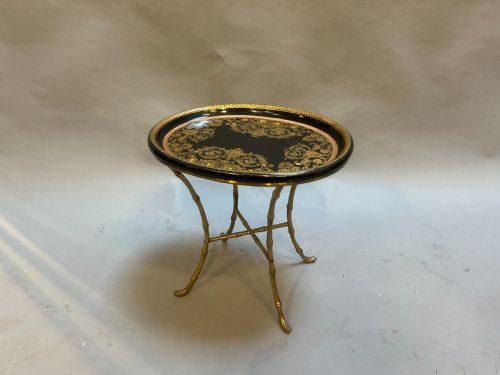
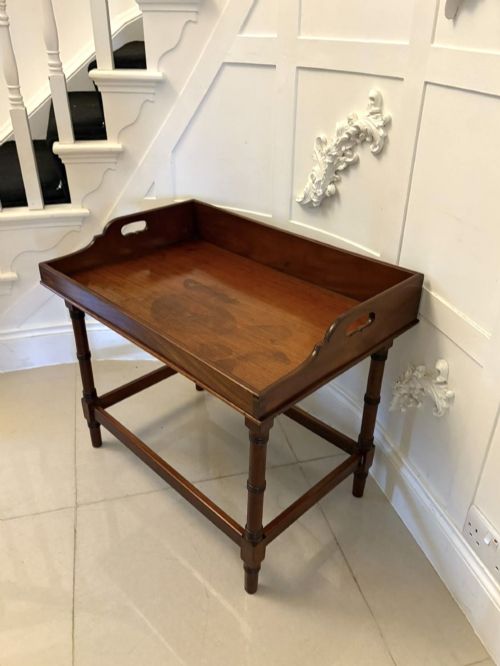
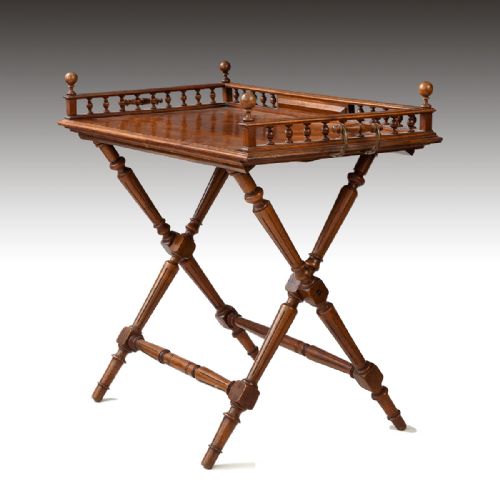
- A table surface finished with a raised gallery border to prevent items from sliding off during service. This edge can be shaped, pierced, or fitted with carrying handles.
- Butler's Tray
- A removable wooden tray, often featuring hinged or shaped flaps, designed to sit upon a folding X-frame stand. It originated for domestic service and portability.
- Campaign Style
- Portable furniture constructed for travel, typically featuring folding stands, recessed brass hardware, and durable timbers. It prioritised practicality without sacrificing finish.
- Marquetry
- The art of applying pieces of veneer to a structure to form decorative patterns or pictures. Craftsmen utilised various woods to create contrasting tonal designs.
- Étagère
- A piece of furniture consisting of open shelves for displaying small objects or serving. These tiered tables appeared in various woods and styles during the nineteenth and early twentieth centuries.
Side Tray Table: Frequently Asked Questions
What is a side tray table used for?
These pieces served originally for holding tea, spirits, or serving items before transitioning to general domestic use as lamp tables or bedside stands.
Today they function flexibly in living spaces as mobile serving surfaces or compact lamp tables beside seating.
Are these tables sturdy enough for daily use?
Most examples utilise robust hardwoods like mahogany or oak combined with traditional joinery, ensuring lasting structural integrity.
Folding campaign stands require correct alignment of their cross-frames to maintain stability during handling.
How do I date an antique tray table?
Stylistic clues such as Georgian bracket feet, Edwardian marquetry inlay, or Victorian turned legs help narrow the period of manufacture.
Construction details, including timber choice and hand-cut joinery, provide further confirmation of the era.