


Traditional Butler Stand
These traditional butler stand pieces are practical folding tray tables valued for their clever portable design and warm timber construction.
Traditional Butler Stand
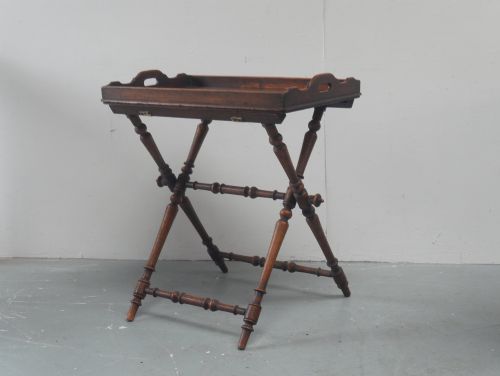
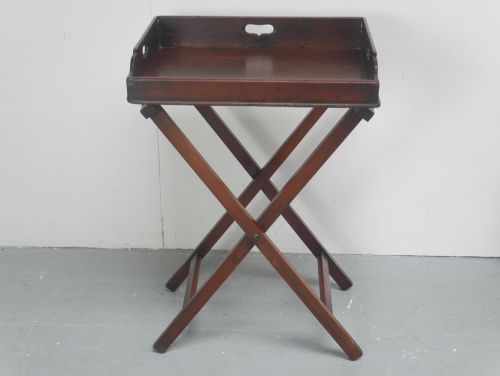
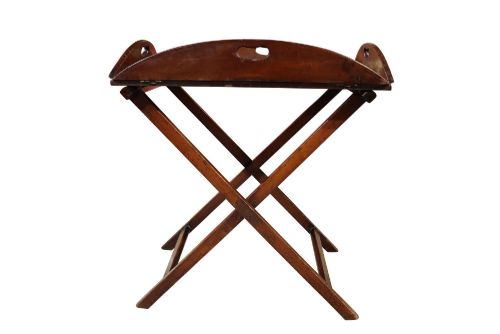
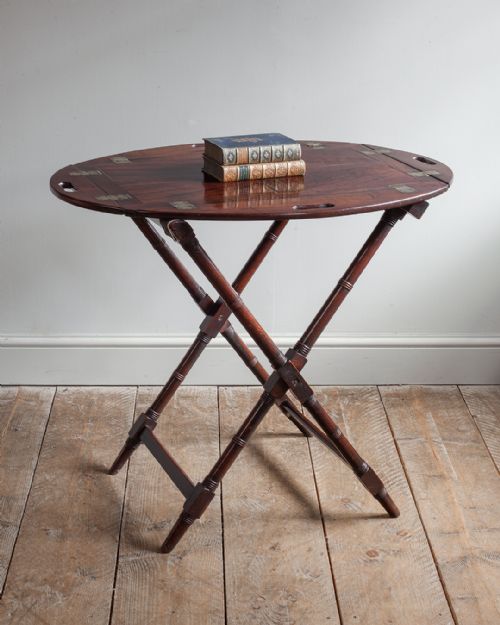
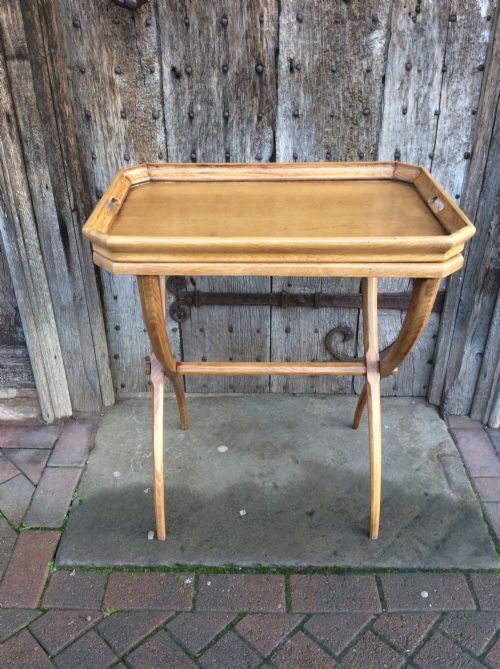
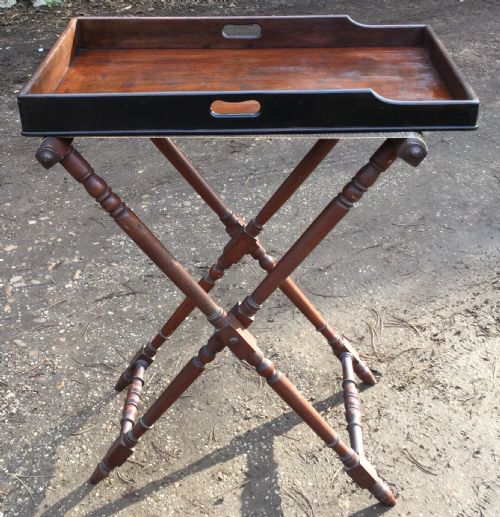
A traditional butler stand combines a detachable rectangular or oval tray with a collapsible folding wooden base, designed originally for domestic service in large houses. The form allows the tray to be lifted off for serving and the stand to be stowed away when not required.
Most examples encountered here date from the nineteenth century, including Georgian and Victorian periods, alongside Edwardian and early twentieth-century interpretations. Mahogany and oak dominate the selection, often accompanied by folding X-frame supports or simple cross-leg stands.
Makers produced these pieces as flexible occasional furniture, and modern buyers utilise them as side tables or coffee tables. The survival of both the original tray and its matching stand together remains a key consideration for collectors.
Construction and materials
Cabinetmakers built the trays from dense hardwoods such as mahogany and oak, frequently incorporating shaped galleries with hand-cut carrying handles to secure items during transit. The timber grain was selected for durability and finished to highlight natural warmth.
Stands were engineered with folding hinges, pivots, or canvas and cotton webbing to ensure stability when open and compactness when folded flat. Joinery relied on traditional methods to withstand the repeated stress of opening and closing.
The listings span the eighteenth, nineteenth, and early twentieth centuries, featuring both mahogany and oak alongside canvas and cotton webbing.
Assessing quality and proportion
Quality rests upon the crispness of the timber carving, the integrity of the folding mechanism, and whether the tray and stand retain their original pairing. Superior examples display refined proportions in the gallery rim and tight joinery on the base.
Later adaptations or mismatched components alter the historical cohesion of the piece. Fine patination on the wood surfaces distinguishes pieces that have aged naturally through domestic use from those with heavy modern intervention.
The Traditional Butler Stand Glossary
- Butler's Tray
- A portable wooden tray featuring a raised gallery edge and integrated cut-out handles for lifting. It lifts off its base independently.
- Folding Stand
- A collapsible X-frame or cross-leg support designed to hold a tray at serving height. It folds flat for storage.
- Gallery
- The raised rim surrounding the edge of a tray to prevent items from sliding off during transport. It is often shaped or pierced with hand grips.
- Webbing
- Strong fabric strips, such as canvas or cotton, used on folding stands to support the tray base or hinge the frame components. It provides flexible tension.
Traditional Butler Stand: Frequently Asked Questions
What is a traditional butler stand?
A traditional butler stand is a piece of antique furniture consisting of a removable wooden tray resting on a collapsible folding base. Originally used in grand households for serving drinks or meals, it functions today as a versatile side or coffee table.
The design allows the entire unit to be packed away easily when floor space is required. Most surviving examples date from the Georgian, Victorian, and Edwardian eras.
How do I know if the tray and stand belong together?
Checking whether a tray and stand belong together involves examining the timber species, wear patterns, and fit. The resting ledges of the stand should match the underside footprint of the tray precisely.
Consistent age, colour, and patination across both components suggest they have remained a matched pair since manufacture rather than being assembled from separate items.
Are these stands sturdy enough for daily use?
These folding stands are engineered to support weight securely when fully opened and locked into position. The sturdy oak or mahogany frames handle everyday items like books, lamps, and cups with ease.
Care should be taken when moving the assembled table, lifting it by the frame rather than relying solely on the tray sides if loaded with heavy objects.
How do I care for antique mahogany and oak?
Maintaining antique timber requires keeping pieces away from direct heat sources and sudden humidity changes to prevent wood movement. Regular dusting with a dry lint-free cloth preserves the surface.
Occasional application of traditional wax feeds the wood and maintains its natural lustre without building up heavy chemical residues that dull the grain.