

Georgian Mahogany Butler Tray
A georgian mahogany butler tray provides a portable serving surface that transforms easily into a compact table.
Georgian Mahogany Butler Tray
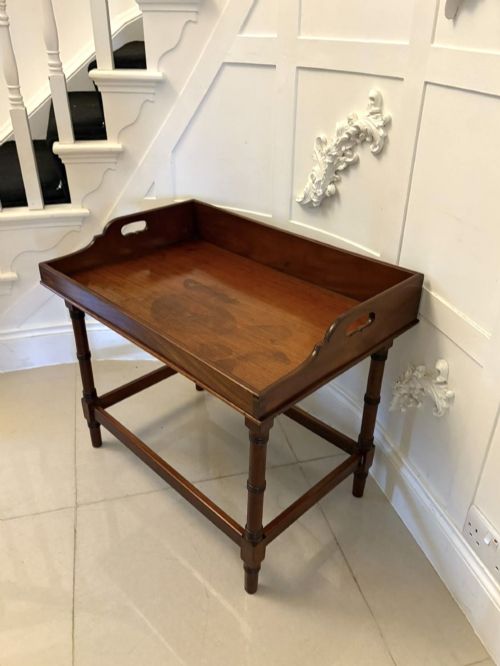
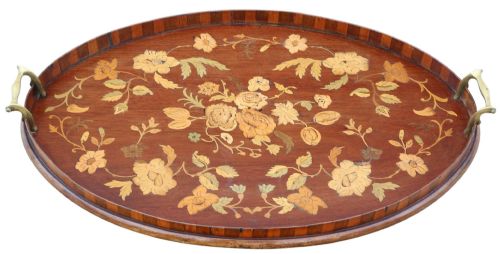
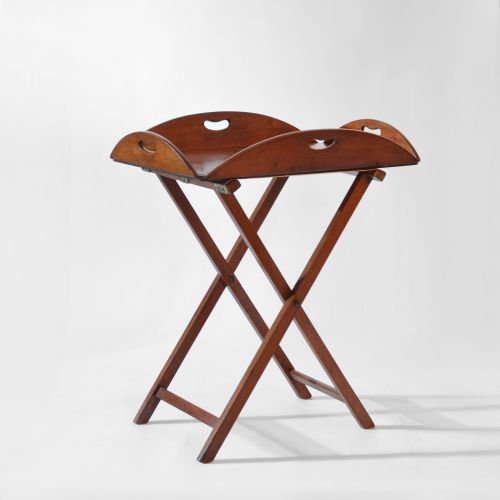
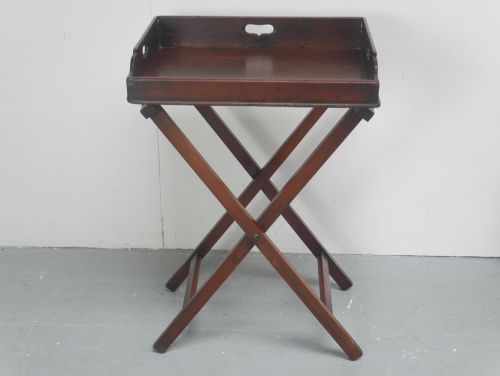
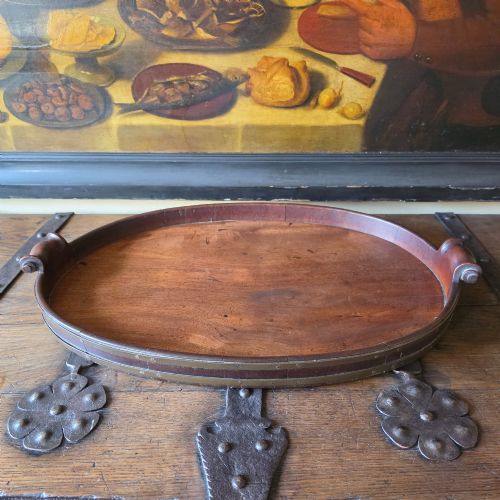
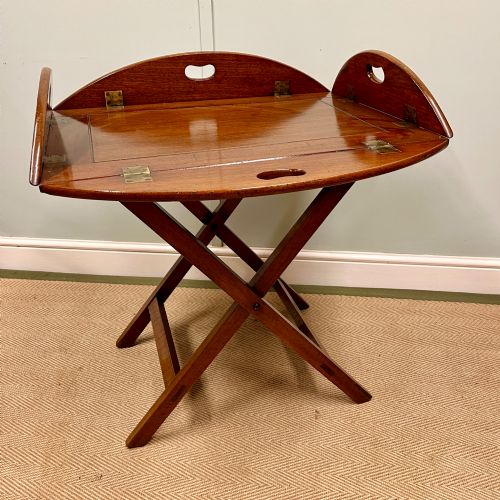
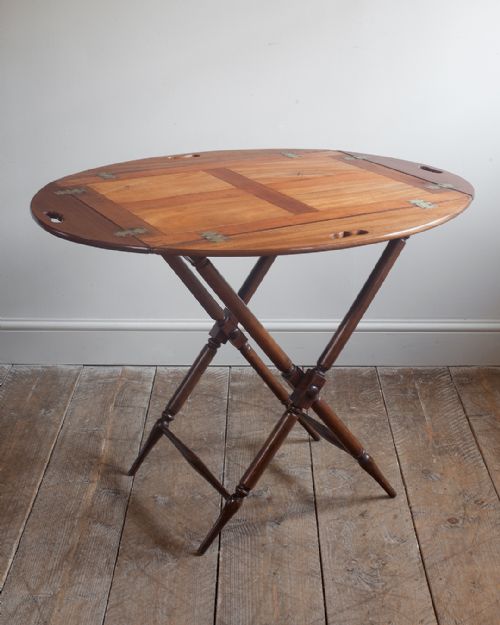
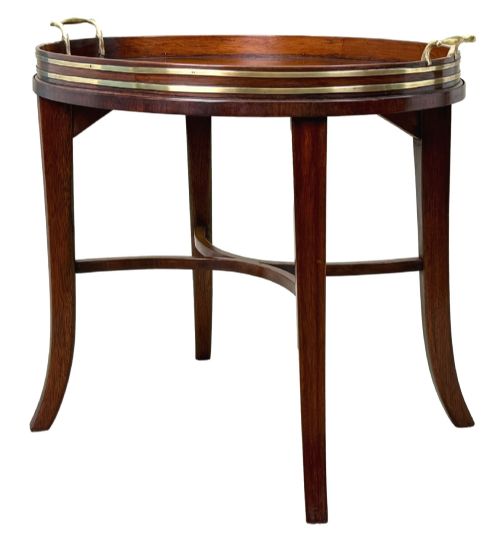
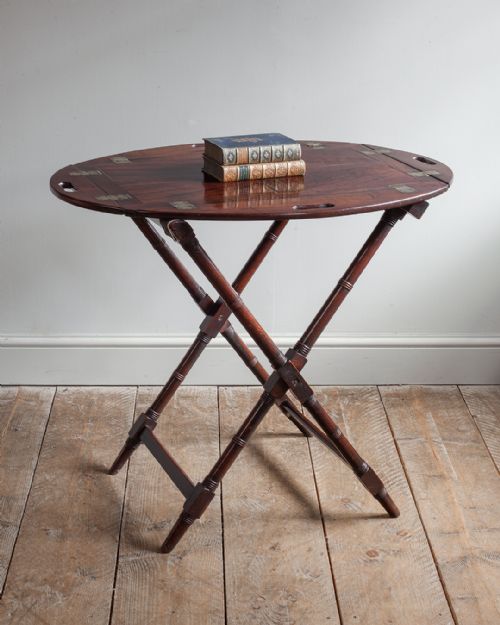
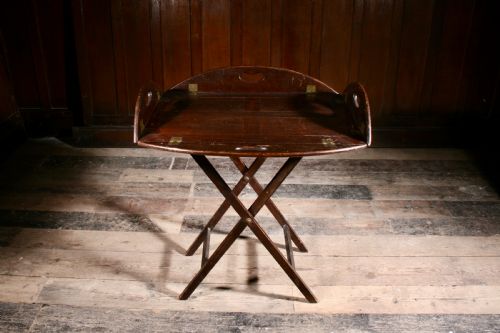
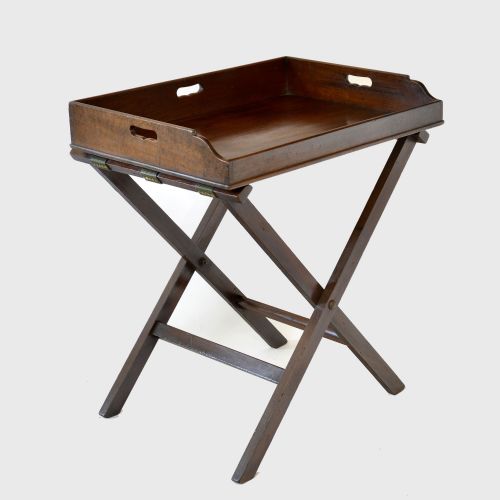
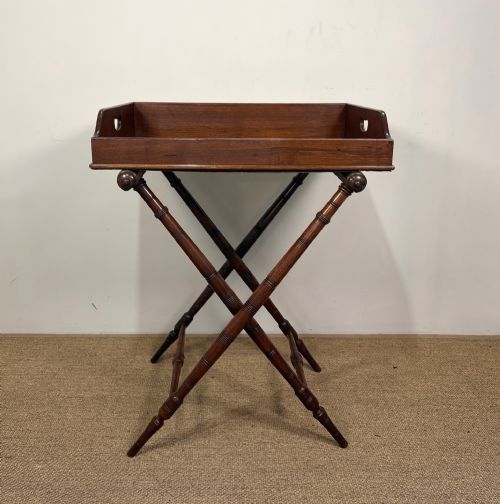
A georgian mahogany butler tray takes the form of a flat or galleried wooden tray designed to lift off a folding or fixed wooden stand. These pieces appear frequently as oval or rectangular serving boards, often resting on X-frame stands intended for easy storage and transport around the home.
The versions most commonly met on this page date from the eighteenth and nineteenth centuries, spanning the Georgian, Regency and Victorian periods. Makers produced these trays for domestic service, allowing staff to carry food and drinks from kitchens to living rooms before setting the tray upon a support to serve guests.
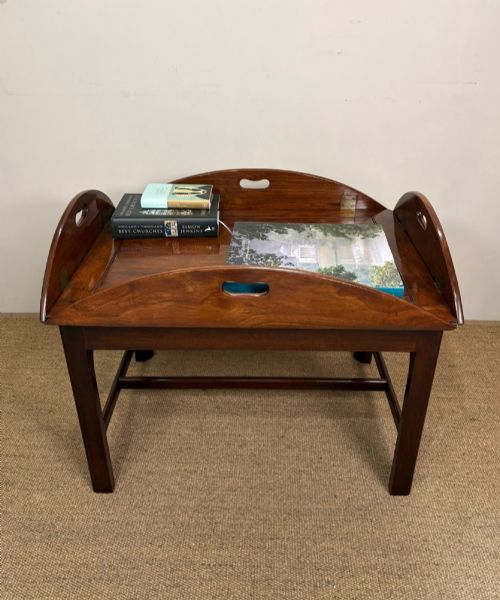
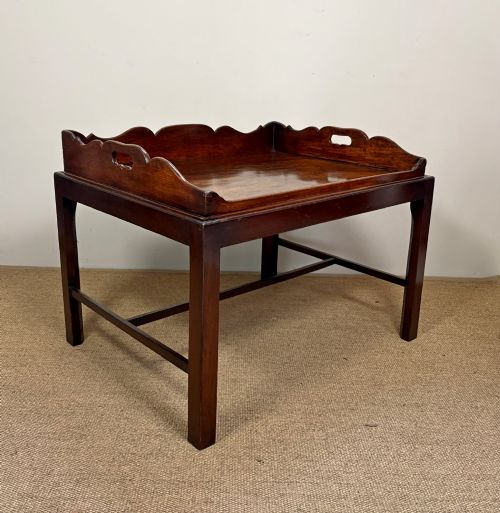
Beyond traditional serving pieces, surviving examples function as occasional tables, coffee tables and lamp tables. Many retain their original stands, while others appear as standalone trays or later adaptations fitted to modern heights.
How They Were Made
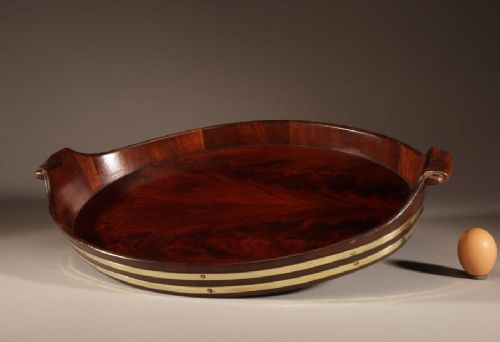
Cabinet makers constructed these trays primarily from solid mahogany and dense Cuban mahogany, occasionally incorporating contrasting timbers such as satinwood and walnut for decorative inlay or marquetry borders. Workshops often selected figured grain patterns for the central surface to create visual depth.
Construction techniques included dovetailed joints, coopered edges and applied galleries pierced with handholds for lifting. Metal elements such as brass bound decoration, hinges and carrying handles added durability to edges and corners subjected to heavy daily use.
Keep an eye out for the occasional cheese truckle, proving that Georgian butlers took their post-dinner Stilton just as seriously as their tea.
What Varies in Quality
Quality rests upon the selection of timber and the crispness of the carpentry, distinguishing standard utility items from finer domestic furnishings. Trays featuring figured Cuban mahogany, detailed marquetry inlay or precise brass bound decoration demonstrate superior craftsmanship compared to plain utility boards.
The relationship between the tray and its support also defines the standard of the piece. Examples retaining their original folding stands show better harmony in design and proportion than trays later paired with mismatched or replacement bases.
The Georgian Mahogany Butler Tray Glossary
- Butler tray
- A portable wooden tray with raised sides or handles, designed to lift off a supporting stand for serving food and drinks. These objects became essential domestic furnishings during the Georgian period.
- Stand
- A folding or fixed wooden frame designed to hold a serving tray at table height. Most stands utilise an X-frame or gateleg design for compact storage.
- Gallery
- A raised wooden border fitted around the perimeter of a tray to prevent items from sliding off during transport. Makers often shaped these edges with pierced handholds.
- Coopered
- A construction method utilising curved wooden staves joined together edge-to-edge, commonly seen on round or oval trays with solid walls. This technique mirrors barrel-making traditions.
- Inlay
- A decorative technique where contrasting woods like satinwood are inserted into recesses cut into the mahogany surface. This creates geometric or floral patterns across the tray.
Georgian Mahogany Butler Tray: Frequently Asked Questions
How were butler trays originally used?
Servants used these trays to carry heavy tea services, meals and drinks from the kitchen to the drawing room. Once the destination was reached, the tray was placed upon a folding stand to serve as an impromptu table.
After serving, the tray could be lifted off and the stand folded away to save space in busy domestic quarters.
Are original stands common?
Many surviving trays retain their original folding or fixed stands, particularly those dating from the eighteenth century. However, numerous trays survived across the generations separated from their original bases.
Finding a tray on its matching period stand remains a desirable feature for collectors seeking complete items.
Can I use one as a coffee table?
These trays adapt naturally to modern living spaces as low coffee tables or lamp tables. Their manageable proportions and raised borders make them practical surfaces for everyday use in sitting rooms.
Height variations do occur, as some stands sit lower than standard modern table heights due to their original service function.
How do I distinguish Georgian from later pieces?
Georgian pieces display hand-cut joinery, dense timber weight and period construction methods such as pegged joints and early brass hardware. Later nineteenth-century iterations and twentieth-century revivals often show machine-cut elements and standardised fittings.
Examining the underside and the wear patterns around the handholds offers clear clues to the age of the wood.