


Folding Tray Stand
When you search for a folding tray stand, you are looking at portable serving furniture designed to lift meals or drinks from the floor to table height.
Folding Tray Stand
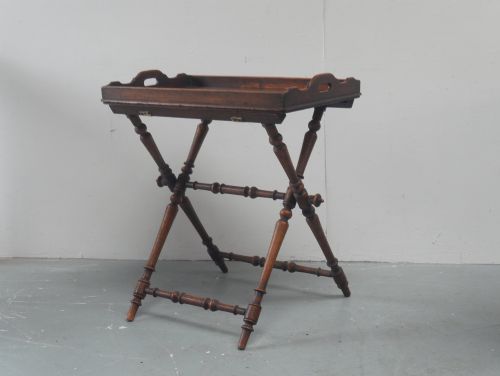
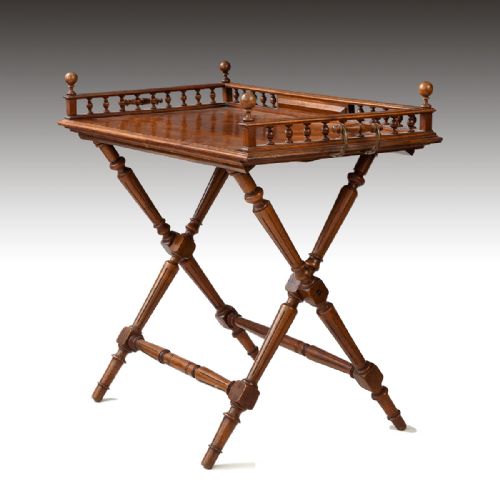
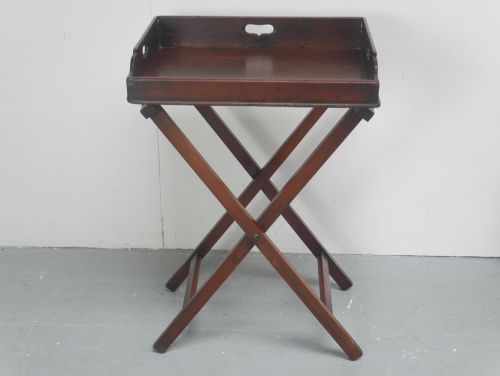
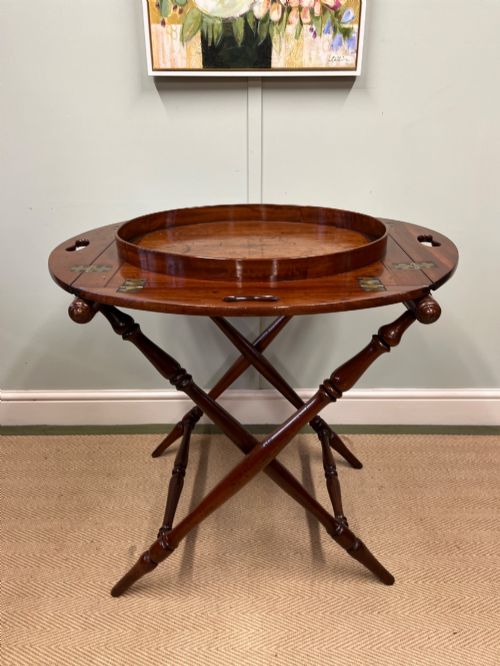
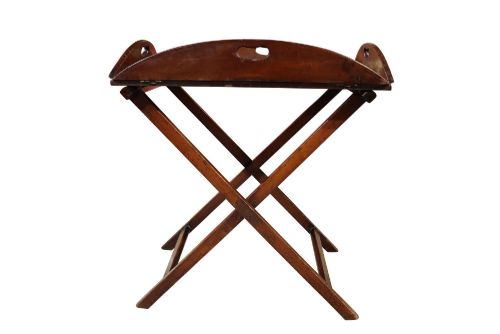
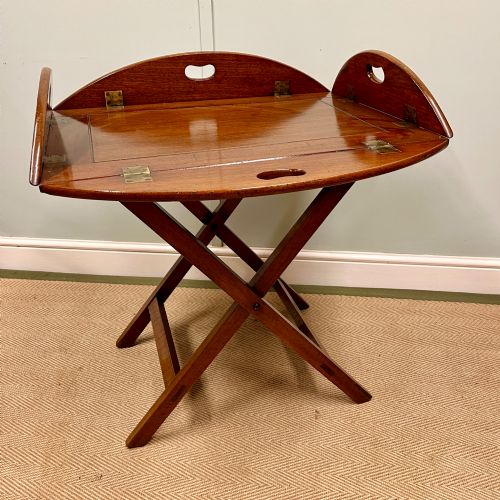
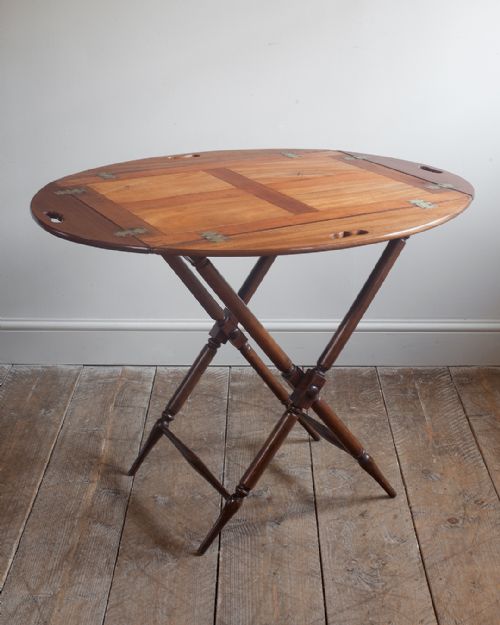
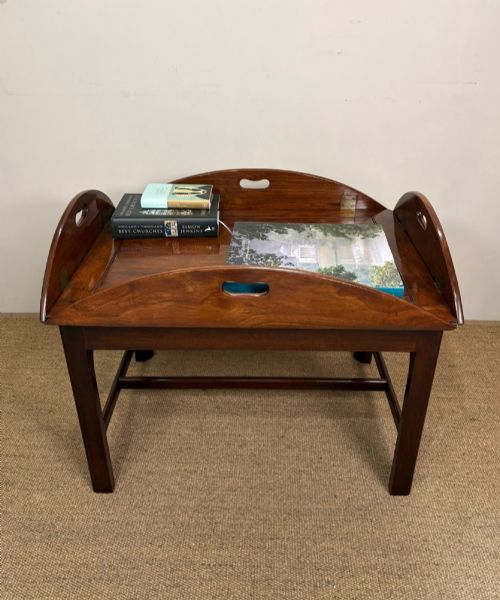
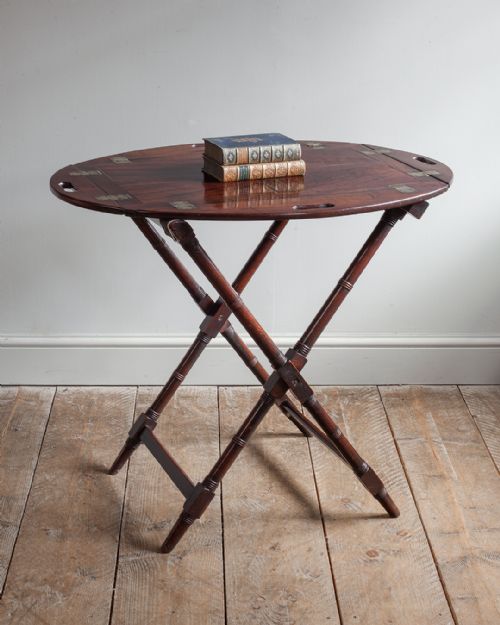
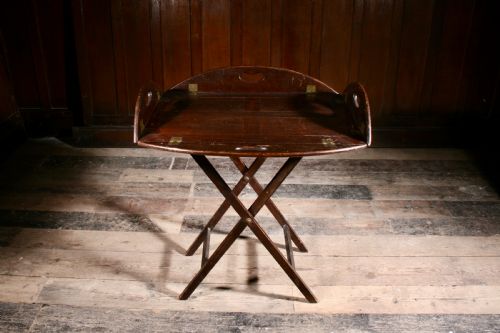
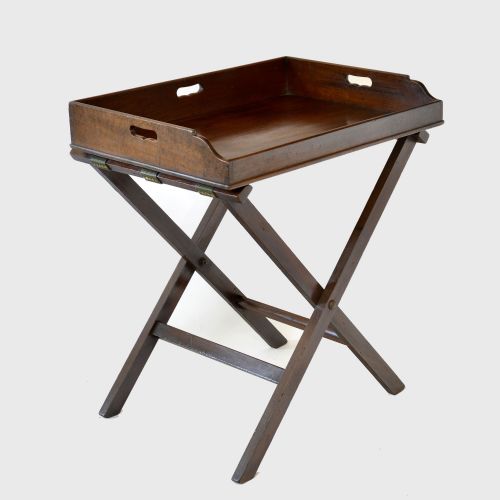
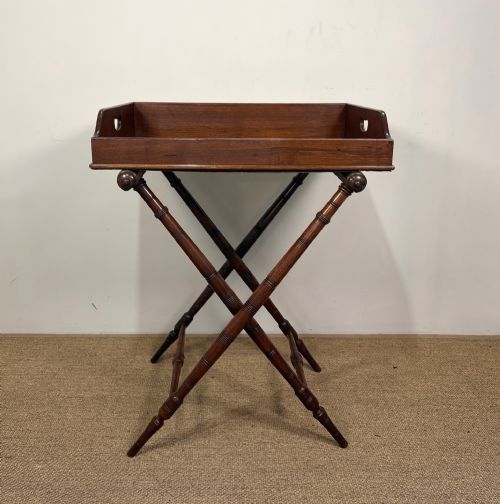
A folding tray stand pairs a removable, often galleried serving tray with a collapsible X-frame base designed for easy storage when not in use. You will most frequently encounter mahogany examples dating from the Georgian and Victorian periods, alongside Edwardian variations.
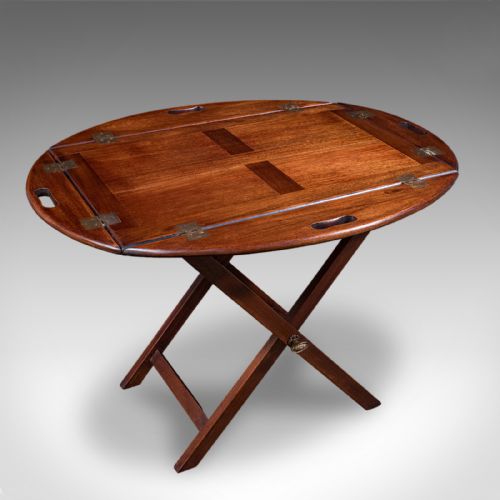
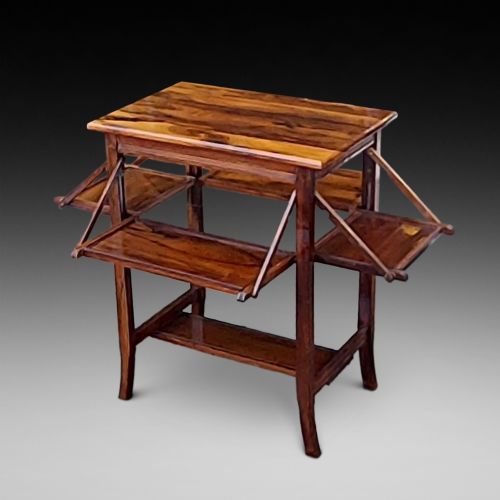
The form spans straightforward domestic serving pieces in oak and pine to more decorative styles in rosewood, walnut, and exotic hardwoods. Many feature hinged or drop-flaps that allowed staff to carry provisions from the kitchens before mounting the tray upon its support.
Beyond standard British dining accessories, the category includes international variants featuring engraved brass or copper tops paired with folding wooden or metal bases. These diverse forms share a primary purpose of versatile, movable surface space within the home.
Materials and construction
Cabinet makers relied heavily on dense timbers such as mahogany, oak, and walnut to ensure the tray could bear the weight of heavy silver and ceramic service without sagging. These woods were frequently polished or carved, showing fine grain patterns that remain visible today.
The supporting frames utilise clever pivoting joints, sometimes secured with cotton webbing or brass hinges, allowing the legs to scissor shut smoothly. Original matching stands often feature turned wooden legs or simple cross-stretchers designed to lock securely into position when opened.
The selection includes formal Georgian dining accessories, ornate Anglo-Indian brass tray tables, and practical Victorian campaign-style serving pieces.
Distinctions in quality
Quality rests significantly on the selection of timber and the crispness of any hand-carving or brass inlay present on the tray surface. Superior pieces exhibit tight, figured grain matching between the tray and its original stand, rather than being later married combinations.
The integrity of the folding mechanism dictates much of the value, with finer stands showing robust, well-fitted pivot joints that operate without lateral wobble. Dovetailed tray corners and integrated carrying handles carved directly from the solid timber rather than applied separately denote superior workshop production.
The Folding Tray Stand Glossary
- Butler's tray
- A large portable tray, traditionally rectangular or oval, featuring raised sides or gallery edges with hand-cut apertures for lifting. They were carried by domestic staff and placed onto a separate folding stand for serving.
- Gallery
- A raised wooden or metal border running around the perimeter of a tray to prevent items from sliding off during transport. They are often pierced with handgrips or shaped with decorative cut-outs.
- X-frame
- A folding cross-leg base that operates on a scissor mechanism, allowing the stand to collapse flat for storage. This clever engineering is central to the portability of campaign and serving furniture.
- Drop-flap
- A hinged section on the side of a tray that can be lowered to ease loading or raised and secured to contain larger items. These flaps frequently utilise subtle brass hinges embedded flush into the timber.
- Papier-mâché
- A durable composite material made from paper pulp mixed with glue and dark lacquer, often gilded or painted. In this category, it forms decorative serving surfaces mounted onto folding stands.
Folding Tray Stand: Frequently Asked Questions
Are folding tray stands sturdy enough for daily use?
These pieces were originally built to carry heavy silver and ceramic tableware, making them remarkably robust for modern living. Their collapsible frames handle regular movement with ease.
To protect the antique joints, lift the piece by the tray base rather than the gallery edges when shifting it across rooms.
How do I know if the tray and stand are original to each other?
Matching sets typically share identical timber species, wear patterns, and age characteristics across both components. Look closely at how the tray rests on the frame to check for harmonious fit.
Many examples found today were paired together later in their lives, though period-appropriate marriages remain entirely usable and collectable.
Can I use a folding tray stand as a coffee table?
Their low profile and removable top make them ideal for positioning beside sofas or armchairs as flexible coffee tables. The surface height mirrors standard occasional furniture.
Using coasters will protect the polished antique wood finishes from water rings left by modern hot drinks.
How do I distinguish a Georgian tray from a Victorian one?
Georgian versions tend to display restrained elegance with solid mahogany construction and subtle cut-out handles, dating from the eighteenth or early nineteenth century. Victorian iterations often incorporate heavier carving, darker walnut timbers, or Gothic revival motifs.
Examining the underside for tool marks and screw types helps confirm the manufacturing era.