


18th Century Tray Table
An 18th century tray table offers raised edges and solid timber construction, serving practical domestic uses with classic Georgian proportion.
18th Century Tray Table
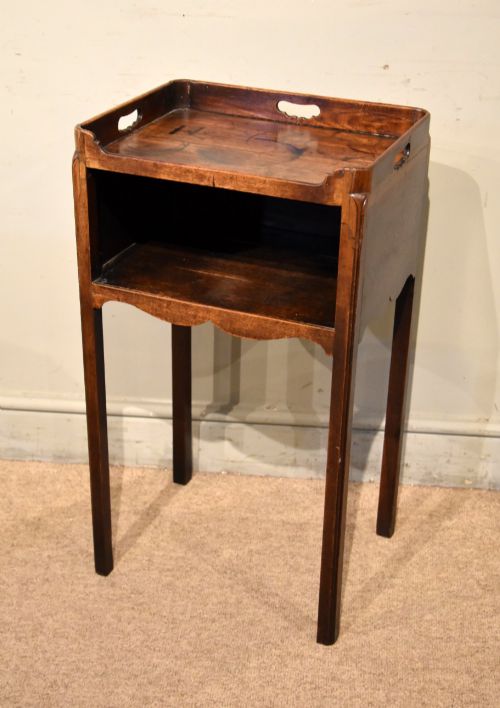
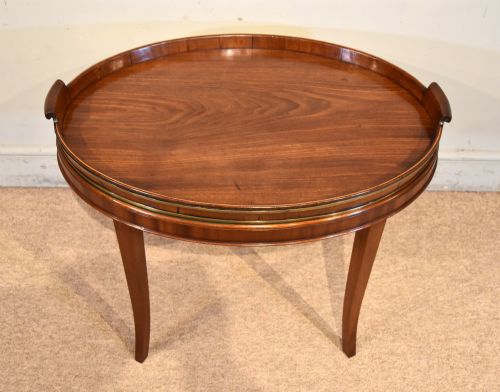
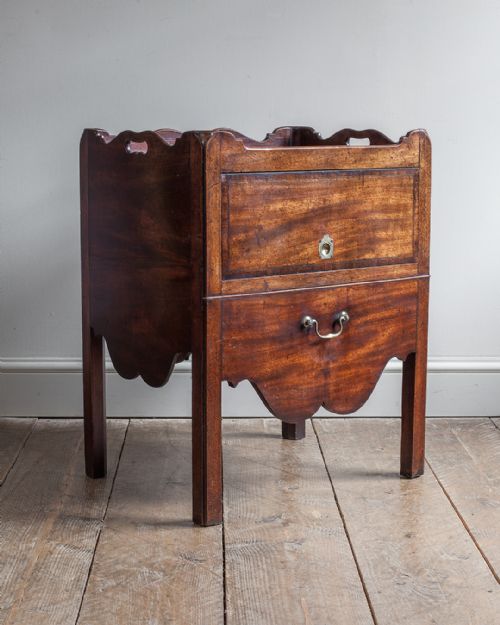
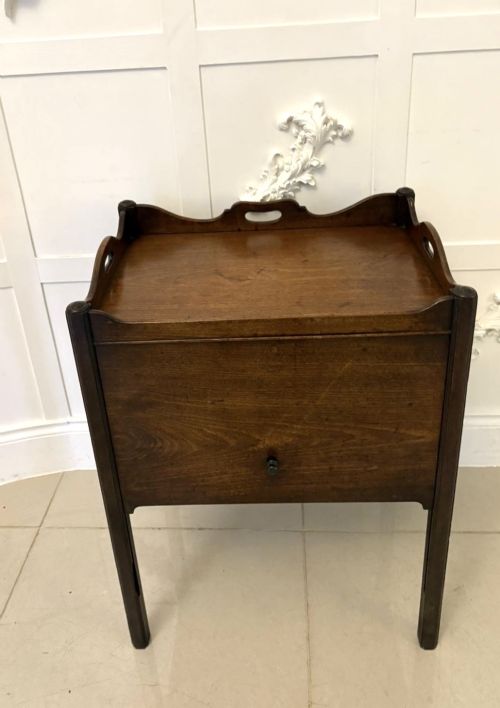
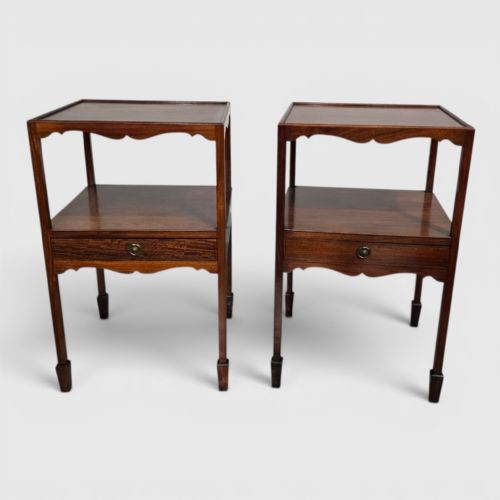
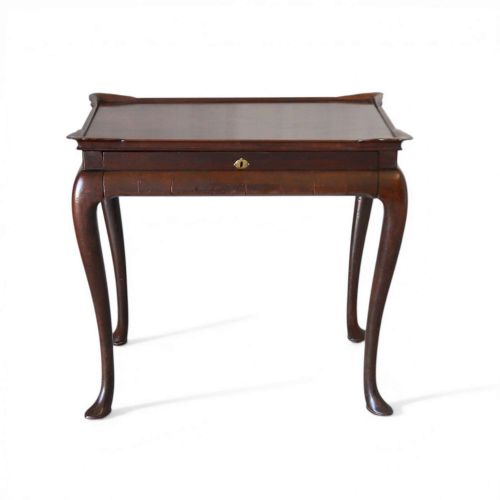
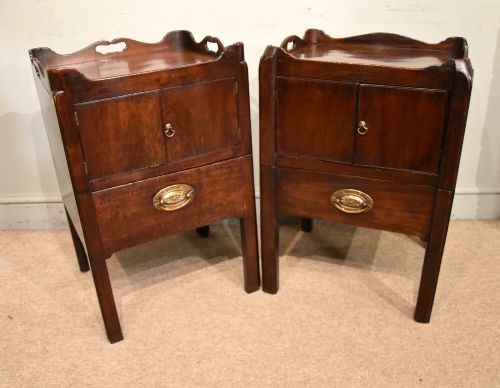
An 18th century tray table typically manifests as a bedside cabinet, nightstand, or occasional silver table designed with a raised moulded edge to secure items. These pieces span Georgian, George II, and George III eras, frequently appearing in forms like tripod wine tables, commodes, and butler's trays on stands.
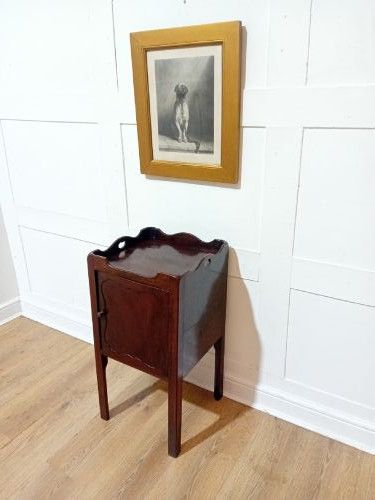
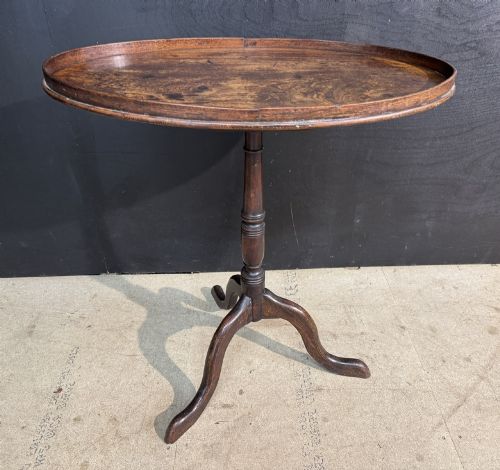
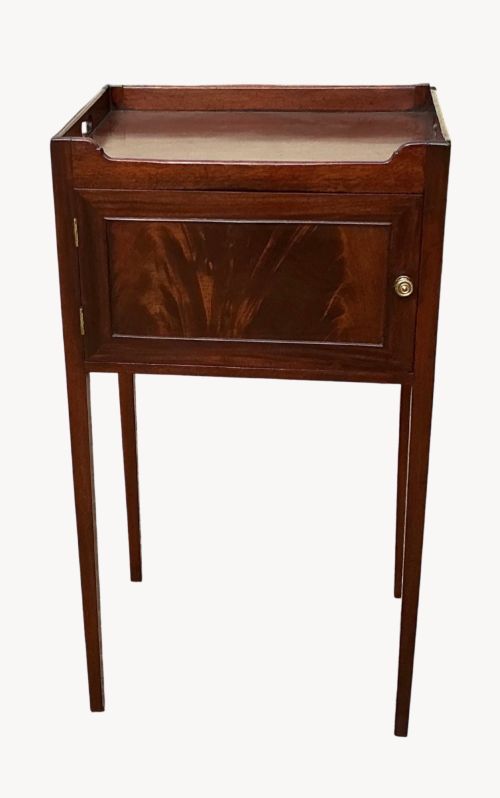
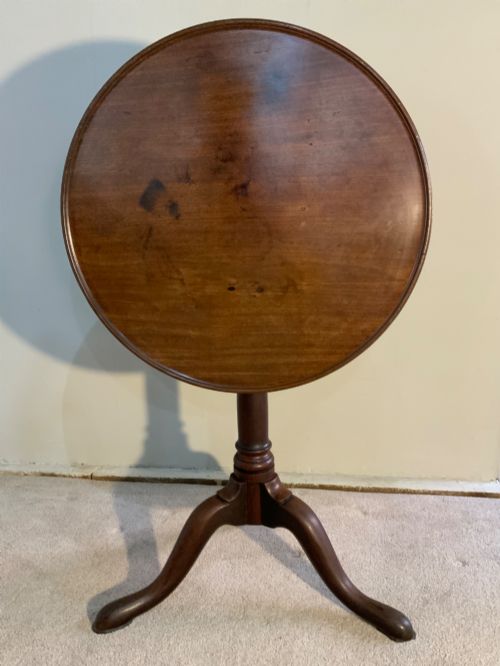
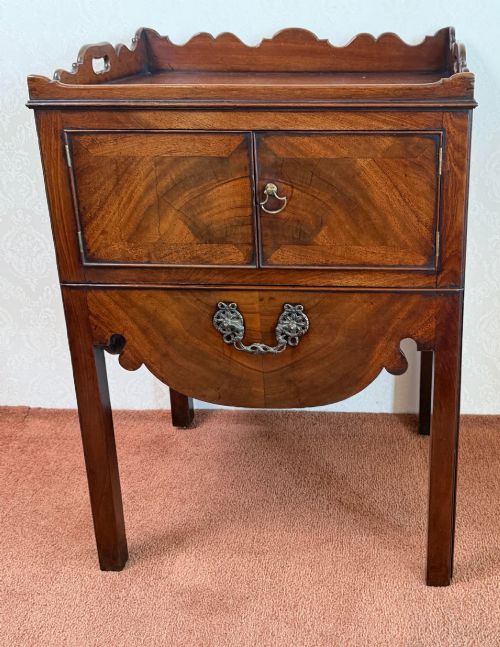
The version most commonly met on this page is the mahogany bedside cupboard or commode featuring a tray top, alongside tripod lamp tables and occasional tables. Walnut and fruitwood variants also emerge, alongside occasional Dutch marquetry and French models.
Materials and construction
Cabinetmakers constructed these tables primarily from solid mahogany and Cuban mahogany, sometimes employing walnut, fruitwood, and boxwood inlay for decorative contrast. Timber selection dictated both the structural integrity and the richness of the finished surface.
Joinery techniques included traditional cabinet construction, cabriole legs on earlier silver tables, and raised tray edges fashioned directly from the solid wood or applied with mitred mouldings. Tambour fronts and tilt mechanisms added mechanical function to fixed and folding stands.
18th Century Tray Table Retail Price Guide 2026
Typical asking prices for 18th century tray table among the pieces listed under this phrase on Sellingantiques today, from the lower quarter to the upper quarter. They describe what is for sale here now, not the wider market.
One recorded piece began life as an 18th century Chinoiserie panel before finding new purpose as a tray table.
Quality differences
The standard of timber grain and the crispness of carved details, such as those found on Chippendale period or George III pieces, separate standard utilitarian items from finer examples. Superior execution shows in the precision of boxwood inlay and the proportion of cabriole legs.
Originality of the tray top surface relative to its base, along with period-appropriate brass hardware and uncompromised structural joinery, determines the standing of a piece within its historical category.
The 18th Century Tray Table Glossary
- Tray top
- A table surface finished with a raised moulded rim designed to prevent objects from sliding off. This feature appears frequently on bedside commodes and silver tables.
- Commode
- A low enclosed cabinet with doors or drawers, often functioning as a bedside night table in Georgian interiors. Many examples incorporate a gallery or tray top.
- Tripod table
- A small occasional table supported by a pillar above three splayed legs. These frequently feature tilt-top mechanisms for compact storage.
- Marquetry
- Decorative veneer work arranged in pictorial patterns using contrasting woods like boxwood. It appears on Dutch Rococo and continental pieces.
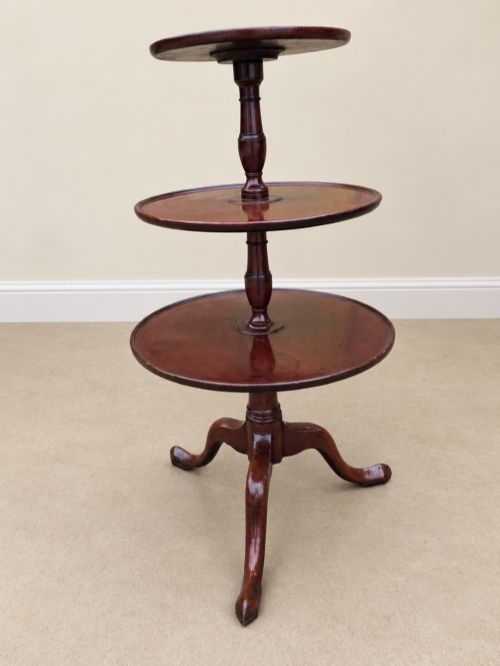
- Dumb waiter
- A tiered serving table fitted with revolving or fixed circular trays. It allowed diners to access tableware without domestic staff present.
18th Century Tray Table: Frequently Asked Questions
What is an 18th century tray table used for?
These pieces served practical domestic functions ranging from bedside storage to holding silver tea services and presentation items. Their raised edges made them secure surfaces for holding lamps, decanters, or tableware.
Today, buyers utilise them as lamp tables, bedside cabinets, or occasional stands in living spaces and bedrooms. Their compact scale suits modern room layouts while retaining period character.
How do I tell a George II table from a George III table?
George II pieces often display earlier characteristics such as cabriole legs and heavier proportions, particularly on silver tables and tripod bases. Mahogany remained the primary timber, sometimes complemented by rich carving.
George III examples tend to show lighter rectilinear proportions, straighter legs, and refined detailing such as boxwood inlay or Chippendale-influenced frets. Tray top commodes and bedside cupboards became particularly refined during this later reign.
Are butler's trays original to the 18th century?
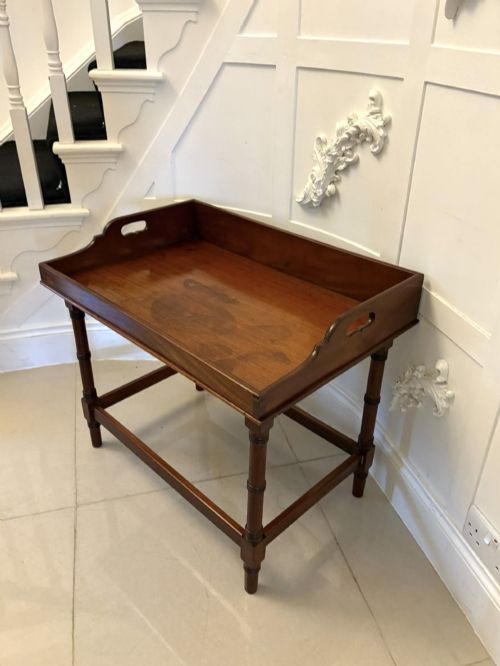
Yes, evidence records 18th century butler's trays constructed as removable serving trays paired with folding X-frame or four-legged stands. They were lifted off to transport items between rooms.
Many surviving pieces maintain this dual construction of a detachable tray resting upon a coordinated wooden stand. Mahogany is the predominant timber recorded for these forms.
What is a silver table?
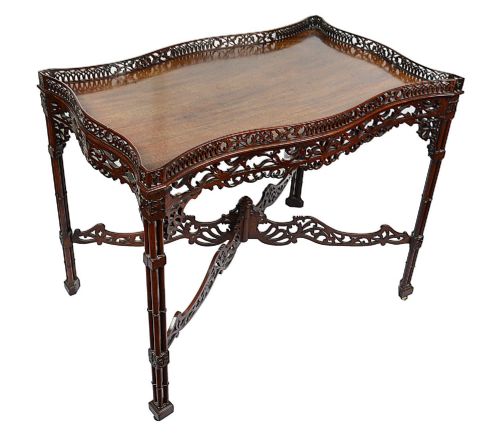
A silver table is an occasional or display table designed specifically to hold tea services, silver presentation pieces, or porcelain. Early examples often feature raised tray tops and elaborate cabriole legs.
These central standing tables served a decorative and functional purpose in formal reception rooms. They showcase some of the finest cabinetmaking techniques of the Georgian period.