





Georgian Butler Tray Table
A georgian butler tray table is a portable serving surface paired with a folding base, prized for versatile entertaining.
Georgian Butler Tray Table
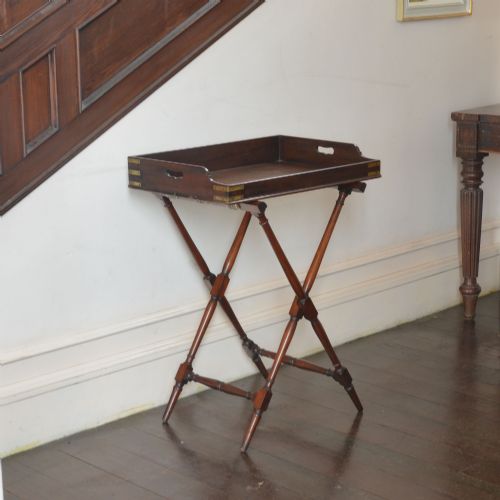
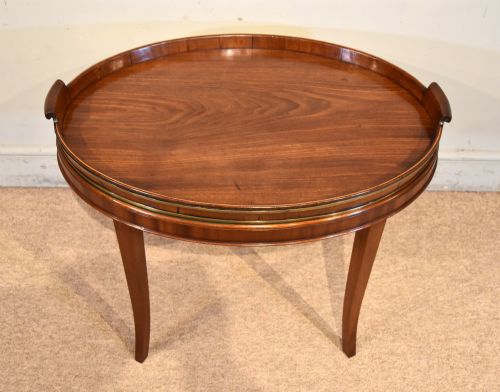
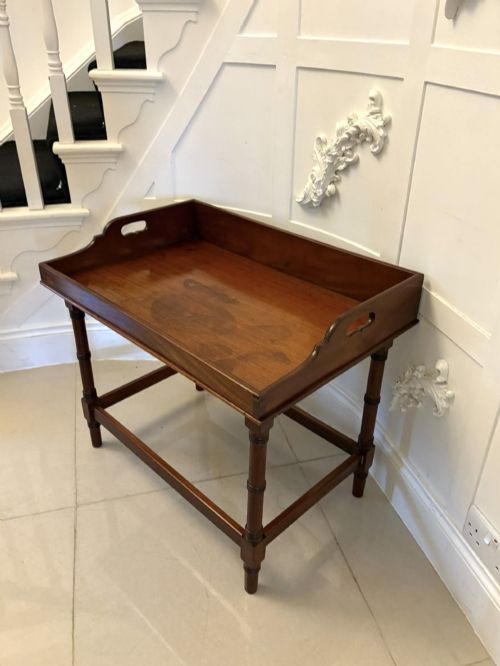
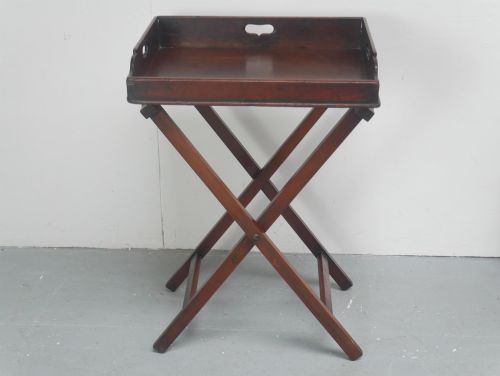
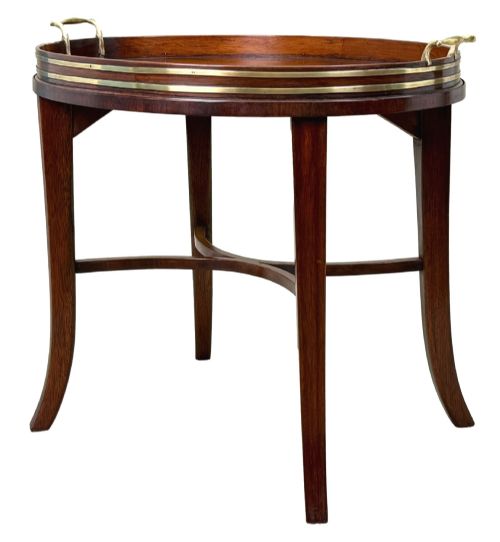
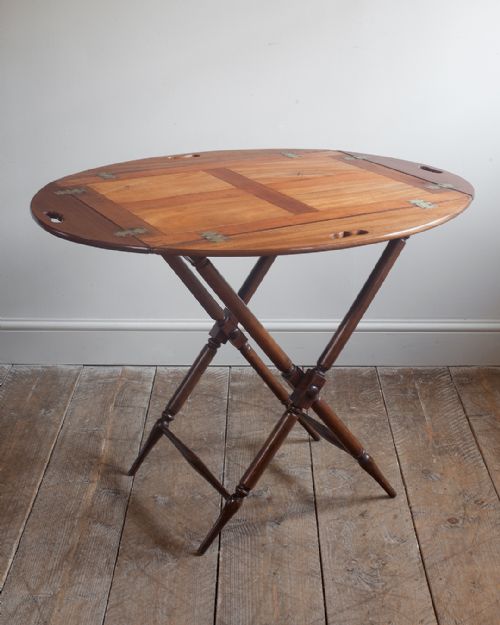
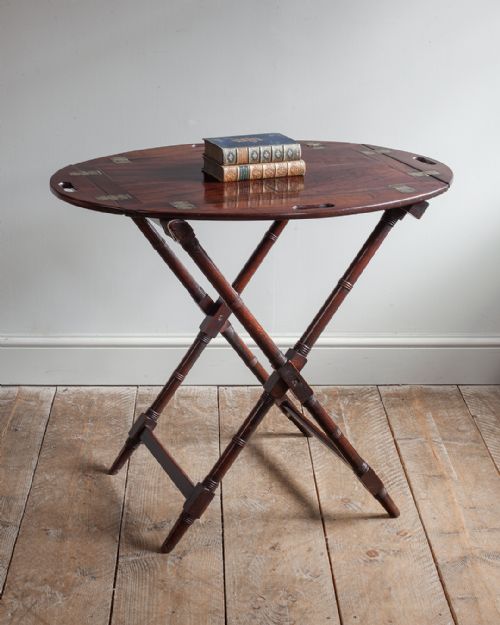
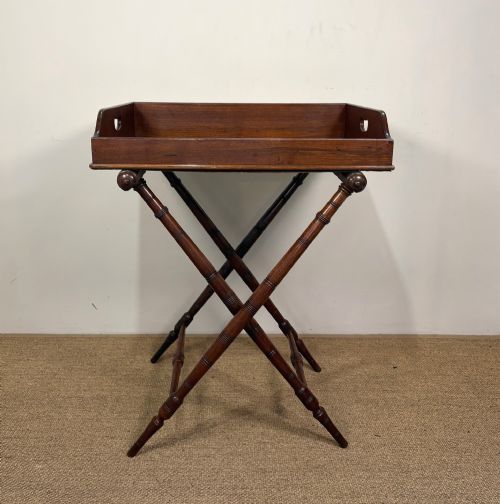
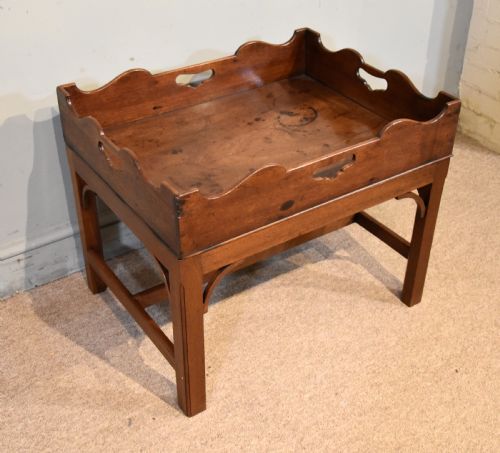
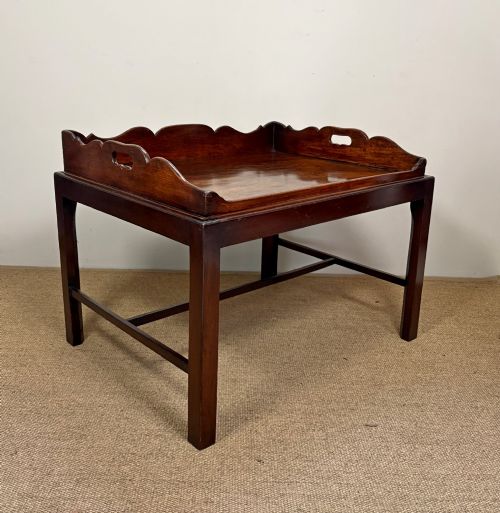
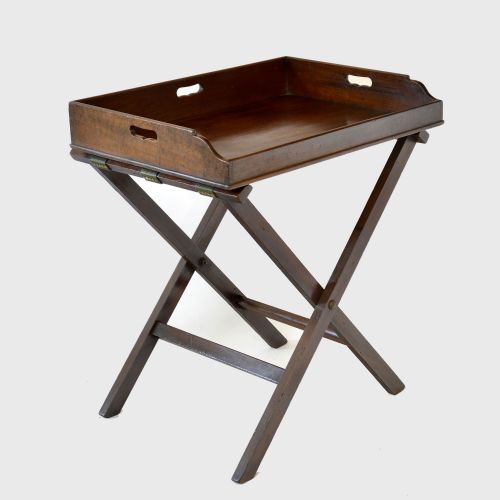
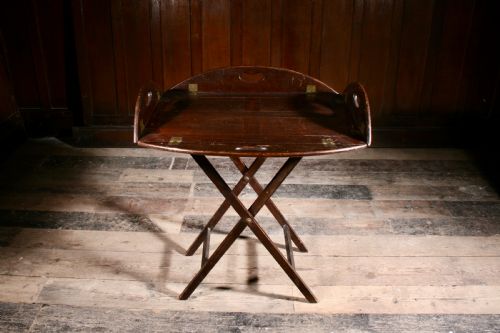
A georgian butler tray table combines a removable wooden tray with a collapsible or fixed stand, designed originally for carrying and serving refreshments in period homes. These pieces appear frequently as oval or rectangular trays featuring raised sides or pierced carrying handles, resting upon X-frame folding stands or four-legged bases.
Buyers meet examples spanning from the eighteenth century through the nineteenth century, alongside later revivals from the Edwardian era. The form also adapts readily into low coffee tables or occasional lamp tables within contemporary interiors.
How They Were Made
Makers constructed these tables predominantly from solid mahogany and dense Cuban mahogany, occasionally incorporating decorative satinwood veneers and marquetry details. Brass bound decoration, hinges, and corner brackets provided structural reinforcement and contrast against the dark timber.
Stands utilised folding timber frames, sometimes supported by fabric webbing or canvas webbing to secure the base when open. Trays frequently employed galleried edges fashioned from shaped timber or integrated hand cut apertures for lifting.
Georgian Butler Tray Table Retail Price Guide 2026
Typical asking prices for georgian butler tray table among the pieces listed under this phrase on Sellingantiques today, from the lower quarter to the upper quarter. They describe what is for sale here now, not the wider market.
Some trays double as cheese truckles, proving that earlier generations took post-dinner dairy very seriously indeed.
What Varies in Quality
The distinction between standard examples and superior pieces rests in the selection of timber grain, particularly the depth and figuring found in Cuban mahogany boards. Crispness in the joinery of the tray gallery and the precision of brass bound mounts indicate higher craftsmanship.
Original stands matching the exact period of the tray elevate an object above marriage pieces where an older tray is paired with a later base. Subtle details such as inlaid stringing, bone escutcheons, or stamped maker signatures further define the upper tier.
Gillows
The Georgian Butler Tray Table Glossary
- Butler tray
- A portable wooden tray with hinged or fixed raised sides designed for serving food and drink. It lifts easily off its supporting stand for separate use.
- Stand
- The folding or rigid wooden base that holds the tray at table height. Many feature X-frame designs for compact storage.
- Cuban mahogany
- A dense, richly figured tropical timber prized for furniture during the eighteenth and early nineteenth centuries. It yields deep patination and exceptional durability.
- Gallery
- A raised wooden border running around the perimeter of the tray to prevent items from sliding off. These can be solid, pierced with handgrips, or shaped into lobes.
- Brass bound
- Edges or corners reinforced with brass strips and corner pieces. This detail protects vulnerable timber joints from knocks during transport.
Georgian Butler Tray Table: Frequently Asked Questions
What is a butler tray table?
A butler tray table is a portable serving tray resting on a folding or fixed wooden stand. It was used in domestic interiors for moving food and drinks between rooms.
Today, the form functions as a flexible side table or coffee table that packs away easily when space is needed.
How do I use one at home?
These tables suit sitting rooms as lamp tables or low coffee tables, and dining rooms as auxiliary serving surfaces. The removable tray allows you to carry items directly from the kitchen.
Folding stands also mean you can store the base flat and place the tray on an ottoman or surface when entertaining.
Are original stands important?
Original stands that match the exact age and timber of the tray hold greater historical interest for collectors. Many pieces encountered today combine older trays with later or replacement stands.
Examining the wear patterns and timber colour helps determine whether the tray and stand belonged together originally.
How do I date these tables?
Dating relies on timber selection, construction methods, and hardware styles such as brass hinges or handles. Eighteenth and early nineteenth century examples display dense mahogany and hand-cut joinery.
Later Edwardian and revival pieces often show lighter secondary woods and machine-made components beneath the finish.