




Sheraton Style Painted Cupboard
These Sheraton style painted cupboard examples bring refined neoclassical elegance to a room through delicate hand-painted detailing and fine timber construction.
Sheraton Style Painted Cupboard
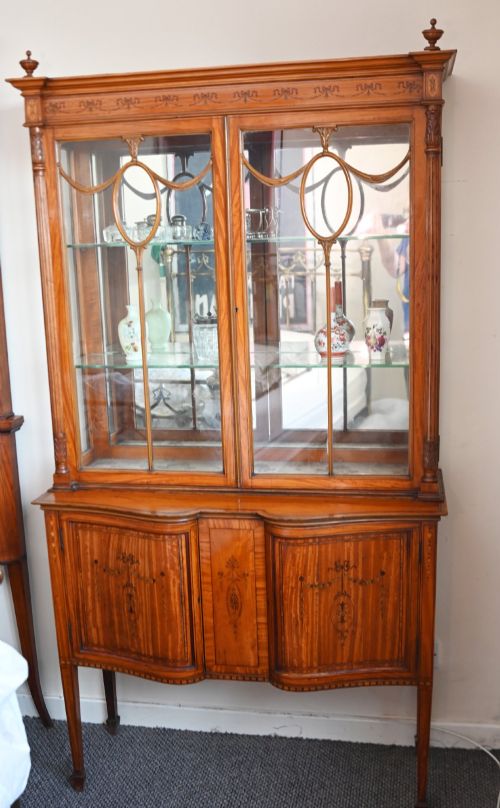
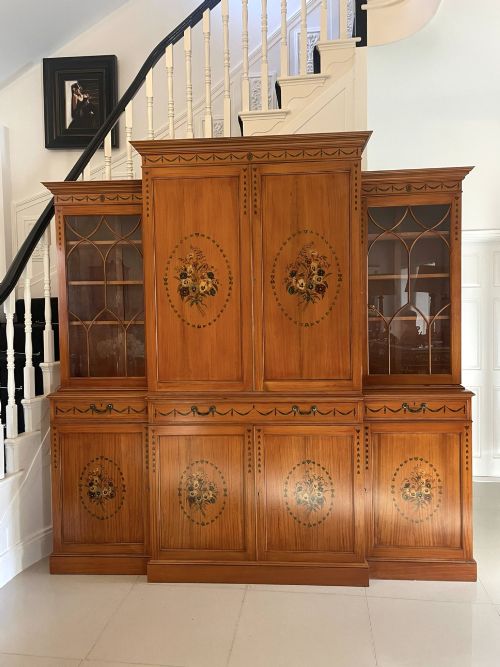
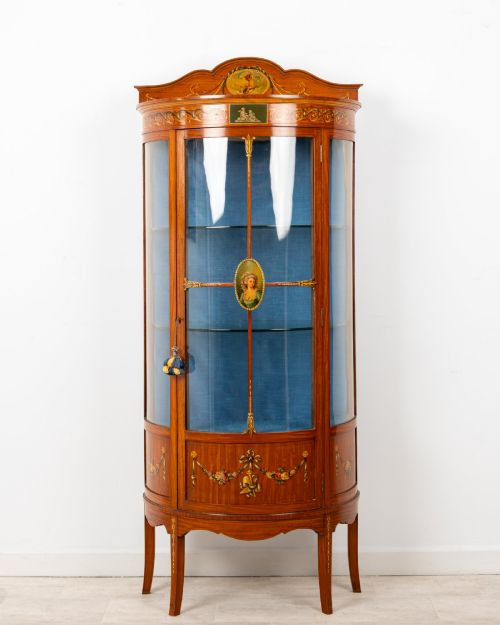
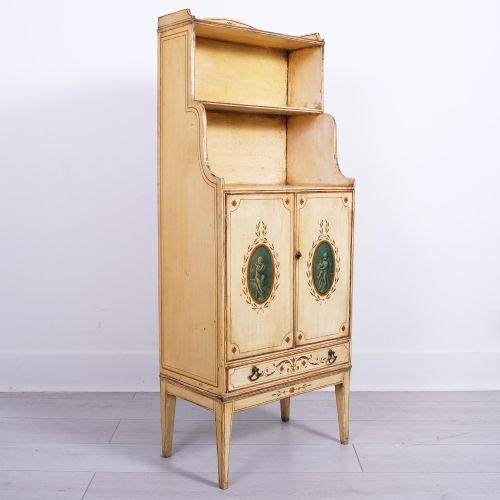
A sheraton style painted cupboard encompasses a diverse range of refined storage furniture, including display cabinets, bookcases, commodes, side cabinets, and linen presses. Buyers seeking these pieces encounter items originating across several distinct eras, spanning from the Georgian and George III periods through the 19th century, the Edwardian epoch, and into the 1920s and 1930s.
Construction and decoration
The pieces rely primarily on timber foundations such as satinwood and mahogany, frequently enhanced by hand-painted detailing and painted wood finishes. Artisans applied delicate painted ornamentation directly onto the timber surfaces, often incorporating classical panels and inlaid motifs.
Additional hardware and structural elements incorporate brass fixtures and glass panels, particularly within the construction of vitrines, bookcases, and display cabinets designed to showcase contents.
Sheraton Style Painted Cupboard Retail Price Guide 2026
Typical asking prices for sheraton style painted cupboard among the pieces listed under this phrase on Sellingantiques today, from the lower quarter to the upper quarter. They describe what is for sale here now, not the wider market.
Listings feature satinwood, mahogany, brass, and glass across forms including display cabinets, bookcases, commodes, and linen presses.
Assessing quality and execution
Quality rests heavily on the precision of the hand-painted detailing and the crispness of the classical panels adorning the timber. Superior examples demonstrate skilled brushwork and balanced composition within the neoclassical decorative scheme.
The choice and handling of the underlying woods, such as figured satinwood and mahogany, dictate the structural integrity and visual depth of the cabinet. Finer pieces maintain original painted decoration and integrated brass or glass elements that complement the proportions of the form.
The Sheraton Style Painted Cupboard Glossary
- Satinwood
- A light-coloured, lustrous timber prized for its fine grain, frequently utilised as the primary surface veneer on neoclassical and revival furniture.
- Demi-Lune
- A half-moon shape characteristic of the tabletops and front profiles of certain side cabinets and commodes.
- Vitrine
- A glass-fronted display cabinet intended for the presentation of porcelain, books, or curated objects.
- Breakfront
- A cabinet design where the central section projects forward from the flanking wings, creating visual depth.
- Serpentine
- A furniture front characterised by a wavy contour that curves outward at the centre and inward at the sides.
Sheraton Style Painted Cupboard: Frequently Asked Questions
What periods do these cabinets come from?
The pieces span multiple eras, encompassing original Georgian and George III pieces alongside later 19th-century interpretations and Edwardian revivals up to the 1930s.
Revival movements frequently reinterpreted earlier neoclassical designs during the late 19th and early 20th centuries, resulting in substantial stylistic crossover.
How do I identify a Sheraton style painted cupboard?
Look for characteristic neoclassical motifs, delicate painted decoration, and light timber surfaces such as satinwood or painted mahogany.
Silhouettes often include bow fronts, demi-lune shapes, and classical panels that reflect the design vocabulary popularised during the Georgian period and revisited in later revival eras.
Where should I place a side cabinet or vitrine?
These cabinets suit drawing rooms, living spaces, and hallways where their decorative painted surfaces and display capabilities can be appreciated.
Glass-fronted vitrines and bookcases work well for showcasing collected objects, while commodes and side cabinets function effectively against feature walls.
Are these pieces made of solid satinwood?
Furniture from these periods typically employs satinwood as a veneer applied over secondary timber foundations to achieve decorative surfaces.
This technique allowed cabinetmakers to utilise figured grain patterns efficiently while maintaining structural stability across large panels and curved fronts.
How do I care for painted wood surfaces?
Protect hand-painted detailing and timber finishes by keeping pieces away from direct sunlight and maintaining stable room humidity.
Dust gently with a soft, dry cloth and avoid harsh chemical cleaners that might compromise the integrity of the painted decoration.