

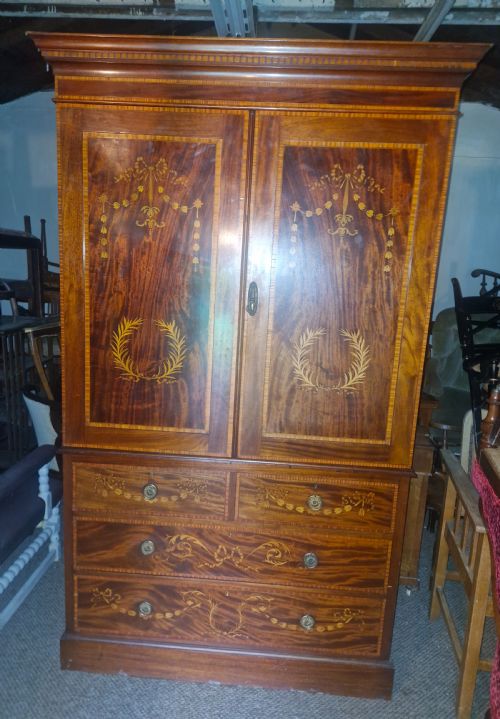


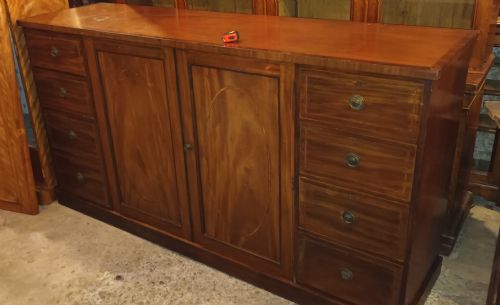

Sheraton Clothes Press
A Sheraton clothes press offers understated elegance, combining generous storage with fine classical proportions in mahogany or satinwood.
Sheraton Clothes Press
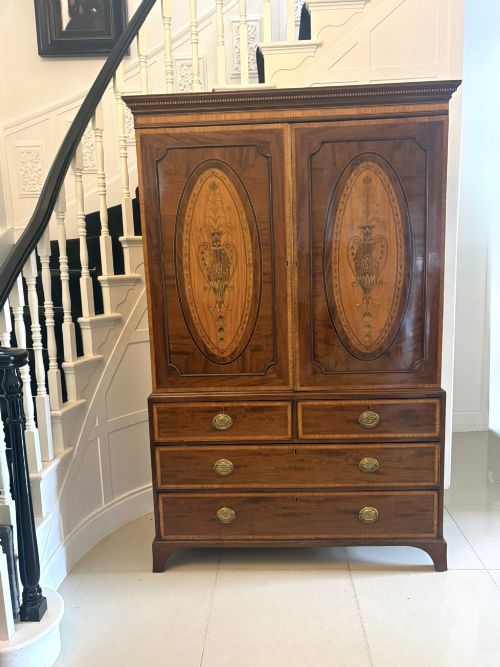
A sheraton clothes press brings classical restraint and refined proportions to bedroom storage, combining hanging space or sliding trays behind panelled doors. Buyers searching for a sheraton clothes press will find pieces originating from the Georgian period through to the Edwardian era and the later revival movements.
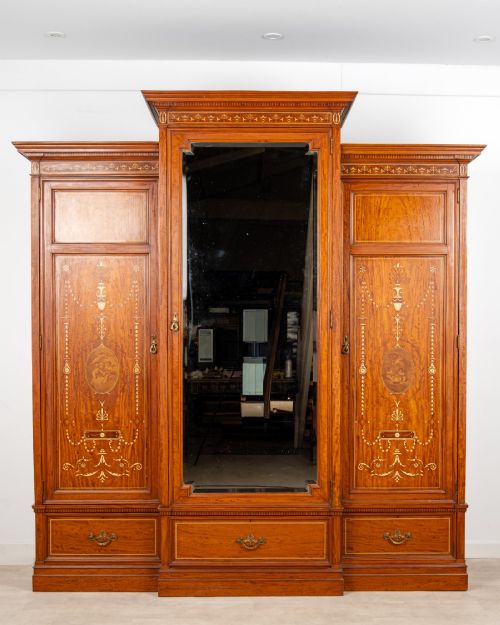
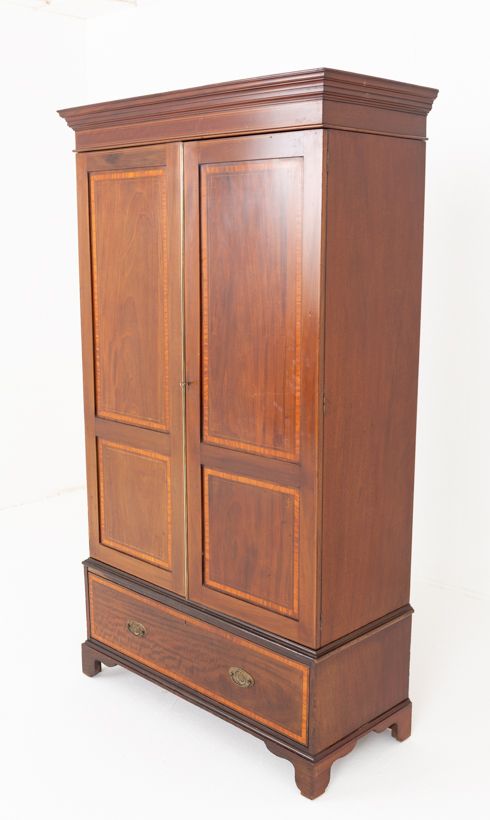
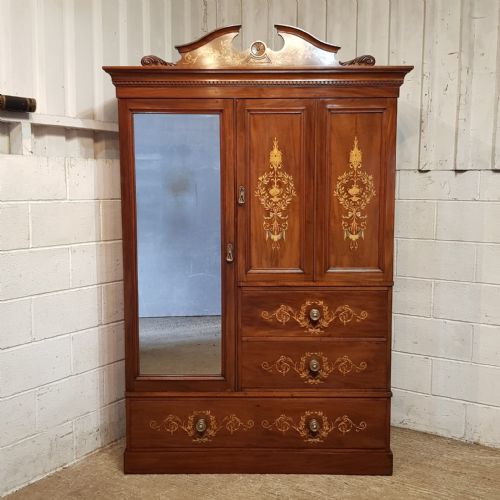
The most common examples on this page date from the Edwardian period and the late nineteenth century, often executed in mahogany with satinwood inlay. These pieces frequently manifest as wardrobes, linen presses, or combination cupboards incorporating drawers and hanging space.
Earlier Georgian examples from the eighteenth century appear alongside later Sheraton Revival pieces, showing how cabinetmakers reinterpreted classical rectilinear forms across generations. Forms range from compact dwarf cupboards to large breakfront wardrobes and multi-piece bedroom suites.
Materials and construction
Makers relied primarily on solid mahogany and flame mahogany veneer, complemented by contrasting bandings and stringing in boxwood and satinwood. Brass hardware, including drop handles and escutcheons, provides functional and decorative accents.
Surface ornament relies heavily on marquetry and fine inlay, framing panels and drawers with geometric precision. Glass appears occasionally in mirrored wardrobe doors, particularly on Edwardian and late nineteenth-century iterations.
Sheraton Clothes Press Retail Price Guide 2026
Typical asking prices for sheraton clothes press among the pieces listed under this phrase on Sellingantiques today, from the lower quarter to the upper quarter. They describe what is for sale here now, not the wider market.
Listings feature mahogany, satinwood, and walnut timbers, spanning the Georgian, Victorian, and Edwardian periods.
Assessing quality and finish
Quality rests upon the crispness of the inlay work and the figuration of the timber veneers, where balanced grain patterns elevate the visual impact. Superior pieces exhibit precise joinery and well-fitted internal sliding trays or hanging divisions.
The proportion and balance of the cornice and base mouldings distinguish finer workshops from more utilitarian production. Original brass fittings and intact glass panels further contribute to the integrity of the piece.
Druce And Co
The Sheraton Clothes Press Glossary
- Clothes press
- A tall piece of furniture designed for storing garments and household linen, typically featuring upper doors enclosing shelves or sliding trays above a chest of drawers.
- Satinwood
- A durable, lustrous timber native to India and Ceylon, prized for its pale golden colour and used extensively for contrasting inlay and banding.
- Marquetry
- The art of forming decorative patterns by fitting together thin veneers of various woods and other materials onto a structural carcass.
- Breakfront
- A cabinet design where the central section projects forward from the flanking wings, creating depth and architectural presence.
- Stringing
- A thin, linear inlay of contrasting wood used to outline panels, drawer fronts, and tabletops in classical furniture.
Sheraton Clothes Press: Frequently Asked Questions
What is a clothes press?
A clothes press is a traditional storage item designed with upper doors that enclose sliding shelves or linen trays, positioned above a chest of base drawers.
Historically, these pieces served to store folded garments, linens, and textiles before modern wardrobes with full-length hanging space became standard.
How do I date a press?
Dating relies on examining timber selection, construction methods, and decorative motifs such as inlay styles and brass hardware.
Georgian examples tend to show heavier solid construction and subtle stringing, whereas Edwardian revival pieces often incorporate extensive satinwood marquetry and mirrored doors.
Where were they used?
These presses were placed primarily in bedrooms, dressing rooms, and large landings of substantial houses to store household linens and daily wear.
Their substantial presence made them central fixtures of the domestic interior, offering both display value and practical compartmentalised storage.
Are shelves adjustable?
Most period clothes presses feature fixed internal sliding trays or stationary wooden shelves rather than modern adjustable metal brackets.
These interior fittings reflect the original purpose of storing folded garments and stacked linens rather than modern hanging garments.