
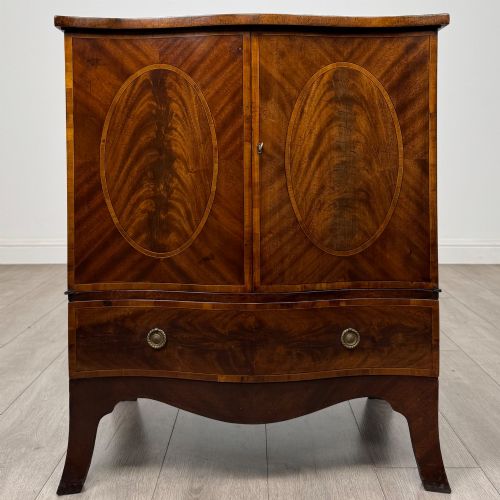
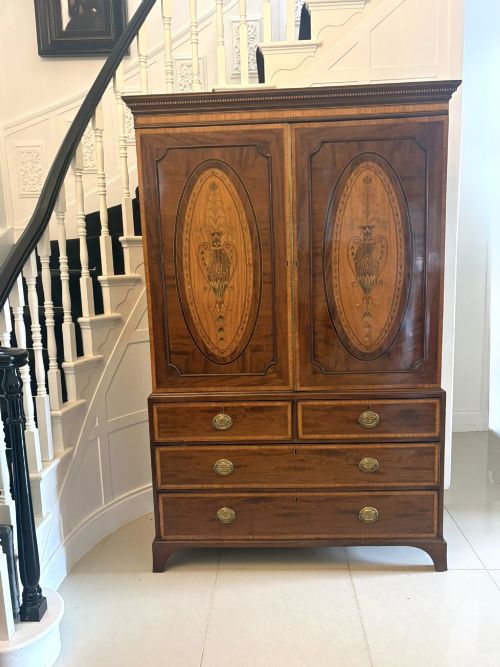
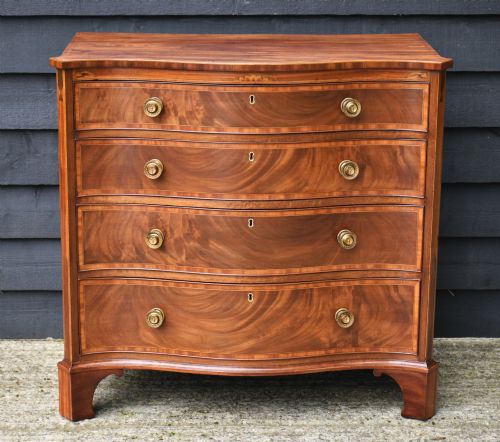
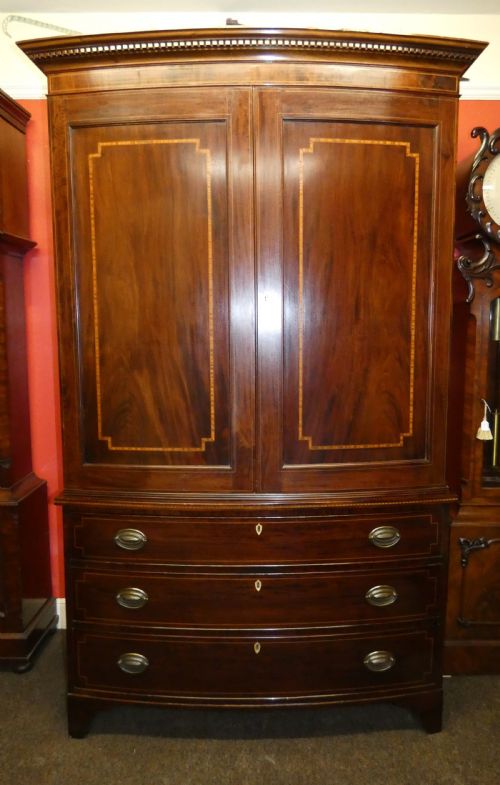

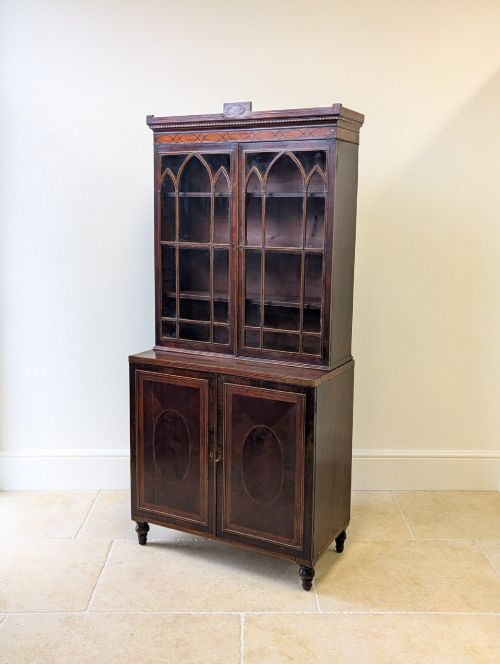
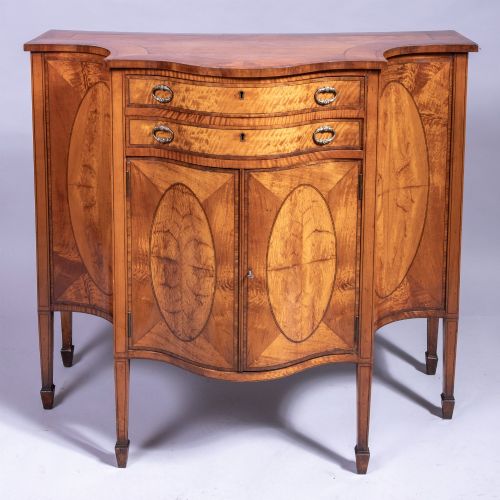

Georgian Inlaid Storage Cabinet
A georgian inlaid storage cabinet brings functional elegance into a room through rich timber and delicate stringing.
Georgian Inlaid Storage Cabinet
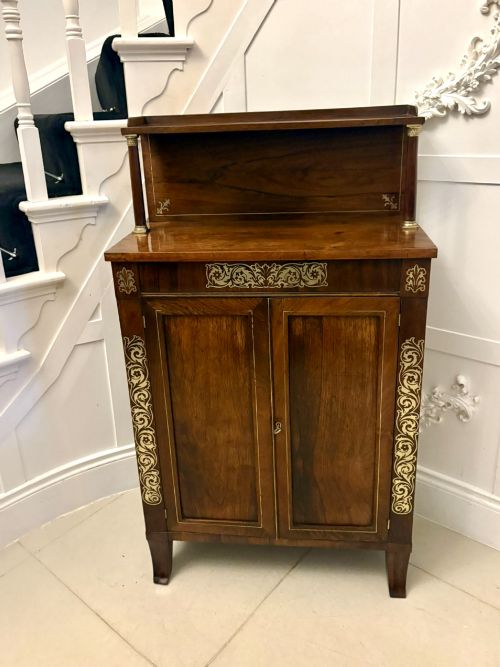
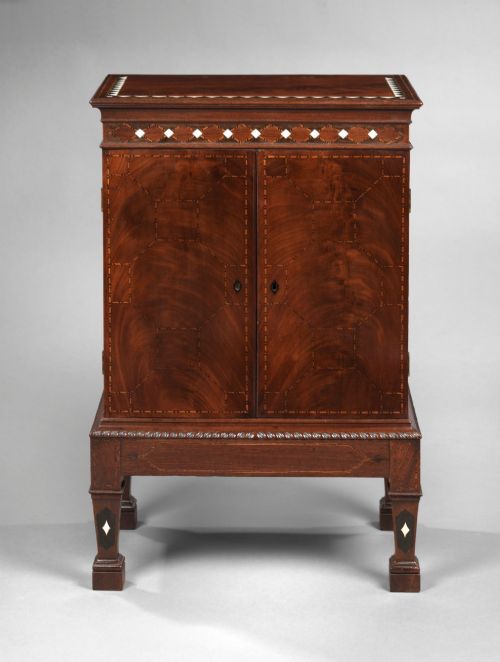
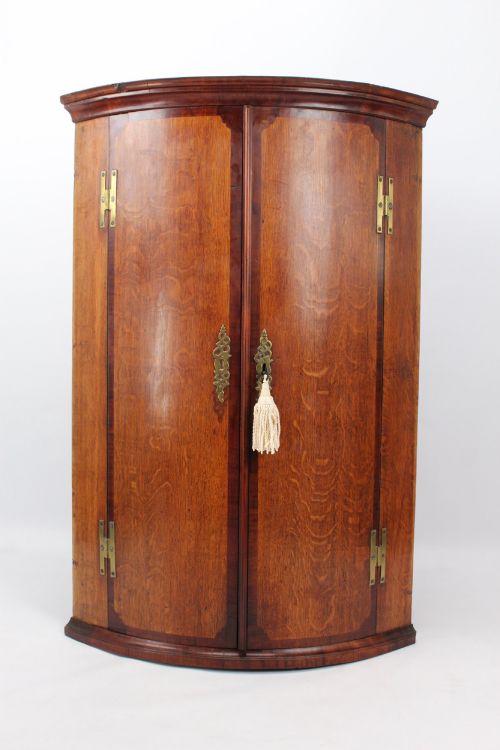
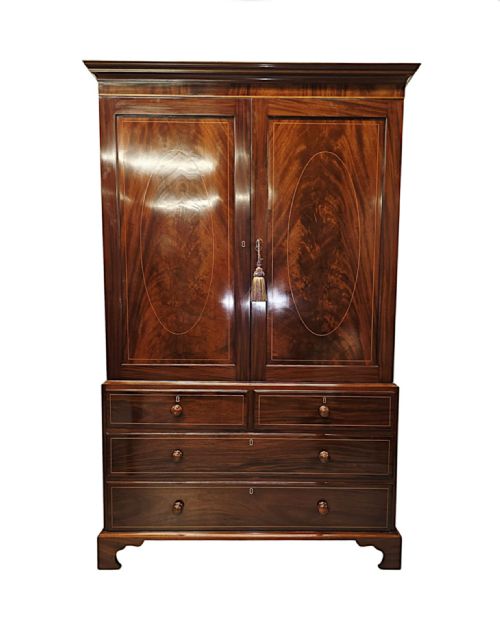
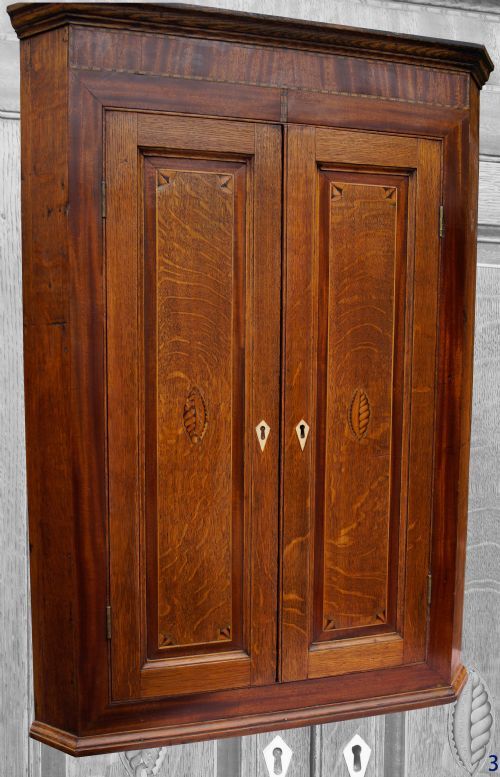
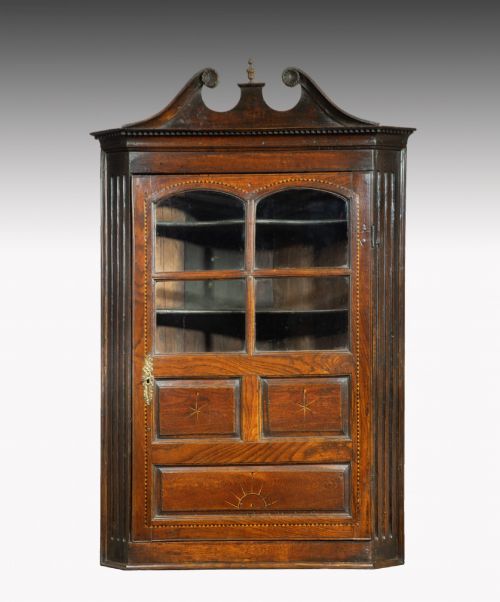
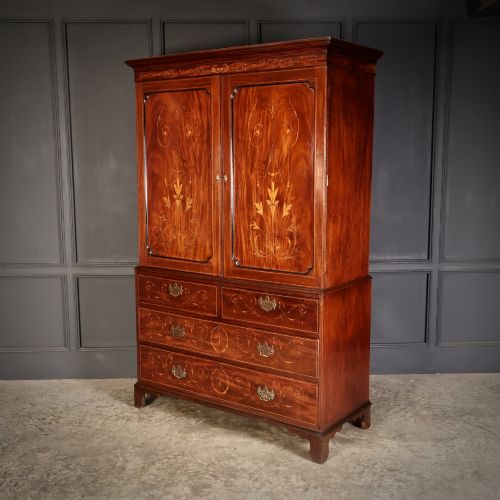
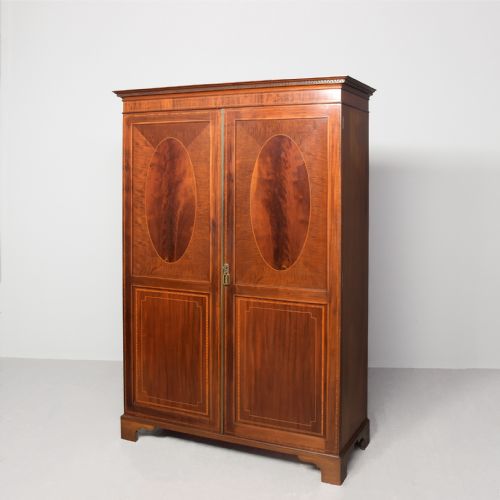
A georgian inlaid storage cabinet encompasses a diverse group of domestic furnishings designed to hold linens, books, tableware, and personal items securely. The items encountered most frequently in this category include linen presses, chests of drawers, corner cupboards, and side cabinets produced during the Georgian era and subsequent revival periods.
Makers of these functional pieces utilised various forms, from bowfront chests to tall linen presses, ensuring each cabinet served a specific domestic purpose. The integration of storage capacity with decorative inlay reflects the refined interior standards of the eighteenth and nineteenth centuries.
Regional workshops and later revival makers produced these cabinets in mahogany, oak, and walnut, often accented with contrasting boxwood and satinwood details. Surviving examples demonstrate how cabinetry evolved from utilitarian storage into prominent architectural focal points within domestic spaces.
Materials and Construction Techniques
Cabinet makers relied heavily upon dense hardwoods like mahogany, oak, and walnut as structural foundations, frequently selecting flame mahogany veneers for prominent drawer fronts and doors. These primary timbers provide both durability and a rich canvas for decorative surface treatments.
The application of wood inlay, marquetry, and stringing utilised contrasting light timbers such as satinwood and boxwood, often embedded directly into the primary grain. Brass hardware, including drop handles and escutcheons, completed the construction of drawers and cupboard doors.
Joinery techniques involved precise dovetailing for drawer construction and sturdy mortise and tenon frames to support heavy interior shelving and hanging space. These structural methods ensured the longevity and stability of large storage pieces like linen presses and tallboys.
Current listings demonstrate cabinet forms spanning the Georgian, Regency, and Edwardian periods, utilising mahogany, oak, walnut, and satinwood.
Factors Determining Quality
The sophistication of the timber selection dictates the visual distinction of a piece, with figured flame mahogany and balanced marquetry patterns marking superior examples. Inferior pieces often display plain secondary woods with minimal attention to grain continuity across drawer fronts.
Precision in the execution of boxwood stringing and inlay indicates the level of craftsmanship invested by the maker. Sharp, intact joinery without excessive secondary timber replacement separates well-preserved examples from heavily restored furniture.
The integration of original brass fittings and functional locks contributes significantly to the integrity of a cabinet. Subtle proportions and harmonious secondary timbers complete the distinction between standard utilitarian items and masterworks.
Mawer & Stephenson
The Georgian Inlaid Storage Cabinet Glossary
- Inlay
- The technique of inserting pieces of contrasting wood, shell, or metal into a recessed solid wood surface to form decorative patterns. This method enhances the visual depth of cabinet doors and drawer fronts.
- Linen Press
- A large storage cabinet featuring upper sliding trays or shelves enclosed by doors, positioned above a base of multiple drawers. Originally designed for storing household linens flat before the widespread use of wardrobes.
- Marquetry
- Elaborate veneer patterns applied to furniture surfaces using various coloured woods to create pictorial or geometric designs. It differs from simple inlay by covering the entire background substrate.
- Bowfront
- A convex, curved furniture front that projects outward in a smooth arc. This shape appeared frequently on chests of drawers and side cabinets during the Georgian period.
- Tallboy
- A tall chest of drawers consisting of one chest stacked directly upon another, maximising vertical storage capacity. These pieces gained popularity in the eighteenth century for bedroom storage.
Georgian Inlaid Storage Cabinet: Frequently Asked Questions
What is a linen press used for?
A linen press served primarily to store household textiles, bed linens, and garments flat upon interior sliding trays to prevent creasing. The enclosed upper section protected fabrics from dust while the lower drawers held smaller items.
Over time, many of these cabinets were converted internally to function as wardrobes by removing the sliding trays to accommodate hanging rails. They remain practical storage solutions for modern bedrooms and dressing rooms.
What distinguishes mahogany from satinwood?
Mahogany is a heavy, durable tropical hardwood with a deep reddish-brown tone and a straight or figured grain that darkens gracefully with age. It formed the structural backbone of much fine Georgian furniture.
Satinwood is a lighter, exotic timber featuring a golden-yellow sheen and a natural reflective quality that suited delicate inlay and decorative banding. Makers often combined the two timbers to create striking contrast on cabinet facades.
How should I care for an antique storage cabinet?
Maintain stable indoor humidity levels and avoid positioning antique timber furniture directly beside heat sources or in intense direct sunlight. Consistent environmental conditions protect natural wood veneers and prevent timber splitting.
Apply a microcrystalline wax periodically to nourish the surface and preserve the polished finish without sealing the wood. Gentle dusting with a soft, dry cloth prevents particulate accumulation on intricate marquetry.