


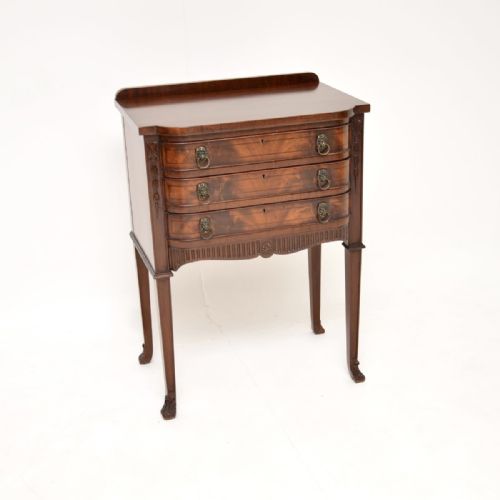
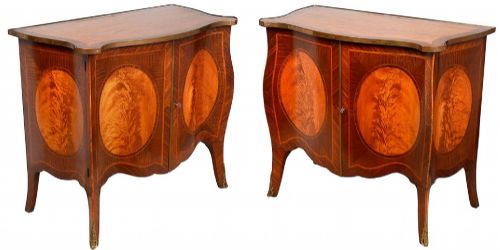
Sheraton Style Cupboard
These pieces for a sheraton style cupboard bring classical proportion and refined marquetry into domestic rooms.
Sheraton Style Cupboard
A sheraton style cupboard encompasses a range of storage forms, from display cabinets and corner units to bedside tables and sideboards, originating across the Georgian, Victorian, Edwardian and early twentieth century periods. When searching for a sheraton style cupboard, buyers meet various incarnations, with Edwardian revival pieces and nineteenth century interpretations forming the bulk of the selection alongside eighteenth century examples.
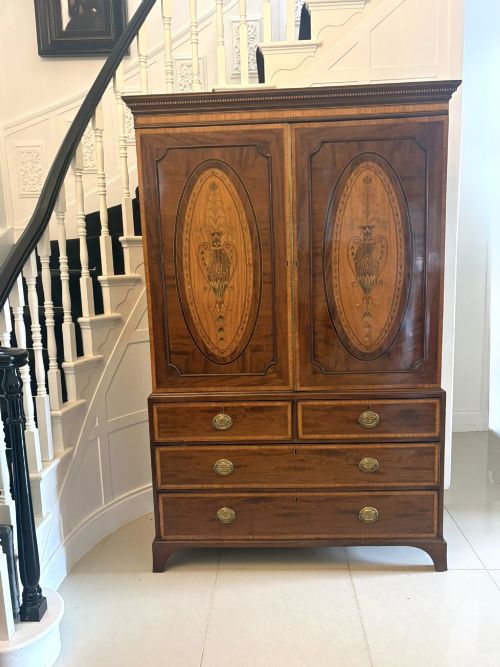
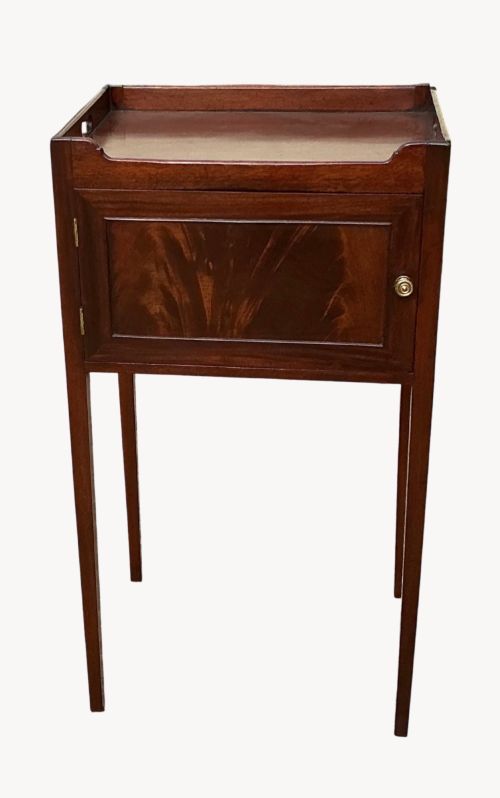
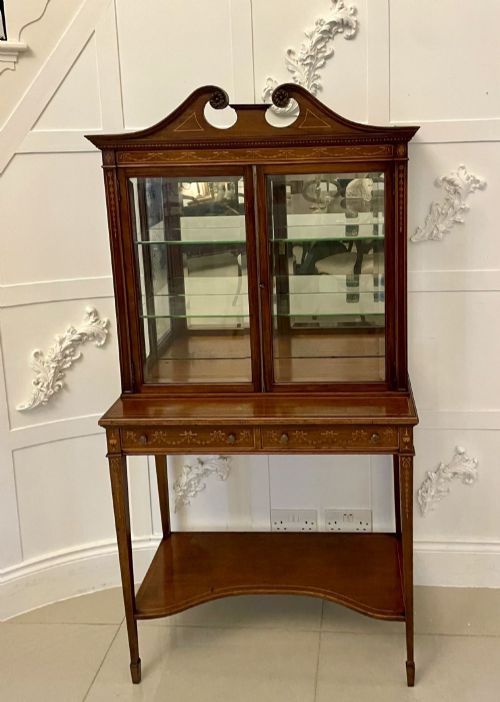
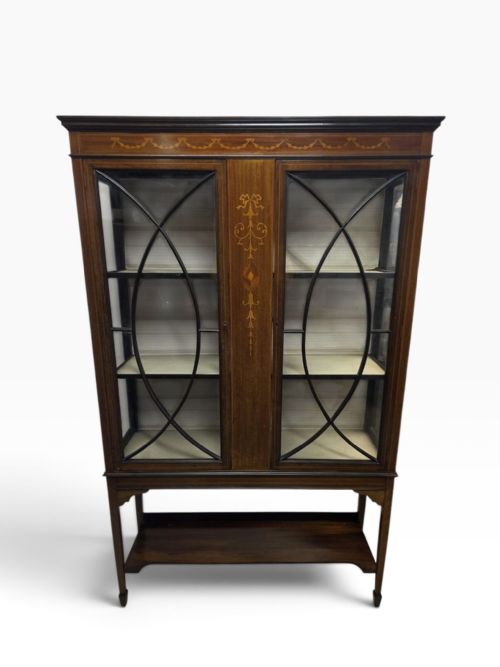
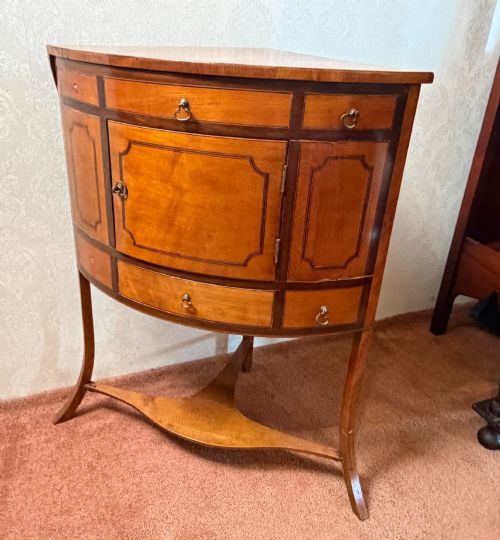
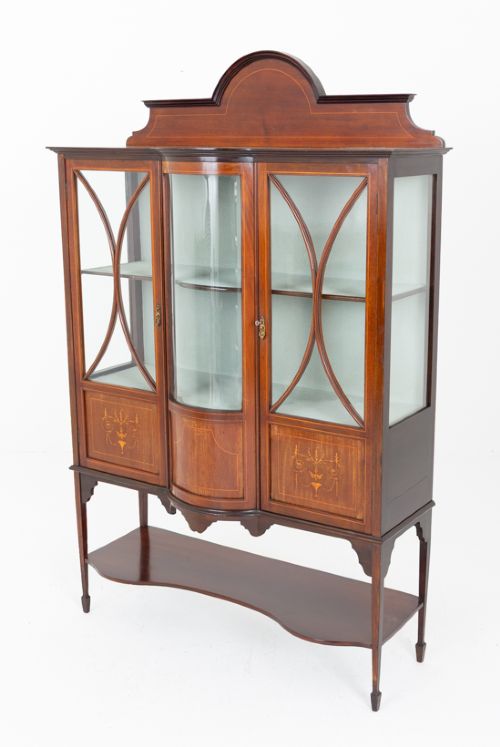
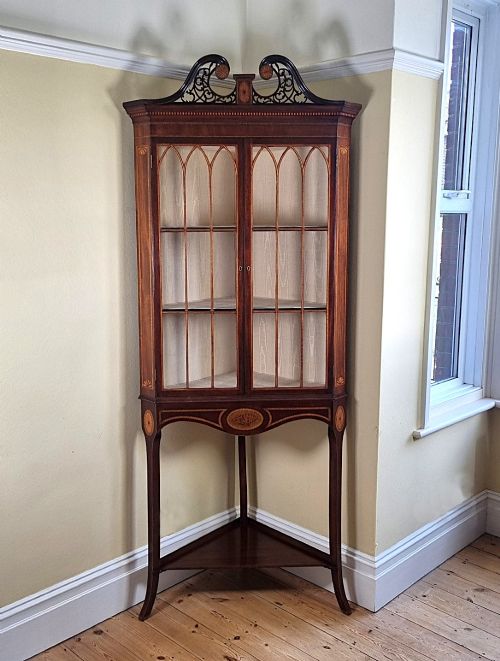
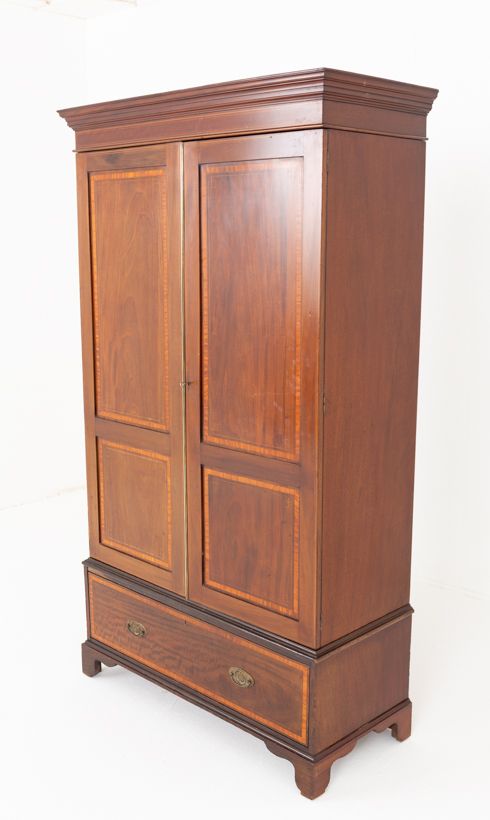
The aesthetic draws heavily on neoclassical restraint, deploying straight lines, balanced proportions and geometric forms. Pieces take the shape of glazed display cabinets, bow-front commodes, linen presses and compact bedside cupboards designed for practical home storage.
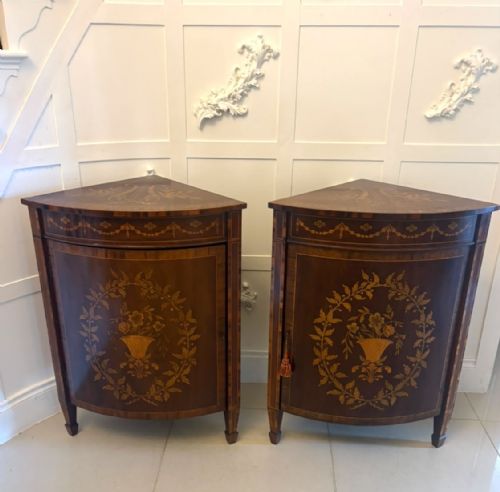
Origins stretch from genuine George III workshops through to late Victorian and Edwardian revivalism, where cabinetmakers reinterpreted classical motifs for modern households. The surviving stock shows considerable variety in scale, ranging from tall corner cabinets to low bedside chests and serpentine sideboards.
Materials and construction methods
Makers constructed these cabinets using a foundation of solid mahogany or satinwood, often applying veneers to flat surfaces to create stable panels. Timber selection prioritised figured grain, flame mahogany and rich harewood to provide textural depth beneath clear polishes.
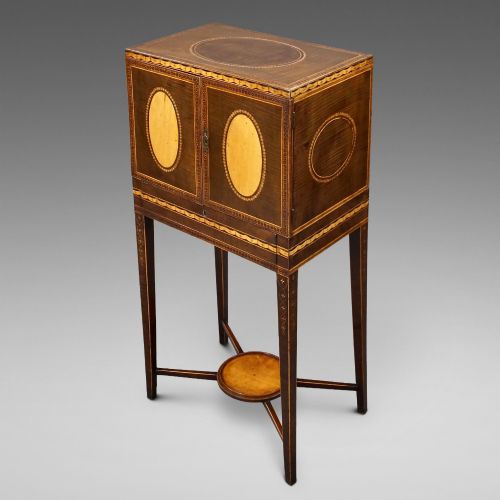
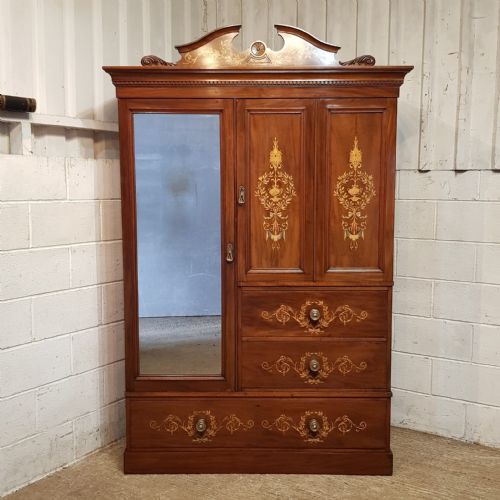
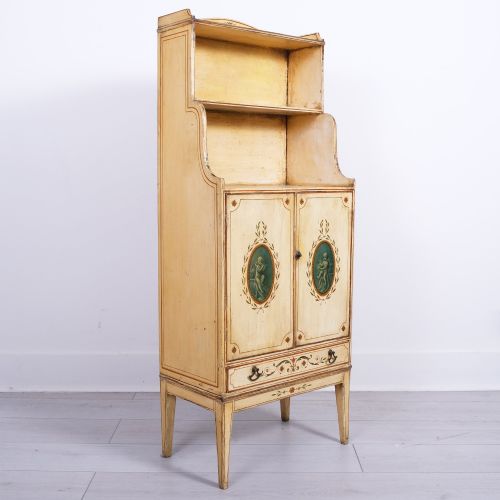
Decoration relied on precise inlay work, utilising contrasting boxwood, satinwood and rosewood strips alongside hand-painted detailing and marquetry panels. Brass hardware, glazed doors and delicate stringing completed the construction, balancing structural integrity with decorative finesse.
Sheraton Style Cupboard Retail Price Guide 2026
Typical asking prices for sheraton style cupboard among the pieces listed under this phrase on Sellingantiques today, from the lower quarter to the upper quarter. They describe what is for sale here now, not the wider market.
Listings span multiple decades, incorporating Georgian, Victorian, Edwardian and early twentieth century periods.
Judging the quality of craftsmanship
Quality reveals itself in the precision of the timber matching and the execution of the inlay. Finer pieces demonstrate seamless integration of contrasting wood veneers, where boxwood and satinwood stringing follows complex curves without splintering or misalignment.
The sophistication of the hand-painted detailing and marquetry distinguishes standard production from superior examples. Secondary woods used in drawer construction, dovetail tightness and the original condition of brass fittings further separate ordinary items from exceptional pieces.
Maple & Co.·Druce & Co.
The Sheraton Style Cupboard Glossary
- Marquetry
- Decorative veneer work forming pictures or geometric patterns using various coloured woods. This technique requires exceptional skill to fit timber segments together tightly.
- Satinwood
- A durable, lustrous timber with a golden sheen, frequently utilised for fine veneers and stringing. It forms the primary visual surface for many revival pieces.
- Linen Press
- A tall storage cabinet featuring upper sliding trays for textiles and lower drawers for garments. These pieces often showcase significant mahogany and inlay work.
- Stringing
- Thin lines of contrasting timber inlaid into the surface of furniture to outline panels and drawers. It defines the rectilinear geometry characteristic of neoclassical design.
Sheraton Style Cupboard: Frequently Asked Questions
How do I spot a true revival piece?
Revival items from the Edwardian period often employ machine-sawn veneers and lighter secondary timbers behind the primary satinwood or mahogany facade. Close inspection of the drawer linings and backboards reveals the industrial milling techniques common around nineteen hundred.
By contrast, eighteenth century examples display hand-cut dovetails and older tool marks on the interior structural members. Comparing the secondary woods helps establish whether a cabinet belongs to the original Georgian era or subsequent revival movements.
Where should I place a corner cabinet?
Corner cupboards suit transitional spaces or dining rooms where floor area is restricted. Their angled backs allow them to utilise dead corners while offering display space behind glazed doors.
Tall corner units anchor empty wall junctions, whereas smaller variations sit effectively above side tables or credenzas. Ensure the door swing clears adjacent furniture before final placement.
How do I care for satinwood veneer?
Satinwood requires stable indoor humidity and protection from direct sunlight to prevent the golden finish from fading. Dusting with a dry, soft cloth maintains the polished surface without moisture damage.
Avoid placing these cabinets near direct heat sources which can cause the delicate veneers to lift or crack. Periodic application of suitable furniture wax preserves the natural lustre.
What distinguishes satinwood from mahogany?
Satinwood provides a pale, golden-yellow ground with a natural reflective sheen that catches light differently than dark woods. It serves as an ideal canvas for painted floral motifs and dark wood stringing.
Mahogany offers a deeper, reddish-brown hue with prominent grain patterns ranging from straight figures to dramatic flame swirls. Both timbers were frequently combined, using mahogany for structural carcases and satinwood for decorative panels.