

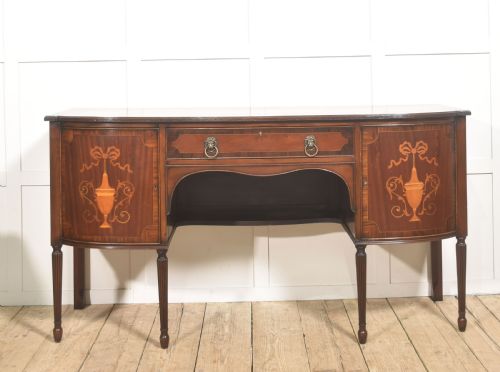

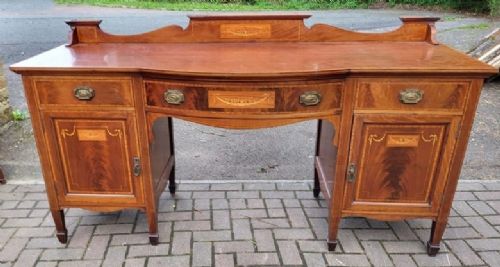
Sheraton Style Buffet
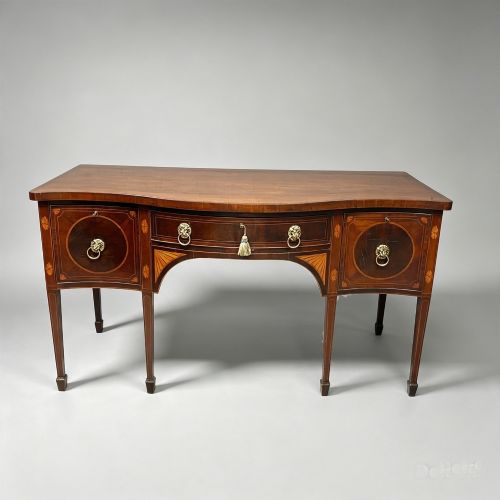
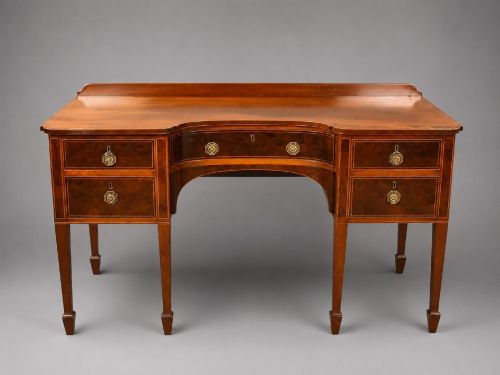
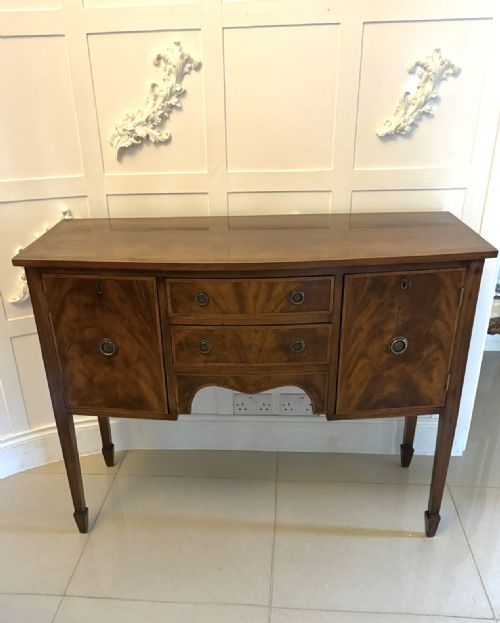
A sheraton style buffet brings refined elegance to a dining room, offering stately storage through graceful serpentine or bow-front forms.
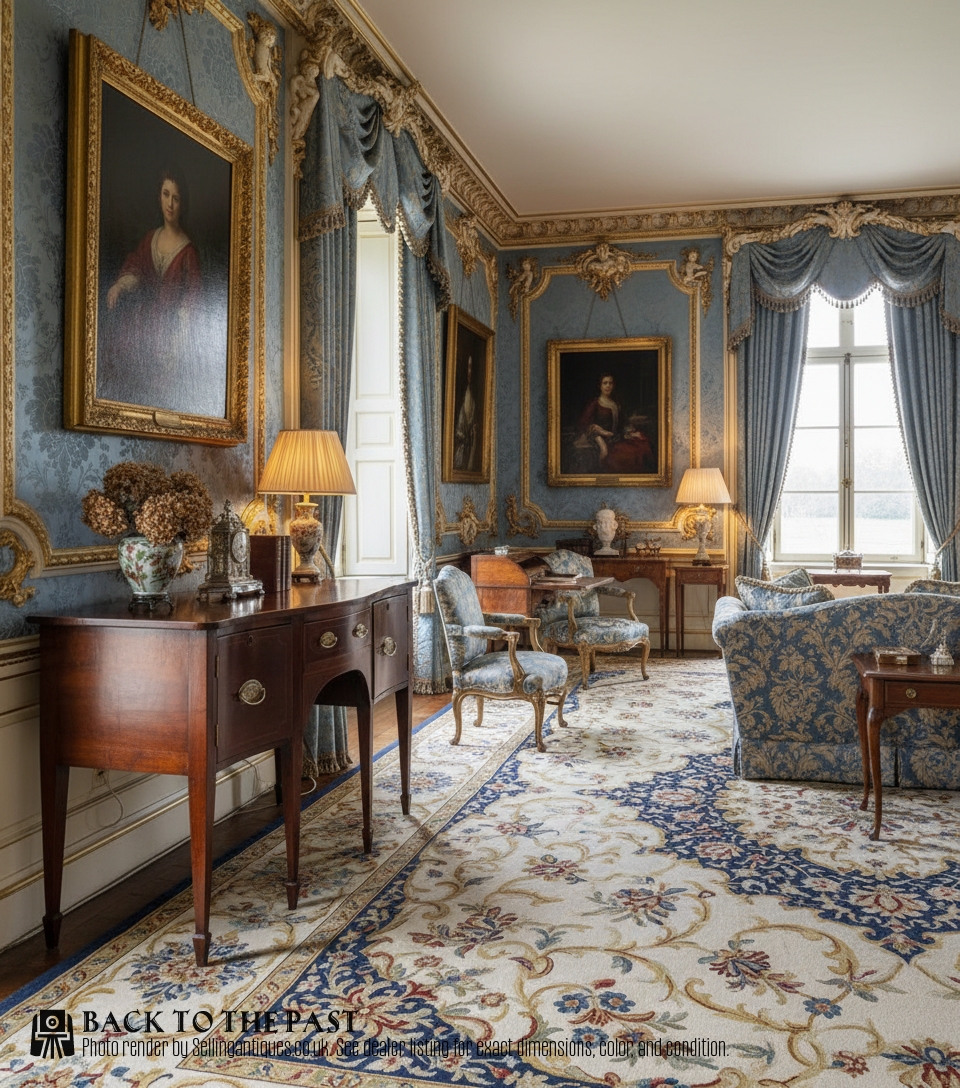
Sheraton Style Buffet
A sheraton style buffet is a formal serving piece designed for dining rooms, drawing from eighteenth-century proportions and lighter geometric lines. Buyers searching for a sheraton style buffet will encounter examples spanning the Georgian era, the nineteenth century, and the Edwardian Sheraton Revival period.
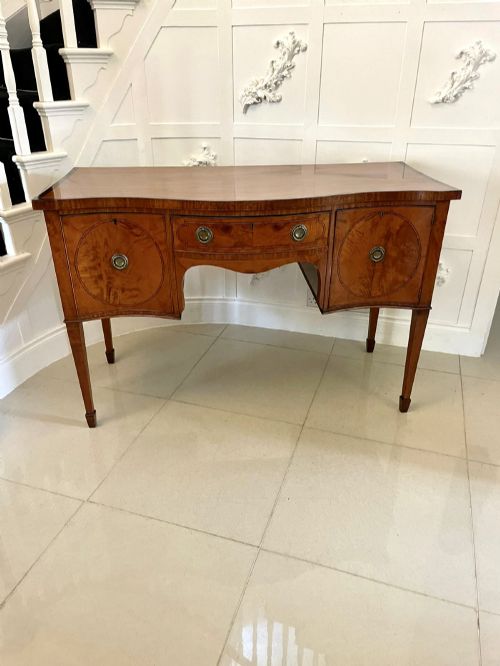
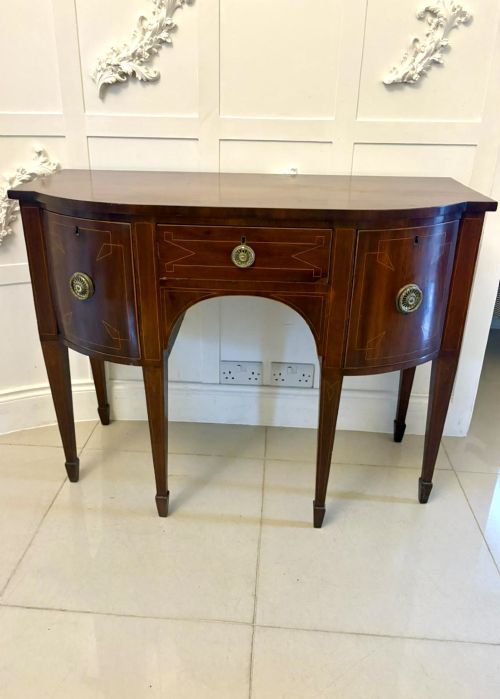
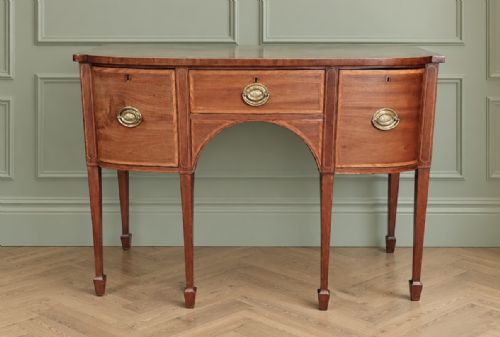
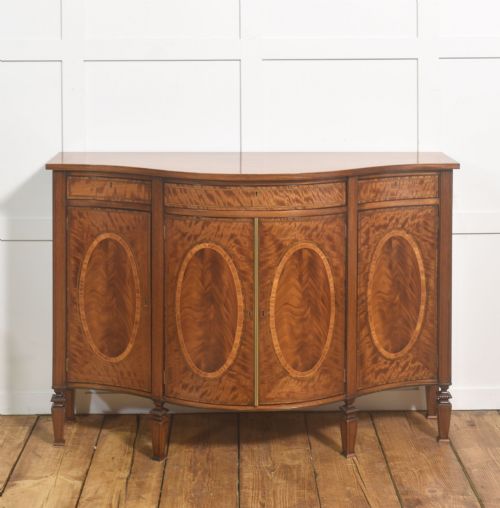
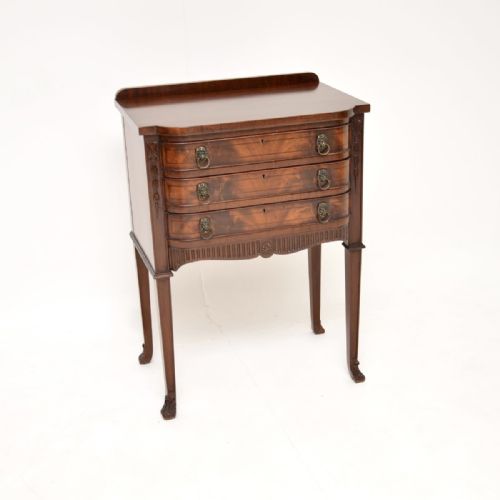
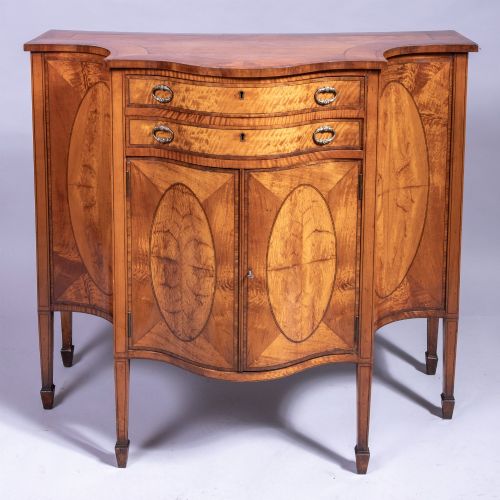
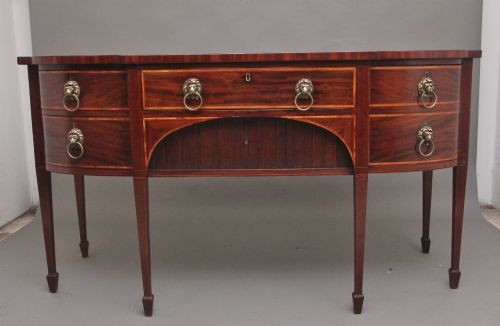
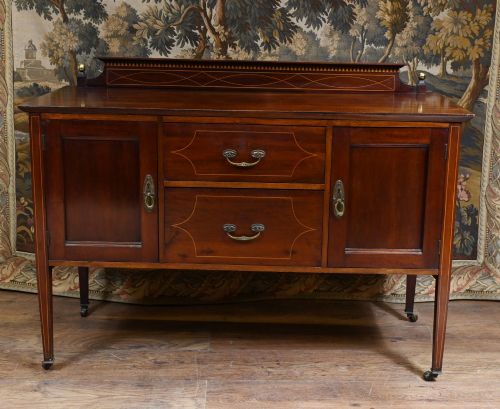
The primary forms on this page include mahogany and satinwood sideboards, servers, bow-front cabinets, and serpentine side tables. These pieces combine practical cupboards and drawers with decorative banded veneers and delicate tapered legs.
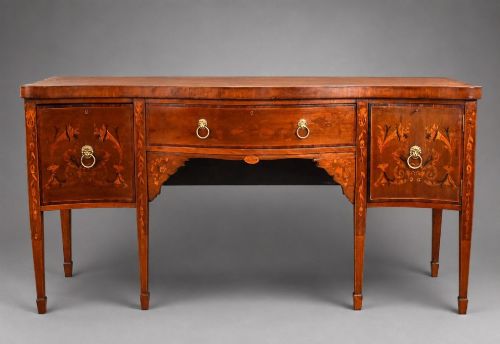
Pieces range from genuine eighteenth-century antiques to later revival interpretations made around nineteen hundred. Edwardian Sheraton Revival pieces often utilise lighter satinwood timbers and intricate floral marquetry alongside traditional mahoganycarved frameworks.
How they were made
Makers built these buffets using solid mahogany and flame mahogany veneer mounted over secondary timber carcases. Drawer linings and internal dividers typically consist of oak or pine, constructed with hand-cut dovetail joints.
Surface enrichment relied on contrasting timbers such as satinwood, boxwood, and rosewood arranged in delicate stringing and geometric crossbanding. Marquetry inlay added pictorial or neoclassical motifs to drawer fronts and top panels.
Hardware consists of cast brass handles and backplates, often shaped as drop rings or neoclassical batwings. Structural support rests on square tapered legs or slender spade feet characteristic of the style.
Periods represented span from the eighteenth-century Georgian era through nineteenth-century variations and Edwardian revivals.
What varies in quality
Quality reveals itself in the selection and bookmatching of the mahogany veneer across large surfaces. Superior examples display symmetrical flame figures and crisp, unbroken stringing without lifting or filler.
The crispness of the inlay work distinguishes workshop standards. Finer pieces feature tight, seamless junctions between boxwood, satinwood, and the surrounding mahogany ground.
Proportion and execution of serpentine or bow-front curves dictate the visual success of the piece. Better proportioned buffets maintain harmonious drawer depths and balanced leg placement that support the heavy timber top.
The Woodworkers Ltd Kilkenny
The Sheraton Style Buffet Glossary
- Serpentine
- A front profile that curves outward in the centre and curves inward toward the ends. This undulating shape requires high carpentry skill to construct drawers and frames.
- Bow-front
- A convex curved front that projects outward in a smooth arc. It defines many classical sideboards and servers from the Georgian and revival periods.
- Crossbanding
- A strip of veneer applied perpendicularly to the grain of the main surface. It creates a contrasting border around drawer fronts and table tops.
- Satinwood
- A lustrous, yellow-gold timber native to Ceylon and India. It provides bright contrast in marquetry and stringing details.
- Marquetry
- The art of forming decorative patterns using thin veneers of various coloured woods. These designs often depict urns, swags, or floral sprays.
Sheraton Style Buffet: Frequently Asked Questions
How do I tell a Georgian buffet from a revival piece?
Original Georgian pieces display the specific tool marks, dry timber characteristics, and structural wear consistent with eighteenth-century workshop practices. Revival pieces made around nineteen hundred often feature different secondary woods and machine-finished secondary components.
Examination of the drawer linings, backboards, and block construction helps clarify the manufacturing date. Dealers assess the secondary timbers and construction methods to separate original period pieces from Edwardian copies.
Where should I place a buffet in my dining room?
A buffet is traditionally placed against a main dining room wall to serve food and store silverware, linen, or serving platters. Its shallow depth allows it to sit comfortably in rooms without obstructing foot traffic.
Ensure the placement keeps the piece away from direct heat sources and strong sunlight, which can dry out mahogany veneers and fade delicate satinwood inlay. Adequate clearance must remain for opening cabinet doors and drawers fully.
What is the difference between a sideboard and a buffet?
In historical terms, sideboards often incorporated pedestals or legs with fixed lower sections, while buffets generally featured cupboards running closer to the floor. Over time, these terms became largely interchangeable among furniture makers.
Both forms served the same primary purpose of holding dining accessories and displaying silver during formal meals. The listings here encompass both formats under the broader category of serving furniture.
How do I care for antique mahogany and satinwood?
Maintain the wood surfaces by dusting regularly with a soft, dry cloth and applying natural beeswax sparingly when the timber appears dry. Avoid silicone-based polishes, which can penetrate old finishes and attract dust.
Keep the room at a stable humidity level to prevent the wood veneers from shrinking, cracking, or lifting away from the carcase. Gentle handling protects the delicate brass hardware and inlaid stringing from accidental damage.