
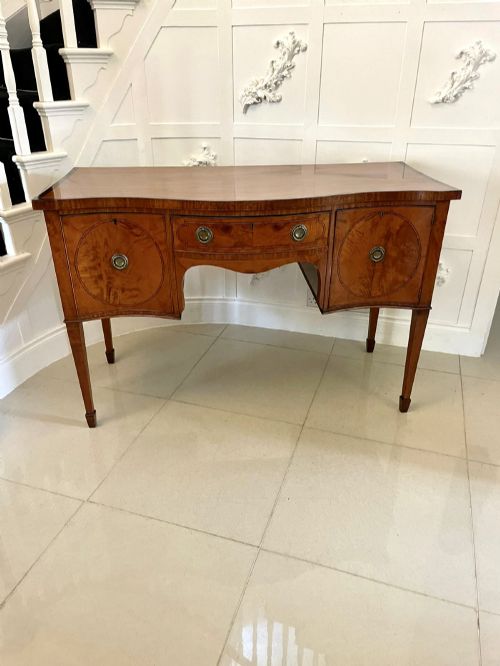
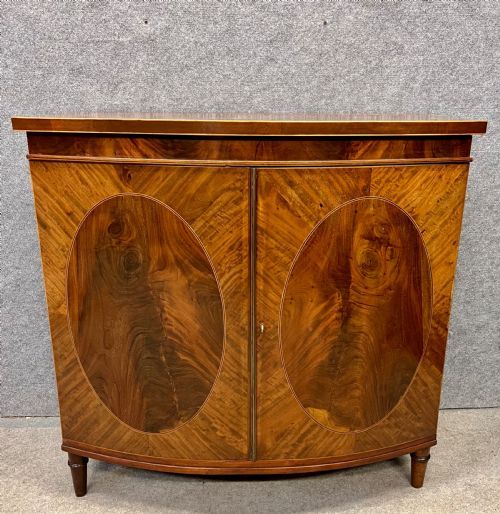
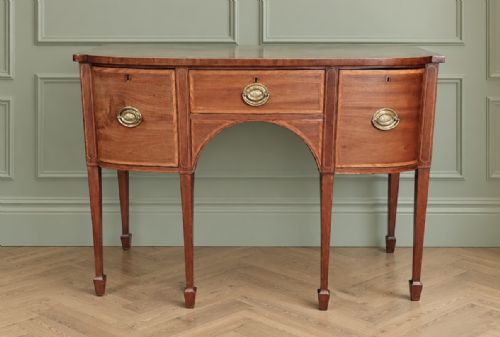
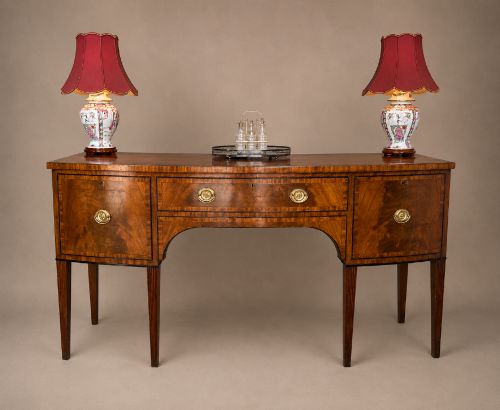


Sheraton Sideboard Table
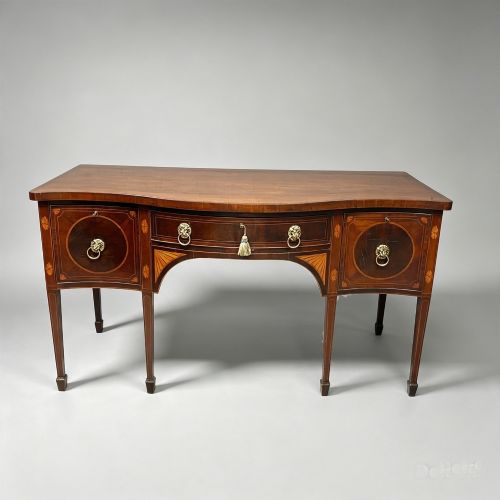
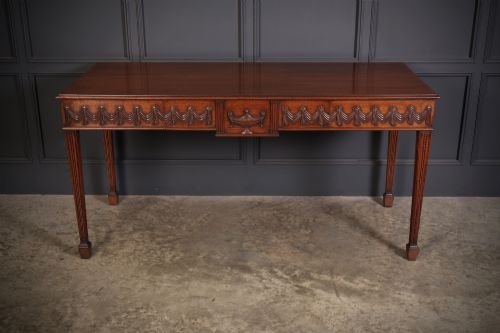
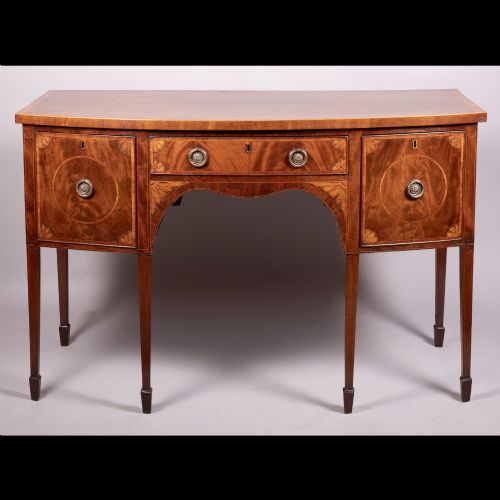
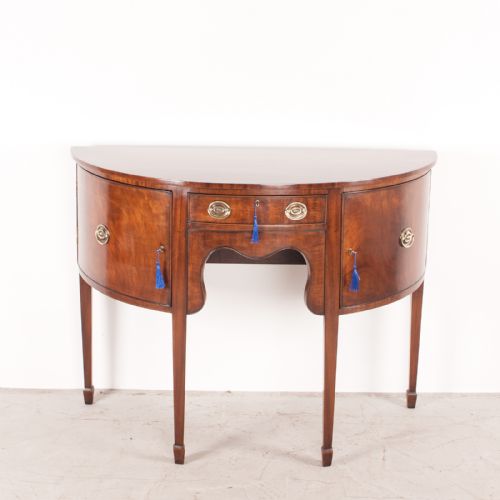
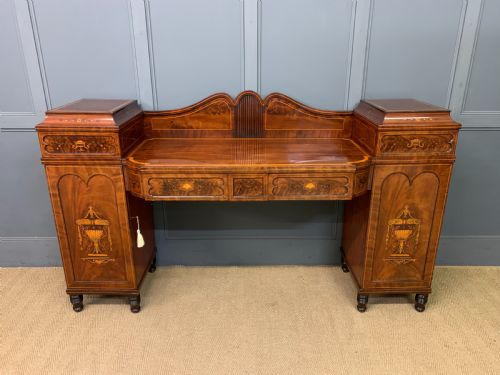
These sheraton sideboard table pieces bring neoclassical elegance and refined timber work to a dining room or hallway.
Sheraton Sideboard Table
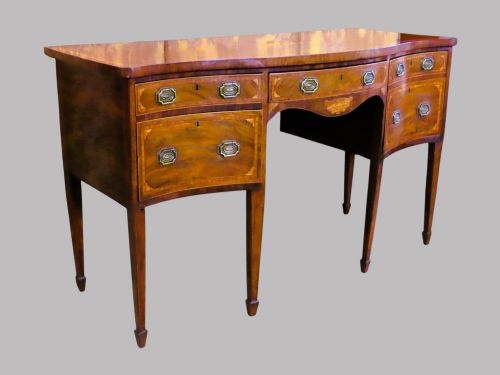
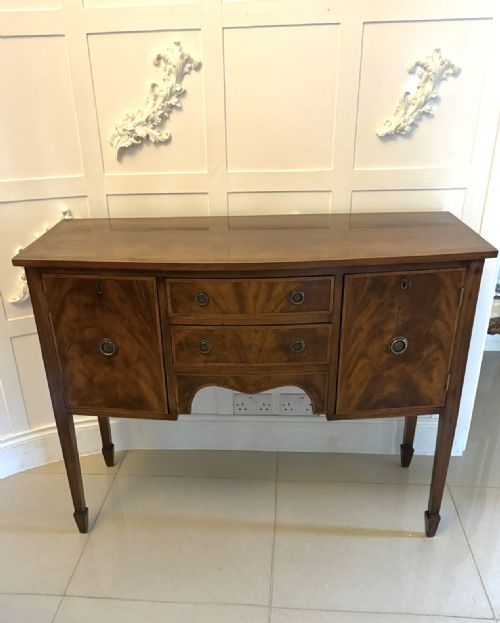
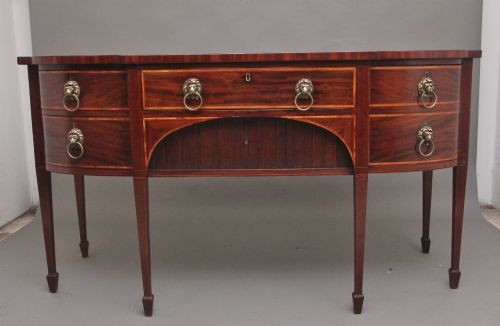
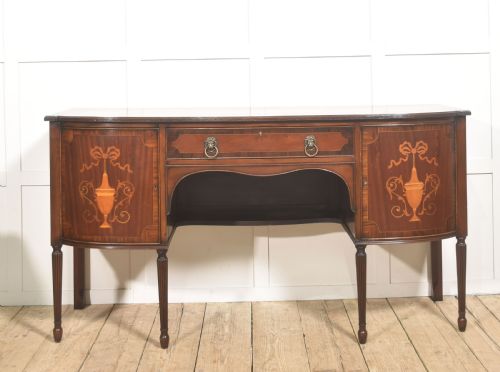
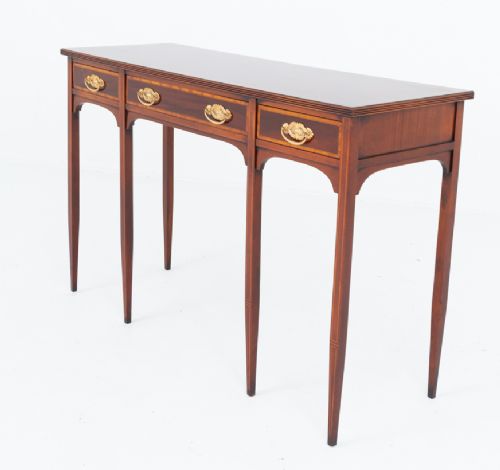
A sheraton sideboard table combines the utility of a dining room server with the restrained geometry characteristic of late eighteenth-century design. When searching this phrase, buyers encounter forms ranging from strict geometric servers to curved serpentine and bow-front shapes.
The pieces listed on this page span the original late eighteenth-century Georgian and Regency eras, alongside later revivals from the Victorian and Edwardian periods. Mahogany forms the backbone of these listings, often accented with lighter wood details.
Most examples adopt either a straight-fronted profile or a sweeping bow or demi-lune shape. These serve as functional serving surfaces while introducing architectural presence to domestic interiors.
How they were made
Cabinetmakers relied heavily on solid mahogany and flame mahogany veneers applied to structural carcases. Timber selection dictated the visual depth of the primary surfaces.
Inlay work defined the aesthetic, employing satinwood, boxwood, and contrasting wood stringing to create geometric borders and delicate floral or fan motifs. Brass handles and mounts completed the construction, adding functional contrast to the dark timber.
Listings span multiple eras from the eighteenth century through the Edwardian revival, predominantly constructed in mahogany with boxwood and satinwood inlay.
What varies in quality
The refinement of the timber figure and the precision of the inlay separate standard production from superior work. Crisp edge-banding and symmetrical grain patterns indicate greater workshop skill.
Proportion and the handling of curved fronts, such as serpentine or demi-lune shapes, demonstrate the maker's mastery. Subtle graduation in drawer depths and integrated secondary timbers reveal the original tier of manufacture.
The Woodworkers Ltd Kilkenny
The Sheraton Sideboard Table Glossary
- Bow front
- A convex curved cabinet front that projects outward in a smooth arc. This shape softens the rigidity of standard rectangular dining furniture.
- Serpentine
- A front contour characterised by a convex centre flanked by concave ends, or vice versa. It requires advanced carpentry to achieve fluid symmetry.
- Demi-lune
- A half-moon shape utilised for console tables and servers designed to sit flat against a wall. This form saves floor space while maintaining a formal profile.
- Satinwood
- A pale, lustrous exotic timber employed for contrasting stringing, crossbanding, and marquetry details. It provides sharp visual contrast against dark mahogany.
- Crossbanding
- A border technique where veneer strips are laid perpendicular to the main grain. This frames the primary panel and accents the piece's geometric edges.
Sheraton Sideboard Table: Frequently Asked Questions
How do I spot an original eighteenth-century piece?
Original pieces from the eighteenth century exhibit hand-cut dovetails and timber movement appropriate to their age. Secondary woods used in drawer linings typically include oak or pine rather than modern manufactured boards.
Examination of the backboards and interior surfaces reveals tool marks consistent with period workshop practices. Hardware placement and the integration of the inlay into the solid timber provide further confirmation of period origin.
What is the difference between a sideboard and a server?
Traditional sideboards frequently incorporate deep cupboards, cellarette drawers for bottles, and fitted utensil storage. Servers tend to be lighter, shallower tables focused purely on presenting food and drink during meals.
Many listings use these terms interchangeably depending on the era and regional terminology. Assessing the interior capacity of the piece clarifies its intended functional role.
How do Sheraton and Regency styles differ?
Sheraton design relies on strict classical geometry, light inlays, and tapering legs derived from neoclassical principles. Regency pieces often introduce bolder architectural elements, heavier brass mounts, and denser mahogany veneers.
Both styles share roots in late eighteenth-century aesthetics, but Regency interpretation trends toward heavier visual weight. Revival pieces from later periods often blend these elements into hybrid forms.
Where should I place a demi-lune table?
Demi-lune tables fit neatly against flat walls in entrance halls, narrow dining rooms, or living spaces. Their curved front projects less into traffic paths than a rectangular cabinet.
Pairing the surface with a mirror or hanging artwork creates a balanced focal point. Their shallow depth makes them suitable for rooms where floor space is limited.