
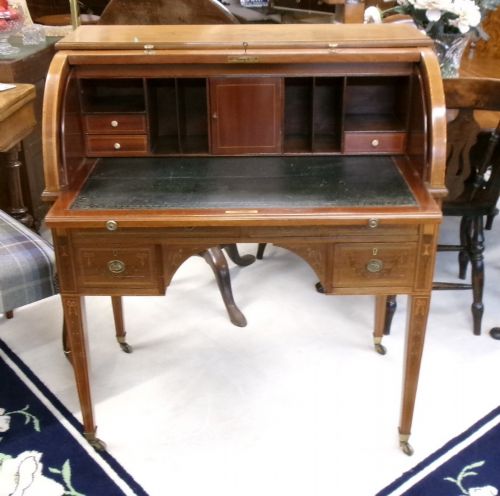


Sheraton Roll Top Desk
These sheraton roll top desk pieces offer concealed writing surfaces and refined proportions, uniting Georgian elegance with Edwardian versatility for the discerning collector.
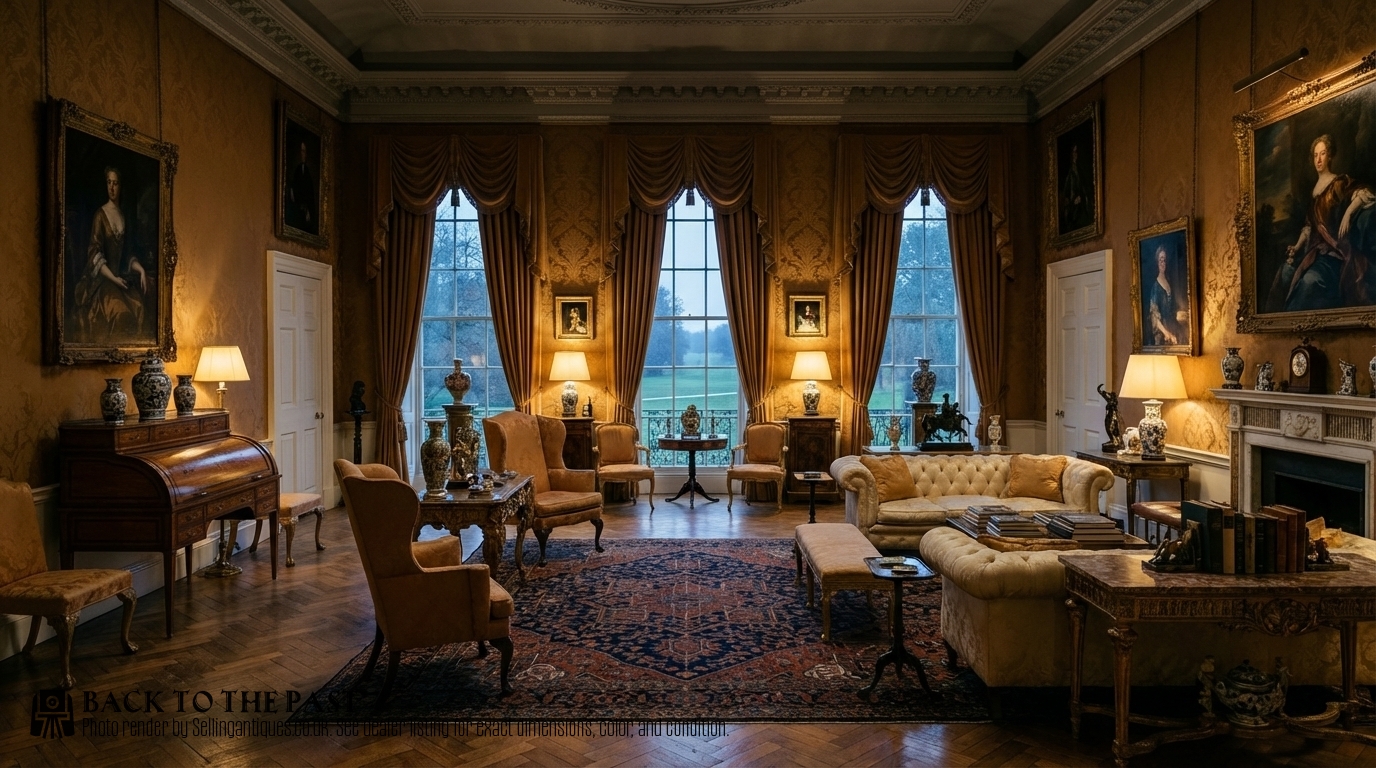
Sheraton Roll Top Desk
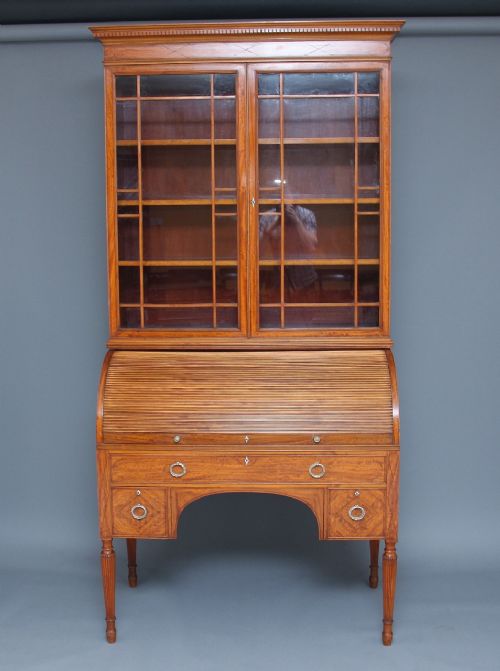
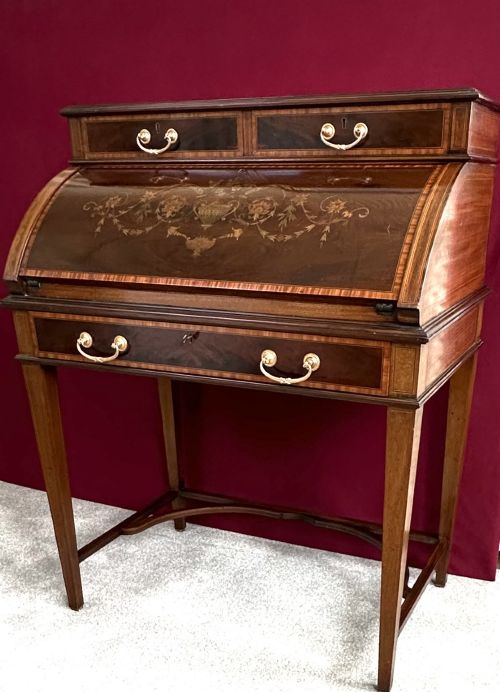
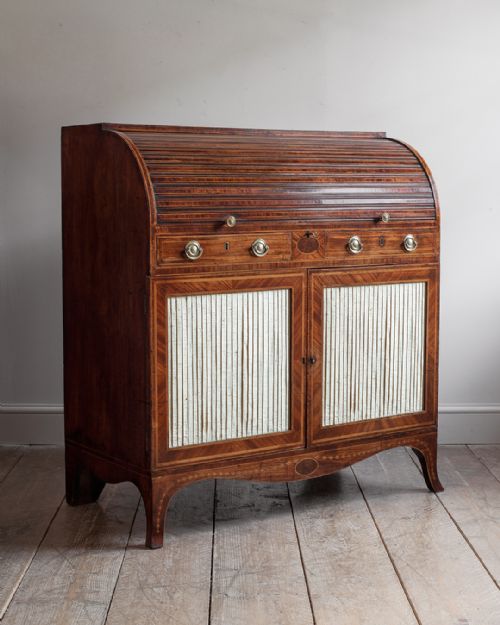
A sheraton roll top desk encompasses cylinder desks, tambour bureaux, and fall front writing furniture rooted in the eighteenth and nineteenth centuries. The listings span George III origins alongside later Edwardian and Victorian revivals.
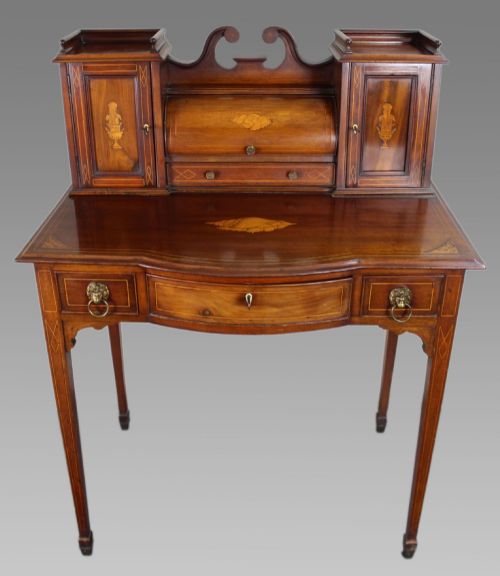
Forms vary from compact ladies desks and bonheur du jour tables to grand cylinder bookcases and secretaire cabinets. You will encounter freestanding writing desks and bureau bookcases designed with enclosed compartments.
The aesthetic draws on Sheraton principles through balanced proportions, refined writing surfaces, and deliberate use of contrasting timbers.
Materials and construction methods
Craftsmen built these pieces primarily using mahogany and satinwood, frequently enriched with delicate satinwood inlay and partridgewood elements. Structural integrity relied on precise joinery to house the flexible tambour shutters or solid wooden cylinders.
Surface appointments often incorporate fitted leather writing inserts, brass hardware, and glass panel doors for bookcase variations. Textile linings and subtle stringing details complete the execution of these refined writing cabinets.
Materials appearing across the collection include mahogany, satinwood, partridgewood, rosewood, brass, leather, glass, and textile.
Distinctions in craftsmanship and design
Superior examples demonstrate meticulous timber selection, where figured mahogany and contrasting satinwood inlay align with absolute precision across the curved cylinder or tambour mechanism. The smoothness of the sliding top reflects the underlying accuracy of the joinery.
Makers such as Edwards & Roberts contributed to the upper tier of production, particularly within the later revival periods. Finer pieces distinguish themselves through balanced proportions, integrated internal stationery fittings, and accomplished cabinet work.
Edwards & Roberts
The Sheraton Roll Top Desk Glossary
- Cylinder desk
- A writing desk featuring a quarter-circle rotating wooden shutter that conceals the desk interior when closed. This mechanism lifts as the writing slide pulls forward.
- Tambour
- A flexible shutter formed of narrow vertical strips of wood glued to a canvas backing, allowing it to run in curved tracks. It operates smoothly around the cylinder housing.
- Satinwood inlay
- Decorative wood marquetry utilising pale, lustrous satinwood to create contrasting geometric or floral patterns against a darker ground timber such as mahogany.
- Bonheur du jour
- A light ladies writing desk originating in the eighteenth century, typically featuring a small cabinet or set of drawers superstructure above the writing surface.
- Secretaire bookcase
- A tall combination piece incorporating a writing drawer or pull-down cylinder desk compartment beneath upper bookcase shelving enclosed by glass doors.
Sheraton Roll Top Desk: Frequently Asked Questions
How do cylinder desks operate?
The curved wooden cylinder slides backward into the body of the desk when the writing surface pulls forward. This action simultaneously reveals the internal pigeonholes and small drawers.
Many designs link the pull-out mechanism so that opening the writing slide retracts the cylinder automatically. This ingenious linkage keeps correspondence concealed when not in use.
What is the difference between a cylinder desk and a tambour desk?
A cylinder desk uses a solid, rigid curved wooden panel that rotates on a fixed radius within the desk carcass. It provides a smooth, unbroken sweep of timber when closed.
A tambour desk employs a flexible curtain made of narrow wooden slats attached to a fabric backing. This construction allows the shutter to follow complex curves around smaller radius corners.
Where were ladies desks placed in a period interior?
These refined writing tables typically stood in private drawing rooms, boudoirs, or upstairs sitting rooms rather than formal libraries. Their smaller scale allowed placement against pier walls or near windows for natural light.
Because many examples feature finished backs for freestanding capability, they could also occupy central positions within a well-appointed room.
How can I distinguish George III pieces from Edwardian revivals?
Original George III pieces exhibit eighteenth-century timber ageing, hand-cut joinery details, and native construction methods appropriate to the period. The patination on the mahogany and satinwood develops a deep, soft lustre over centuries.
Edwardian Sheraton Revival pieces reflect late nineteenth or early twentieth-century interpretations of these earlier classical designs. They often display crisper machine-assisted accuracy and lighter secondary timbers.