
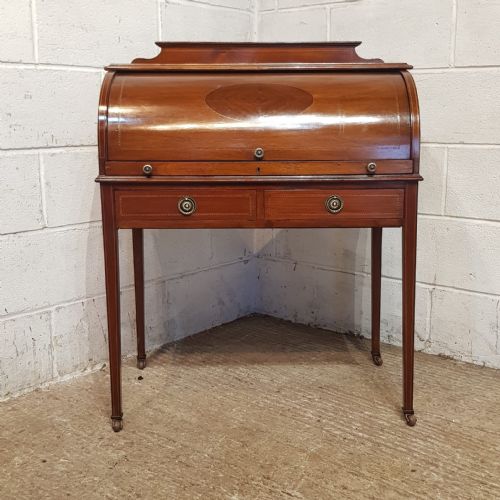
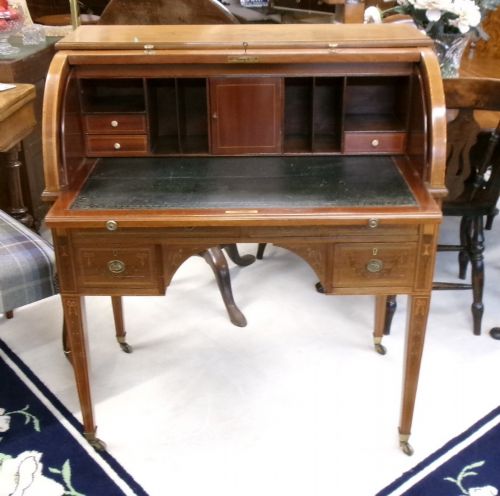


Satinwood Roll Top Desk
A satinwood roll top desk brings glowing timber and clever enclosed writing spaces into a room, offering elegance alongside practical storage.
Satinwood Roll Top Desk
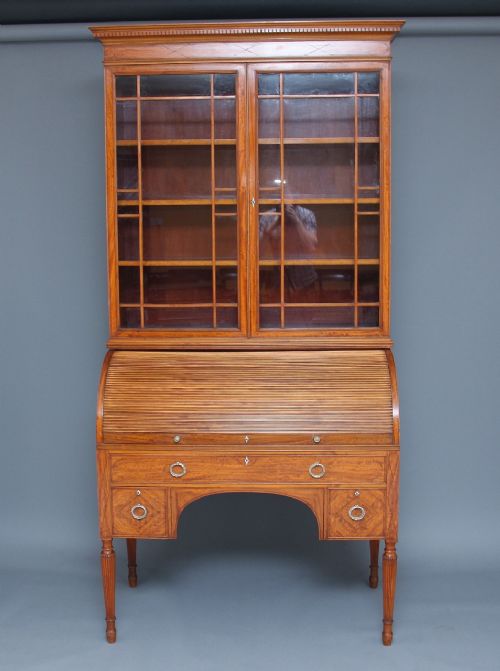
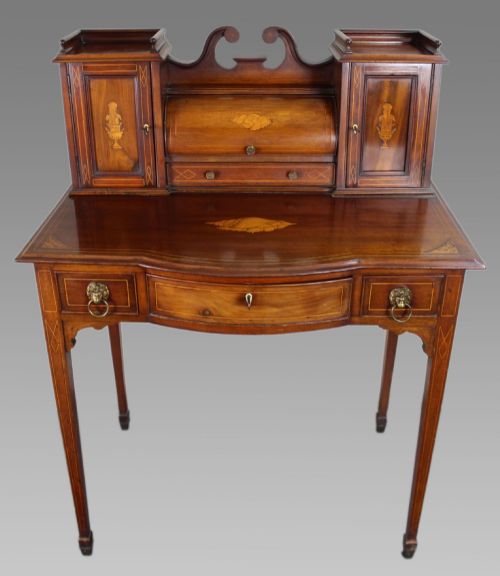
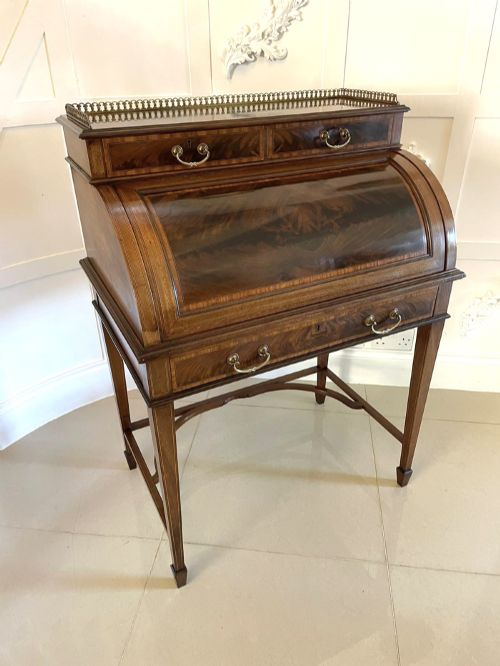
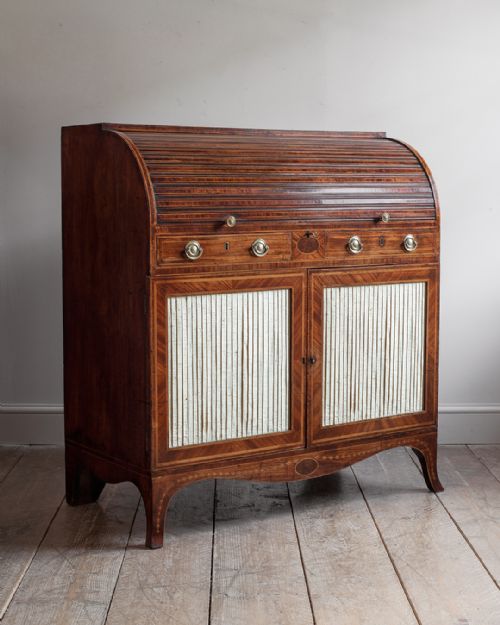
A satinwood roll top desk is a refined writing surface concealed by a flexible tambour or cylinder shutter, keeping correspondence neatly tucked away. Buyers hunting for this specific form encounter pieces spanning the late eighteenth century through the Edwardian era.
The selection here ranges from compact ladies desks and George III cabinets to larger freestanding cylinder bookcases by prominent makers. Edwardian Sheraton Revival examples appear frequently, often combining lighter mahogany structures with satinwood veneers and delicate inlays.
These pieces served as private workspaces in period homes, designed to hide the clutter of daily letter writing behind curving wooden slats. Their enduring appeal lies in this clever mechanical action paired with finely figured cabinet work.
How they were made
Cabinet makers constructed these desks using solid timbers like mahogany for the primary structure, applying luminous satinwood veneers across the exterior surfaces. Individual wooden strips were glued to canvas or leather backings to form the flexible roll top cylinder.
Brass handles, hinges and pigeonhole galleries completed the internal fittings, while satinwood inlay and contrasting stringing added geometric border decoration.
Several desks conceal tiny hidden drawers behind sliding pigeonhole partitions, designed for secret notes and private correspondence.
What varies in quality
Quality rests upon the choice of timber figurations and the precision of the joinery in the curving roll top mechanism. Superior examples display carefully matched satinwood veneers across the cylinder and drawers, operating smoothly without binding.
Finer pieces incorporate fitted interior compartments with leather writing surfaces, secret drawers and quality brass hardware that reflects skilled workshop production.
Maple and Co London·Edwards and Roberts
The Satinwood Roll Top Desk Glossary
- Satinwood
- A hard, yellow-toned timber with a natural sheen, prized in eighteenth and nineteenth-century cabinet making for decorative veneers. It takes a high polish and catches the light beautifully.
- Cylinder desk
- A writing desk with a curved, quarter-circle wooden shutter that slides back to reveal the writing surface and interior pigeonholes. When closed, it conceals the entire workspace.
- Tambour
- A flexible sliding shutter formed from narrow vertical strips of wood glued to a fabric backing. It runs in a grooved track around a curve.
- Sheraton Revival
- A late nineteenth and early twentieth-century design style inspired by the late eighteenth-century neoclassical work of Thomas Sheraton. It utilises light timbers, painted decoration and classical symmetry.
- Bonheur du jour
- A light lady's writing desk featuring a small cabinet or set of shelves fixed to the top of the writing surface. The name translates from French as day's happiness.
Satinwood Roll Top Desk: Frequently Asked Questions
How do I care for satinwood?
Keep these pieces away from direct sunlight and radiators to prevent the timber from drying out and the veneers from lifting. Regular dusting with a soft, dry cloth maintains the natural lustre of the polished surface.
Avoid using silicone sprays or harsh chemical polishes, as they can damage the historic finish. An occasional application of traditional beeswax preserves the depth of the wood grain.
How does the cylinder mechanism work?
The curved wooden shutter moves within recessed tracks cut into the sides of the desk carcass. Sliding the cylinder upward guides the slats out of sight beneath the desk top.
Many period mechanisms are linked to the writing slide so that pulling the writing surface forward automatically retracts the cylinder cover.
Where were these desks placed?
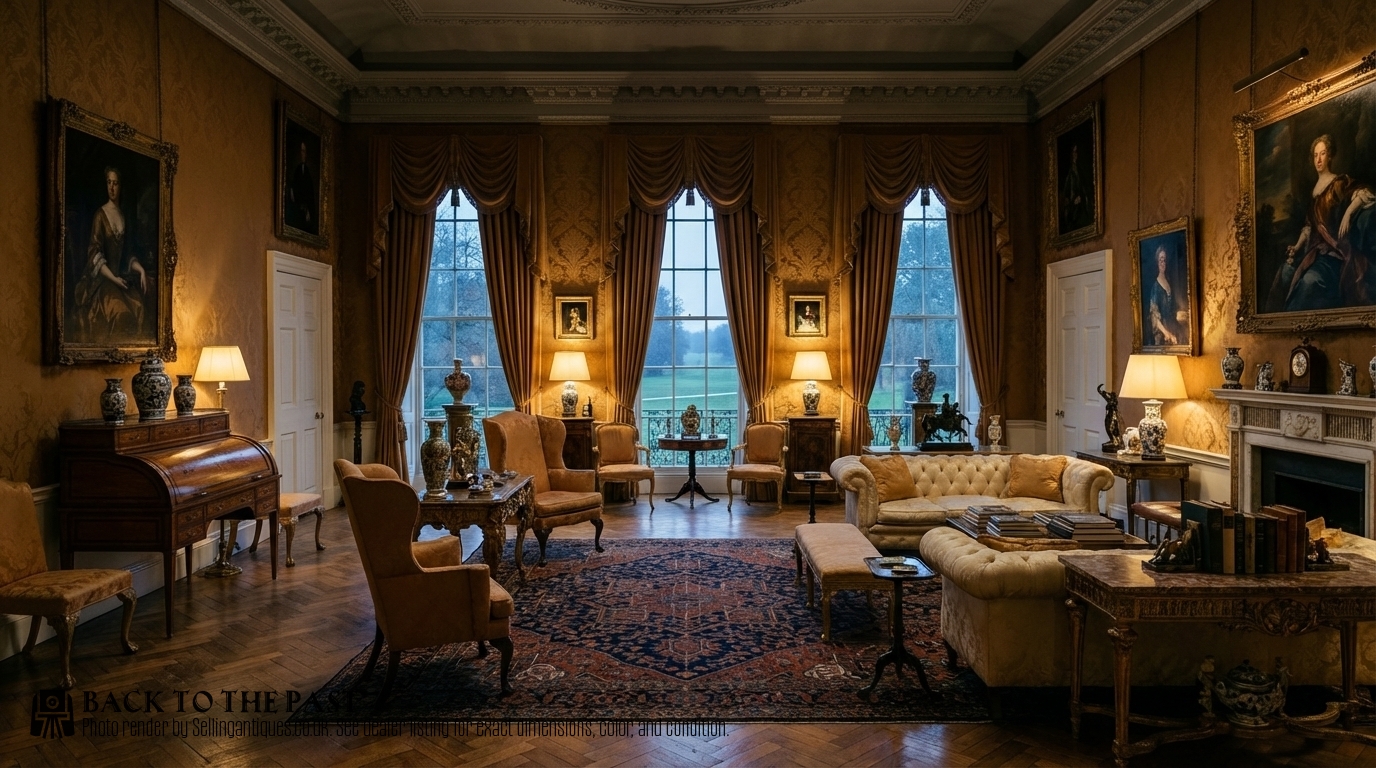
In period homes, these desks occupied private drawing rooms, boudoirs or libraries where personal correspondence took place. Freestanding versions allowed placement away from walls to display finished timber on all sides.
Their compact proportions made them suitable for smaller apartments as well as large country house studies.
How do I date a cylinder desk?
Examining the secondary timbers, construction joints and decorative styles helps determine the age of a piece. George III examples display eighteenth-century cabinet methods with hand-cut dovetails and subtle crossbanding.
Edwardian Sheraton Revival pieces often feature machine-sawn elements, brighter satinwood veneers and lighter framing characteristic of the nineteen hundreds.