

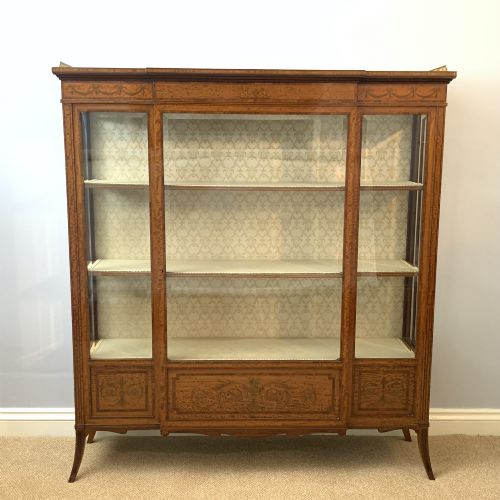
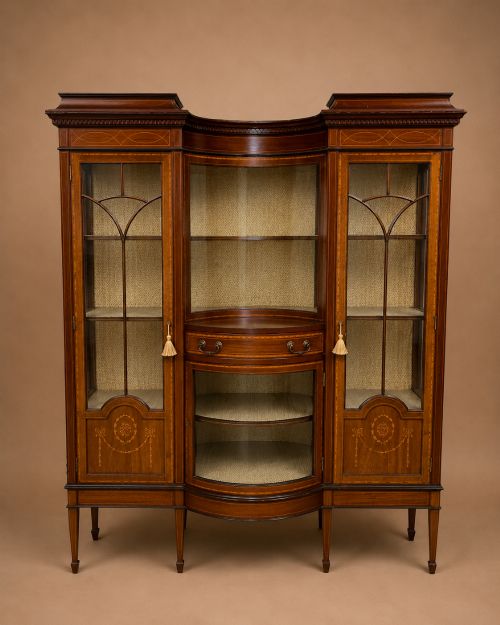
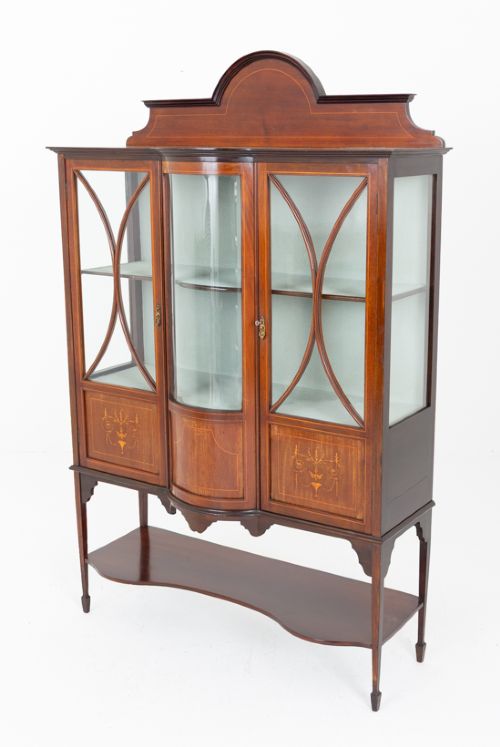
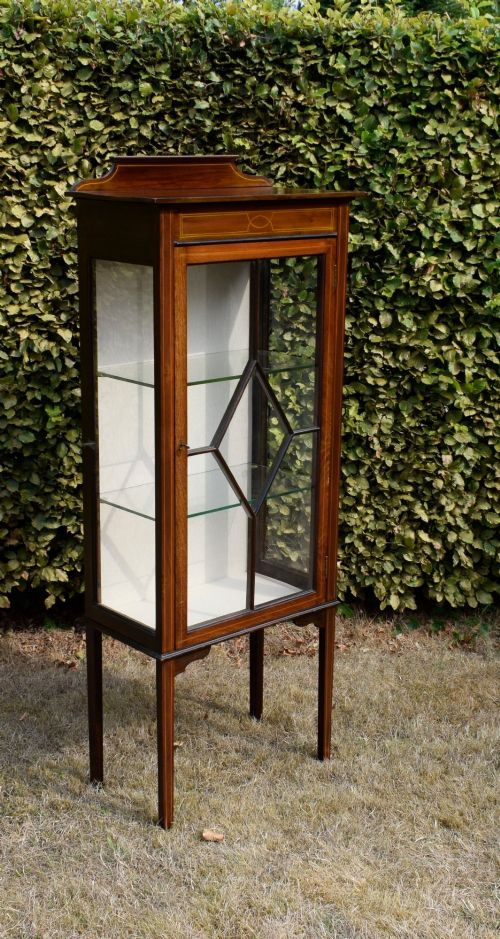
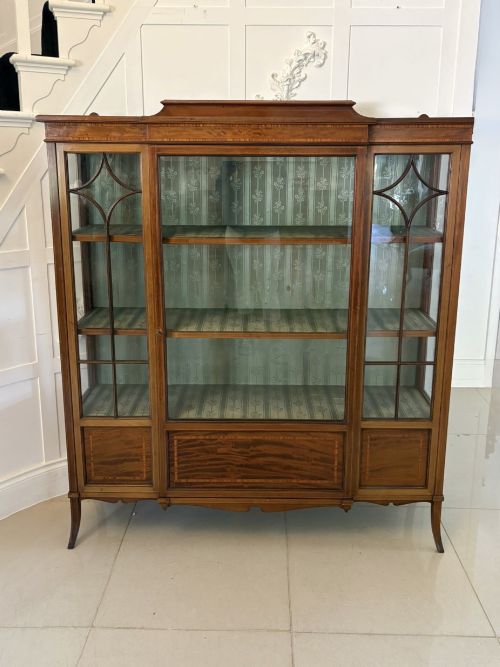
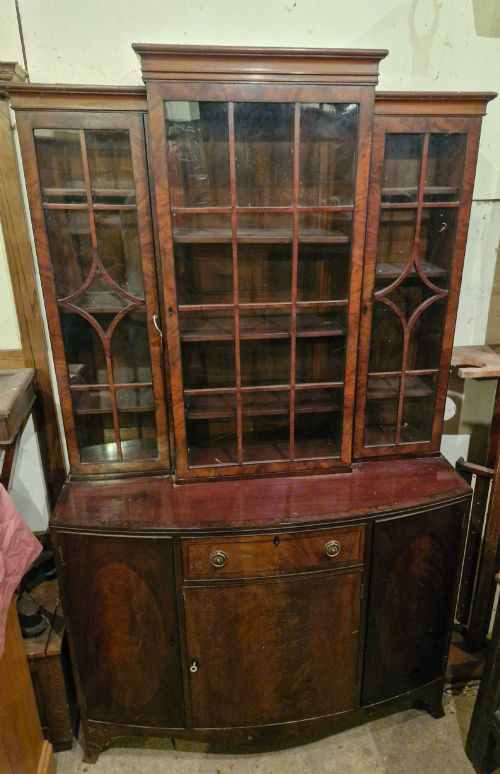
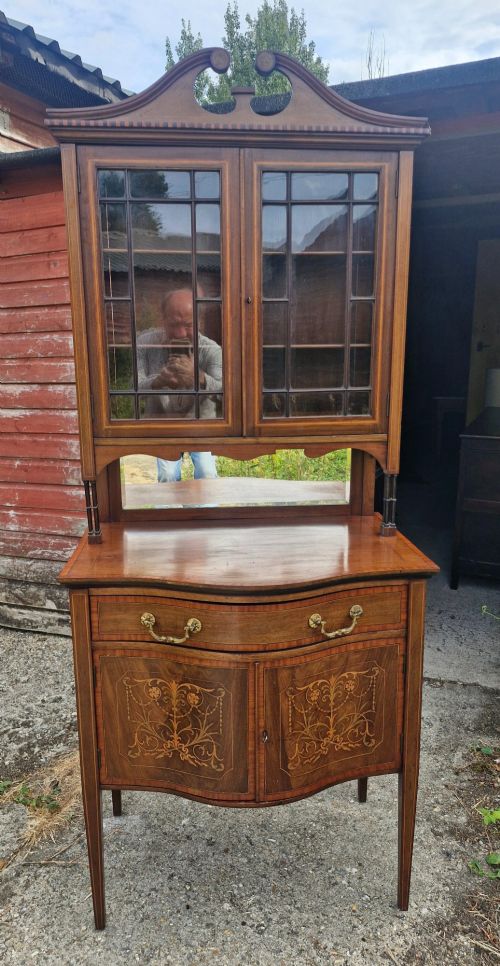
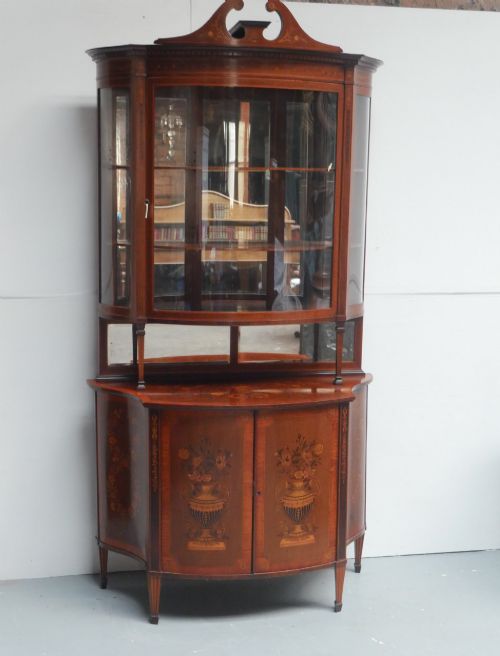
Sheraton Revival China Cabinet
These Sheraton Revival china cabinet designs combine neoclassical grace with Edwardian craftsmanship to showcase treasured porcelain behind delicate glass.
Sheraton Revival China Cabinet
A sheraton revival china cabinet brings together the lighter forms of the late eighteenth century with the cabinetmaking standards of the Victorian and Edwardian eras. The pieces recorded here span from eighteen-eighty through to nineteen-thirty, capturing a sustained appetite for neoclassical elegance in domestic display.
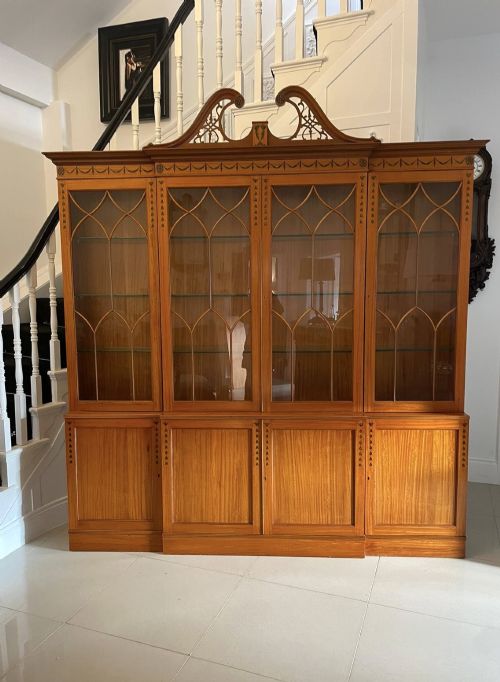
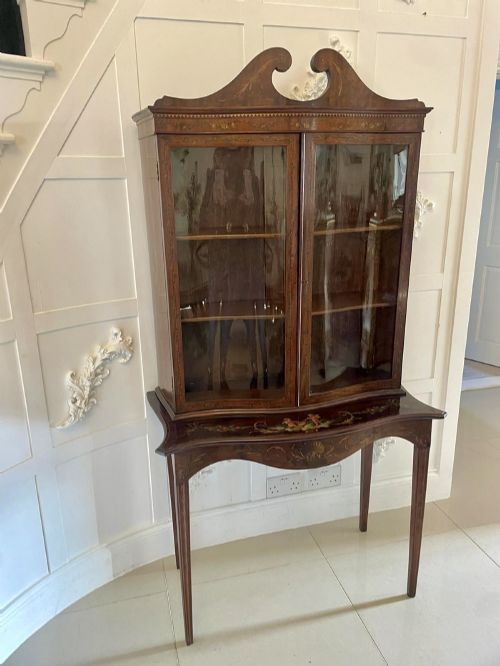
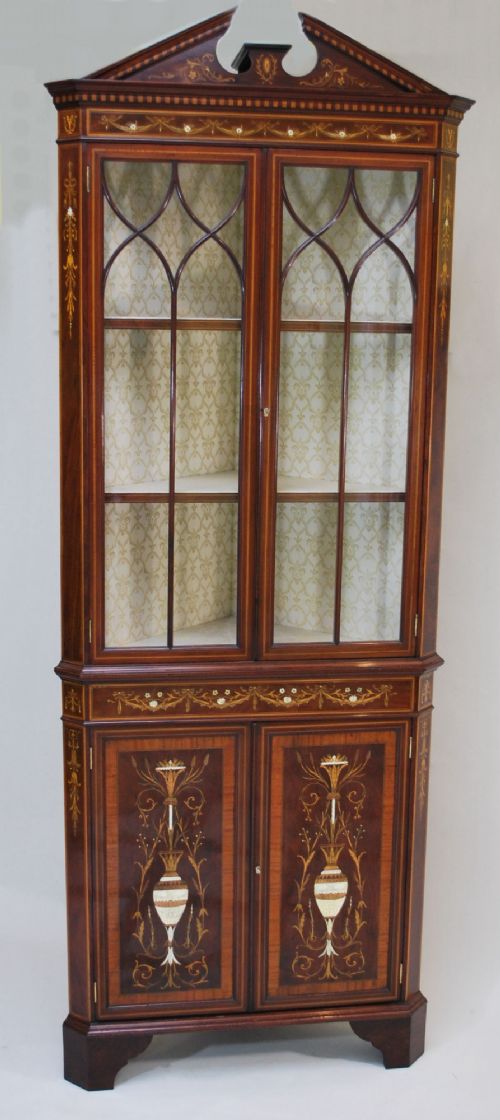
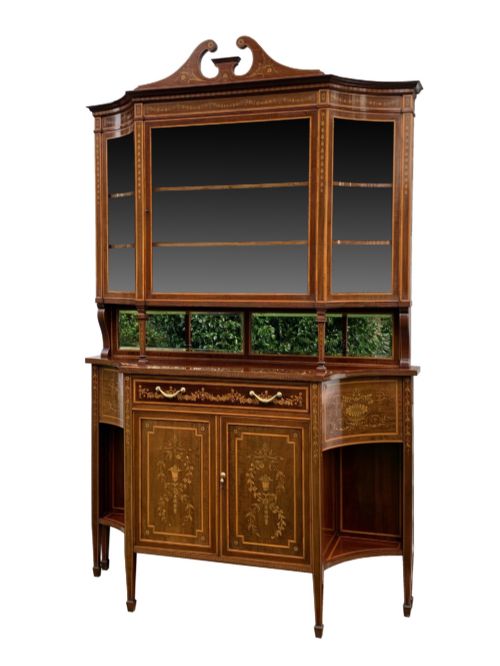
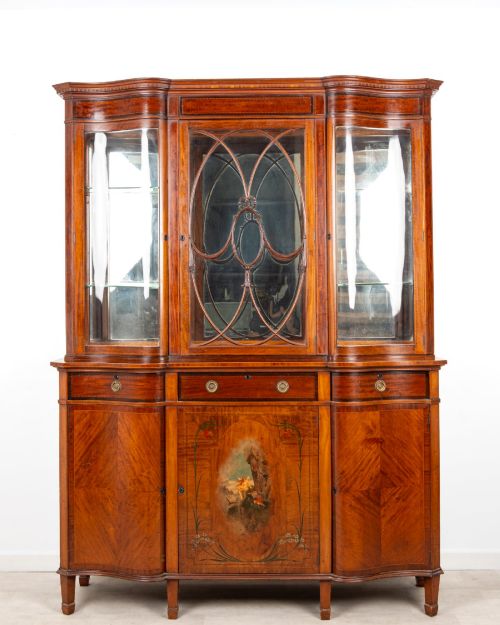
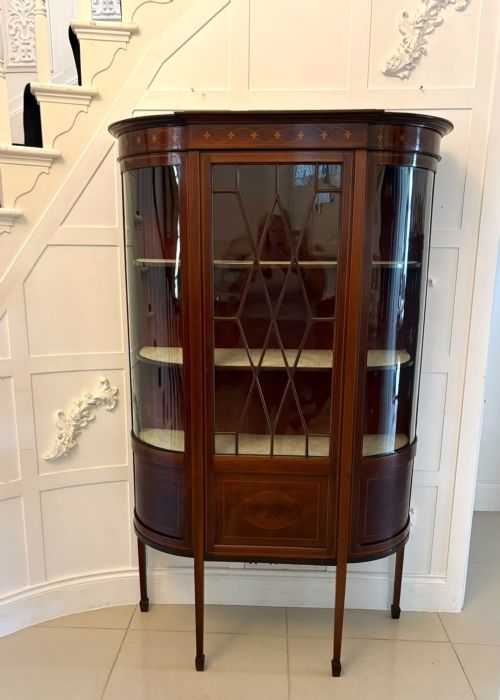
Most examples you encounter take the form of freestanding display cabinets or corner units shaped in mahogany or satinwood. Makers favoured straight-fronted models, serpentine profiles, and breakfront arrangements designed to hold porcelain behind glass panes.
The style borrows directly from Thomas Sheraton's pattern books, translating slender proportions and painted motifs into late-nineteenth and early-twentieth-century rooms. These cabinets served then, as they do now, to protect and present fine ceramics to the household.
Materials and construction
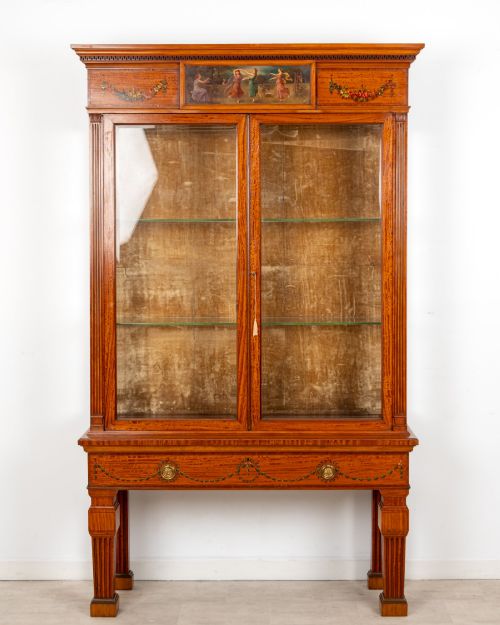
Cabinetmakers built these pieces using solid mahogany or framing them in woods ready to receive delicate satinwood veneers and intricate wood inlay. Marquetry and contrasting stringing provide the characteristic linear framing associated with the revival style.
Glazing relies on astragal bars arranged in geometric or arched patterns to divide the glass into smaller panes. Original painted decoration, often depicting floral garlands or classical ribbons, appears directly on the wood surfaces alongside cast brass hardware.
Listings for this phrase include mahogany, satinwood, and birds-eye maple, demonstrating a strong preference for figured hardwoods across Edwardian and Victorian examples.
Judging cabinet quality
Quality rests principally in the crispness of the inlay and the depth of the timber selection rather than mere ornamentation. Finer cabinets employ figured mahogany and genuine satinwood rather than painted simulations.
Structural refinement shows in the handling of curved glass, serpentine fronts, and balanced proportions across breakfront or two-part constructions. Original painted decoration preserved in clear condition distinguishes superior workshops from standard commercial output.
Hampton & Sons·Edwards & Roberts
The Sheraton Revival China Cabinet Glossary
- Astragal glazing
- Wood or metal bars holding individual panes of glass within a cabinet door. These narrow mouldings create geometric patterns that define the display area.
- Marquetry
- Decorative patterns formed by fitting contrasting pieces of veneer into a wood ground. This technique creates pictorial or floral motifs on cabinet doors and cornices.
- Serpentine front
- A furniture facade curving outward in the centre and inward at the sides. It requires considerable skill from the cabinetmaker to fit doors and drawers to this undulating shape.
- Breakfront
- A cabinet design where the central section projects forward from the flanking wings. This configuration breaks the linear monotony of a large wall piece.
- Satinwood
- A durable tropical hardwood with a lustrous yellow sheen often used for veneering and inlay. It forms the pale contrasting panels characteristic of Sheraton revival pieces.
Sheraton Revival China Cabinet: Frequently Asked Questions
What is a Sheraton Revival china cabinet?
It is a display piece inspired by eighteenth-century neoclassical designs, constructed primarily during the Victorian and Edwardian periods. These cabinets use lighter woods and inlaid motifs to brighten domestic interiors.
They combine glass doors for viewing porcelain with refined carpentry, reflecting a revival of interest in antique elegance.
Where were these cabinets placed in the home?
They typically stood in drawing rooms or formal dining spaces where families entertained guests. Corner versions utilised awkward angles while providing visible storage for prized porcelain.
Their slim profiles allowed them to display collections without dominating the floor space of smaller Victorian rooms.
How do I distinguish Edwardian from Victorian examples?
Victorian cabinets often feature heavier timber frames and darker mahogany finishes with dense marquetry. Edwardian pieces tend toward lighter satinwood veneers, brighter painted decorations, and airier proportions.
Overlapping dates mean stylistic details like astragal glazing patterns and inlay quality serve as better guides than age alone.
How should I care for satinwood and inlay?
Keep these pieces away from direct sunlight to prevent the satinwood and painted decorations from fading. Maintain a stable room temperature to protect delicate veneers from lifting.
Apply high-quality beeswax polish sparingly and buff gently with a soft cloth to preserve the natural lustre of the wood.