
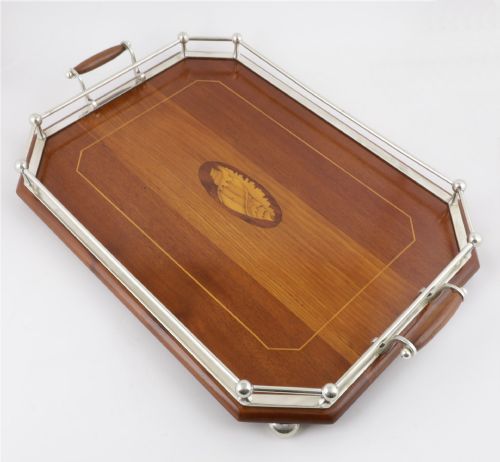
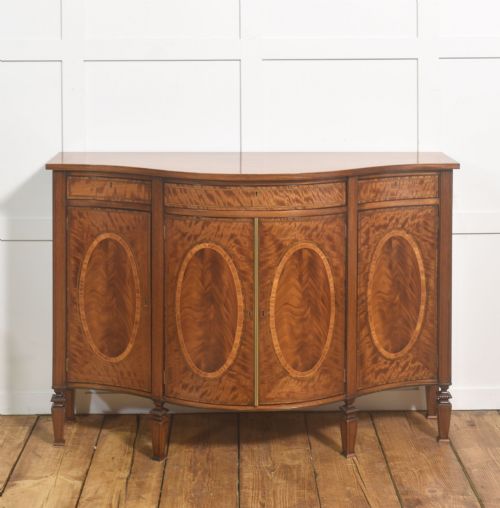
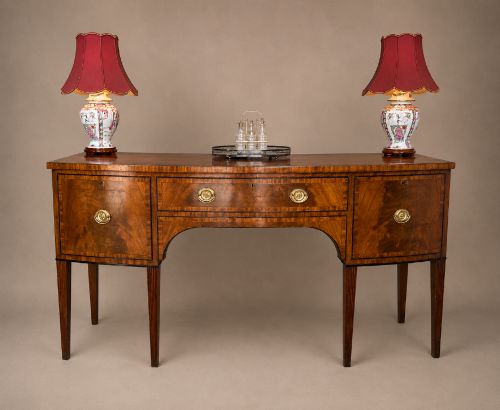
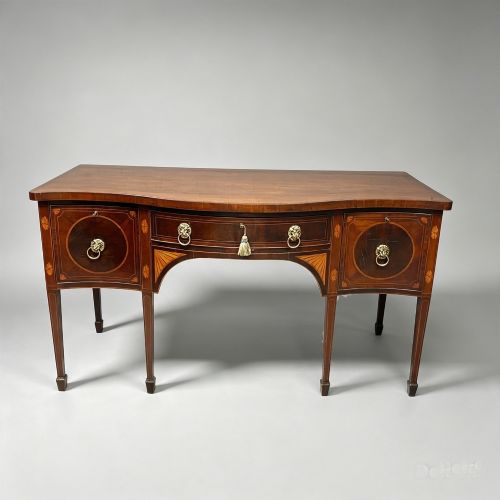
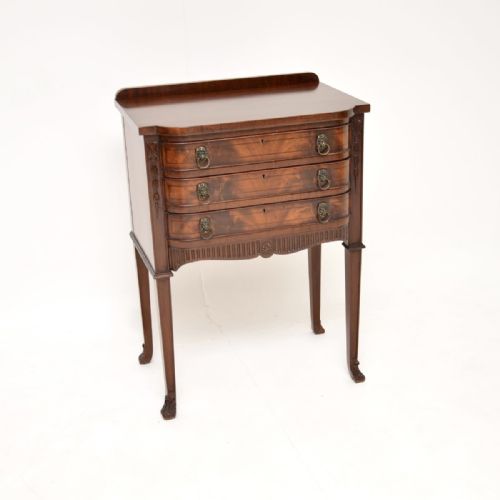
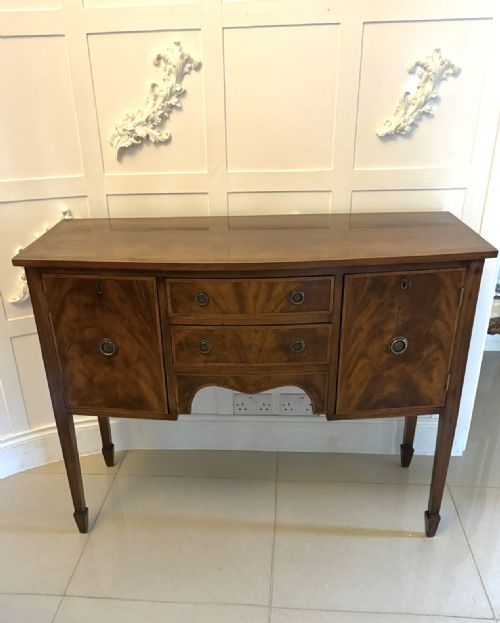

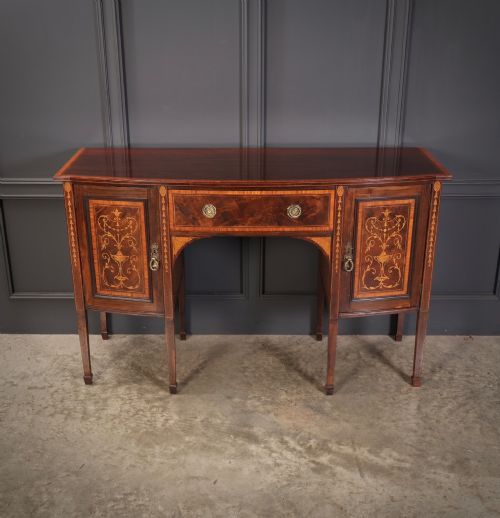
Sheraton Mahogany Server
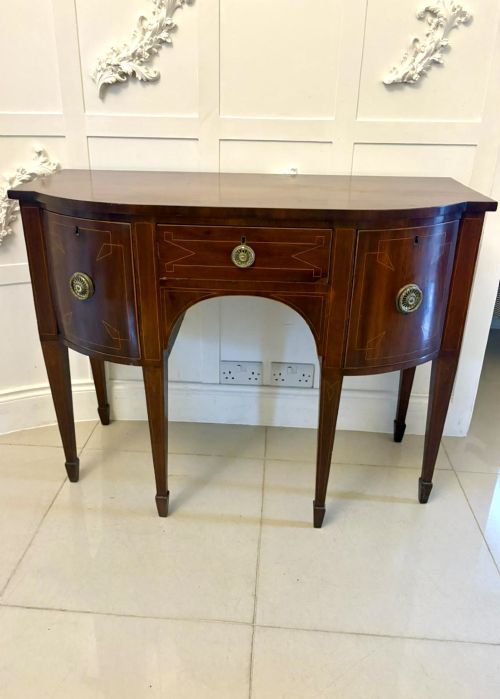
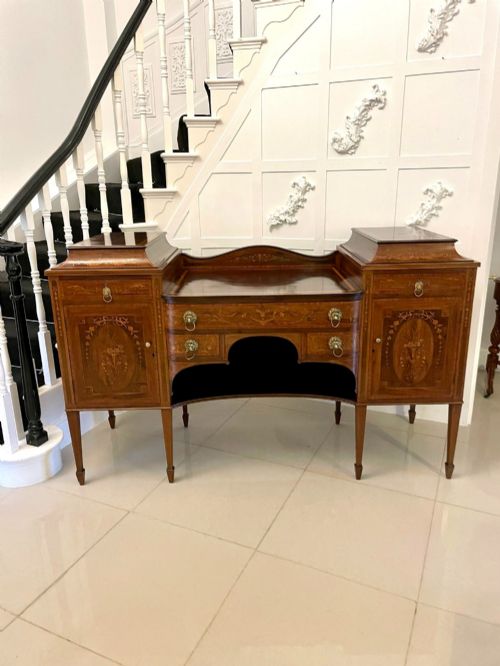
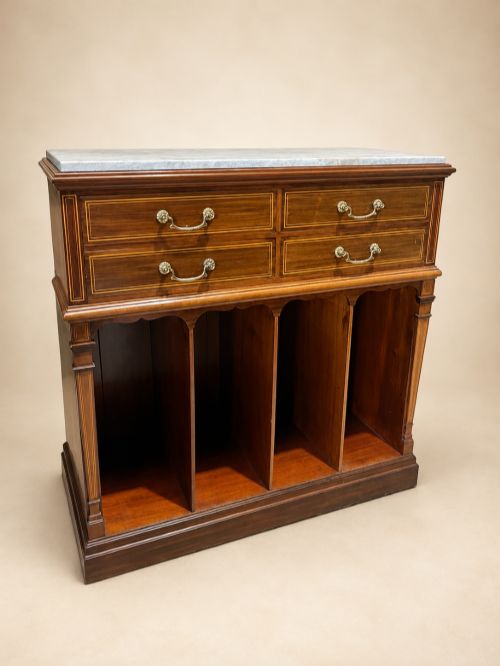
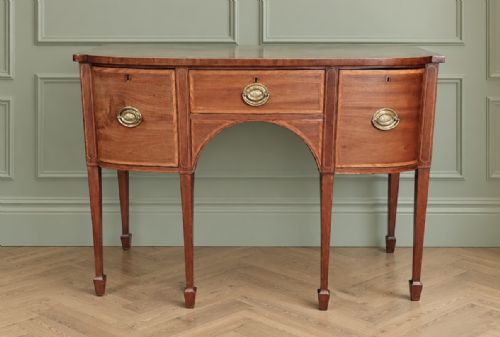
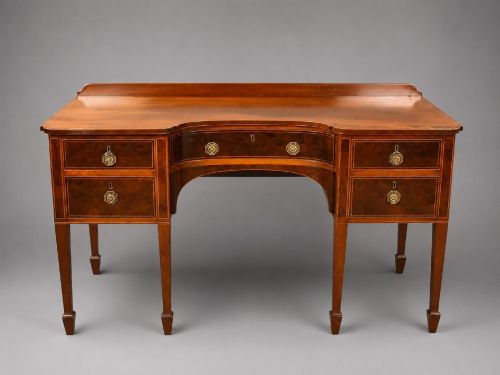
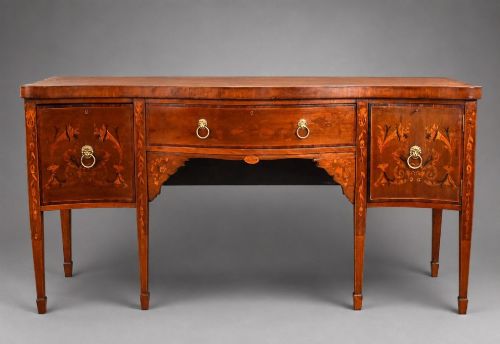
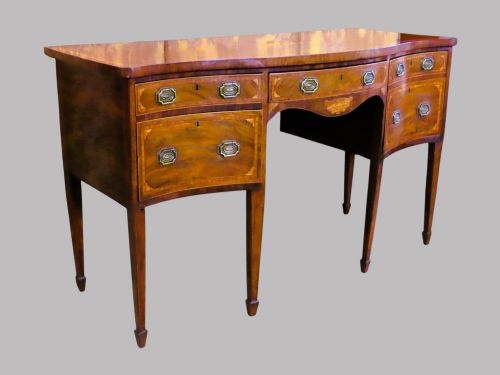
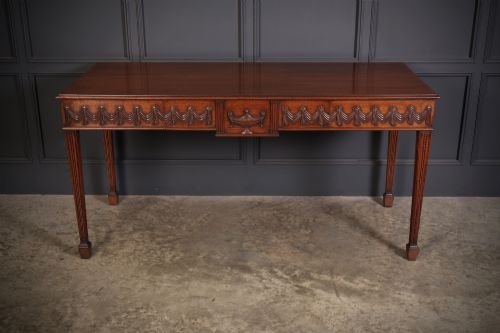
These sheraton mahogany server pieces bring refined dining room utility, combining classic timber with delicate inlay work.
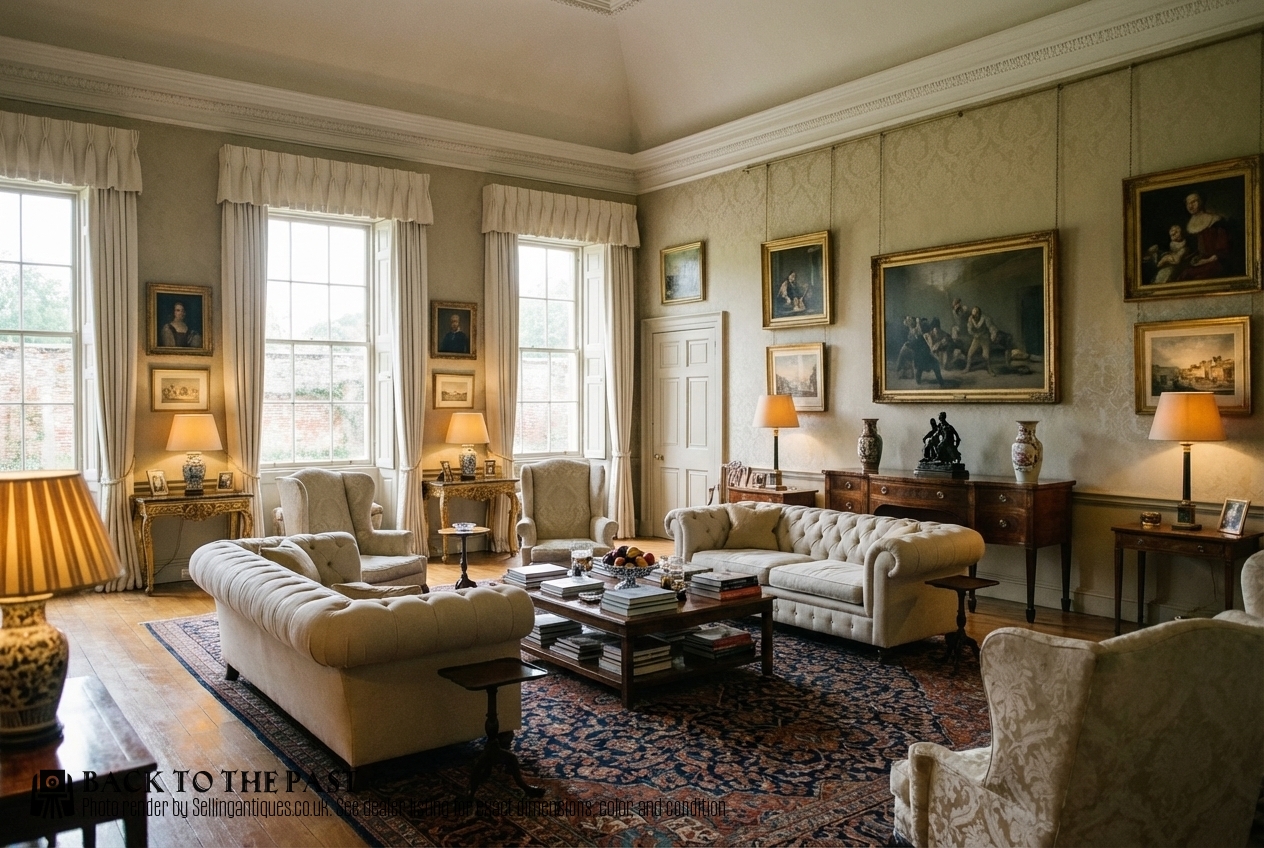
Sheraton Mahogany Server
A sheraton mahogany server typically takes the form of a sideboard, side table, or serving table designed for dining room utility. The pieces gathered here span from the 18th century and the Georgian era through to later revivals in the Edwardian period.
Buyers will most frequently encounter serpentine and bow-front sideboard designs alongside rectangular serving tables. These variations reflect both original Georgian craftsmanship and the later Sheraton Revival movement that reproduced these graceful proportions.
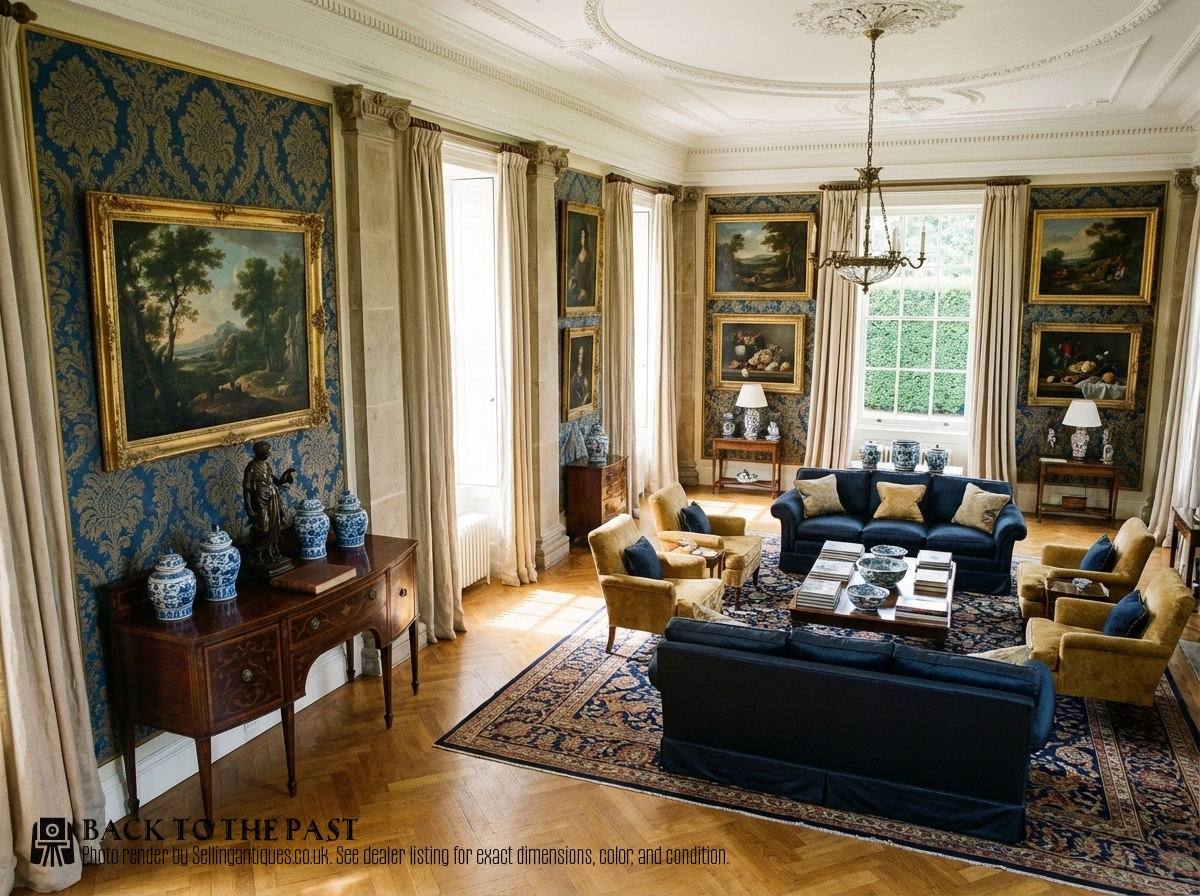
Craftsmanship and Proportion
Quality rests primarily in the crispness of the inlay work and the selection of figured mahogany veneers. Superior examples display precise botanical or geometric banding that integrates seamlessly into the curved or serpentine timber body.
Structural harmony and original hardware also dictate the tier of a piece. Well-proportioned legs, tight joinery, and well-preserved brasses elevate a server from standard utilitarian furniture to a finer decorative example.
Sheraton Mahogany Server Retail Price Guide 2026
Typical asking prices for sheraton mahogany server among the pieces listed under this phrase on Sellingantiques today, from the lower quarter to the upper quarter. They describe what is for sale here now, not the wider market.
Listings feature mahogany, satinwood, boxwood, and marble across Georgian, Edwardian, and Regency periods.
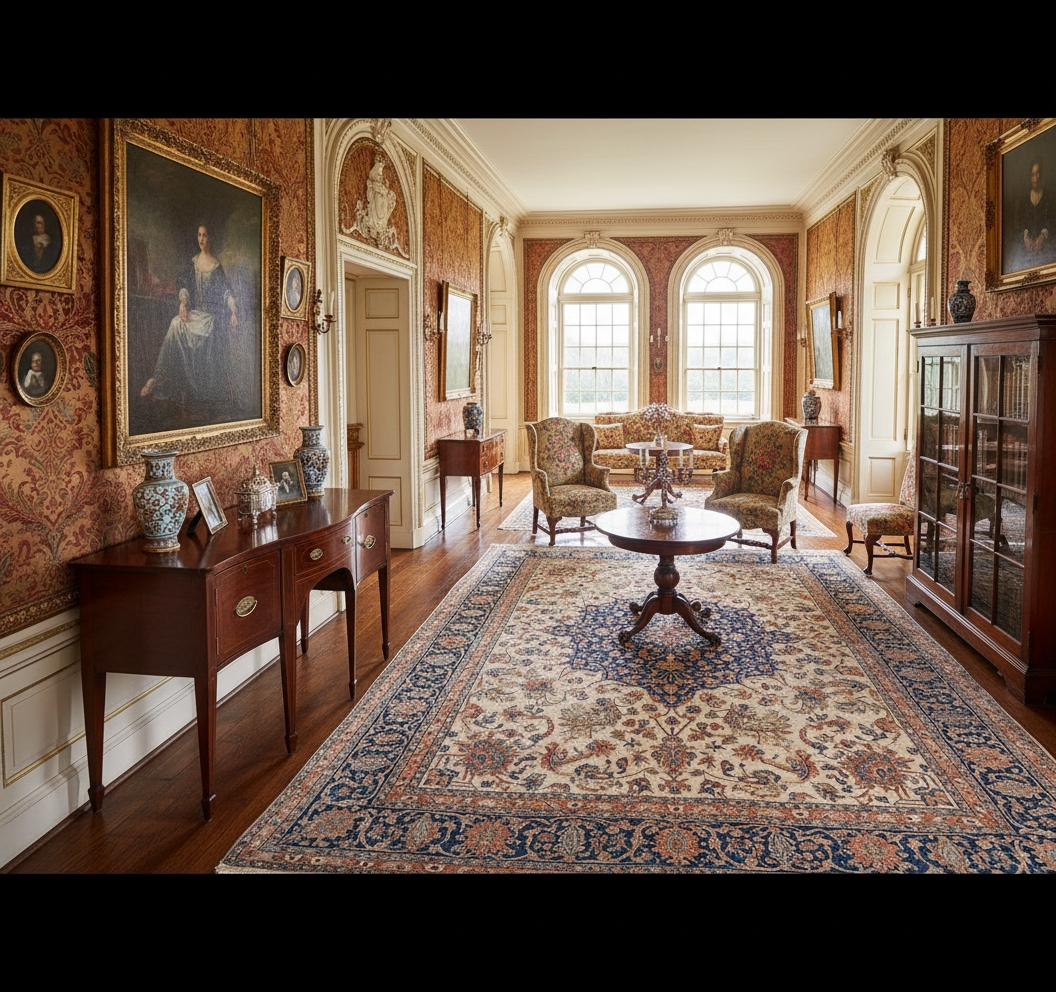
Hewetsons London
The Sheraton Mahogany Server Glossary
- Serpentine
- A front contour that curves inward centrally and swells outward at the sides. This flowing shape demands precise carpentry to match the grain across undulating timber.
- Bow-front
- A convex curved front that projects outward in a smooth arc. It serves to soften the rectangular geometry of a dining room.
- Crossbanding
- A narrow strip of veneer laid around the border of a panel with the grain running perpendicular to the centre. This technique frames the primary wood figure.
- Marquetry
- The art of creating decorative patterns using pieces of different coloured veneers. It often incorporates floral or classical motifs into the sideboard top or drawer fronts.
- Demi-lune
- A half-moon shape used for console tables and servers designed to sit flush against a wall. This profile suits smaller dining spaces while maintaining surface area.
Sheraton Mahogany Server: Frequently Asked Questions
What is a sheraton mahogany server used for?
These pieces function as sideboards and serving tables intended for dining rooms. They provide surface space for food presentation and storage within cabinetry.
Historically, they supported the service of meals in formal homes. Today, they continue to serve dining rooms or hallways as display surfaces with enclosed storage.
How do I date a sheraton mahogany server?
Dating relies on examining the timber species, construction methods, and inlay style. 18th century and Georgian pieces display hand-cut joinery and period-specific brass hardware.
Later Sheraton Revival pieces from the Edwardian era often feature machine-sawn components and brighter satinwood contrasts. Comparing the secondary woods inside drawers also helps confirm the period of manufacture.
Where should I place a server in my home?
A server suits dining rooms, large hallways, or living spaces where surface area and low-profile storage are required. Their shallow depth allows them to sit against walls without obstructing walkways.
Curved serpentine and bow-front variants work well in focal points where their detailed inlay remains visible. Demi-lune shapes fit neatly into corners or narrower wall spaces.
What is the difference between a sideboard and a server?
Sideboards generally incorporate more extensive cabinetry with multiple cupboards and drawers for heavy dining storage. Servers often present a lighter, more open form with fewer cupboards or rely on a table base.
In practice, the terms overlap frequently in antique descriptions. Both types share the characteristic mahogany construction and classical inlay work associated with the style.