


Sheraton Mahogany Furniture
Sheraton mahogany furniture brings refined classical lines and delicate marquetry into the home, offering both elegance and utility.

Sheraton Mahogany Furniture
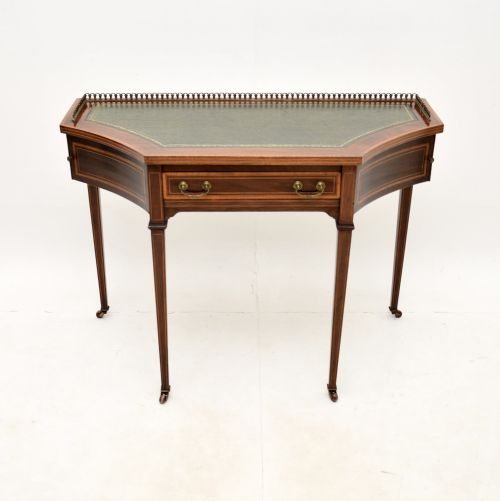
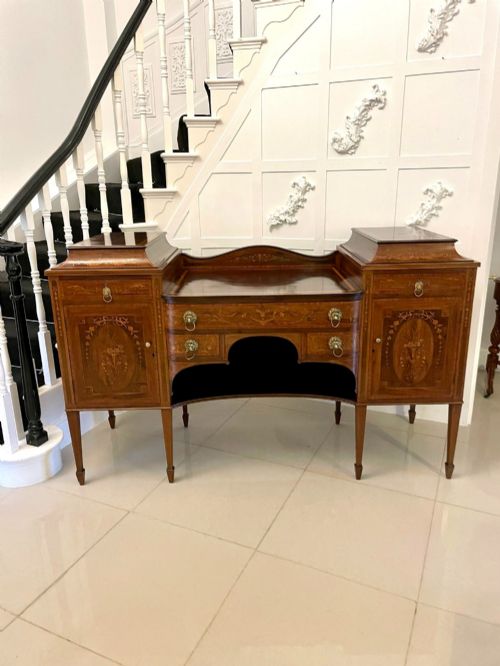
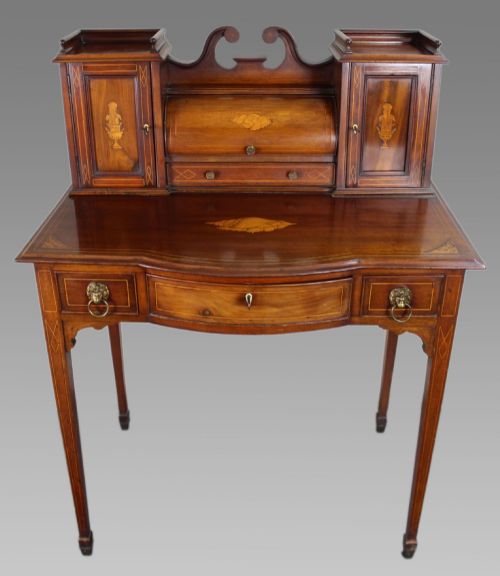
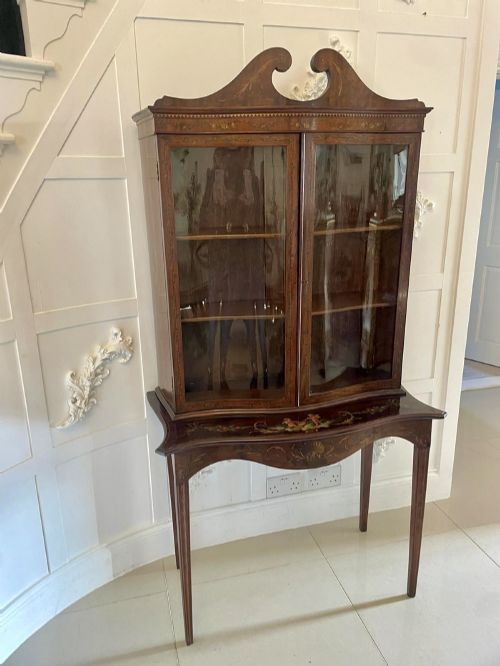
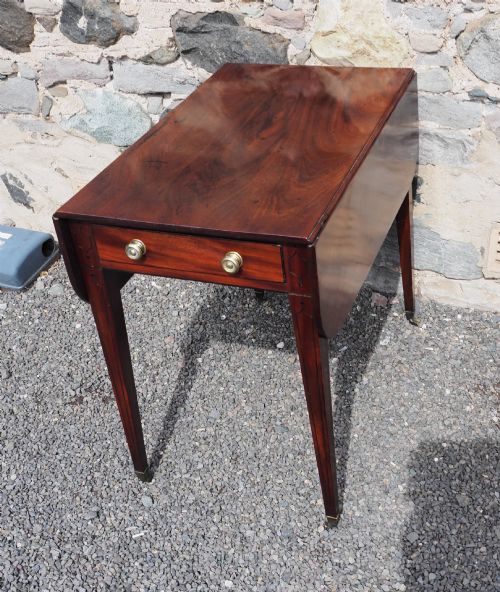
Sheraton mahogany furniture encompasses practical household forms such as sideboards, writing desks, Pembroke tables, and dining chairs originating across the Georgian, Victorian, and Edwardian periods. Buyers searching for sheraton mahogany furniture will encounter authentic 18th-century examples alongside later revival interpretations from the 19th and early 20th centuries.
Originating from the late 18th-century design idiom, these items emphasise straight tapered legs, geometric proportions, and balanced symmetry. Surviving examples reflect both original period manufacture and subsequent Edwardian revivals utilising similar craftsmanship.
Materials and Construction
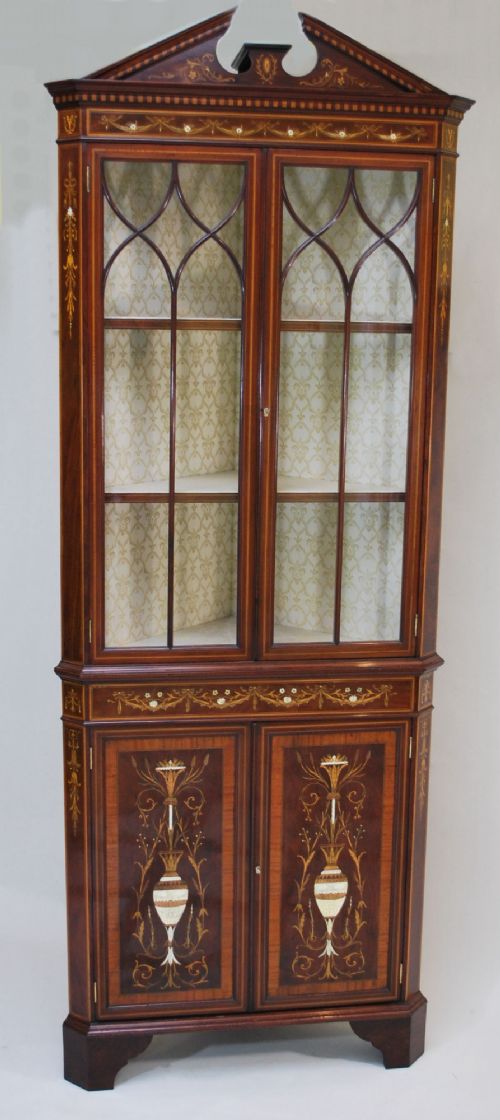
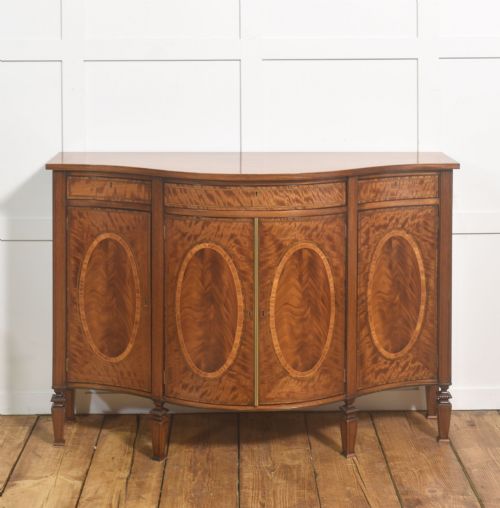
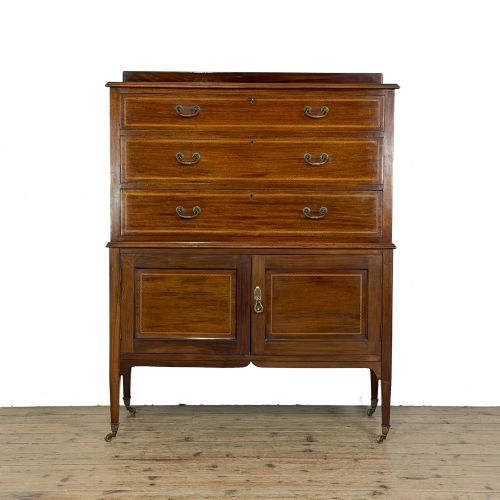
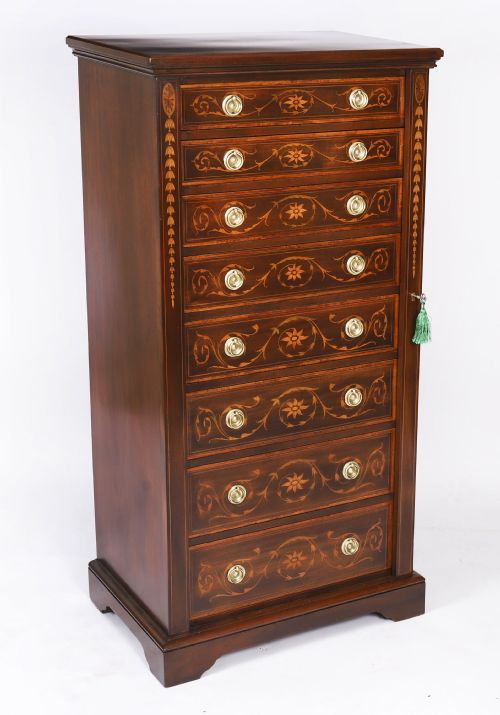
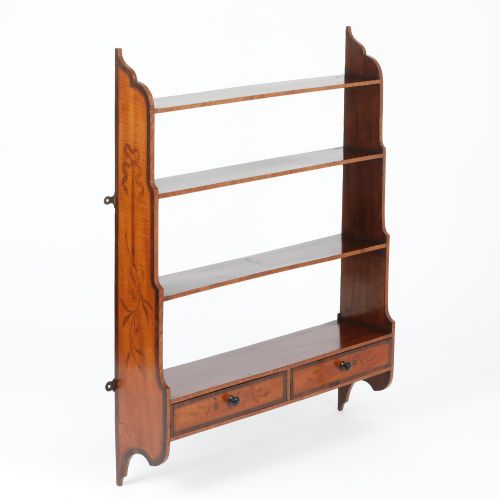
Makers utilised solid mahogany and figured mahogany veneers over secondary timbers, chosen for stability and rich grain patterns. Surfaces frequently display contrasting inlay and banding executed in satinwood, boxwood, and other pale timbers.
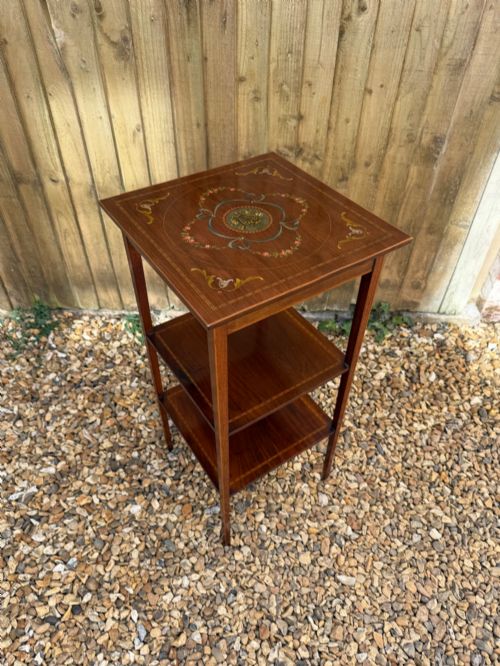
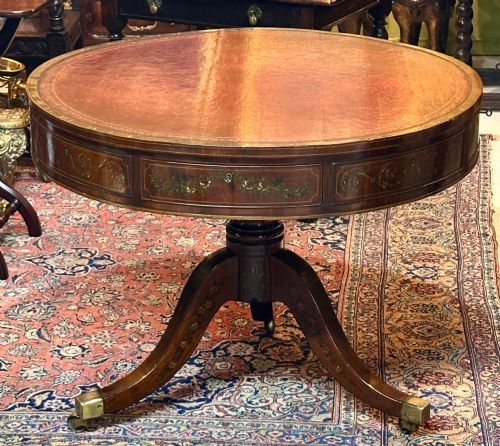
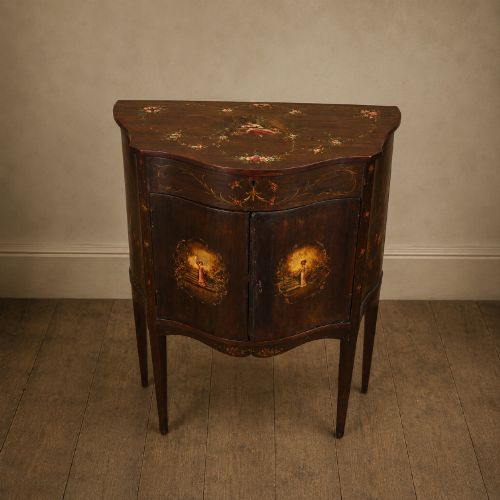
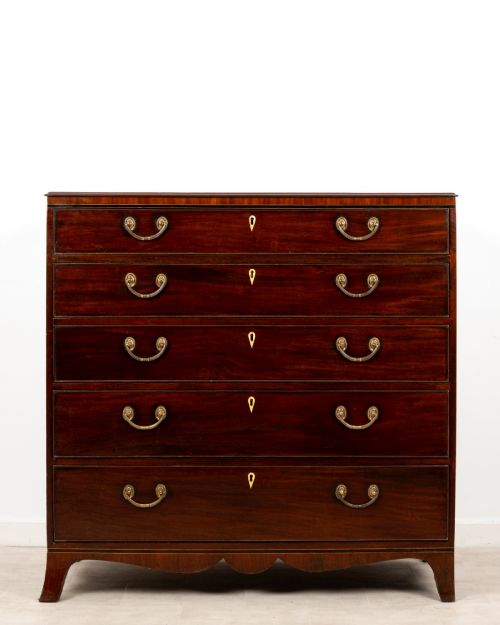
Craftsmen incorporated fine decorative details such as hand-painted floral motifs, glass panels for display pieces, and solid brass hardware including handles and key escutcheons. Structural integrity relied on traditional joinery methods tailored to each form, from dining chairs to cylinder top desks.
Revolving bookcases let studious Victorians spin their entire reference library with a single polite flick of the wrist.
Evaluating Quality and Craftsmanship
Quality rests upon the selection of figured timber for primary surfaces, where carefully matched grain patterns create visual depth on tabletops and drawer fronts. The crispness and precision of the inlaid stringing and marquetry further distinguish superior examples from simpler production.
Hewetsons London·J Shoolbred
The Sheraton Mahogany Furniture Glossary
- Marquetry
- Decorative veneer work forming pictorial or geometric patterns using various coloured woods. This technique adorns drawer fronts and tabletops on finer pieces.
- Satinwood
- A pale, lustrous timber native to India and Ceylon used extensively for contrasting inlay and banding. It provides a bright visual counterpoint to dark mahogany.
- Pembroke table
- A small rectangular table with hinged drop flaps on either side, supported by folding brackets. These versatile tables served various domestic functions.
- Stringing
- Thin inlaid lines of contrasting wood set flush into the surface to frame panels or drawers. It defines the geometric borders characteristic of the style.
- Etagere
- An open tiered piece of furniture used for displaying ornaments or books. Examples include freestanding and corner formats in mahogany.
Sheraton Mahogany Furniture: Frequently Asked Questions
How do I spot a revival piece?
Revival pieces often date from the Edwardian era or late Victorian period, identifiable by machine-sawn timber uniformity and secondary woods typical of 1900 manufacture. They faithfully copy earlier George III proportions but utilise contemporary construction methods.
Examine the interior drawer construction, backboards, and secondary framing timbers to ascertain the true manufacturing era of the item.
Where were these pieces used originally?
Sheraton mahogany furniture graced the principal reception rooms, dining rooms, and private studies of well-appointed Georgian and Edwardian residences. Items like Pembroke tables and sideboards fulfilled specific daily dining and hosting needs.
Desks and revolving bookcases served the library or parlour, while display cabinets showcased porcelain and collectibles in drawing rooms.
How should I care for mahogany surfaces?
Maintain mahogany furniture by dusting regularly with a soft, dry cloth and avoiding placement near direct heat sources or strong sunlight. Proper humidity control prevents veneer lifting and timber splitting over time.
Apply traditional beeswax periodically to nourish the grain and preserve the warm patina built up across the centuries.
What defines the style?
The aesthetic relies on classical restraint, straight tapered legs, architectural cornices, and balanced proportions inspired by antiquity. Ornamentation remains refined, favouring fine veneer matching and delicate inlay over heavy carving.
This disciplined approach creates a light, graceful silhouette distinct from earlier heavier styles.