

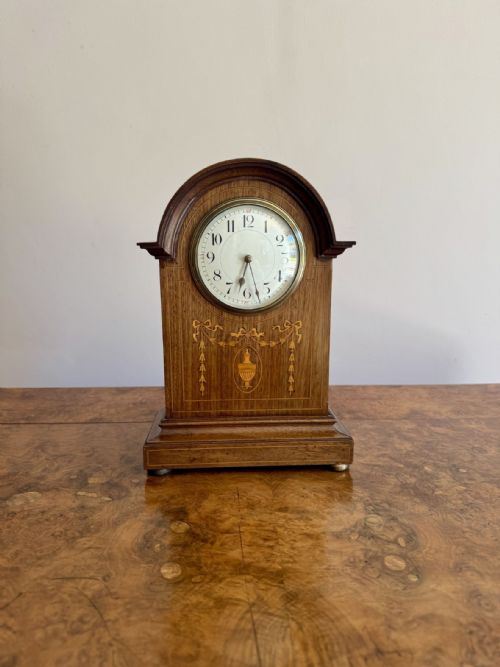


Sheraton Inlay Clock
A sheraton inlay clock brings architectural elegance and crisp marquetry into a room, offering both reliable timekeeping and period charm.
Sheraton Inlay Clock
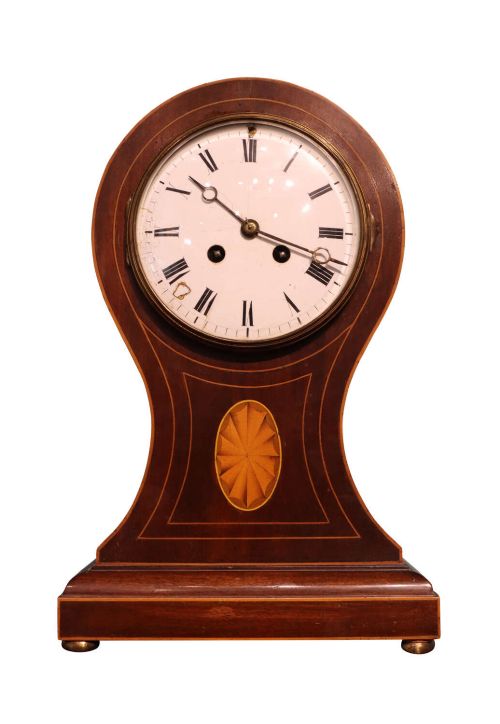
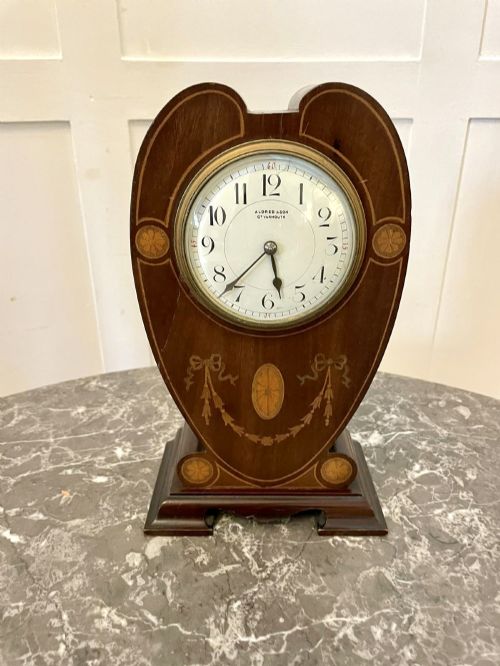
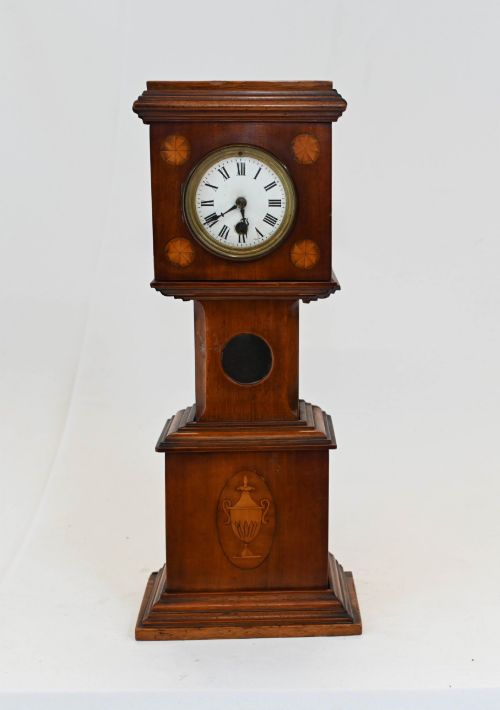
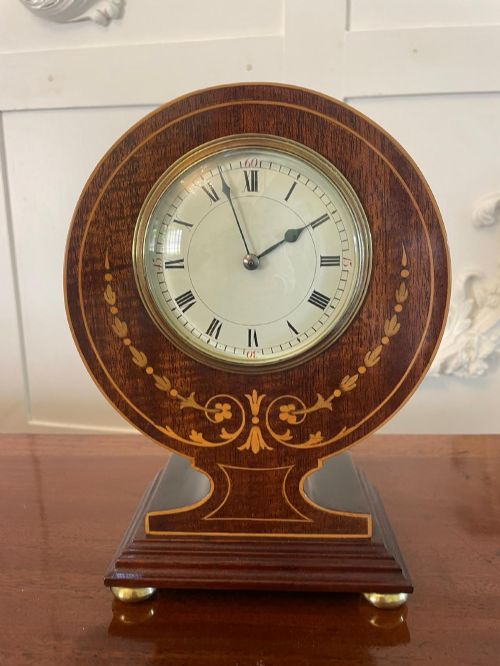
A sheraton inlay clock combines classical proportions with delicate contrasting timber details, taking forms from mantel and bracket clocks up to tall grandfathers. These pieces reflect the neoclassical taste favoured across the nineteenth and early twentieth centuries.
Most examples met on this page date from the Edwardian period or the Sheraton Revival, when cabinetmakers enthusiastically revisited lighter eighteenth-century geometries. Buyers encounter compact mantel versions alongside taller floor-standing longcase formats.
The aesthetic relies upon symmetrical arrangements, architectural break-arch shapes, and subtle stringing that frames the primary timber surfaces. Every variation maintains a restrained dignity distinct from heavier Victorian ornamentation.
Materials and Construction
Makers built these clock cases predominantly using rich mahogany, often paired with satinwood for contrasting inlay and stringing details. The natural grain provides a warm visual foundation that highlights the precision of the marquetry.
Dials frequently feature silvered metal or white enamel set behind protective glass plates, sometimes driven by single fusee movements or eight-day mechanisms. Brass feet, bezels, and handle fittings complete the structural assembly.
Sheraton Inlay Clock Retail Price Guide 2026
Typical asking prices for sheraton inlay clock among the pieces listed under this phrase on Sellingantiques today, from the lower quarter to the upper quarter. They describe what is for sale here now, not the wider market.
Judging Quality
Distinction across the range lies in the crispness of the cabinetwork and the subtlety of the contrasting timbers. Sharpened sightlines in the satinwood inlay separate superior pieces from simpler utilitarian production.
The sophistication of the internal movement and the legibility of the silvered or enamelled dial further elevate an example. Harmony between the case proportions and the decorative detailing governs the overall visual balance.
The Sheraton Inlay Clock Glossary
- Fusee
- A conical pulley used in clock movements to maintain even tension on the mainspring as it unwinds. This mechanical feature helps ensure accurate timekeeping.
- Inlay
- A technique where pieces of contrasting wood or other materials are fitted into recess depressions on the surface. It creates flat decorative patterns across the clock case.
- Marquetry
- Elaborate decorative veneer work assembled to form pictorial or geometric designs. It differs from simple linear stringing through its broader pictorial scope.
- Silvered Metal
- A brass or copper dial surface treated with a silver solution to create a muted reflective finish. Numerals are typically engraved and darkened for clarity.
- Break-Arch
- A classical pediment shape featuring a central curved rise flanked by right-angled corners. This silhouette frequently defines the top profile of mantel and longcase clocks.
Sheraton Inlay Clock: Frequently Asked Questions
How do I wind a mantel clock?
Most mechanical mantel clocks utilise a key inserted into the dial face to tension the mainspring barrels. Care must be taken not to overwind the mechanism.
Consulting the specific movement instructions helps preserve the internal brass teeth and ensures the pendulum remains in beat.
Where should I place a longcase clock?
Tall grandfathers require a stable, dry interior wall away from direct sunlight and sudden temperature shifts. Securing the tall case to the wall prevents accidental tipping.
Level flooring is essential so the pendulum swings symmetrically and the escapement ticks with an even beat.
How do I identify a revival piece?
Edwardian Sheraton Revival pieces often display machine-sawn veneer thicknesses and standardised internal movements alongside older stylistic motifs. Examining the interior construction reveals secondary timbers typical of later workshops.
These clocks capture eighteenth-century elegance while utilising early twentieth-century manufacturing improvements.