


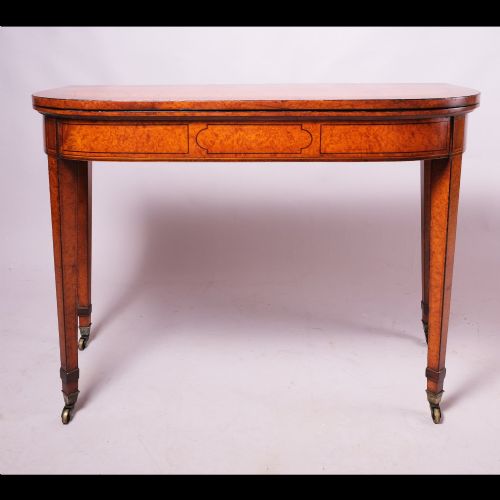
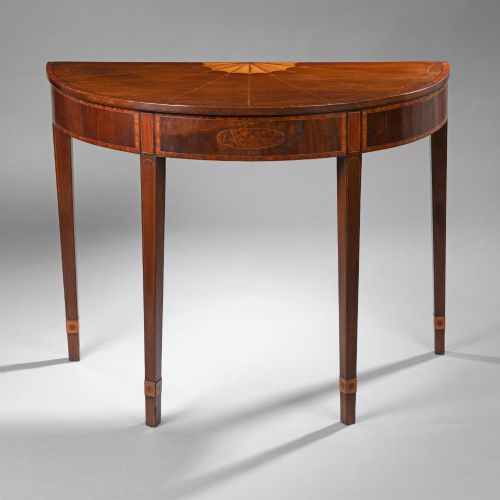
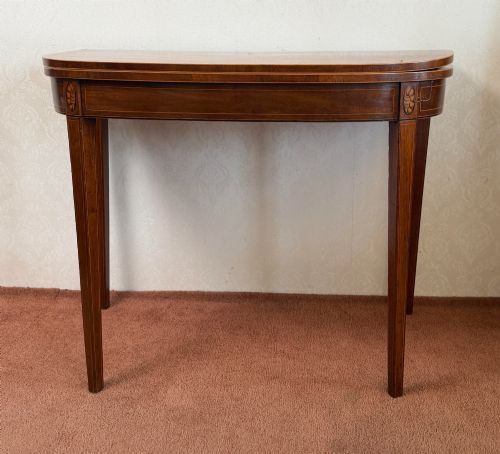
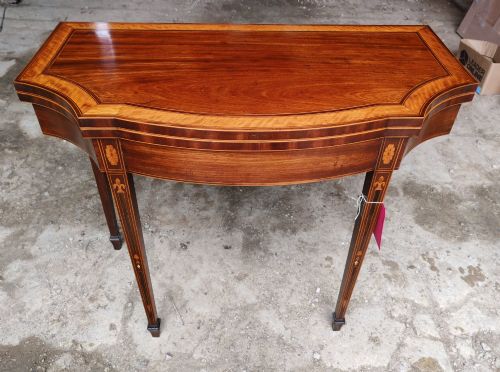
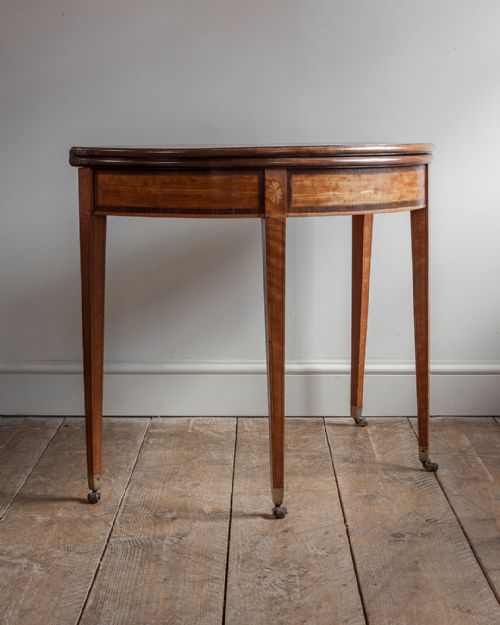
Sheraton Inlaid Console Table
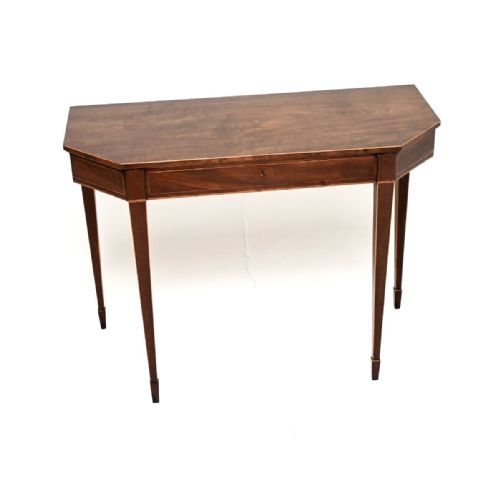
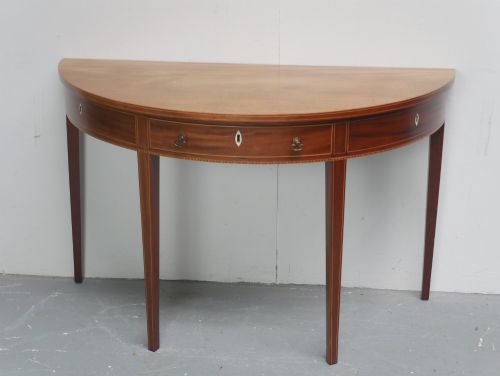
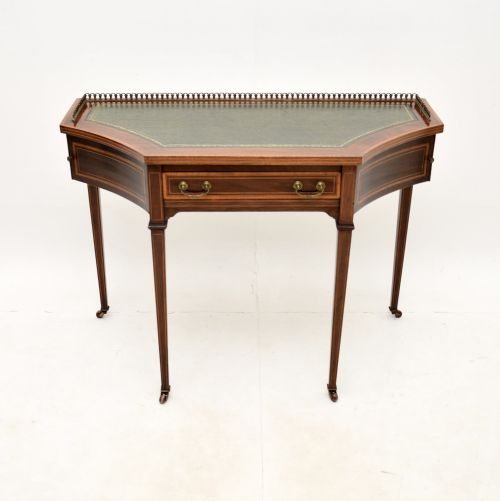
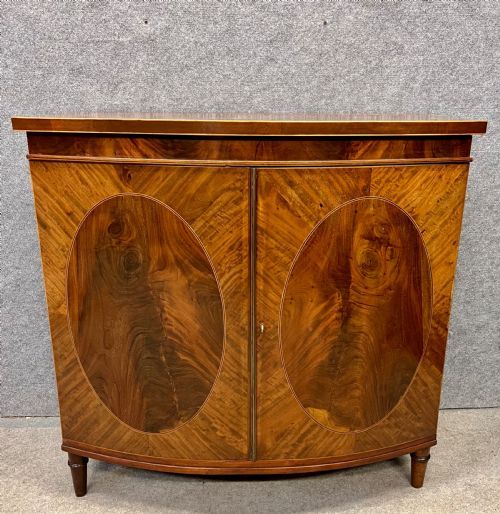
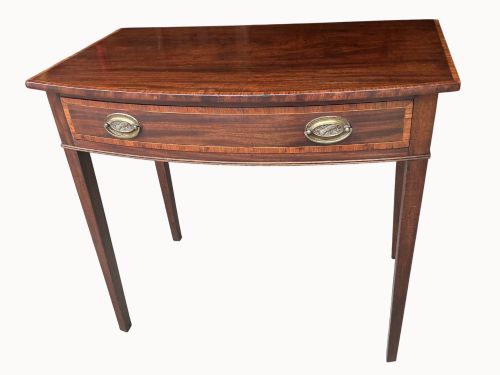
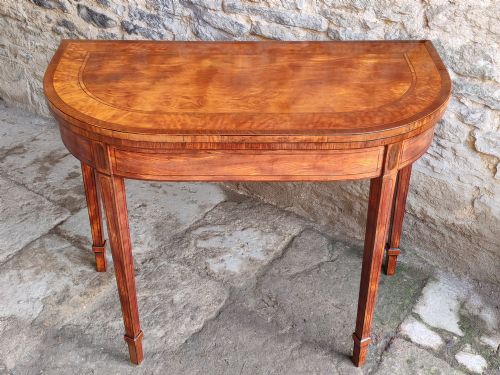
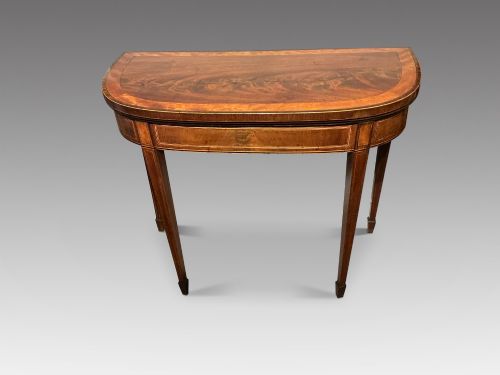
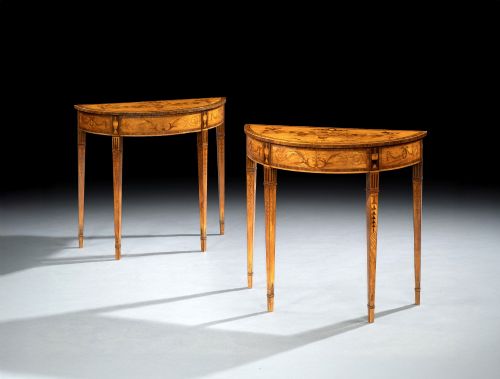
A sheraton inlaid console table brings symmetry and refined timber work to a room, taking the form of card tables, side tables, and demi-lune servers.
Sheraton Inlaid Console Table
When you search for a sheraton inlaid console table, you are looking at items designed with classical proportions, often appearing as demi-lune tables, card tables, and side tables.
The versions you are most likely to meet on this page span the Georgian and Edwardian periods, alongside later Sheraton Revival pieces.
These items originate in mahogany, satinwood, and walnut, frequently featuring half-moon shapes that fit snugly against a wall.
How they were made
Cabinet makers built these tables using solid mahogany and satinwood timbers, often applying figured veneers to the primary surfaces for visual depth.
Inlay and marquetry work utilised contrasting woods such as boxwood to create delicate banding and geometric or floral motifs along the edges and legs.
Folding tops on card and tea tables relied on wooden hinges or pivoting frames to conceal internal compartments.
Listings feature items spanning the Georgian, Regency, Victorian, and Edwardian periods, constructed in mahogany, satinwood, walnut, and amboyna.
What varies in quality
The crispness of the boxwood inlay and the intricacy of the marquetry distinguish standard pieces from more ambitious workshops.
Figured mahogany or satinwood on the top surface demonstrates a more deliberate selection of raw timber by the maker.
The subtlety of the tapered legs and the precision of the joints determine the structural elegance of each table.
The Sheraton Inlaid Console Table Glossary
- Demi-lune
- A half-moon shape popular for console and card tables designed to stand flat against a wall. This form allows the table to occupy minimal floor space.
- Satinwood
- A pale, hard wood with a natural sheen utilised for decorative veneers and inlay work. It contrasts strongly with darker timbers like mahogany.
- Marquetry
- The art of forming decorative patterns using thin pieces of wood veneer. Artisans fit these pieces together to create pictorial or geometric designs.
- Crossbanding
- A border of veneer laid around the edge of a table top with the grain running perpendicular to the centre. This technique frames the primary timber.
- Sheraton Revival
- A late 19th and early 20th century style imitating the lighter, classical furniture designs of the 18th century. These pieces often employ mahogany and satinwood inlay.
Sheraton Inlaid Console Table: Frequently Asked Questions
How do I date a console table?
Dating relies on identifying the primary timbers, construction methods, and the style of the inlay work. Georgian pieces show period timber handling, while Sheraton Revival items often date from the Edwardian era.
Examining the secondary woods underneath provides further clues to the manufacturing decade.
Were these tables used for cards?
Many console and side tables incorporated folding leaves specifically for card games and tea. When closed, they functioned as slim side tables against the wall.
Opening the top revealed a baize-lined playing surface supported by a swing leg.
What woods were used?
Makers relied heavily on mahogany and satinwood for the primary surfaces and framing. Boxwood inlay provided sharp contrast lines along the edges and tapered legs.
Walnut also appears in several revival-period variations.