
Seventeenth Century Table
A seventeenth century table carries the heavy presence of early English domestic life in solid oak and honest joinery.
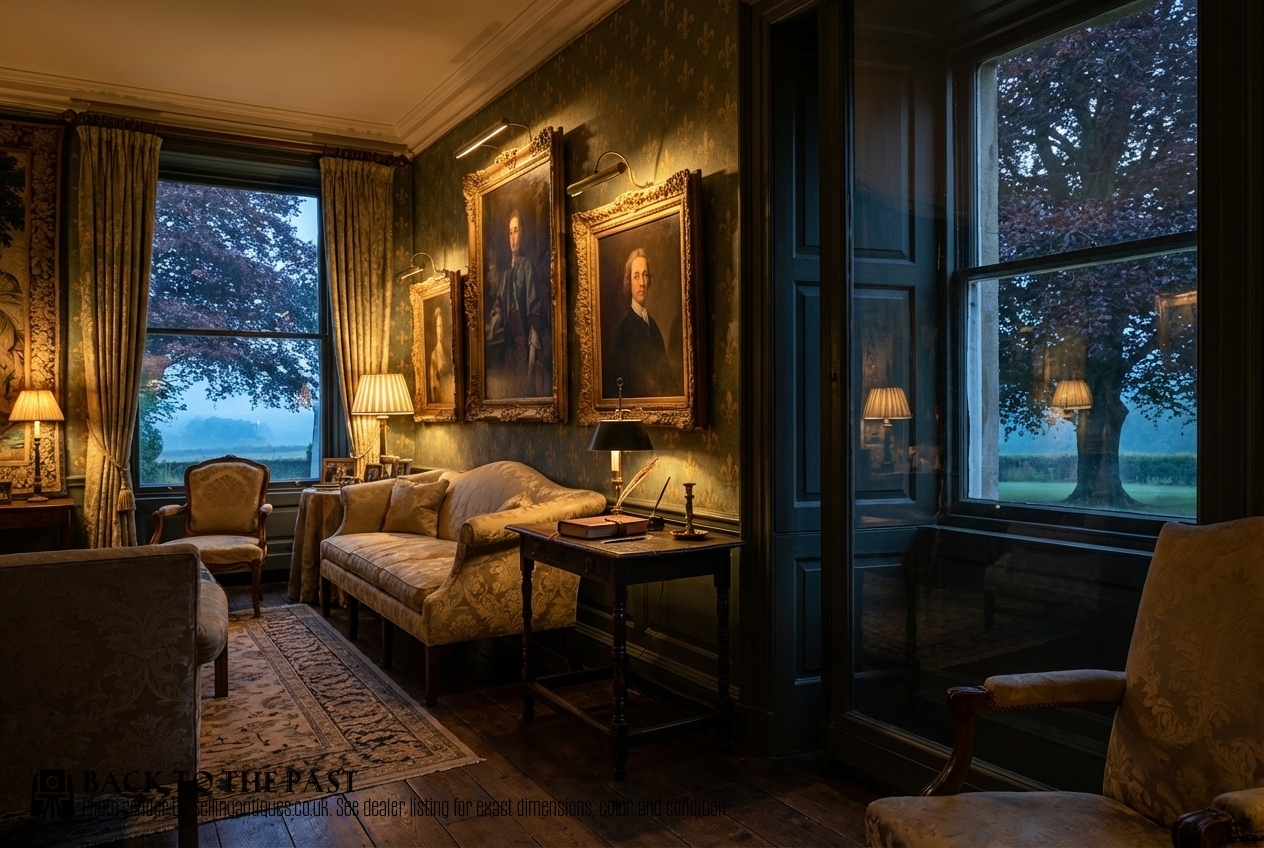
Seventeenth Century Table
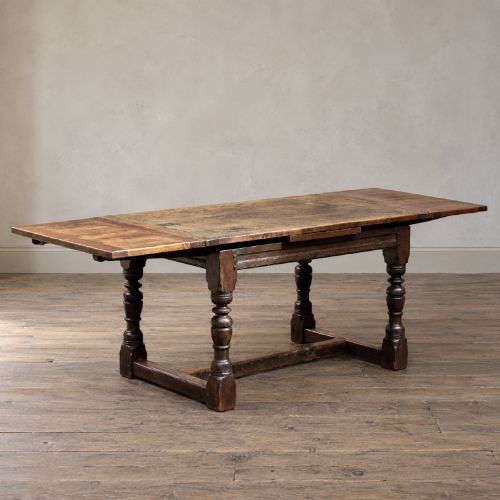
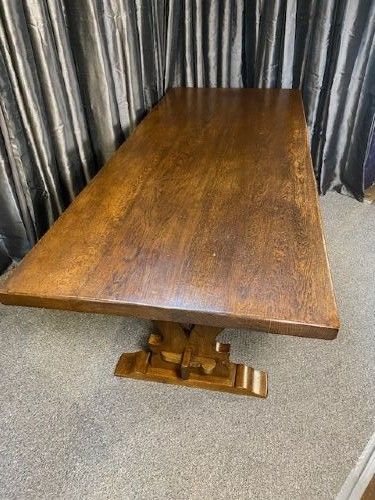
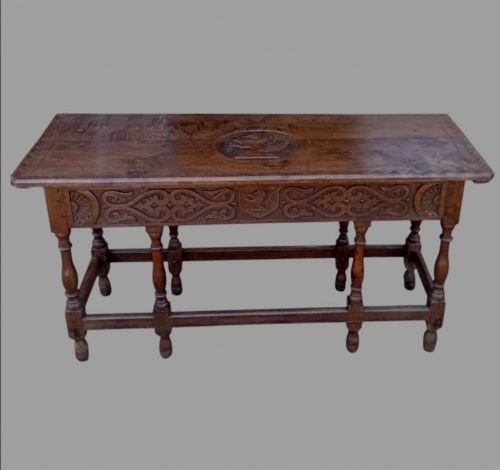
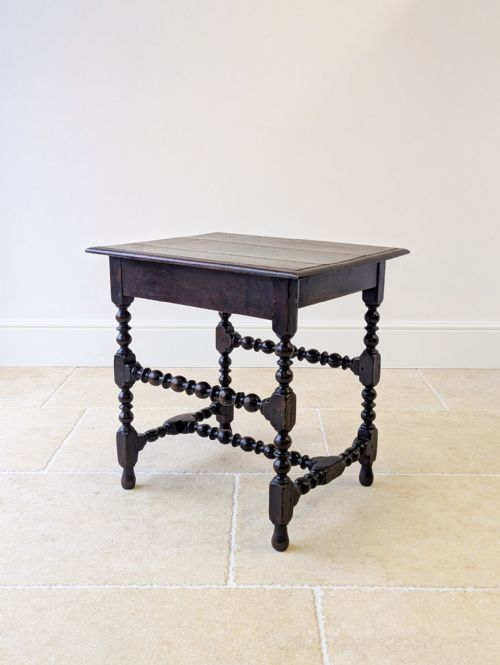
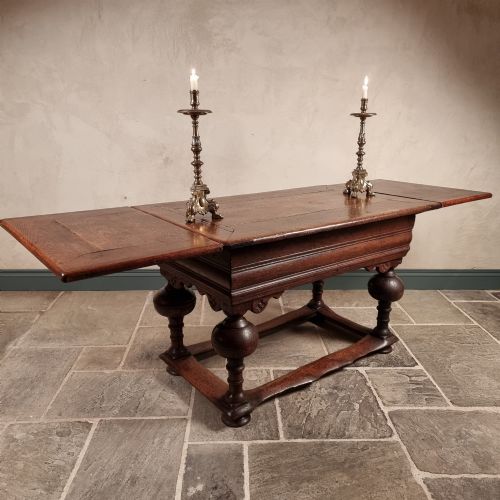
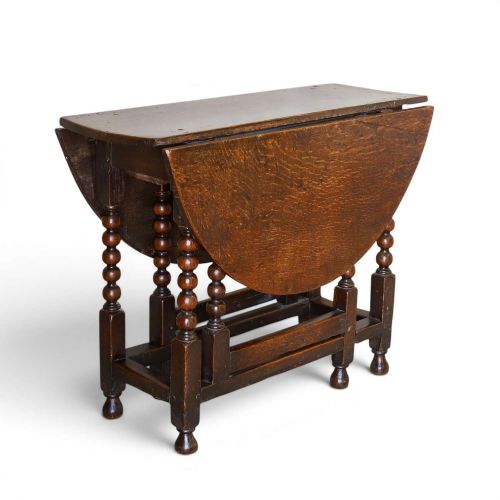
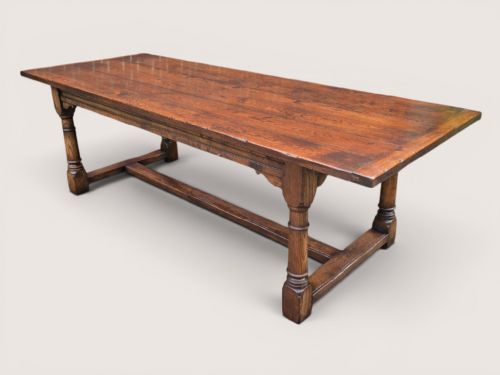
A seventeenth century table most often appears on this page as a gateleg dining table, a refectory board for the hall, or a compact side table with turned supports.
The materials and construction reflect seventeenth century joinery alongside later revival pieces from the nineteenth and twentieth centuries.
Buyers encounter walnut, fruitwood, and oak forms ranging from heavy refectory boards to smaller side tables and credence tables.
Distinctions in Execution
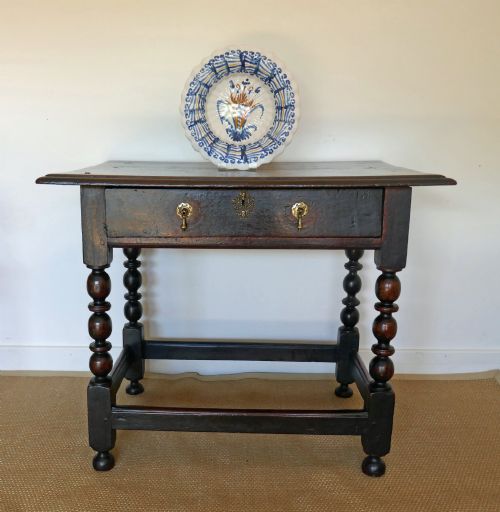
Quality rests in the integrity of the timber, the crispness of the hand-turned legs, and the retention of original top boards without excessive shrinkage or later replacement.
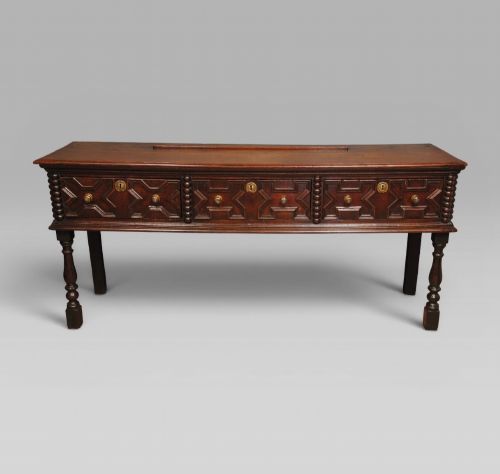
Refined examples display subtle geometric mouldings on drawer fronts and balanced proportions, whereas simpler utilitarian items rely on straightforward plank construction.
Seventeenth Century Table Retail Price Guide 2026
Typical asking prices for seventeenth century table among the pieces listed under this phrase on Sellingantiques today, from the lower quarter to the upper quarter. They describe what is for sale here now, not the wider market.
Listings combine genuine seventeenth century joined oak furniture with later nineteen-twentieth century revival interpretations in oak and walnut.
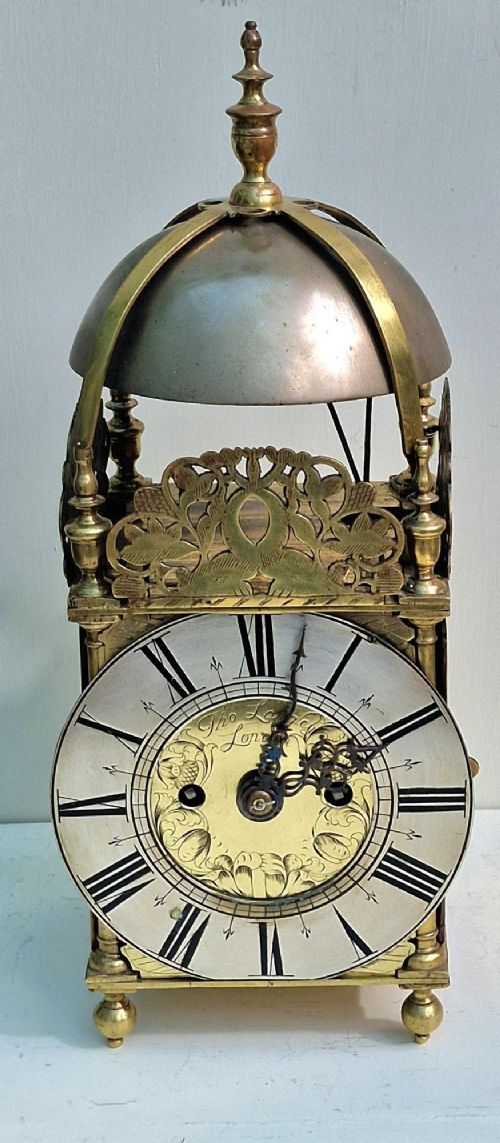
Thomas Langley·Joseph Windmills
The Seventeenth Century Table Glossary
- Gateleg table
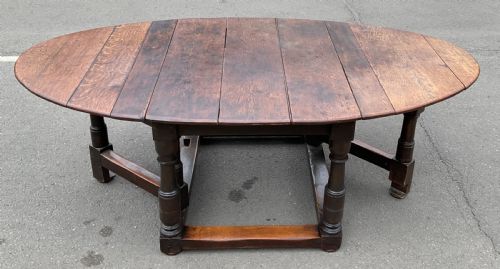
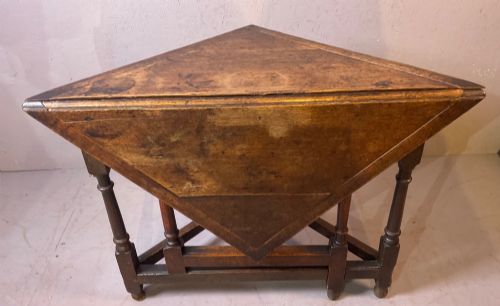
- A drop-leaf table with hinged flaps supported by swing legs that pull out like a gate.
- Refectory table
- A long, narrow dining table traditionally used in communal halls and supported by substantial trestles or joined legs.
- Credence table
- A folding table with a semicircular top supported by a swinging leg, often featuring a triangular rear section.
- Bobbin-turned
- A style of turning on a lathe that produces a series of rounded, spool-like shapes along the length of a leg or stretcher.
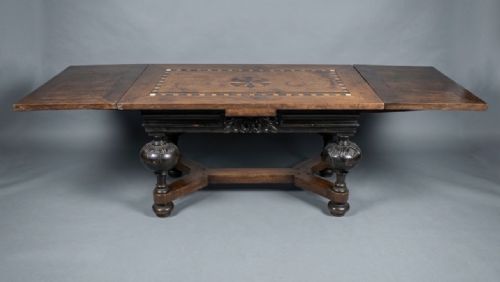
- Draw leaf table
- An extending dining table with leaves stored beneath the main top that pull out to lengthen the surface.
Seventeenth Century Table: Frequently Asked Questions
How do I identify a seventeenth century table?
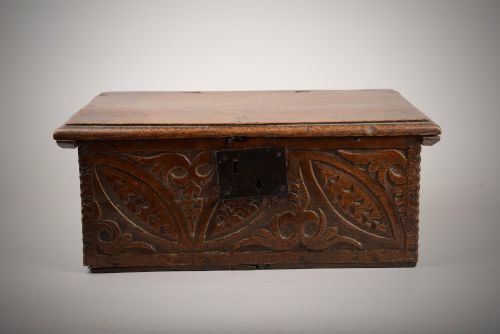
Look for pegged joints, solid oak construction, hand-carved details, and structural joinery typical of seventeenth century cabinet making.
Compare the timber patination and tool marks beneath the top boards with known period examples.
What is a gateleg table used for?
These tables served primarily for dining or supper, offering flexible surface space through folding leaves.
Dropping the leaves allowed the table to stand compactly against a wall when not in use.
Are refectory tables suitable for daily dining?
Refectory tables provide sturdy, spacious surfaces that accommodate modern seating comfortably for everyday meals.
Their substantial oak frames easily handle heavy daily use while retaining historical character.
How do period pieces differ from revival tables?
Seventeenth century tables show authentic age-related wear, hand-cut joinery, and period timber characteristics.
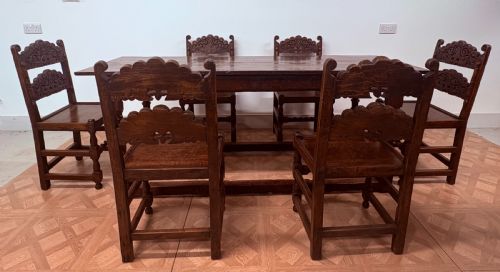
Revival pieces made around nineteen twenty utilise older styles but display twentieth century construction methods.