




Seventeenth Century Sideboard
A seventeenth century sideboard brings heavy timber and dark patination into a room, serving as a striking focal point for storage and display.
Seventeenth Century Sideboard
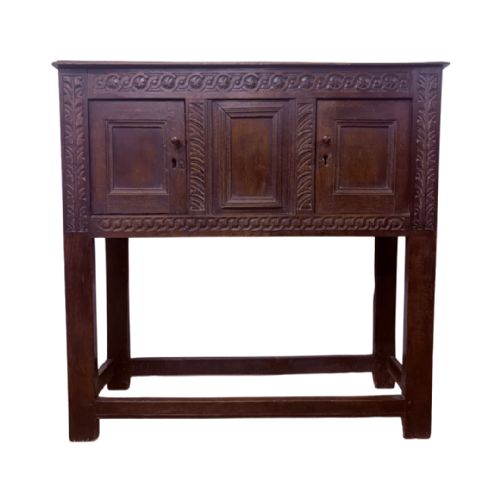
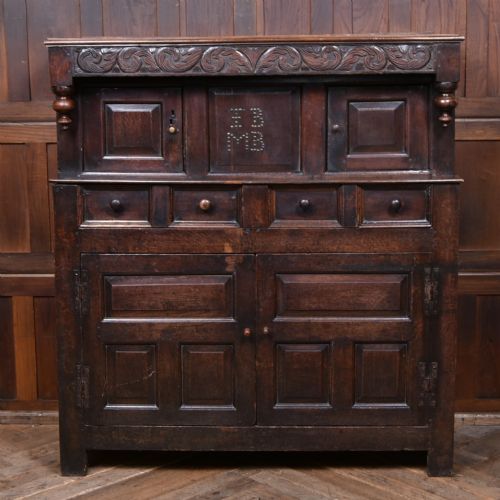
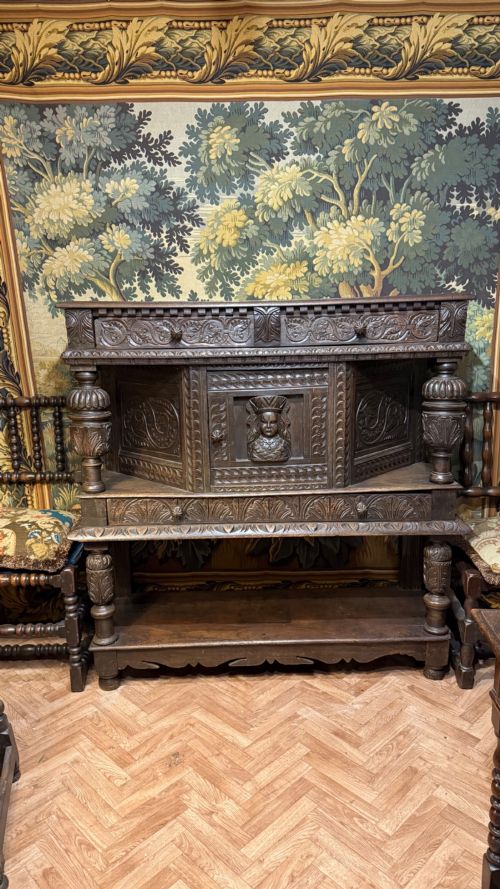
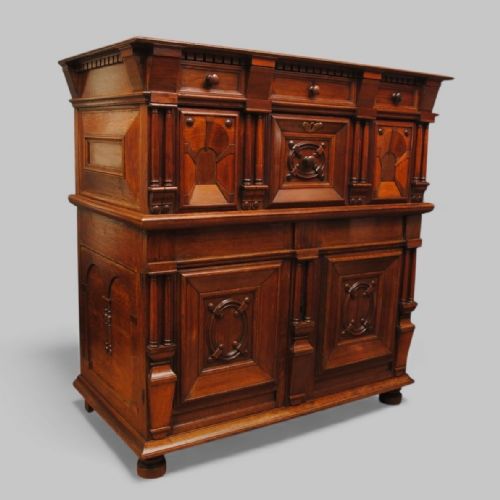
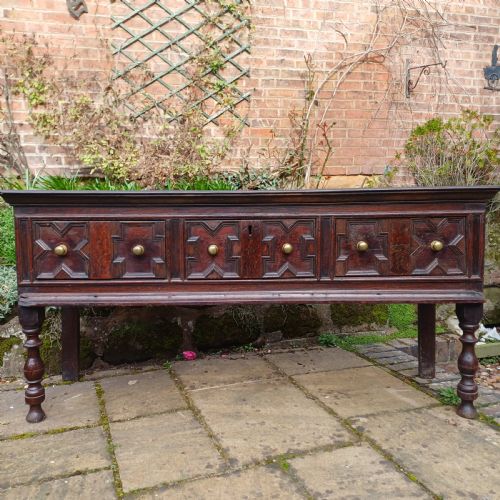
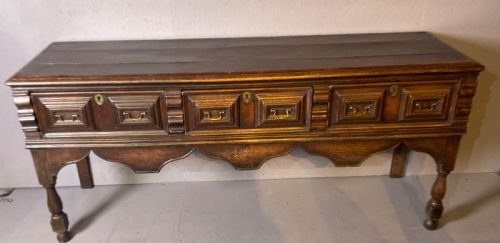
When searching for a seventeenth century sideboard, buyers encounter heavy oak case furniture, including court cupboards, press cupboards, livery cupboards, and low dresser bases. These functional items emerged from domestic requirements for storing food, linens, and dining vessels.
The pieces appearing in this category span genuine seventeenth century origins alongside later revival periods such as the nineteenth and early twentieth centuries, reflecting enduring tastes for vernacular craftsmanship. Regional varieties from Wales and the West Country also surface alongside English examples.
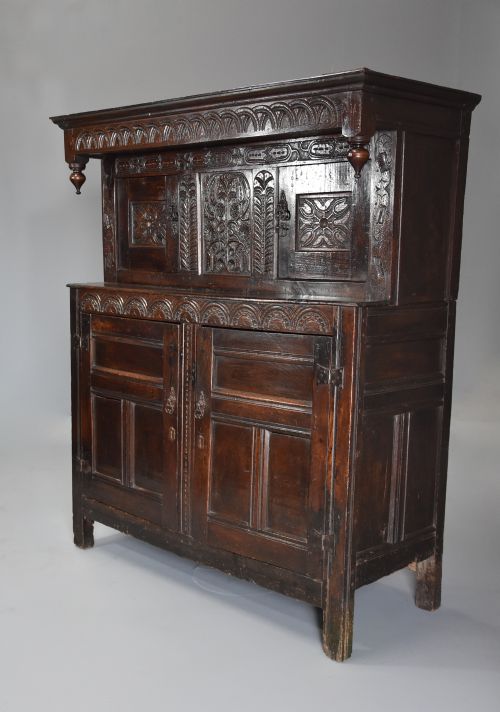
Forms range from compact servers and block-front bases to towering multi-tiered court cupboards featuring carved panels and enclosed upper sections.
What varies in quality
The depth and crispness of the carved ornamentation distinguish standard domestic examples from finer commissions. Timber selection and the survival of original surface patination significantly impact the visual weight and character of a piece.
Structural integrity depends on the retention of original joined elements rather than later timber replacements or heavy restoration.
Some seventeenth century cupboards feature secret compartments hidden behind sliding panels for stashing small valuables.
The Seventeenth Century Sideboard Glossary
- Court Cupboard
- An enclosed piece of furniture featuring a recessed upper section supported by pillars, used historically for displaying plate.
- Dresser Base
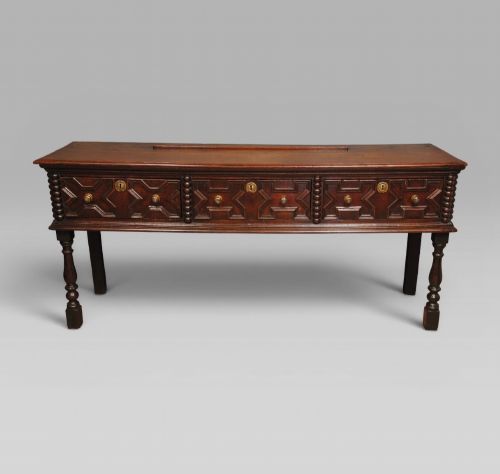
- A low rectangular cabinet fitted with drawers and occasionally cupboards below, functioning as a sideboard.
- Press Cupboard
- A tall enclosed storage piece designed primarily for linens and clothing.
- Joined Oak
- Furniture constructed using mortise and tenon joints secured with wooden pegs rather than metal nails.
- Geometric Moulding
- Raised rectilinear patterns applied to drawer fronts and panels, popular during the later seventeenth century.
Seventeenth Century Sideboard: Frequently Asked Questions
What is a seventeenth century sideboard used for?
These pieces function primarily as statement storage items in dining rooms, hallways, or living spaces. They accommodate tableware, linens, and decorative objects on their upper surfaces.
Historically, variations like court cupboards and press cupboards held food and domestic goods securely behind heavy wooden doors.
How do I identify a genuine seventeenth century piece?
Examine the timber construction for hand-cut joints, pegged tenons, and signs of age-related wear such as uneven shrinkage and historical tool marks. Genuine examples often display rich patination built up over centuries of use.
Revival pieces from later centuries frequently utilise machine-sawn timber or uniform construction methods that differ from early vernacular work.
What is the difference between a court cupboard and a dresser base?
A court cupboard is a multi-tiered cabinet featuring enclosed upper compartments and often a recessed middle stage supported by columns. It serves both display and secure storage functions.
A dresser base sits lower to the ground and consists primarily of a row of drawers above cupboards or an open pot board.
How do I care for antique oak furniture?
Maintain stable indoor humidity levels and keep timber away from direct heat sources to prevent the wood from drying out and splitting. Apply traditional beeswax sparingly to nourish the grain and protect the original surface.
Avoid silicone-based polishes, which can degrade historic finishes and attract dust to carved details.