

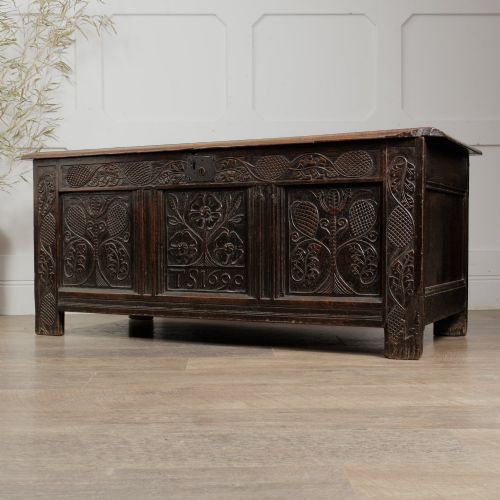

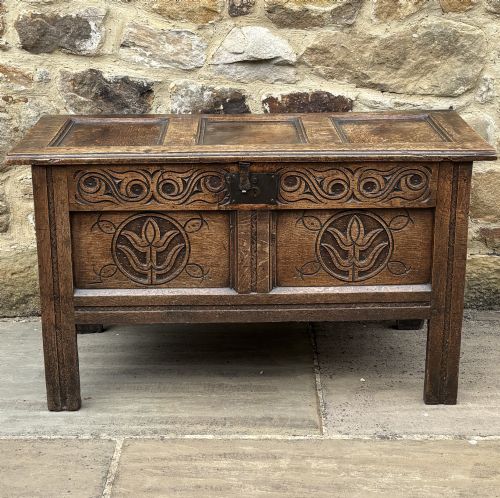
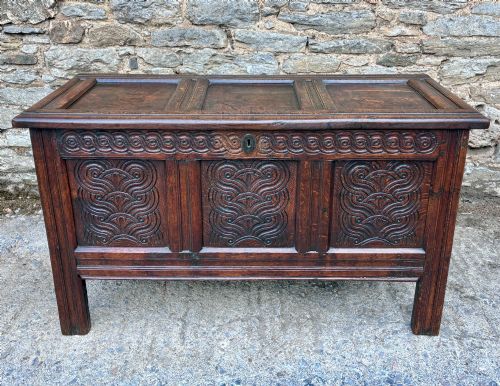
Seventeenth Century Oak Coffer
A seventeenth century oak coffer is a robust storage piece built from native timber during a period of intense cabinetmaking tradition.
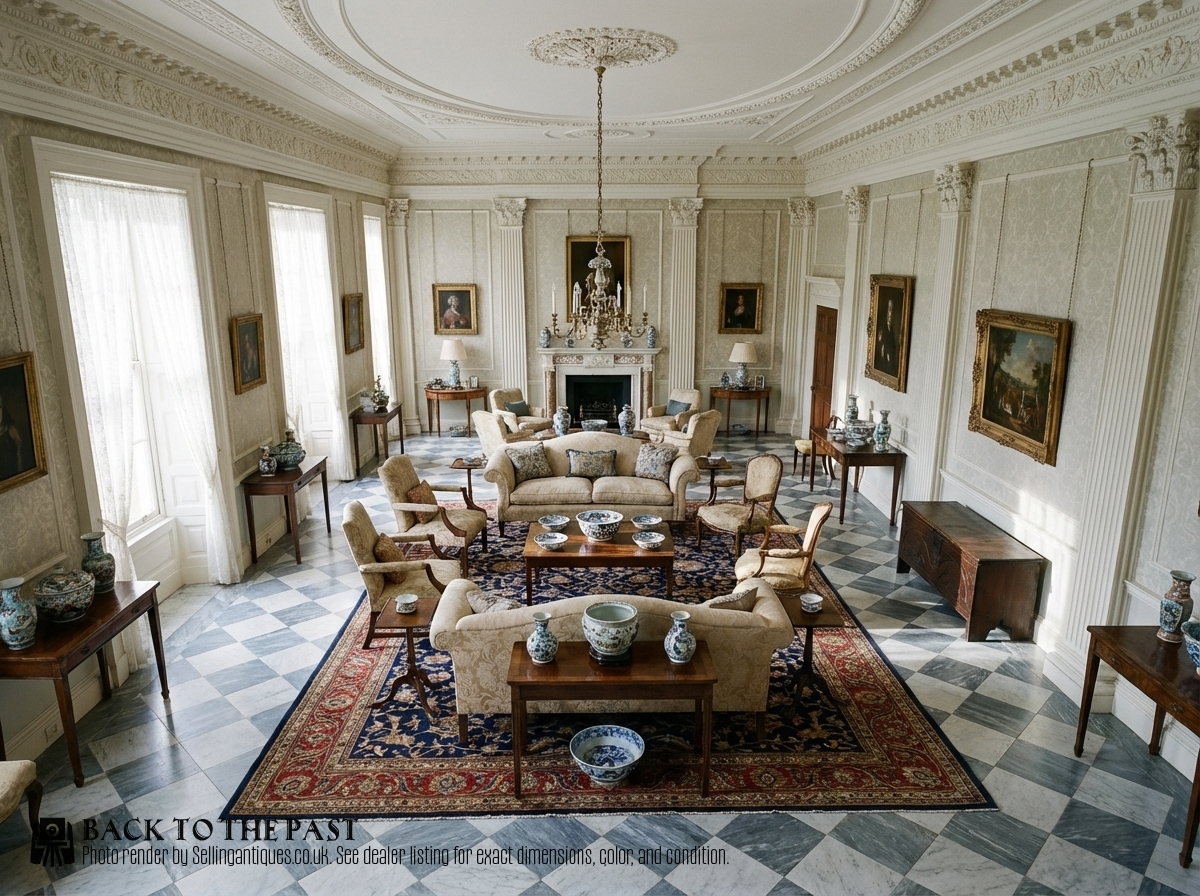
Seventeenth Century Oak Coffer
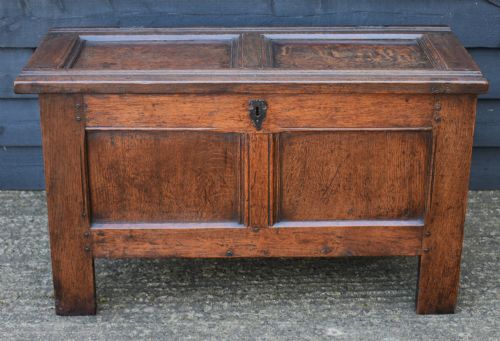
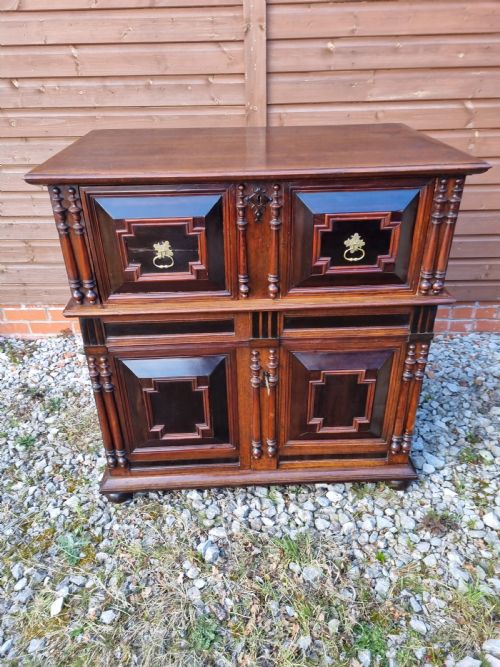
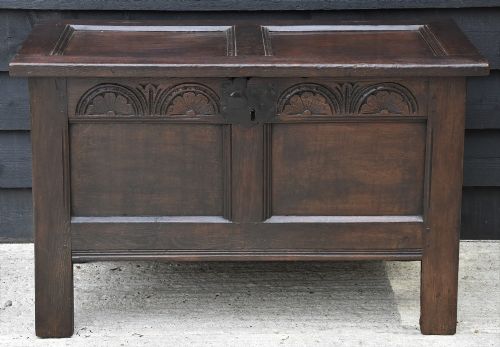
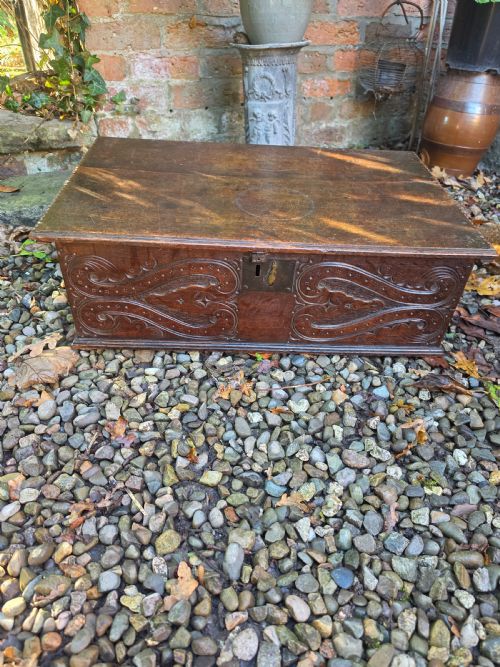
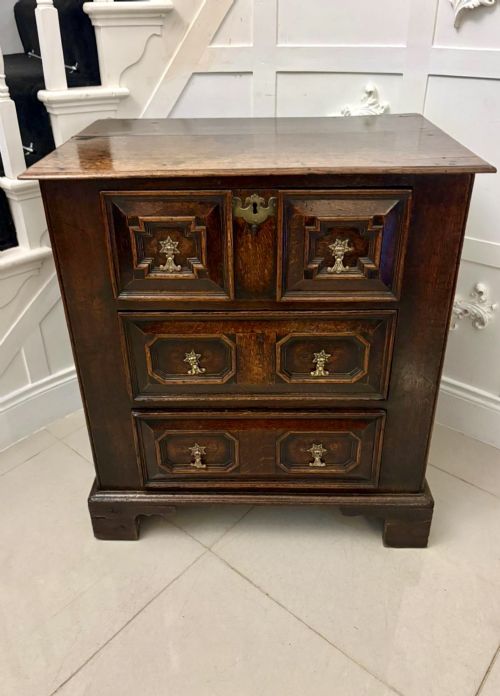
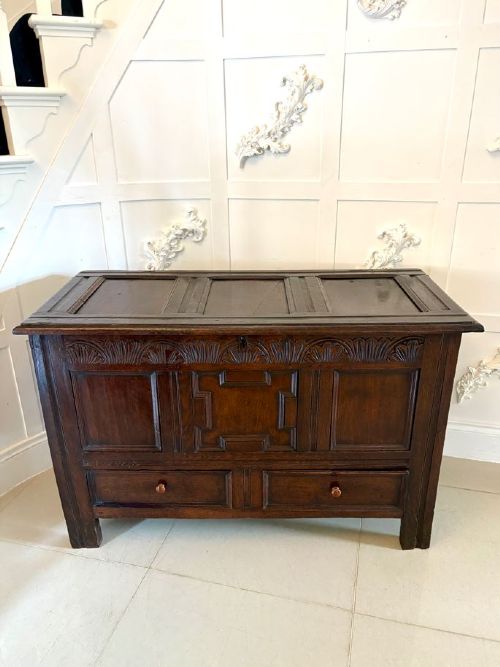
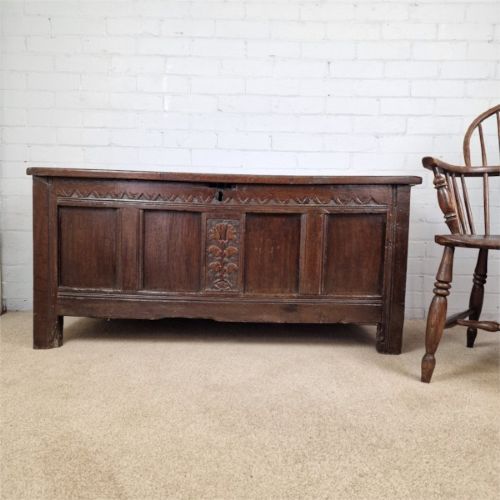
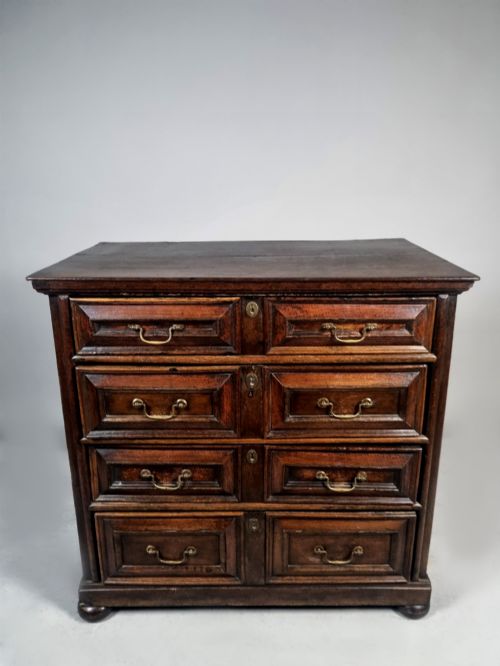
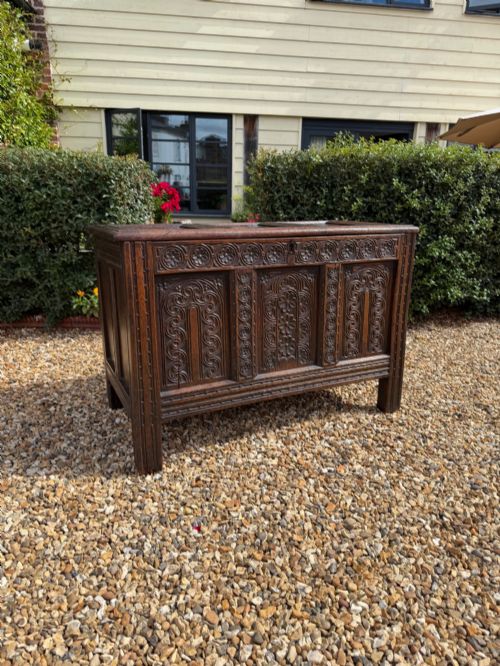
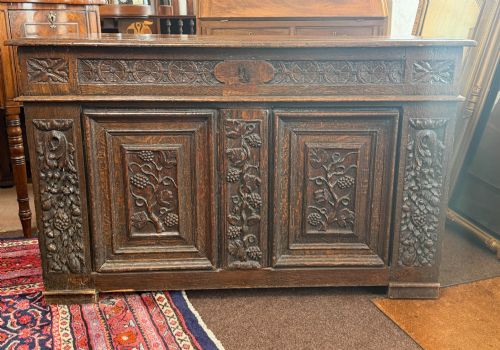
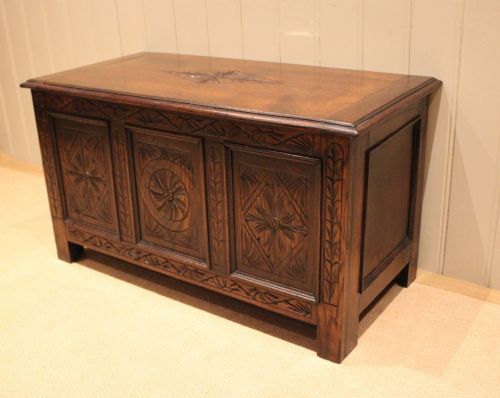
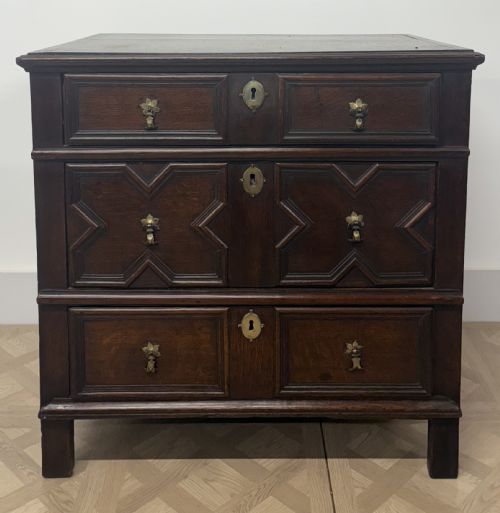
When you search for a seventeenth century oak coffer, you encounter sturdy timber boxes designed for domestic storage, security, and occasional seating. The standard form on this page is the panelled chest, though variations include six-plank constructions, sword chests, and related forms like boxes or chests of drawers from the same era.
Most examples originate from English workshops, with occasional regional pieces attributed to Welsh localities such as the Gower Peninsula or Dorset. These items carry the structural marks of the Jacobean and Charles II periods, often displaying stylistic traits like carved panels, geometric mouldings, or plain boarded surfaces.
Beyond standard coffers, the selection extends to related storage and desk boxes, side tables, and court cupboards sharing the same timber vocabulary. Buyers often find that smaller proportions or specific regional carving styles dictate the exact character of the piece they encounter.
How they were made
Joiners constructed these items primarily from solid oak, sometimes combining walnut, fruitwood, or iron and brass hardware for locks and hinges. Panels were fitted into grooved framing members, allowing the timber to expand and contract naturally with changes in humidity.
Surface ornamentation relied on hand carpentry techniques, including chip carving, linen fold panels, and applied geometric mouldings fixed to the drawer fronts or rails. Iron mechanisms such as complex steel locks were fitted internally to secure valuables and documents.
Seventeenth Century Oak Coffer Retail Price Guide 2026
Typical asking prices for seventeenth century oak coffer among the pieces listed under this phrase on Sellingantiques today, from the lower quarter to the upper quarter. They describe what is for sale here now, not the wider market.
The inventory includes functional domestic items ranging from small table boxes to large boarded sword chests.
What varies in quality
The degree of original surface survival and timber patina separates standard examples from exceptional pieces. Natural ageing produces a faded, mellow surface colour that reflects centuries of handling and environmental exposure.
Structural integrity depends on the retention of original framing, boards, and ironwork without extensive modern timber replacement. Pieces retaining their early locks, hinges, and untouched panel construction hold greater historical cohesion.
Thomas Dennis
The Seventeenth Century Oak Coffer Glossary
- Coffer
- A large wooden chest used historically for storing valuables, textiles, or documents. These storage items often feature hinged lids and boarded or panelled framework.
- Jacobean
- An artistic and architectural style spanning the early part of the seventeenth century, marked by robust proportions and geometric or strapwork carving. This aesthetic heavily influences the ornamentation found on period woodwork.
- Panelled
- A method of construction where flat boards are fitted within a surrounding frame of stiles and rails. This technique prevents the wood from warping significantly as atmospheric conditions change.
- Moulding
- A shaped strip of wood applied to a surface to create decorative shadows and relief. Geometric versions are characteristic of Charles II period drawer fronts and chests.
- Patina
- The surface sheen and colour developed by timber over long periods through use, waxing, and ageing. Collectors value surfaces that show honest signs of age without harsh stripping.
Seventeenth Century Oak Coffer: Frequently Asked Questions
What were seventeenth century oak coffers used for?
These chests served primarily for storing household valuables, linens, and important documents safely away from pests and dampness. Their flat lids also allowed them to function as tables or extra seating in modest domestic spaces.
Over time, as household storage needs evolved, many transitioned from general utility items to treasured family possessions used to display heirlooms.
How do I tell a Jacobean coffer from a Charles II piece?
Jacobean examples generally display flatter, more rigid strapwork and chip-carved motifs reflecting earlier seventeenth-century tastes. Charles II pieces frequently introduce applied geometric mouldings and walnut veneers reflecting changing continental fashions.
Examining the overall framing structure and secondary woods alongside the primary carving style helps clarify the likely decade of manufacture.
Are all these chests made entirely of English oak?
While native English oak dominates the construction of these items, joiners frequently incorporated other native timbers such as fruitwood or walnut for contrast or drawer linings. Regional pieces from Wales or the English provinces sometimes utilise local timber stocks characteristic of those specific areas.
Hardware elements like iron locks and brass keyplates also introduce mixed media into the otherwise timber-heavy construction.
How should I care for an antique oak coffer?
Keep the wood away from direct heat sources and dramatic humidity fluctuations to prevent the oak from splitting or warping. Occasional light application of traditional beeswax helps maintain the surface sheen and nourishes the dry timber.
Avoid modern synthetic varnishes or harsh cleaning agents that can strip away the accumulated historical patina of the surface.