
Seventeenth Century Drawers
Seventeenth century drawers comprise early timber case pieces designed for storage, prized for their robust construction and rich surface patination.
Seventeenth Century Drawers
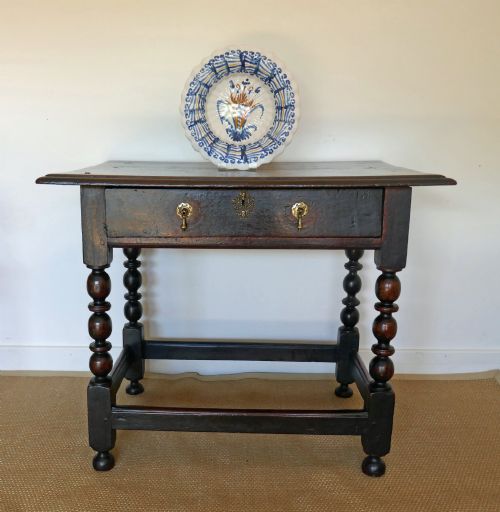
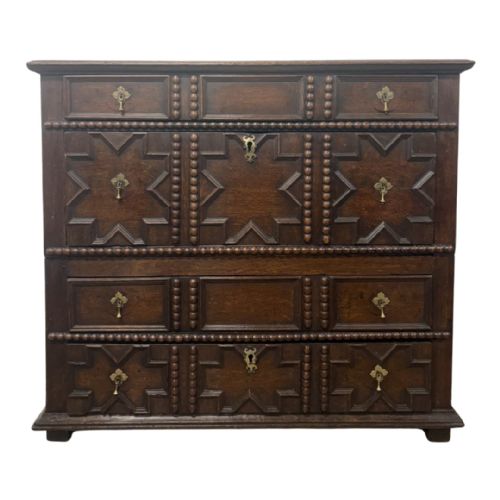
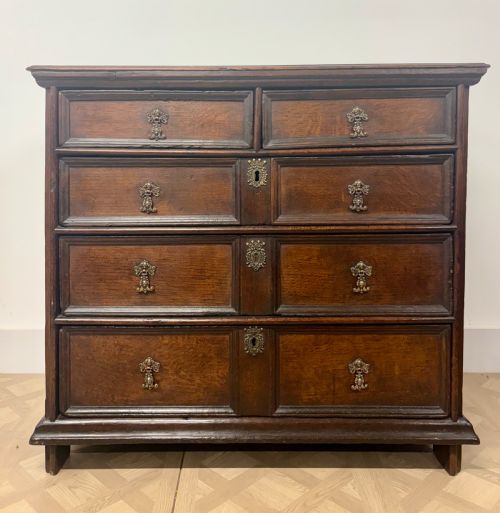
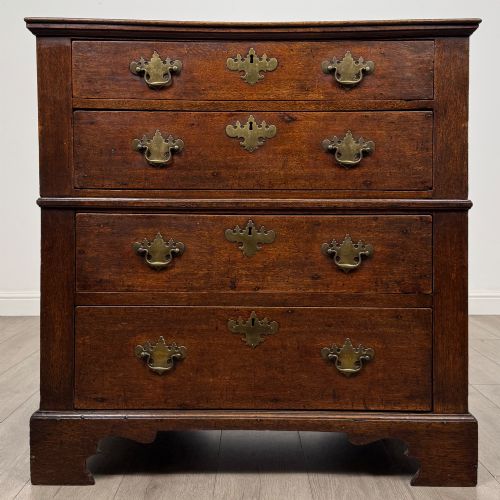
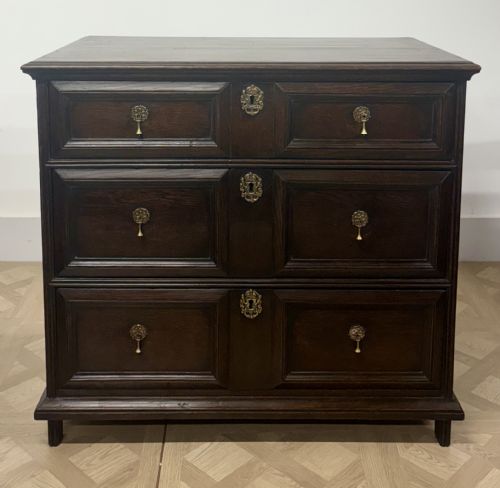
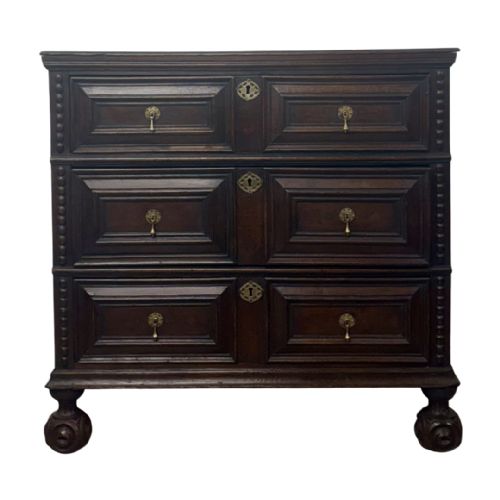
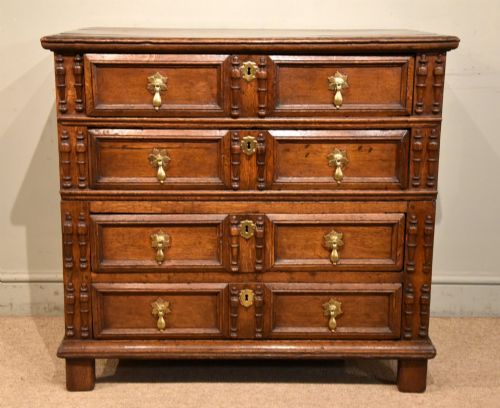
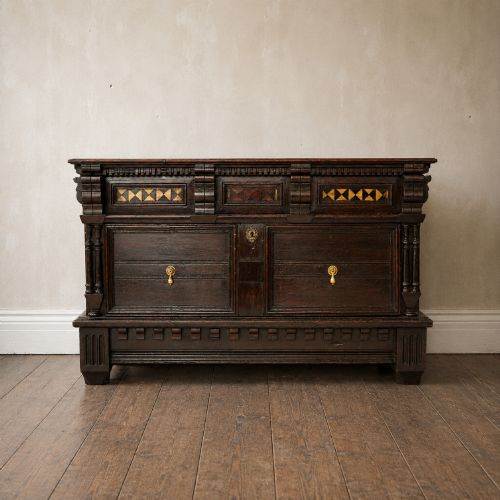
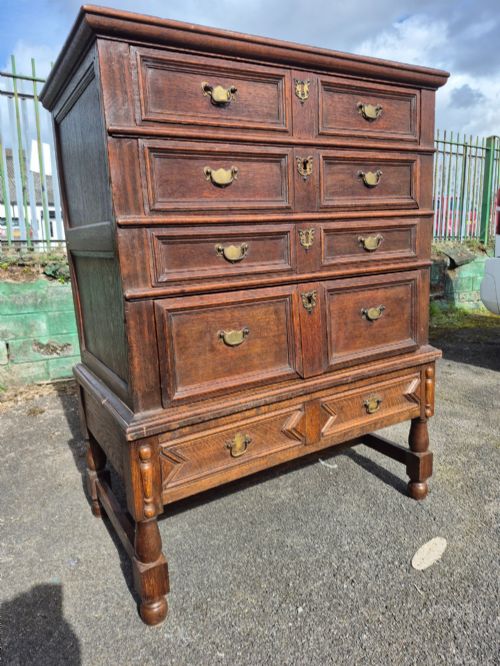
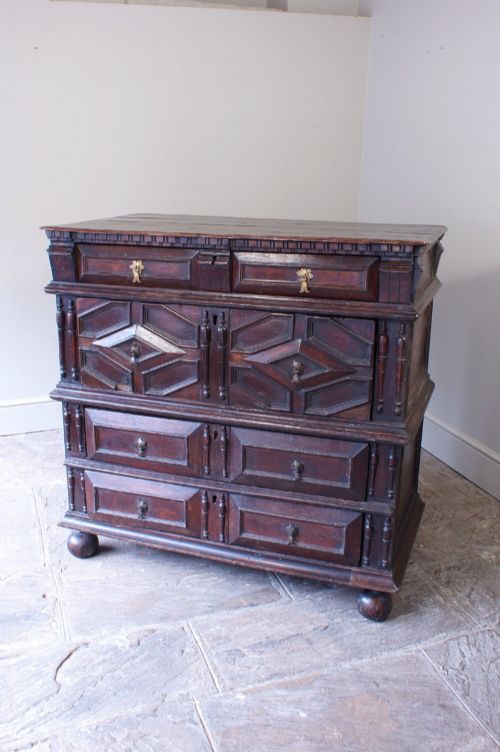
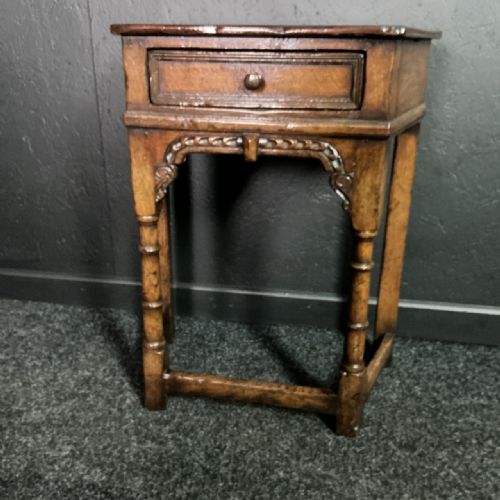
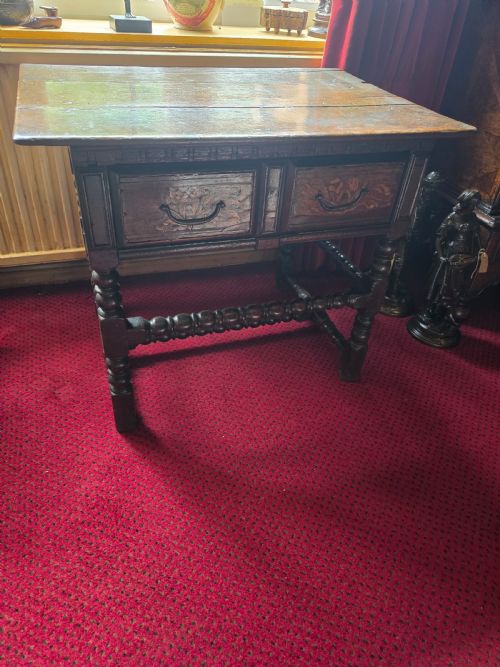
When searching for seventeenth century drawers, buyers encounter substantial case furniture built primarily for domestic storage in domestic settings. Chests of drawers dominate the selection, appearing alongside side tables with internal drawers, dresser bases, and chests on stands.
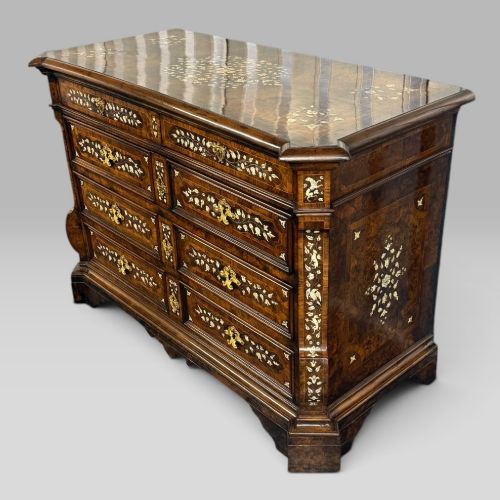
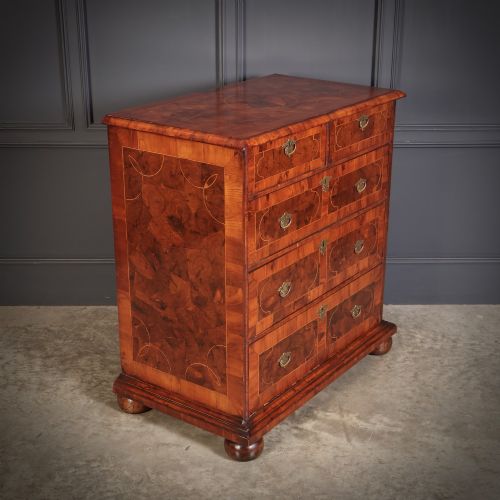
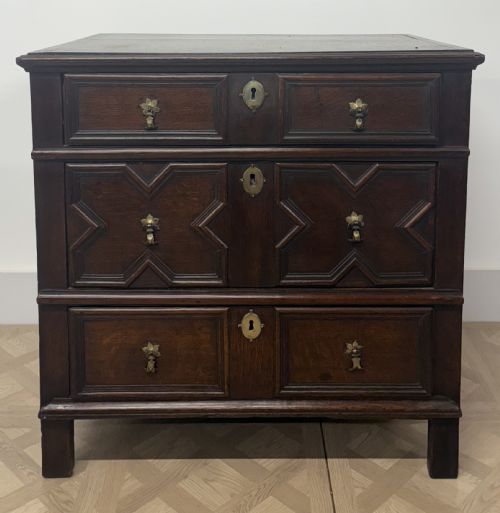
The prevailing style on this page is English oak work from the Charles II and Jacobean periods, characterised by rectangular proportions and panelled construction. Pieces range from plain moulded fronts to elaborate geometric designs and oyster-veneered surfaces in walnut and olive.
Earlier forms utilise heavy framing with pegged joints, while later examples incorporate walnut and fruitwood veneers applied to secondary timbers. Buyers also find occasional sideboards, servers, and side tables fitted with functional storage compartments.
Materials and construction methods
Carpenters relied heavily on native oak for structural integrity, utilising quarter-sawn boards that revealed attractive medullary rays. Joinery depended on mortise and tenon joints secured with wooden pegs rather than modern metal fasteners.
Surface ornamentation involved applied mouldings arranged in geometric panels, alongside decorative veneers cut from walnut, olive, and fruitwood branches. Drawers frequently retained secondary linings of soft wood, assembled with hand-cut dovetails and operated with iron or brass hardware.
Listings feature oak, walnut, fruitwood, and olive timbers alongside decorative bone and wood inlay techniques.
Distinctions in quality and survival
Quality rests upon the preservation of original surfaces, timber selection, and the integrity of the structural joinery. Pieces retaining their original brass handles, feet, and backboards command greater interest than those subjected to extensive timber replacement or re-polishing.
Subtleties in geometric moulding placement and the crispness of carved details separate standard utility pieces from exceptional workshop outputs. The natural fading of the timber over centuries contributes significantly to the visual appeal of surviving examples.
The Seventeenth Century Drawers Glossary
- Oyster veneer
- Circular veneer slices cut cross-wise from small branches to create repeating natural patterns. This technique appeared frequently on fine cabinetry during the late seventeenth century.
- Geometric moulding
- Raised wooden strips applied to drawer fronts in rectilinear patterns such as octagons and mitred rectangles. It defined the aesthetic of Charles II case furniture.
- Dresser base
- A long low table fitted with multiple drawers beneath a solid top, used for serving and storage. These pieces originated in seventeenth-century kitchens and dining halls.
- Chest on stand
- A tall drawer section elevated on an open frame or base with legs. This form emerged to provide elevated storage while lightening the overall visual weight of heavy case furniture.
- Barley twist
- A turned wooden column resembling a spiral rope, popular on the legs of tables and stands. Artisans produced these using lathes and hand chisels during the seventeenth century.
Seventeenth Century Drawers: Frequently Asked Questions
How do I date these drawers?
Dating relies on examining construction techniques, timber choices, and stylistic details such as mouldings and hardware. Early examples utilise pegged oak frames, while later pieces introduce walnut veneers and dovetail joinery.
Changes in drawer linings and handles also provide chronological markers. Comparing the piece against documented examples from the Jacobean and William and Mary eras helps confirm its period.
Were these used in bedrooms?
Seventeenth century drawers served multiple rooms across the house rather than residing exclusively in bedrooms. They provided secure storage for linens, documents, and valuable garments in parlours and halls.
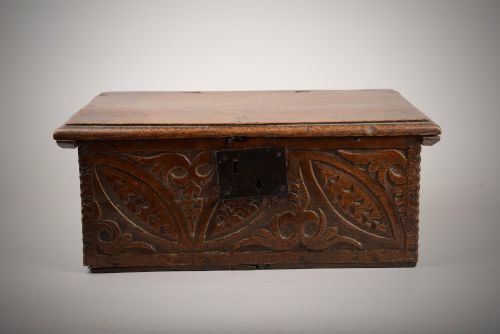
Smaller variants like table boxes and side tables with drawers held writing materials or personal items. Their robust construction allowed them to function as durable utility surfaces.
Is replacement hardware acceptable?
Original brass drops and escutcheons are uncommon on furniture of this age due to centuries of use and repair. Replacement hardware sized to historical patterns remains standard for pieces of this antiquity.
Buyers look for ghost marks left by earlier handles to determine if existing brassware matches the original layout. Clean pinholes without extensive timber patching indicate well-maintained mountings.
How should I care for oak?
Oak furniture benefits from stable indoor environments protected from direct sunlight and rapid humidity fluctuations. Extreme dryness causes timber shrinkage, while excessive moisture damages historical finishes.
Applying occasional applications of traditional beeswax feeds the dry wood and preserves the surface patina. Avoid modern silicone polishes that penetrate the open grain of antique timber.