
17th Century English Chest
A 17th century english chest brings substantial domestic history and architectural timber into a room, offering robust storage built to endure centuries.
17th Century English Chest
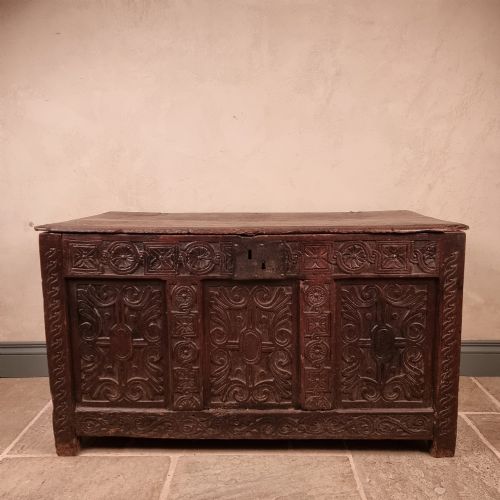
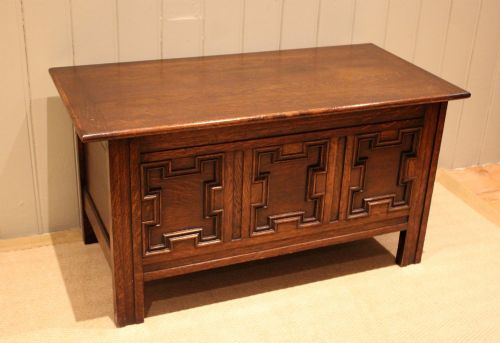
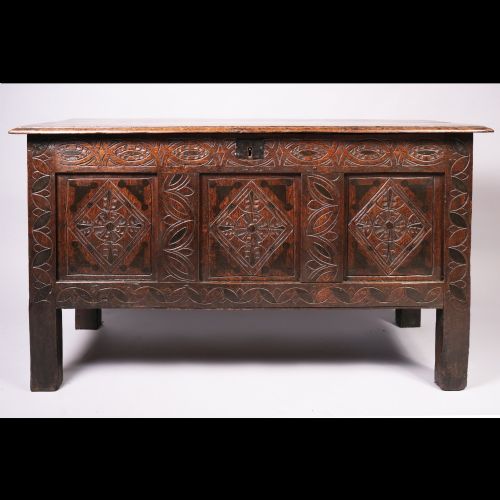
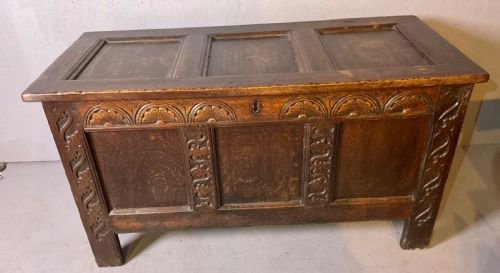
The pieces grouped under the search for a 17th century english chest encompass heavy storage furniture designed for domestic security and household goods. Buyers encounter joined chests, panelled coffers, blanket boxes, and early multi-drawer chests that reflect the changing interior demands of the period.
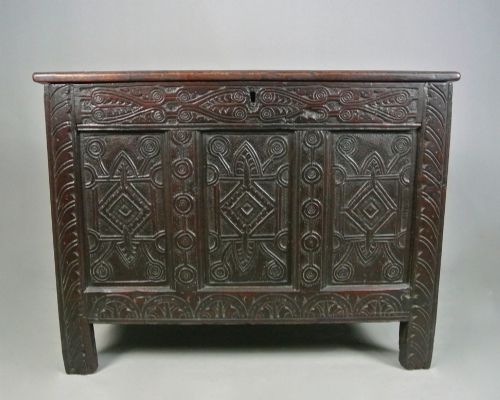
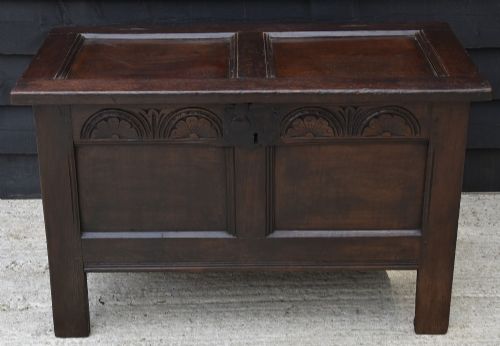
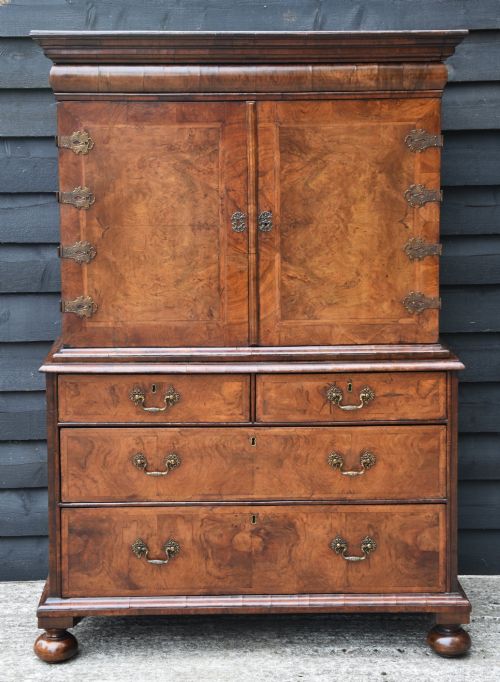
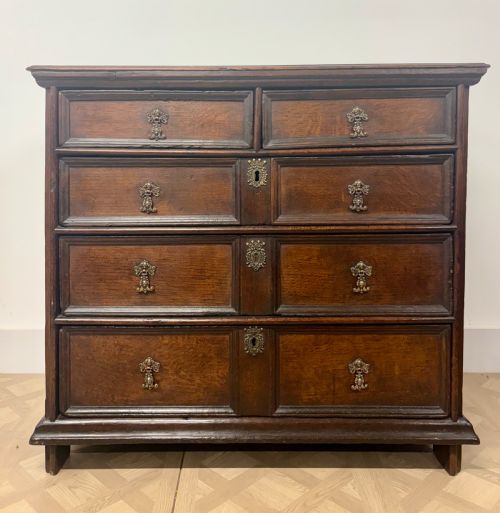
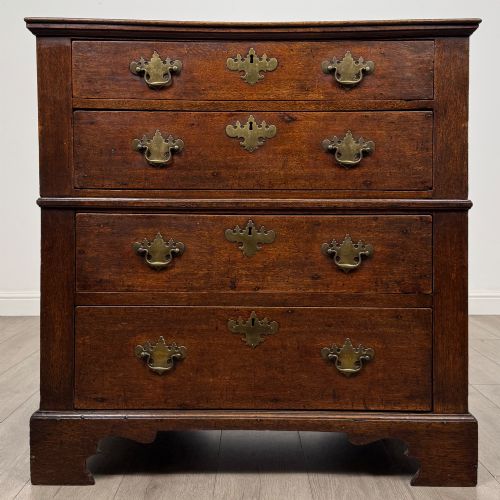
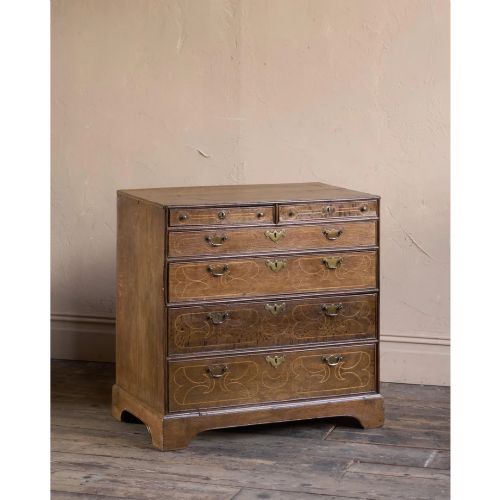
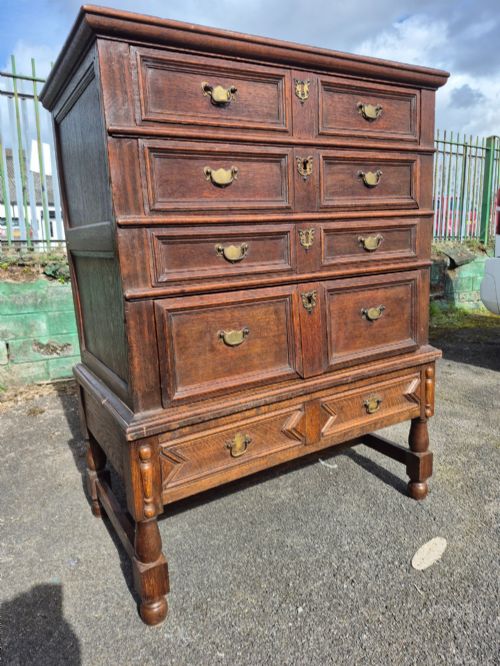
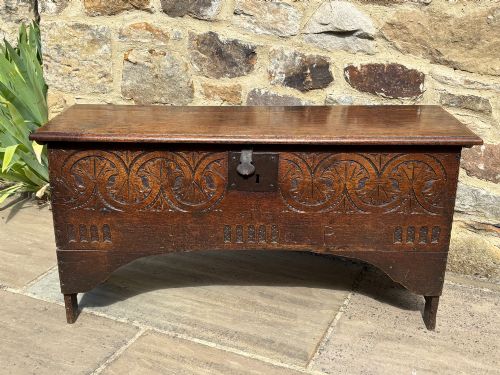
The dominant forms on this page are oak coffers and chests of drawers spanning the Jacobean, Charles II, and William and Mary eras. Surviving examples range from simple six-plank constructions to elaborate geometric drawer fronts and veneered cabinet work.
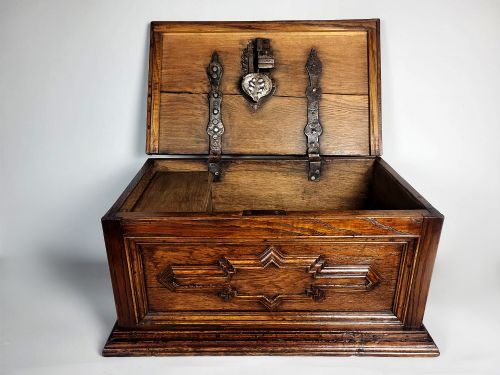
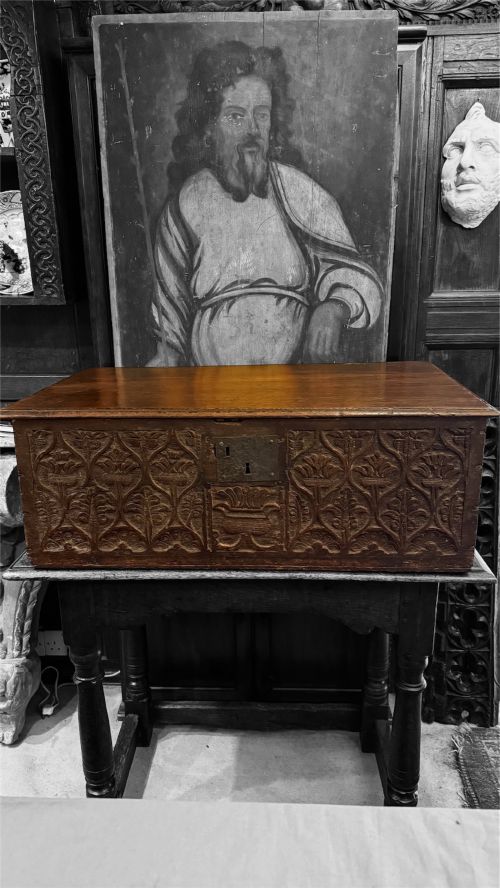
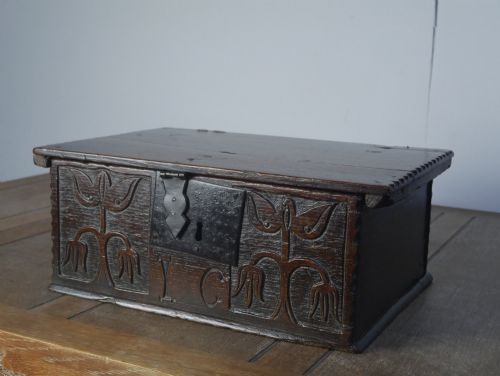
Origins trace directly to English workshops working with native hardwoods, supplemented by transitional pieces stretching into the early eighteenth century. Smaller scaled examples such as bible boxes and safe boxes also appear alongside large blanket chests.
How They Were Made
Construction relies heavily on solid English oak, joined using traditional mortise and tenon frames secured with wooden pegs. Panel construction allowed timber to expand and contract naturally without splitting the primary structure.
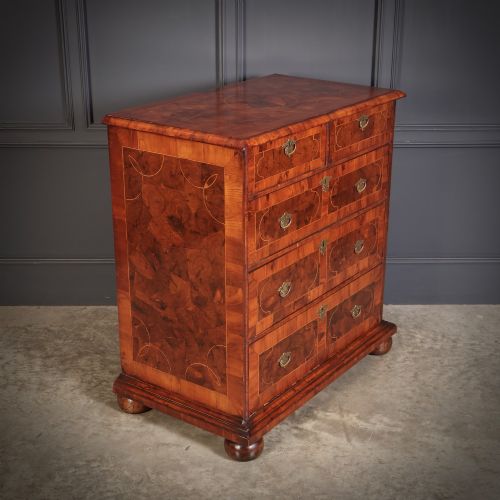
Later seventeenth-century pieces introduce decorative surfaces through walnut, burr walnut, fruitwood, and olive veneers arranged in geometric patterns or floral marquetry. Iron, brass, and steel provide functional reinforcement via strap hinges, escutcheons, and complex locking mechanisms.
Listings feature oak, walnut, fruitwood, and olive timbers combined with iron, brass, and steel hardware across the seventeenth and eighteenth centuries.
What Varies in Quality
Quality rests upon the integrity of the original timber, the crispness of hand-carved mouldings, and the survival of early hardware. Pieces retaining their original boarded tops, floorboards, and working locks command greater appreciation.
The sophistication of the joinery and surface ornament dictates tier, moving from utilitarian boarded boxes to intricate geometric drawer fronts and highly figured oyster veneer cabinets.
The 17th Century English Chest Glossary
- Coffer
- A heavy storage chest with a hinged lid, frequently constructed with panelled oak. These boxes stored valuables, textiles, and documents.
- Oyster veneering
- A technique of slicing small branch wood across the grain to create circular, oyster-like patterns on drawer fronts and cabinet surfaces. This method gained popularity during the late seventeenth century.
- Geometric moulding
- Raised wooden mouldings applied in rectilinear or octagonal patterns to flat drawer fronts. It characterises the William and Mary aesthetic.
- Six-plank chest
- A primitive chest constructed from six individual boards joined simply at the edges. It represents the earliest and most utilitarian form of domestic trunk.
- Marquetry
- Inlaid patterns composed of different coloured woods or veneers assembled to form floral or pictorial designs. It appears on high-status case furniture.
17th Century English Chest: Frequently Asked Questions
What is the difference between a coffer and a chest of drawers?
A coffer is a top-opening trunk primarily used for blankets, linen, and general storage in early homes. A chest of drawers provides side-access compartments that emerged as domestic storage needs evolved.
Coffers rely on deep lids and open interior spaces, whereas chests of drawers introduce compartmentalised sliding trays supported by frames and stands.
How do I identify a Jacobean piece from a William and Mary piece?
Jacobean pieces typically feature heavy oak construction, deep relief carving, and panelled architecture reflecting early seventeenth-century design. William and Mary items introduce veneered surfaces, geometric mouldings, and raised stands.
Earlier Jacobean work focuses on solid timber integrity and carved strapwork, while the later William and Mary period embraces imported decorative techniques like marquetry and oyster veneering.
Were these chests used for clothing or documents?
Domestic chests served multiple functions depending on their scale and internal fittings. Large coffers held heavy woollens, tapestries, and bedding.
Smaller examples such as bible boxes and safe boxes protected valuable manuscripts, deeds, and household silver from theft and damp conditions.
How should I care for an oak chest in a modern home?
Solid oak and walnut furniture requires stable humidity levels away from direct heat sources and harsh sunlight. Sudden environmental shifts cause timber to split or veneers to lift.
Occasional treatment with traditional beeswax maintains the finish and nourishes dry grain without sealing the historic wood surface.