


Restoration Oak Chest Drawers
These restoration oak chest drawers are robust seventeenth-century storage pieces offering honest timber work and traditional joinery for period interiors.
Restoration Oak Chest Drawers
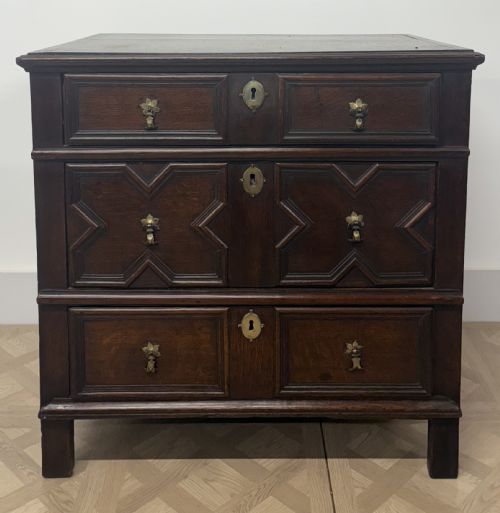
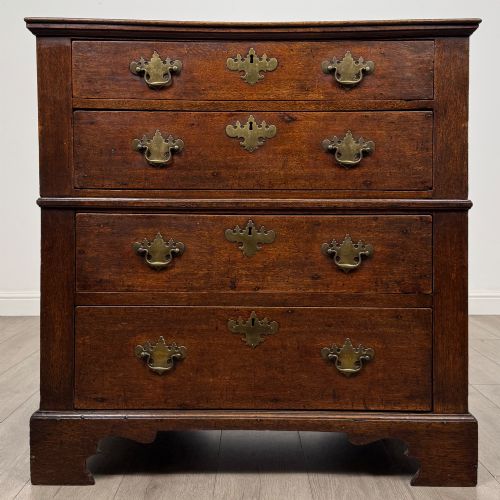
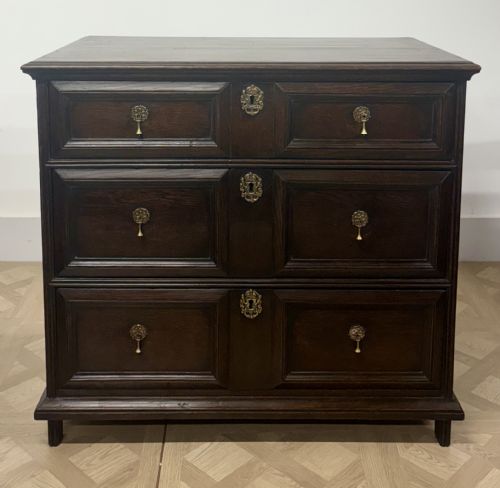
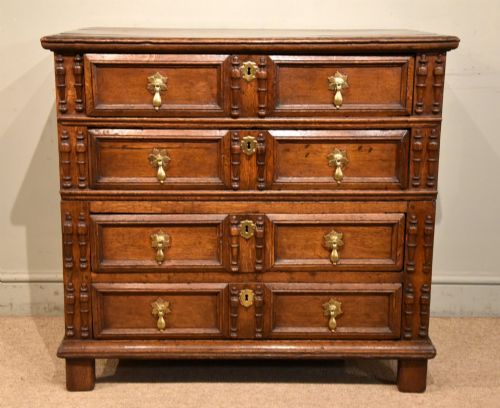
A restoration oak chest drawers brings seventeenth-century character into a room through sturdy construction and time-worn timber surfaces. The selection centres heavily on pieces from the Charles II and William and Mary periods, showcasing the craftsmanship of the later seventeenth century.
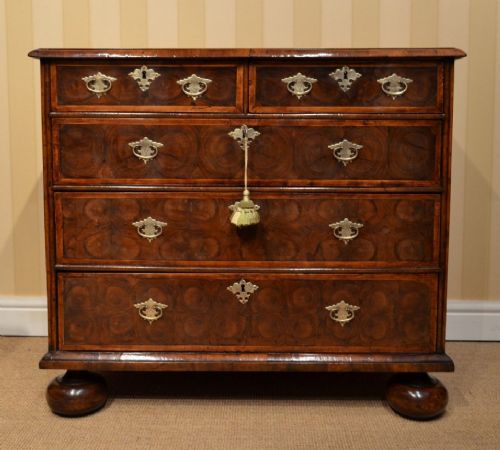
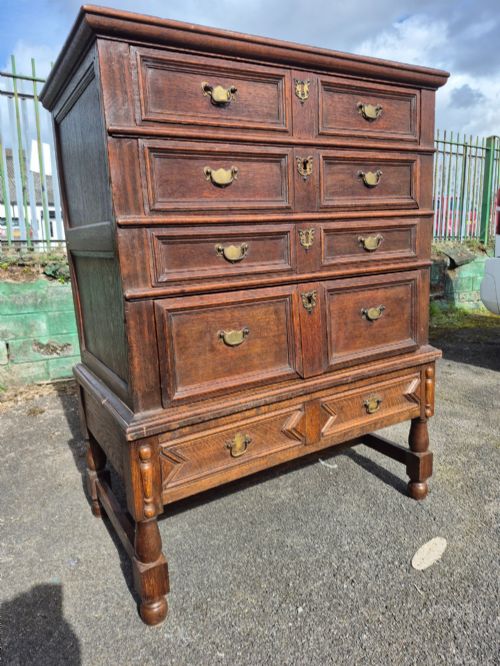
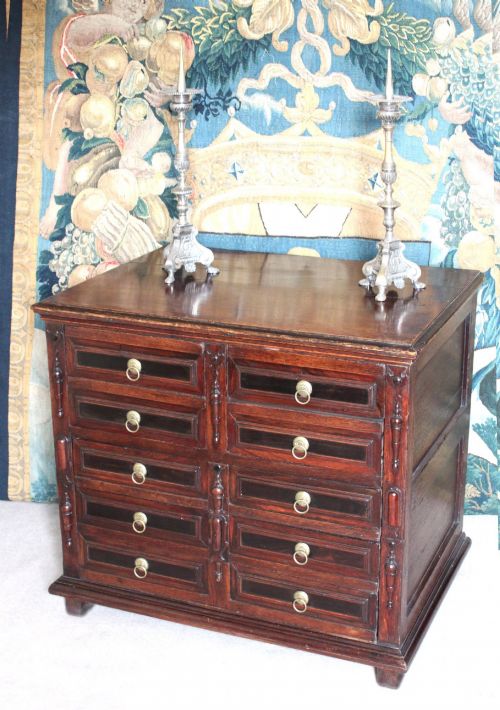
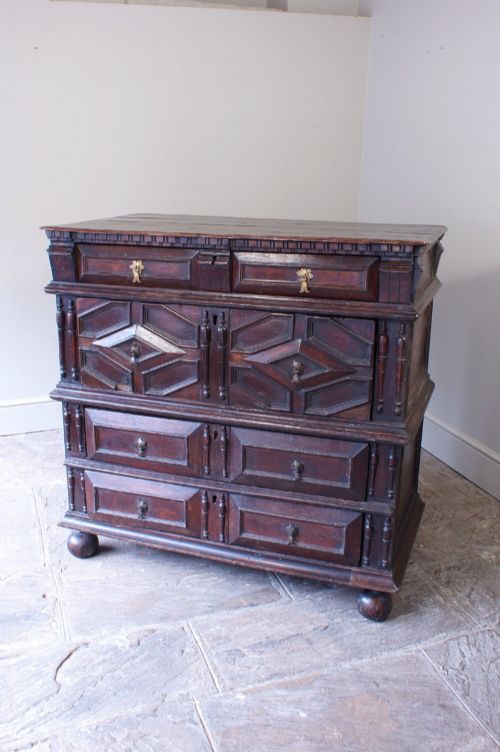
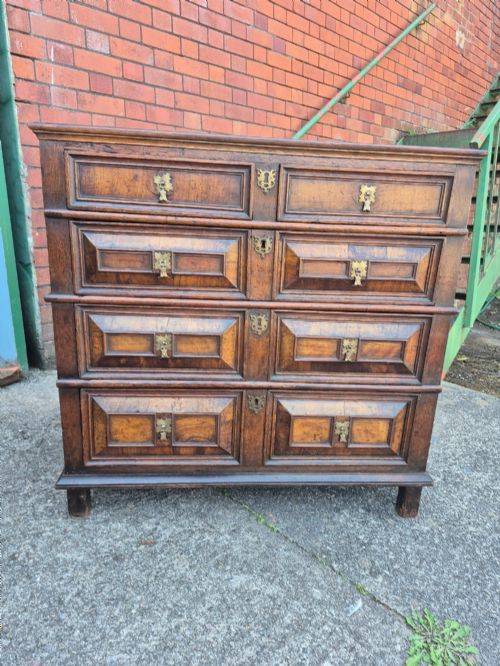
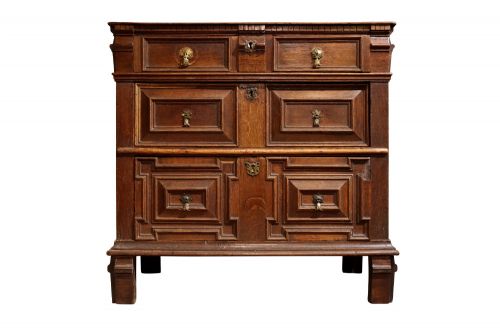
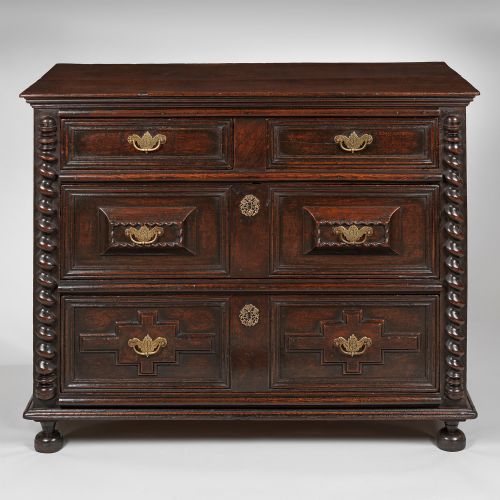
Buyers will encounter two-part chests and standard chest of drawers formats, frequently incorporating walnut, fruitwood, or olive alongside the primary oak timber. Many examples display geometric mouldings on the drawer fronts, a defining characteristic of the era.
What varies in quality
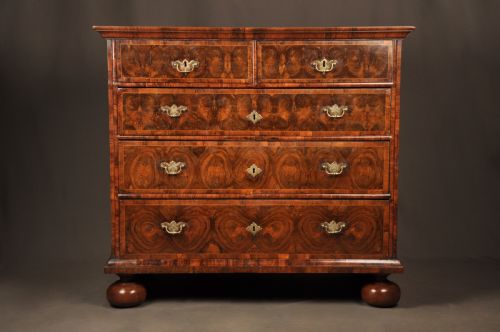
The sophistication of the surface decoration separates standard utilitarian storage from finer decorative work, particularly in the execution of geometric mouldings and oyster veneer patterns. The choice of secondary timbers, such as contrasting walnut or olive wood against oak, indicates the ambition of the original maker.
Proportion and structural integrity define the better examples, where two-part forms retain their balanced proportions and original brass hardware. Alterations over the centuries, such as later cupboard bases or modified stands, influence how closely a piece reflects its seventeenth-century origins.
The Restoration Oak Chest Drawers Glossary
- Oyster veneer
- Circular slices cut from small branches or boughs of walnut, olive, or fruitwood to create a repeating oyster-shell pattern on drawer fronts. This decorative technique demands careful matching of the timber grain.
- Geometric moulding
- Raised mitred wooden strips applied to drawer fronts in repeating angular patterns. It creates strong visual depth and shadow on seventeenth-century case furniture.
- Two-part chest
- A chest of drawers constructed in two separate stacked sections to facilitate transport. This form appears frequently in Charles II cabinetwork.
Restoration Oak Chest Drawers: Frequently Asked Questions
How do I date a restoration oak chest drawers?
Dating relies on observing construction methods, timber choices, and stylistic details such as geometric mouldings or oyster veneers. Pieces spanning the seventeenth century through to seventeen hundred typically exhibit hand-riven oak framing and early brass hardware.
Changes in hardware fixings and secondary woods provide further clues to the period. Comparing the drawer construction against known Charles II and William and Mary examples helps confirm the era of manufacture.
Were these chests always made in two parts?
Many large seventeenth-century examples were constructed as two separate stacked sections to make moving heavy timber furniture manageable. This two-part format also reduced warping risks in large carcases.
Single-section chests of drawers also appear across the same periods. Both formats served the same primary storage function in seventeenth-century households.
How do I care for oyster veneer surfaces?
Oyster veneered surfaces require stable indoor humidity levels and protection from direct sunlight to prevent timber shrinkage or lifting. Gentle dusting with a dry cloth keeps the polished finish clean without introducing moisture.
Avoid placing these pieces near active heat sources which can dry out seventeenth-century adhesives and wood. Occasional application of appropriate wax helps nourish the walnut, olive, or fruitwood grain.
What is the difference between Charles II and William and Mary styles?
Charles II furniture often emphasises robust oak structures combined with bold geometric mouldings and contrasting walnut or fruitwood veneers. The subsequent William and Mary period introduced lighter proportions and refined veneering techniques.
Both styles fall within the broader seventeenth-century restoration aesthetic. Master cabinetmakers of these decades experimented extensively with contrasting timbers like olive and walnut.