



Seven Drawer Tall Chest
A seven drawer tall chest provides vertical storage with a narrow footprint, making it a practical choice for compact rooms.

Seven Drawer Tall Chest
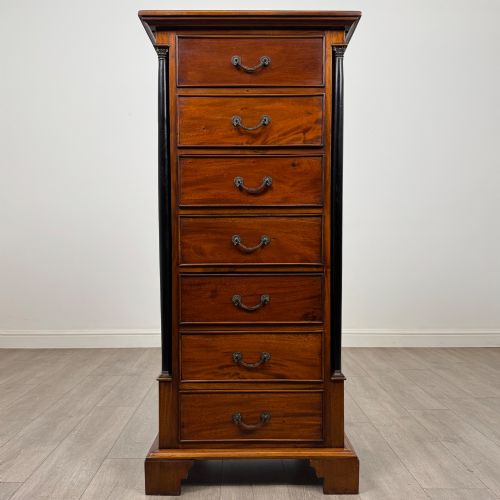
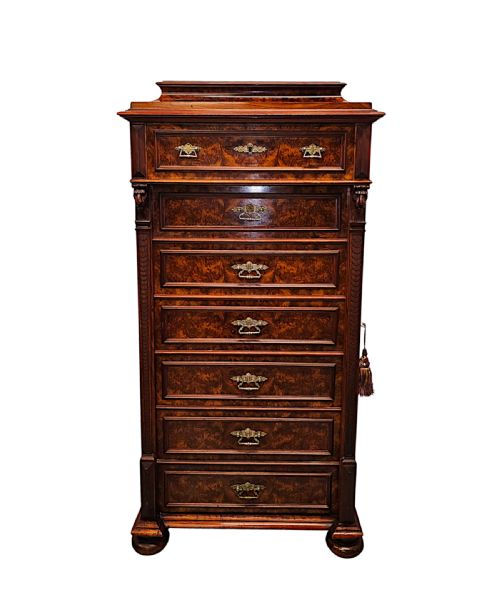
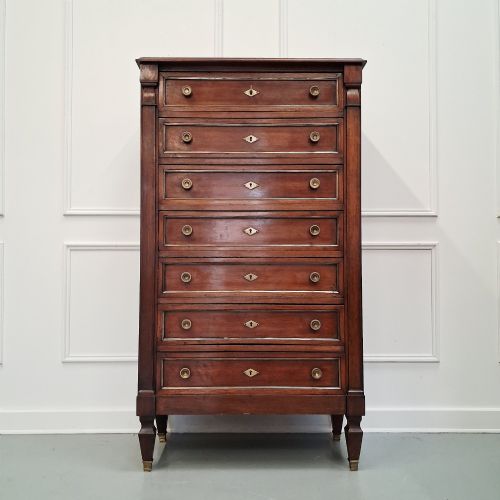
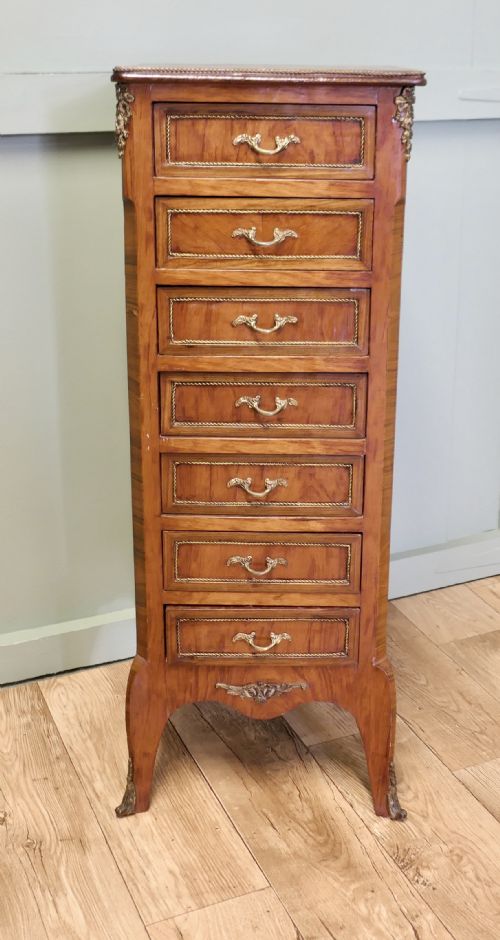
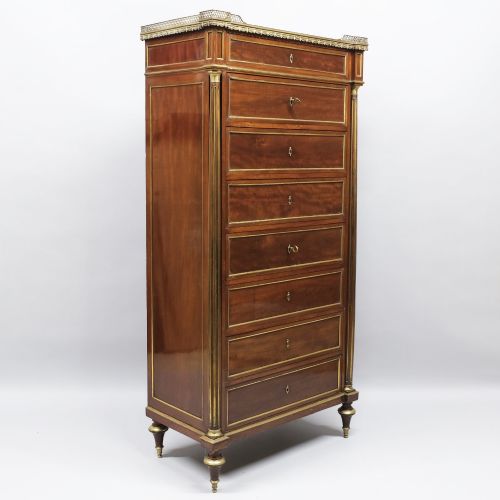
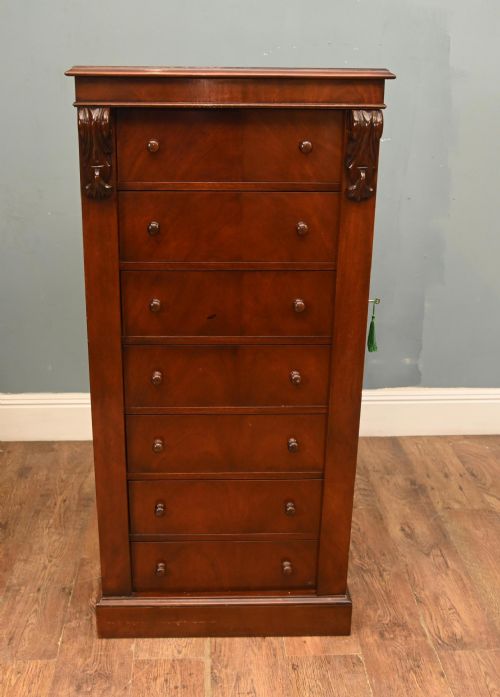
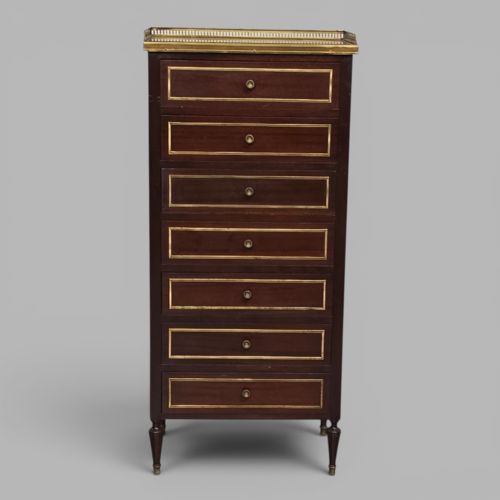
A seven drawer tall chest combines high capacity with a narrow footprint, often found in forms such as the Wellington chest, semainier, or tall-boy.
Pieces from this selection date primarily from the nineteenth and twentieth centuries, spanning periods including Victorian, Edwardian, and Georgian.
Makers utilised various regional styles, yielding British mahogany designs alongside French walnut and cherrywood semainiers.
Materials and construction
Cabinetmakers constructed these chests predominantly using timbers like mahogany, walnut, burr walnut, and oak, frequently adding brass hardware and occasional ormolu mounts.
Many examples incorporate specialised mechanisms, including locking pilasters on Wellington chests or secret drawers within tall carcases.
Listings feature woods including mahogany, burr walnut, satinwood, oak, ebonised wood, and cherrywood alongside brass hardware.
Assessing quality
Quality rests on timber selection, such as figured flame mahogany or burr walnut veneers, paired with crispness in carved details or inlay.
The precision of drawer construction and the smooth operation of locking mechanisms distinguish superior examples from standard utility pieces.
Maple and Co.
The Seven Drawer Tall Chest Glossary
- Wellington chest
- A tall, narrow chest of drawers featuring a hinged locking pilaster that secures all drawers simultaneously. This form originated in the nineteenth century and typically has seven drawers.
- Semainier
- A French tall chest traditionally designed with seven drawers, one for each day of the week. These pieces often utilise walnut, mahogany, or cherrywood.
- Tall-boy
- A chest on chest arrangement providing elevated storage capacity. Eighteenth-century versions divide into an upper and lower section.
- Pilaster
- A vertical architectural column applied to the sides of a cabinet or chest. On a Wellington chest, one pilaster is hinged to lock the drawers.
Seven Drawer Tall Chest: Frequently Asked Questions
What is a seven drawer tall chest?
A seven drawer tall chest is a vertical storage unit designed to hold maximum capacity while occupying minimal floor space. These pieces frequently appear as Wellington chests, semainiers, or tall-boys.
Cabinetmakers built them to suit smaller chambers or dressing rooms where horizontal floor space was limited.
How do I use a Wellington chest?
A Wellington chest operates by swinging open the right-hand locking pilaster once the small brass key is turned. This unblocks the runners and allows the seven drawers to open individually.
Ensure the chest stands level on the floor so the tall locking mechanism functions smoothly without binding.
Where should I place a tall chest?
Position a tall chest against a solid wall in a bedroom, dressing room, or hallway to make use of vertical wall space. Because of their height and narrow footprint, securing them to the wall provides stability.
Keep them away from direct heat sources to protect timber veneers like burr walnut and flame mahogany from drying.
How do I tell a semainier from a Wellington chest?
A semainier is a French chest that typically lacks the locking side pilaster found on a British Wellington chest. Both styles generally contain seven drawers stacked vertically.
Semainiers often display French walnut, cherrywood, or mahogany veneers influenced by Louis XV or Empire styles.