
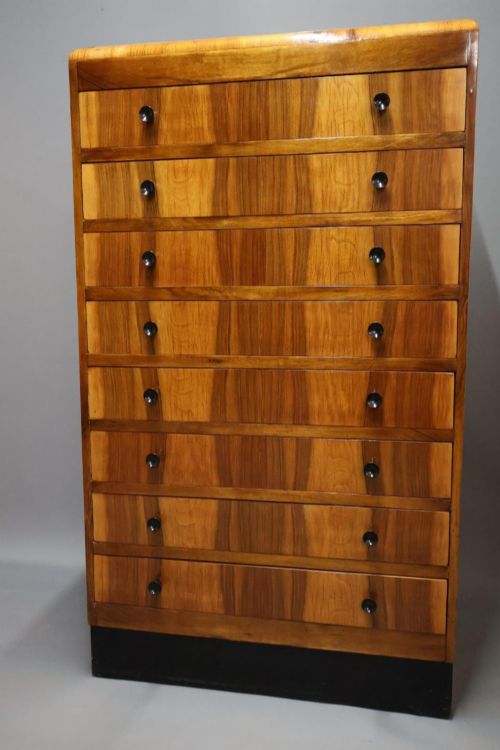


Antique Walnut Semainier Cabinet
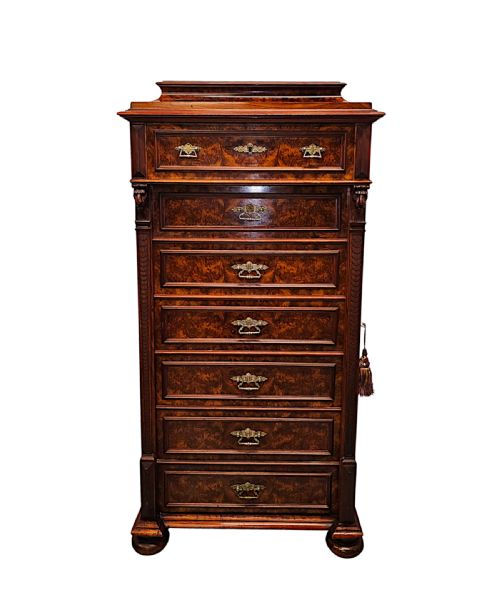
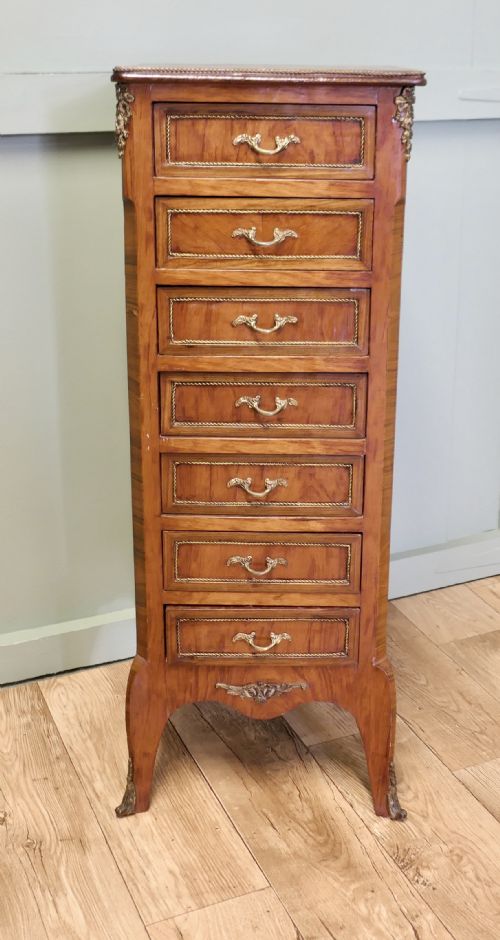
An antique walnut semainier cabinet is a tall, narrow storage piece prized for its seven daily drawers, offering refined vertical elegance.

Antique Walnut Semainier Cabinet
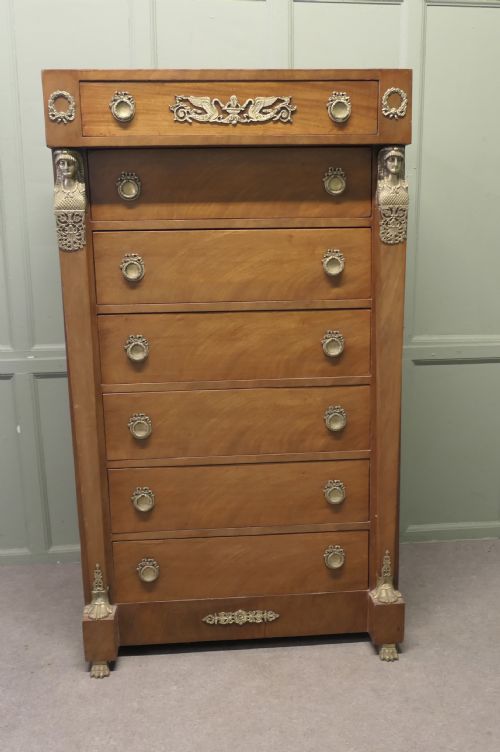
An antique walnut semainier cabinet provides a tall, narrow footprint designed for disciplined daily storage across seven distinct horizontal drawers. These pieces emerge in styles ranging from Victorian and Late Victorian to French Empire, Louis XV Revival, and Art Deco.
The materials recorded in these listings centre on walnut, burr walnut, and walnut veneer, often paired with marble tops, brass, or ormolu mounts. Makers such as Gillows and Betty Joel appear, alongside French regional workshops producing marquetry and parquetry.
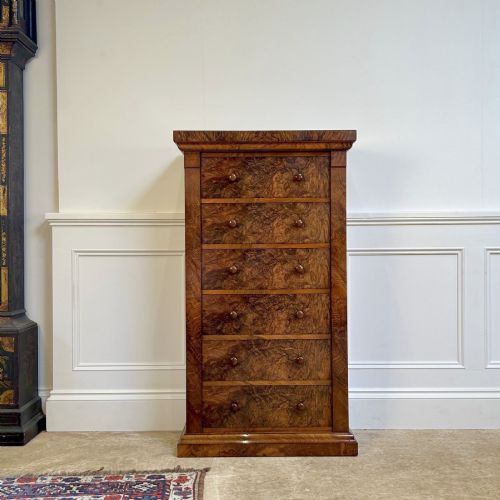
Buyers encounter forms described as Wellington chests, secretaire tall chests, filing chests, and bedside tables alongside the standard tall chest of drawers. Pieces date from the nineteenth century through to nineteen forty, spanning English and Continental traditions.
Materials and construction methods
Cabinet makers applied figured walnut and burr walnut veneer over solid timber carcases, creating rich grain patterns across the narrow drawer fronts. Parquetry and marquetry veneer work appears on specific Continental pieces from the nineteenth century.
Mounts in ormolu, gilt bronze, and brass accent the corners and handles of French Empire and Louis XV style pieces. Heavy marble tops provide a durable and contrasting surface on select French seven drawer chests.
Listings feature walnut, burr walnut, and parquetry veneer across periods spanning the nineteenth century, the Victorian era, and the nineteen forties.
Judging the range of quality
Quality separates through the selection of timber figures, where matched burr walnut and figured walnut veneers demand superior cabinet making skill. The crispness of parquetry placement and the integration of ormolu mounts indicate workshop standards.
Internal construction, such as the mechanism of a Wellington locking stile or the smooth travel of seven narrow drawers, distinguishes standard production from finer commissions by makers like Gillows or Betty Joel.
Gillows·Betty Joel
The Antique Walnut Semainier Cabinet Glossary
- Semainier
- A tall chest traditionally containing seven drawers, one for each day of the week. This form originated in France during the eighteenth century.
- Wellington chest
- A sturdy tall narrow chest featuring a hinged locking stile on one side that secures all drawers simultaneously. The design dates to the nineteenth century.
- Burr walnut
- Timber taken from a tree growth or burl, yielding a swirling, highly figured grain pattern. Cabinet makers prize this wood for decorative veneer surfaces.
- Ormolu
- Gilt bronze ornamentation applied to furniture mounts and hardware. This technique was widely utilised in French cabinet making.
- Parquetry
- Geometric wood inlay patterns forming decorative surfaces on tabletops and drawer fronts. Makers assemble small geometric blocks of veneer with precision.
Antique Walnut Semainier Cabinet: Frequently Asked Questions
What is a semainier cabinet?
A semainier is a tall, narrow chest of drawers traditionally designed with seven drawers, one for each day of the week. This form provides substantial vertical storage while occupying minimal floor space.
Cabinet makers produced these pieces in various regional styles, incorporating walnut timber, marble tops, and decorative veneers.
How do I identify a Wellington chest?
A Wellington chest is characterised by its tall, narrow proportions and a hinged vertical locking timber piece on the right side. This locking stile secures all the drawers when padlocked.
Nineteenth century English workshops frequently utilised this sturdy mechanism for secure personal storage.
Where should I place a tall walnut chest?
These tall cabinets suit bedrooms, dressing rooms, or hallways where floor space is limited but vertical storage is necessary. Their narrow footprint allows them to fit between doorways or windows.
Keep wooden furniture away from direct heat sources to protect the walnut veneer from drying and cracking.
How do I care for walnut veneer?
Maintain walnut veneer by dusting with a dry microfibre cloth and avoiding harsh chemical polishes. Natural wax applied sparingly preserves the sheen of the timber grain.
Protect marble top surfaces from acidic liquids and moisture rings by using coasters or protective pads.