

Tall Bedroom Storage
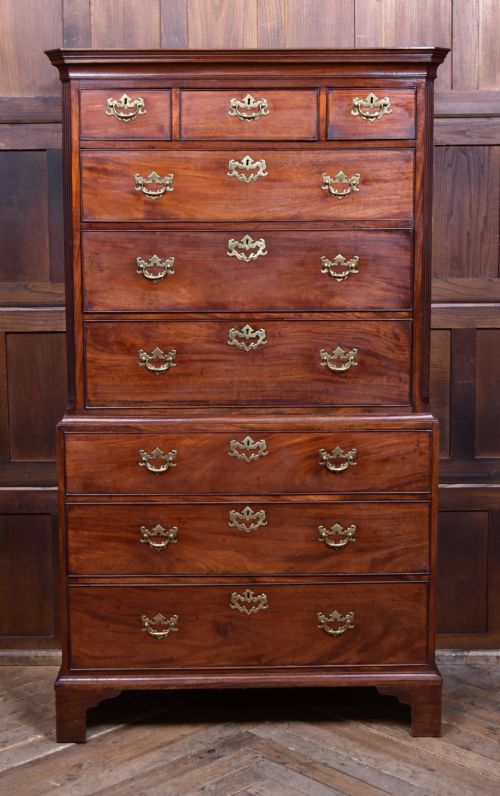
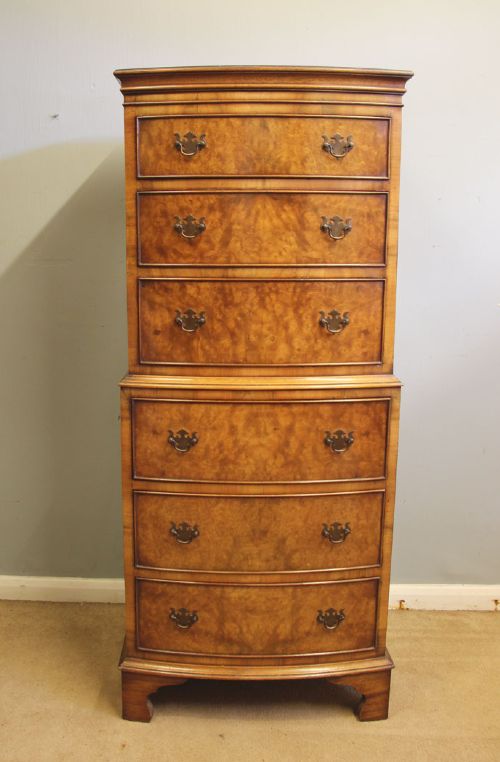
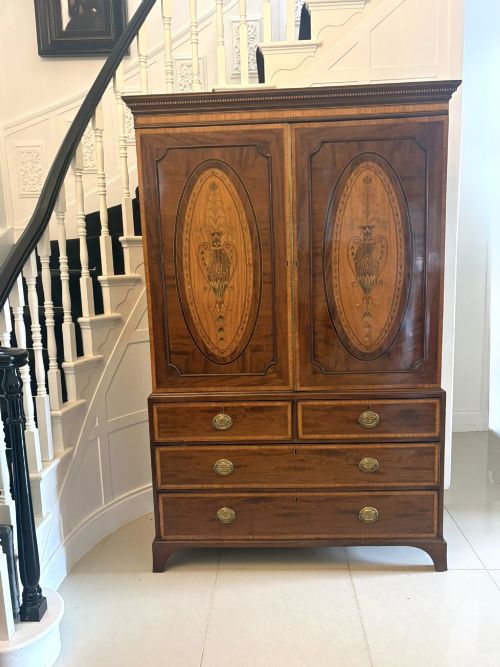
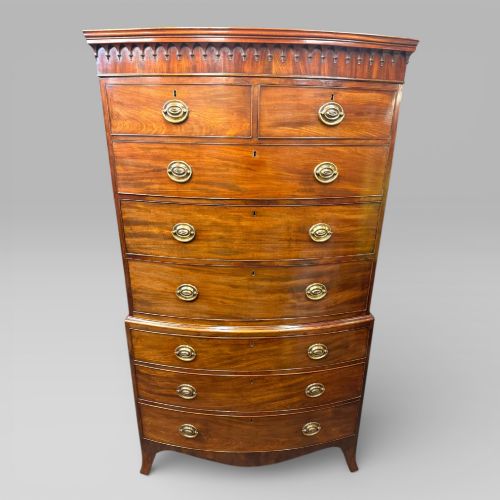
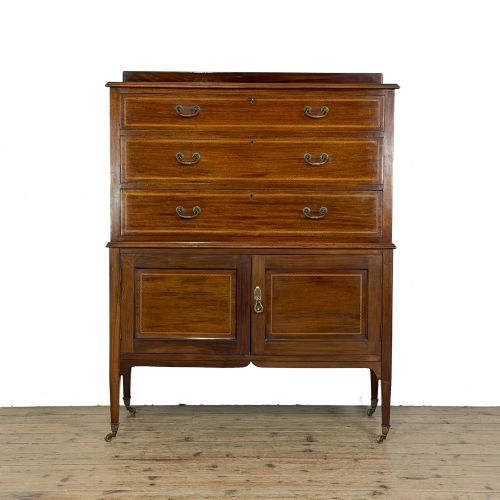
Tall antique bedroom storage gathers chests on chest, tallboys, and linen presses designed to hold a household's wardrobe while occupying minimal floor space.

Tall Bedroom Storage
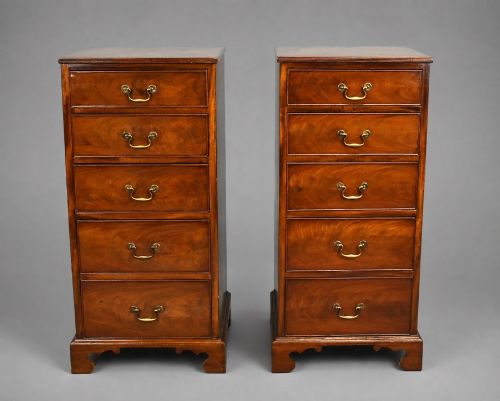
When buyers seek tall antique bedroom storage, they encounter vertical furniture forms designed to maximise capacity without enlarging the footprint. The pieces on this page span the Georgian, Victorian, and Edwardian eras, alongside later twentieth-century interpretations.
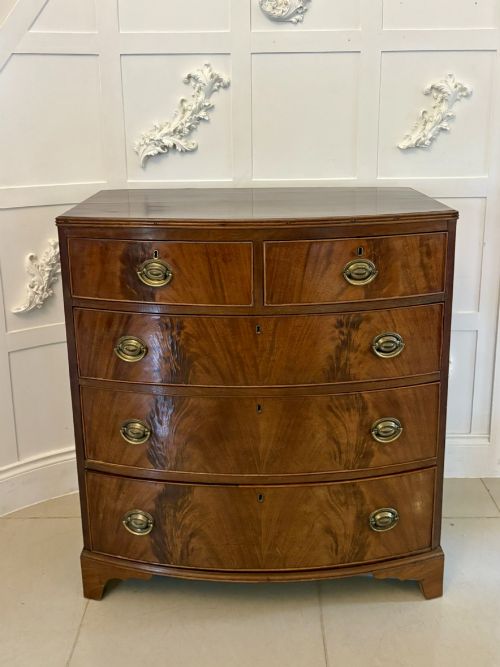
Mahogany predominates among these tall forms, often enriched with flame veneers, satinwood inlay, or brass drawer pulls. Walnut, burr walnut, oak, and pine also appear frequently across chest on chest and tallboy configurations.
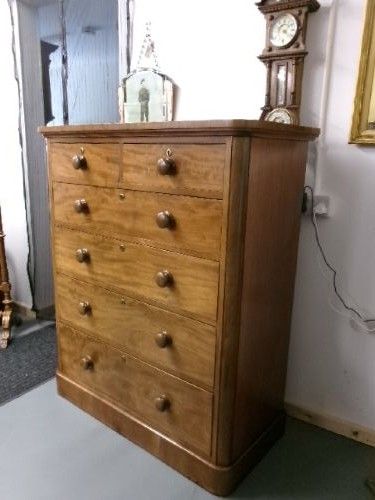
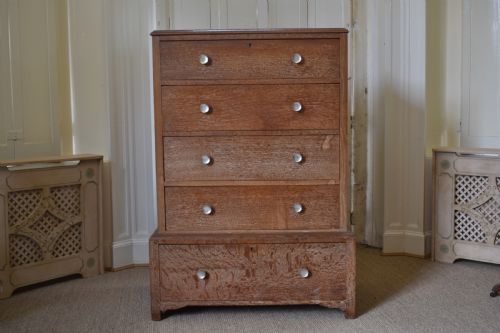
The selection ranges from grand Georgian linen presses and tallboys to slender Edwardian chests and Art Deco iterations. Buyers meet both single-section tall chests of five or more heights and two-part pieces such as chest on chest constructions.
Materials and construction
Cabinet makers built these tall storage units primarily using solid timber frameworks lined with secondary woods, applying mahogany, walnut, or satinwood veneers to prominent exterior surfaces. Flame mahogany veneer and burr walnut figured panels required skilled hand-selection to mirror grain patterns across multiple drawers.
Construction techniques relied on hand-cut dovetail joints for drawer construction and sturdy mortise and tenon frames to support the considerable height and weight of pieces like the linen press and chest on chest. Brass handles, escutcheons, and locks were fitted by hand into recessed timber housings.
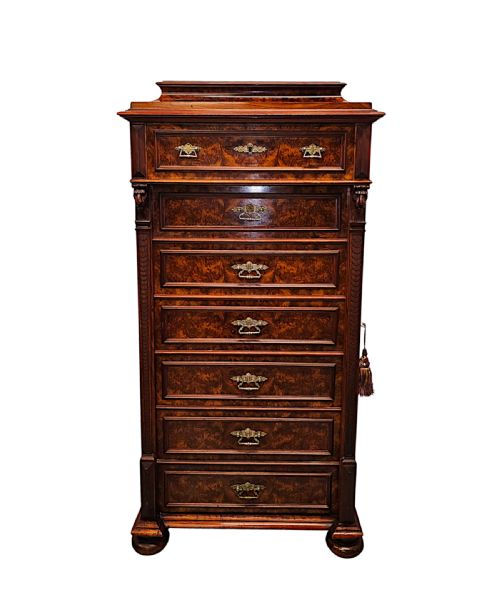
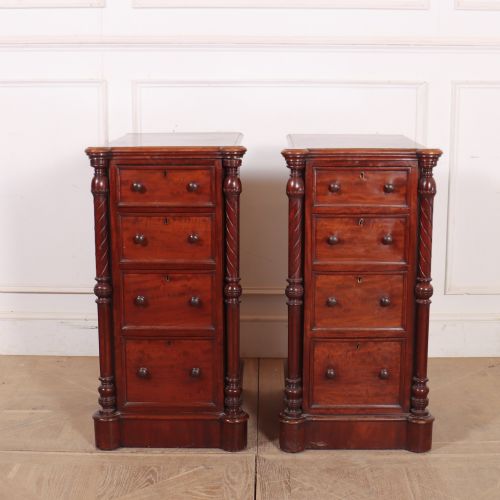
Wellington chests include a locking side bar that secures every drawer at once, originally designed to keep snooping valets at bay.
Quality variations
The standard of a tall storage piece rests on the selection of its timber veneers and the crispness of its joinery. Superior examples display uninterrupted grain alignment across successive drawer fronts and tight, hand-cut dovetail joints that remain flush through decades of use.
Proportion and decorative restraint dictate the upper tier of these pieces. Finely figured burr walnut, subtle satinwood stringing, and original brass hardware elevate a tallboy or chest on chest far above simpler utilitarian counterparts.
The Tall Bedroom Storage Glossary
- Tallboy
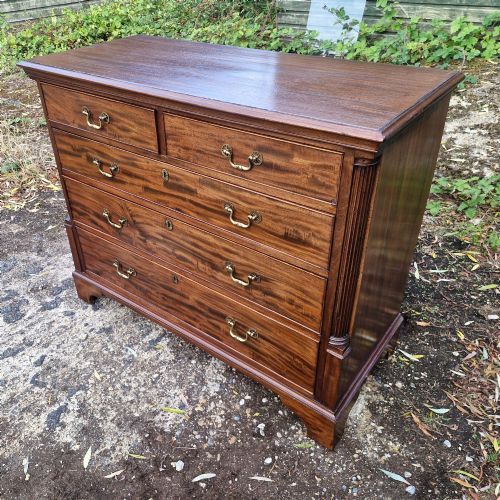
- A tall chest of drawers, often constructed as a chest on chest where a smaller upper section sits upon a larger base.
- Linen Press
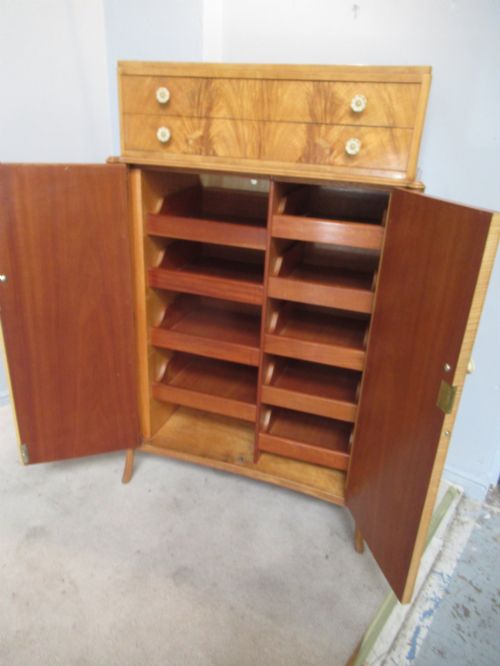
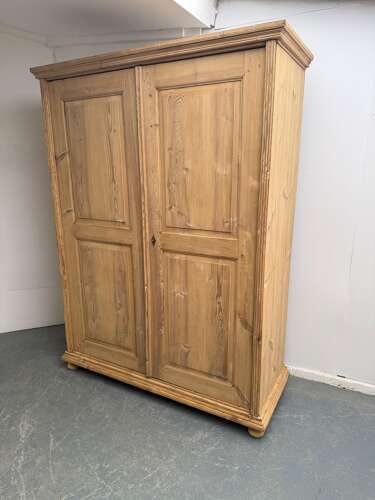
- A tall double-door cupboard enclosing sliding trays or shelves above a bank of lower drawers, originally intended for household textiles.
- Wellington Chest
- A tall, narrow chest of drawers secured by a hinged locking stile on one side that fastens over the drawer ends.
- Dovetail
- A joint formed by interlocking wedge-shaped fingers, widely used in antique drawer construction for maximum tensile strength.
- Escutcheon
- A decorative metal plate surrounding a keyhole, designed to protect the surrounding wood from wear.
Tall Bedroom Storage: Frequently Asked Questions
What is the difference between a tallboy and a chest on chest?
A chest on chest specifically comprises two distinct carcass sections stacked vertically, with the upper chest resting directly on the lower one. A tallboy generally refers to any tall chest of drawers, though the terms are often used interchangeably in antique furniture.
Both forms provide substantial vertical storage while maintaining a compact floor footprint. They emerged to meet the demand for larger wardrobes in period bedchambers.
How do I style a tall antique chest in a modern bedroom?
Allow the rich timber tones of mahogany or walnut to anchor the room by keeping surrounding walls neutral. Tall storage pieces work well against blank walls where their height can be fully appreciated without overcrowding the space.
Ensure the piece is properly secured to the wall if it possesses significant height, particularly with heavier two-part configurations. Pair the natural grain with simple lighting to highlight the historical surface texture.
How do I distinguish Georgian tall storage from Edwardian pieces?
Georgian pieces typically feature solid proportions, dense timber weight, and hand-cut construction details such as secondary wood linings in oak or pine. Their handles and hardware reflect eighteenth-century design canons, including brass drop handles and cockbeaded drawer edges.
Edwardian examples often present lighter frames, satinwood stringing, and machine-assisted precision in the joinery. They tend to embrace revival styles that reinterpret earlier Georgian or Sheraton proportions with a lighter touch.
What were linen presses originally used for?
Linen presses served to store household linens, sheets, and garments flat on internal sliding trays before modern hanging wardrobes became standard. The upper cupboard protected textiles from dust while the lower drawers held smaller apparel.
Today, owners frequently repurpose these deep upper compartments for contemporary clothing storage or entertainment equipment. Their substantial height makes them a focal point in any bedroom setting.