


Set of Salt Cellars
These small vessels hold table seasoning, bringing craftsmanship and period character to dining arrangements.
Set of Salt Cellars
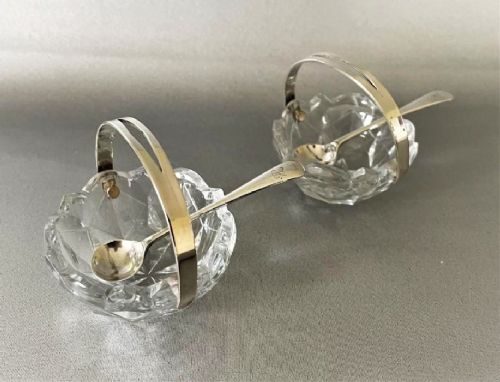
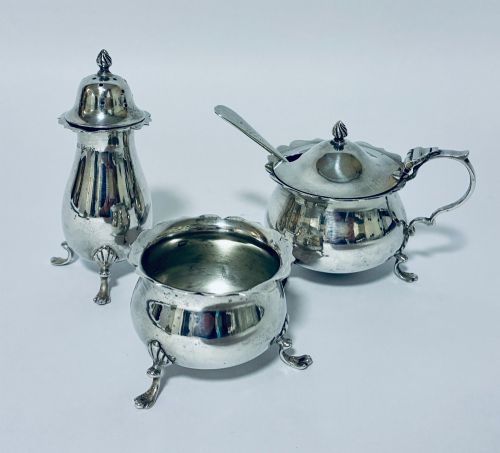
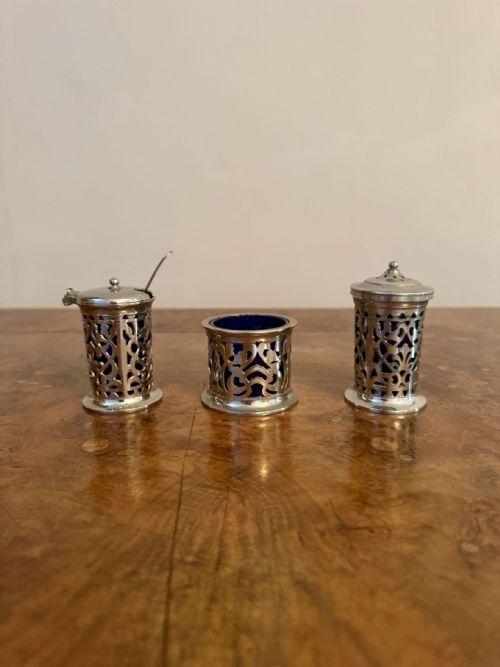
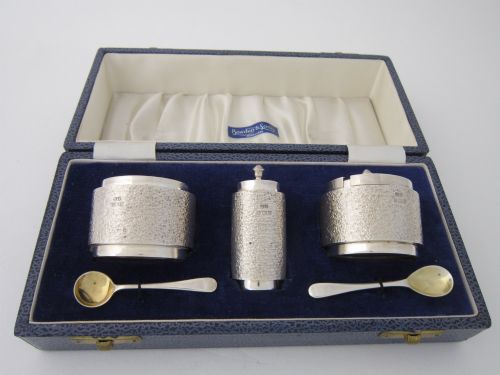
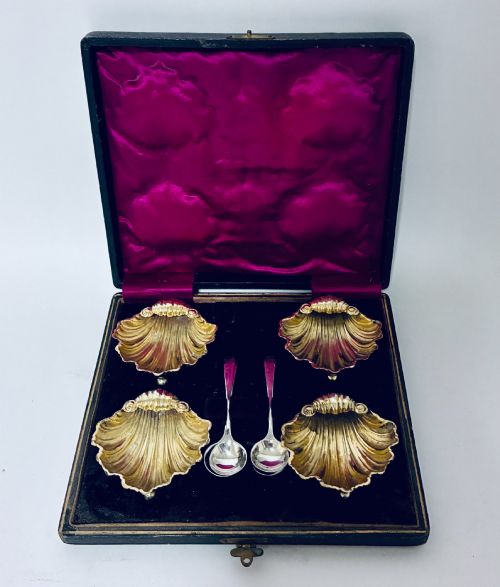
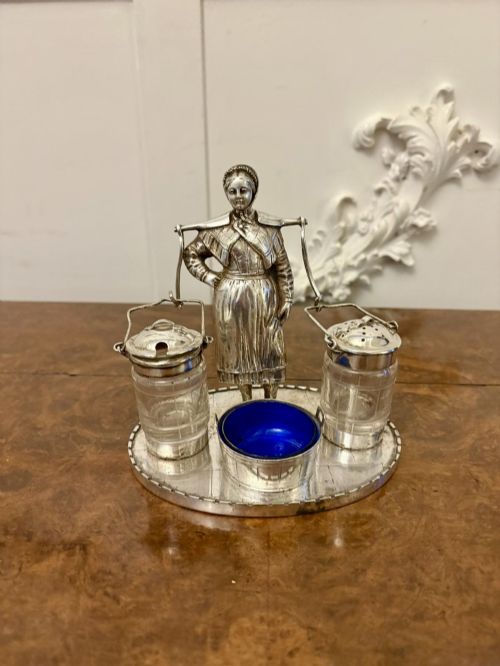
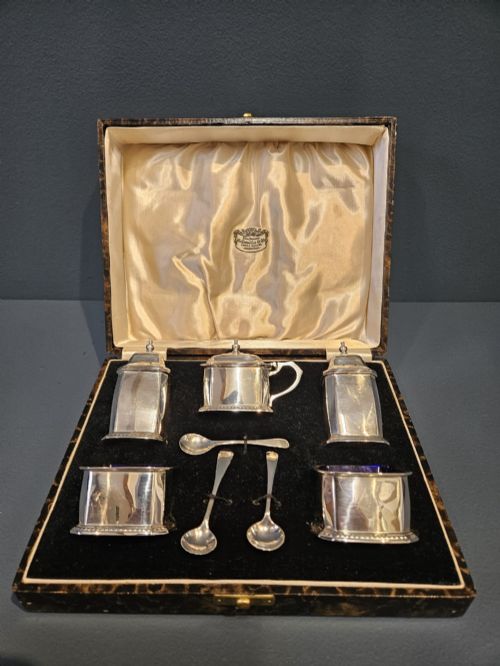
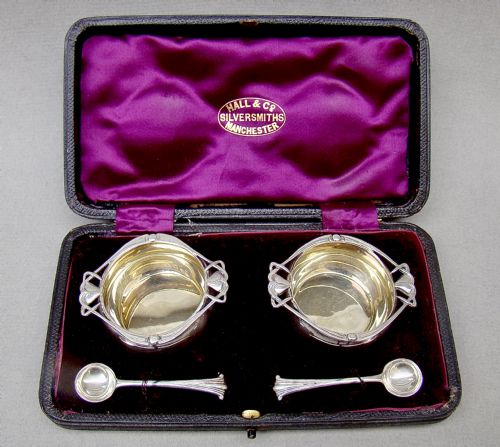
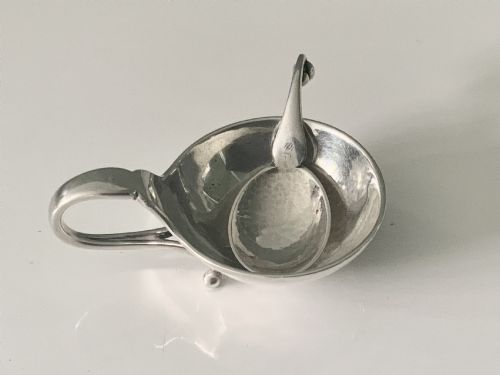
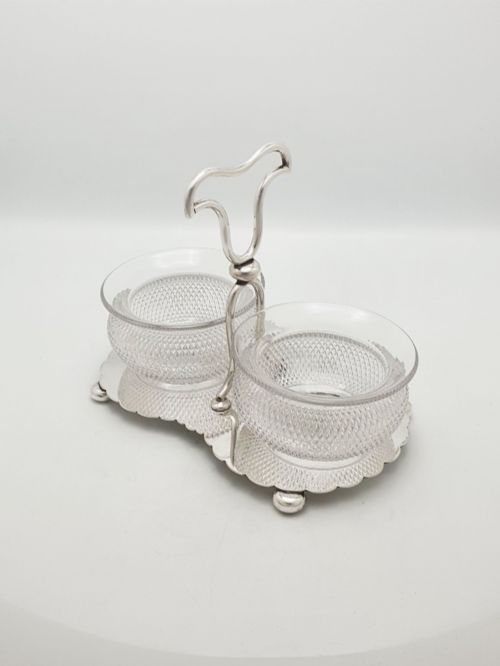
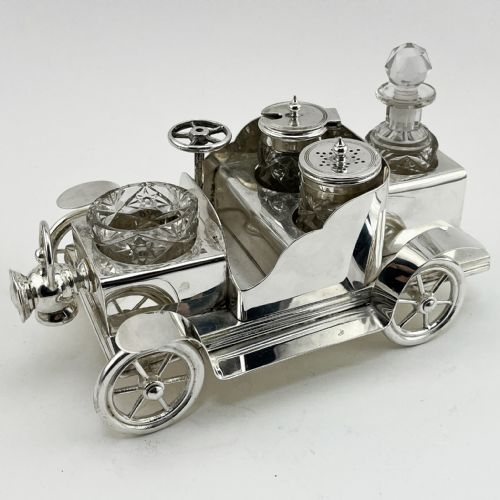
A set of salt cellars comprises matching small open bowls or covered pots designed to hold salt at the dining table, often accompanied by miniature spoons. Buyers searching for a set of salt cellars encounter diverse configurations, ranging from pairs and quartets of open salts to complete cruet sets incorporating mustard pots and pepper shakers.
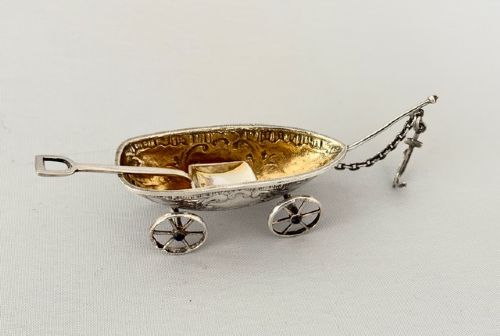
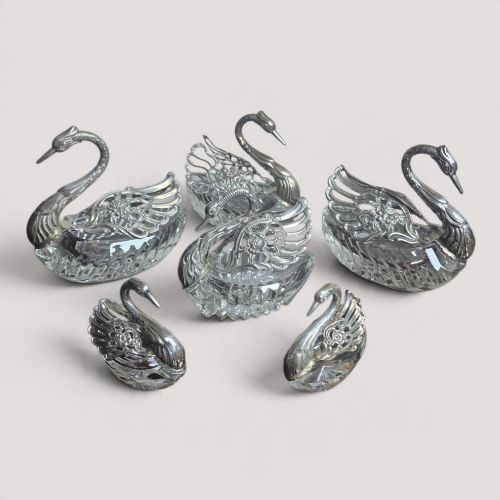
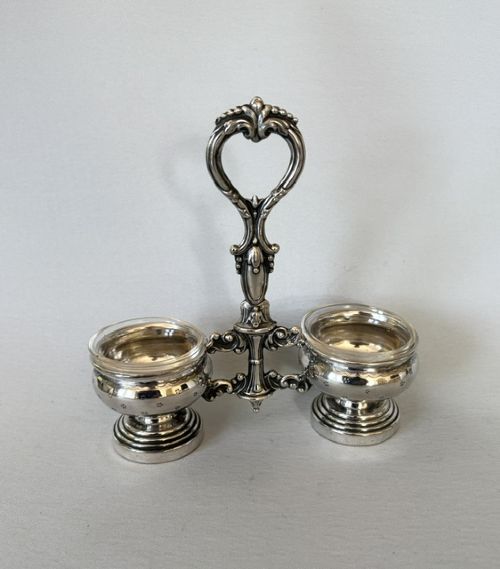
The pieces on this page span several eras, with Victorian and Edwardian examples appearing frequently alongside Georgian items and later twentieth-century modernist designs. Forms vary from traditional cauldron and boat shapes to novelty animals, shells, and glass liners paired with metal stands.
Materials and construction
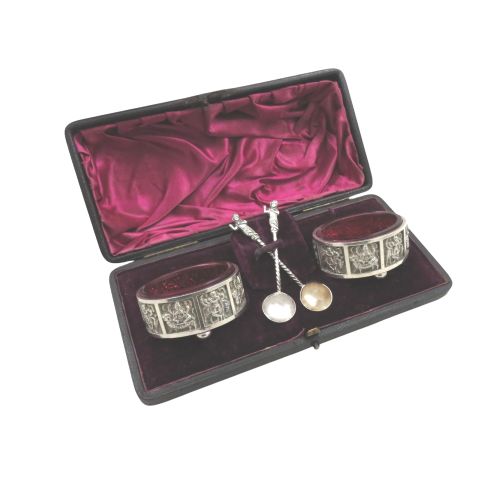
Makers utilised sterling silver and silver plate extensively, often casting metals into decorative shapes such as shells, birds, or classical cauldrons. Many open salt cellars require contrasting inner liners made from cobalt glass, cranberry glass, or green opaline glass to protect the metal from corrosion caused by salt.
Cut glass and crystal appear widely, shaped through heavy moulding and wheel-cutting before receiving silver rims, mounts, or hinged lids. Enamel work also surfaces in twentieth-century Scandinavian pieces, adding vibrant colour to silver bases.
Set of Salt Cellars Retail Price Guide 2026
Typical asking prices for set of salt cellars among the pieces listed under this phrase on Sellingantiques today, from the lower quarter to the upper quarter. They describe what is for sale here now, not the wider market.
Listings feature materials ranging from sterling silver and silver plate to cut glass, velvet, and cobalt glass across multiple centuries.
Distinctions in quality
Quality rests upon the crispness of the casting, the weight of the metal, and the precision with which glass liners fit their metal mounts. Finer pieces display hand-chased detail, clear hallmarks, and matching original spoons rather than mismatched replacements.
The integrity of the interior glass liner remains central, as replacement liners alter the original state of the piece. Superior craftsmanship shows in the balanced proportions of miniature feet, rims, and handles on even the smallest vessels.
Josiah Williams & Co·Georg Jensen·William Neale·Paul Storr
The Set of Salt Cellars Glossary
- Cruet set
- A collection of matching condiment containers, typically holding oil, vinegar, pepper, and salt within a fitted stand. These sets often use a central carrying handle for table service.
- Cauldron salt
- A small, round salt cellar raised on three or four small feet, styled after a traditional cooking pot. This form became particularly popular during the Georgian and Victorian periods.
- Glass liner
- A removable insert, often in cobalt blue or cranberry glass, placed inside open silver salt cellars. This prevents the corrosive action of salt from damaging the metal body.
- Silver gilt
- Silver that has been coated with a thin layer of gold on the interior or exterior surface. This technique provides a rich golden appearance and protects the silver from tarnishing.
Set of Salt Cellars: Frequently Asked Questions
How were salt cellars used?
Dinners before the invention of free-flowing table salt relied on open salt cellars placed beside each place setting or shared between guests. Dinners would pinch salt from the bowl using miniature spoons or clean fingers to season their food.
Larger master salts sat centrally on the table, while smaller individual cellars served guests directly. This practice continued until modern shaker mechanisms gained widespread favour in the twentieth century.
How do I clean antique silver salt cellars?
Cleaning requires gentle warm water, mild washing-up liquid, and a soft cloth to remove everyday dust and grease. Strong chemical dips strip away desirable patination and can ruin delicate glass inserts or enamel.
Glass liners should be removed and washed separately before being dried thoroughly. Care must be taken around vintage hallmarks and intricate chased details.
How do I spot replacement glass liners?
Replacement liners often sit slightly too high or rattle loosely within the metal frame because they lack the exact dimensions of the original blown glass. Original liners usually show minor bottom wear and match the exact contours of the claw or pedestal feet.
Colour consistency also offers clues, as period glass exhibits specific hues typical of nineteenth-century manufacturing techniques.