
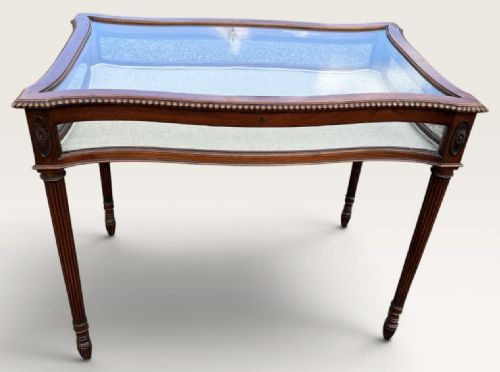
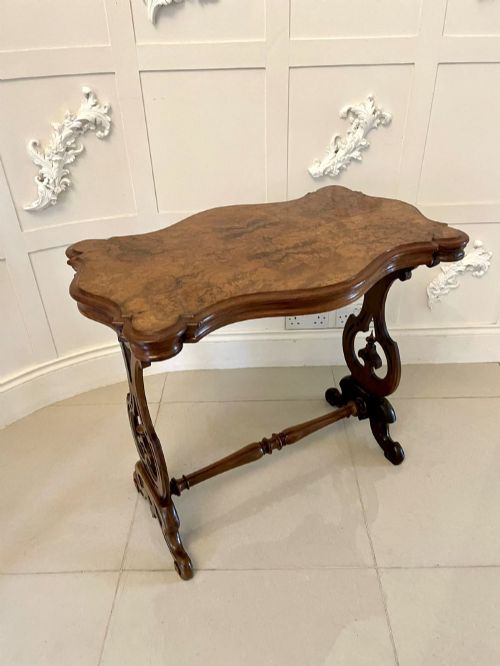
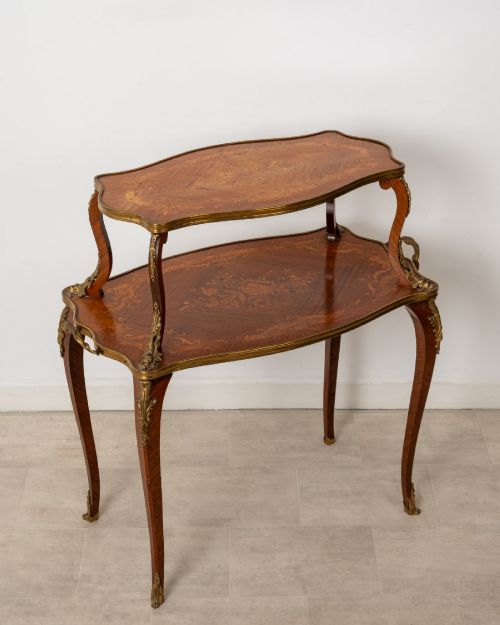
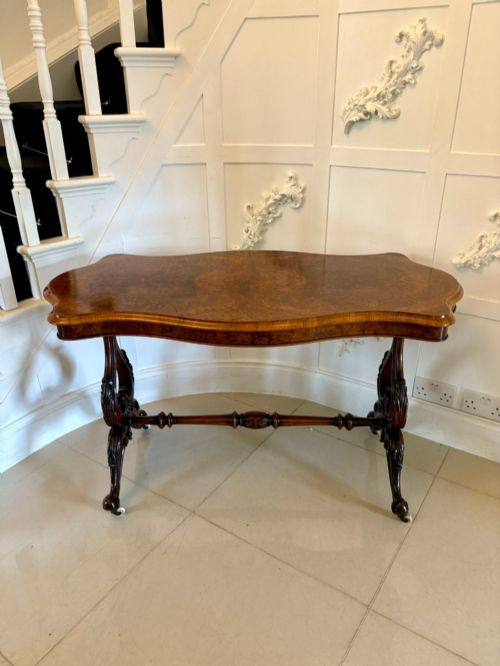
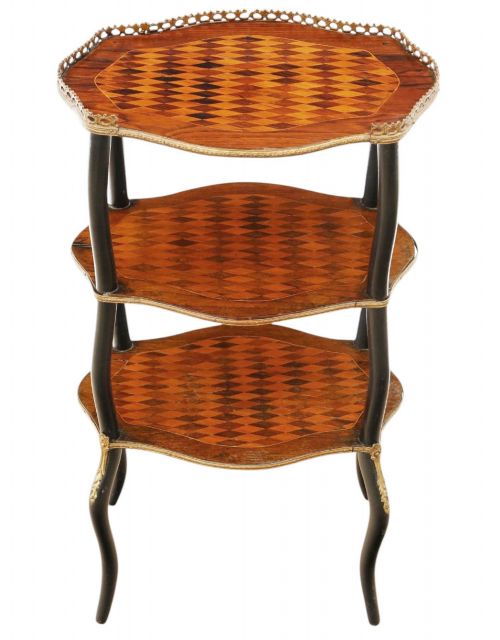
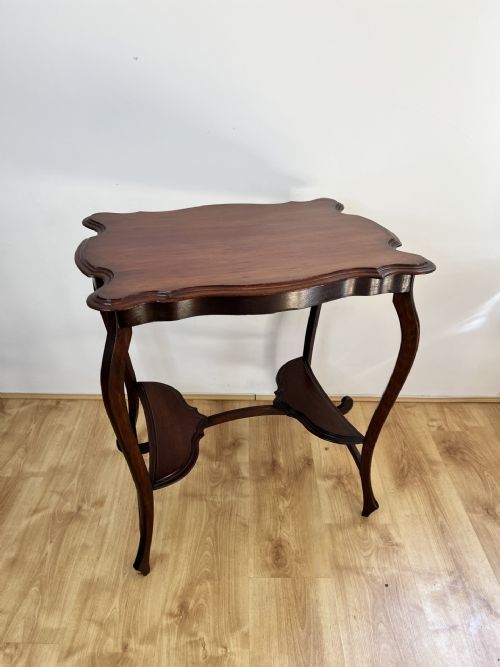
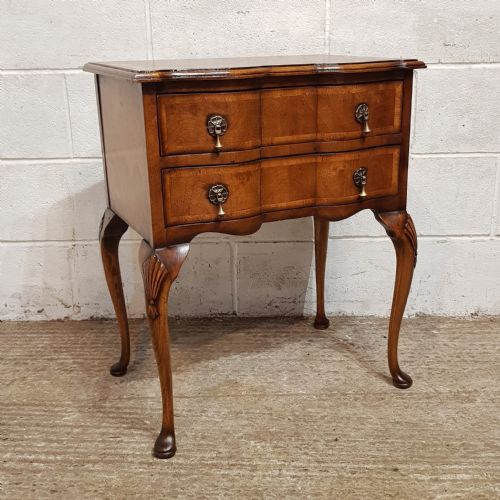
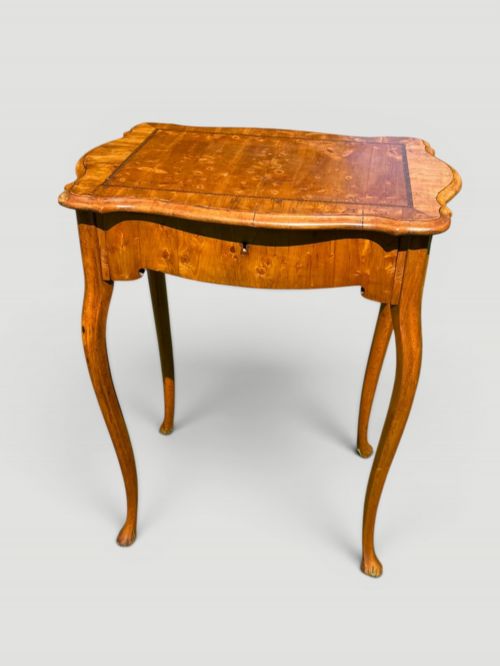


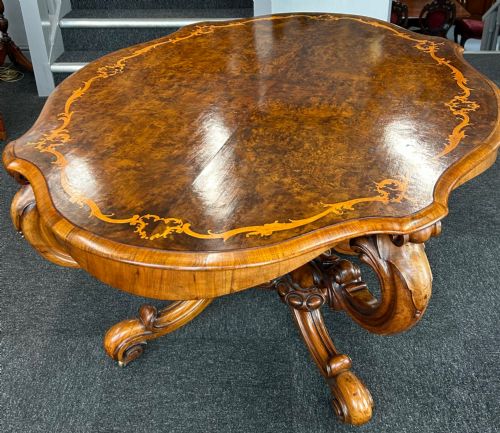

Serpentine Occasional Table
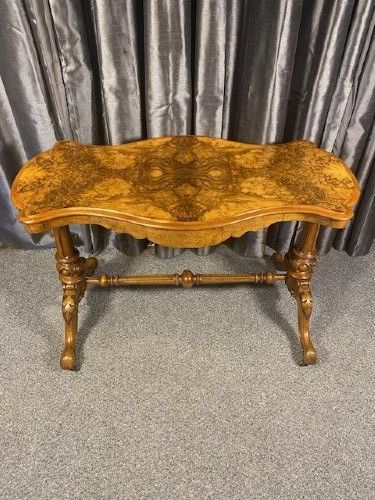
These serpentine occasional table pieces bring fluid curves and rich timber figures into a room.
Serpentine Occasional Table
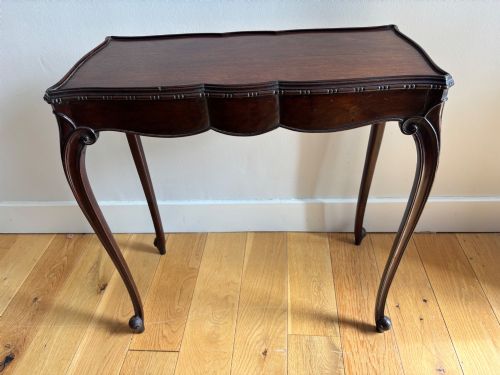
A serpentine occasional table presents a distinctive undulating front edge, combining practicality with refined proportions. These pieces emerge primarily from Victorian, Edwardian, and nineteenth-century workshops, spanning English and French traditions.
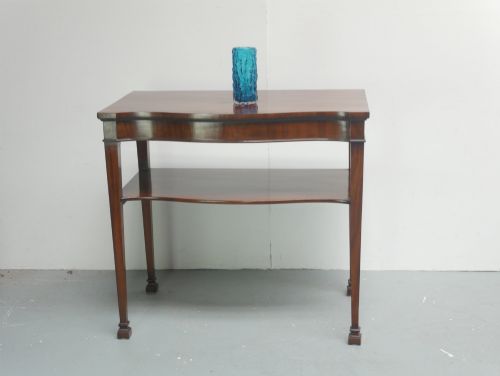
The form encompasses side tables, centre tables, and display pieces, frequently displaying shaped tops designed to catch the light. Buyers encounter walnut, mahogany, and satinwood iterations most often across these periods.
Materials and Construction
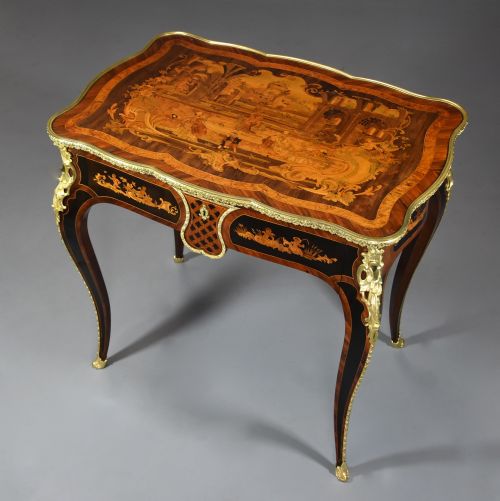
Cabinet makers utilised dense hardwoods including walnut, mahogany, rosewood, and kingwood as the structural foundation. Highly figured burr walnut and delicate marquetry veneers were applied to curved surfaces to create visual depth.
Makers integrated cast brass mounts, ormolu details, and inlaid parquetry to accentuate the undulating outlines of the timber. Joinery methods allowed rigid frames to support cantilevered shelves and shaped galleries.
The listings on this site span walnut, mahogany, rosewood, and satinwood across the Victorian and Edwardian periods.
Judging Quality
Quality rests in the crispness of the curved serpentine timber and the precision of the veneer matching along the edges. Superior examples show seamless continuity in marquetry across moving parts and drawers.
Finer pieces incorporate dense secondary timbers, hand-cut dovetails, and cast hardware that fits flush without excessive gaps. The stability of the freestanding frame and the depth of the French polish indicate the original workshop standard.
Gillows
The Serpentine Occasional Table Glossary
- Serpentine
- A curved edge profile shaped in a double curve, resembling a snake's movement with a convex centre flanked by concave wings.
- Burr Walnut
- Timber taken from the abnormal growth of a walnut tree, producing highly twisted, decorative grain patterns prized by cabinet makers.
- Marquetry
- The art of applying thin slices of wood veneers in geometric or pictorial patterns onto a solid wooden carcase.
- Ormolu
- Gilt bronze ornamentation applied to furniture mounts, popular in French revival and nineteenth-century decorative pieces.
- Étagère
- A set of open display shelves supported by columns, designed for ornaments or books in a drawing room.
Serpentine Occasional Table: Frequently Asked Questions
What is a serpentine occasional table?
A serpentine occasional table is a small, movable piece of furniture featuring a distinctively curved, wave-like front edge. These tables served various functions in nineteenth and early twentieth-century drawing rooms.
Craftsmen built them in forms such as lamp tables, display units, and compact side tables using decorative timbers like burr walnut and mahogany.
How do I style a serpentine table?
The curved profile makes these tables suitable for placement against a wall, behind a sofa, or freestanding in the centre of a room. Their shaped tops provide visual interest without dominating the floor space.
Pair them with traditional lamps, small sculptures, or botanical arrangements to complement the figured wood and inlaid details.
How can I date a serpentine table?
Dating relies on examining the construction methods, timber choices, and stylistic influences present in the piece. Nineteenth-century examples often utilise heavy burr walnut and elaborate marquetry, while Edwardian pieces lean towards lighter mahogany and satinwood.
Drawer linings, screw types, and secondary woods inside the structure offer further clues to the manufacturing decade.
Where were these tables made?
Makers across England and France produced these pieces, reflecting distinct regional tastes in revival styles. French workshops frequently employed kingwood, ormolu mounts, and intricate parquetry.
English cabinet makers focused heavily on figured walnut, mahogany, and satinwood, drawing inspiration from earlier Georgian and Regency designs.