
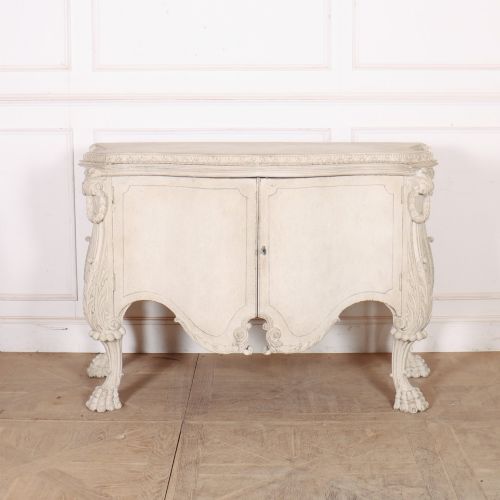

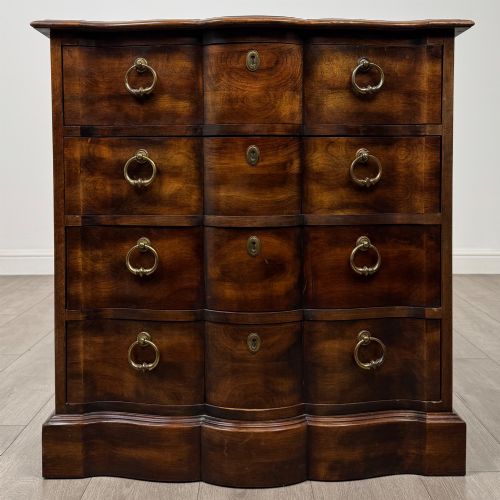
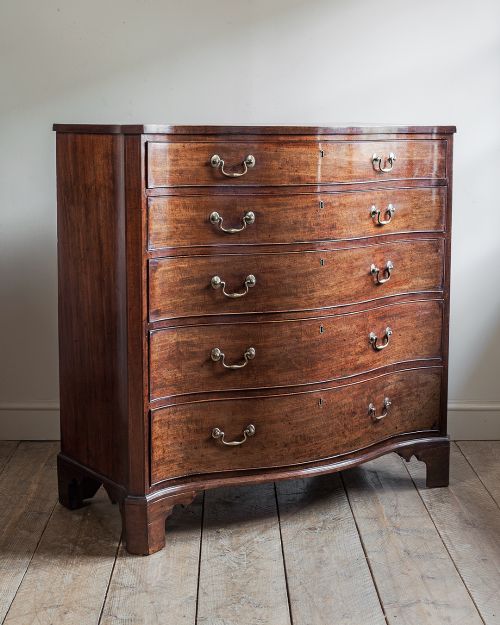
Serpentine Fronted Commode
A serpentine fronted commode offers a distinctive undulating silhouette that brings elegance and practical storage to a room.
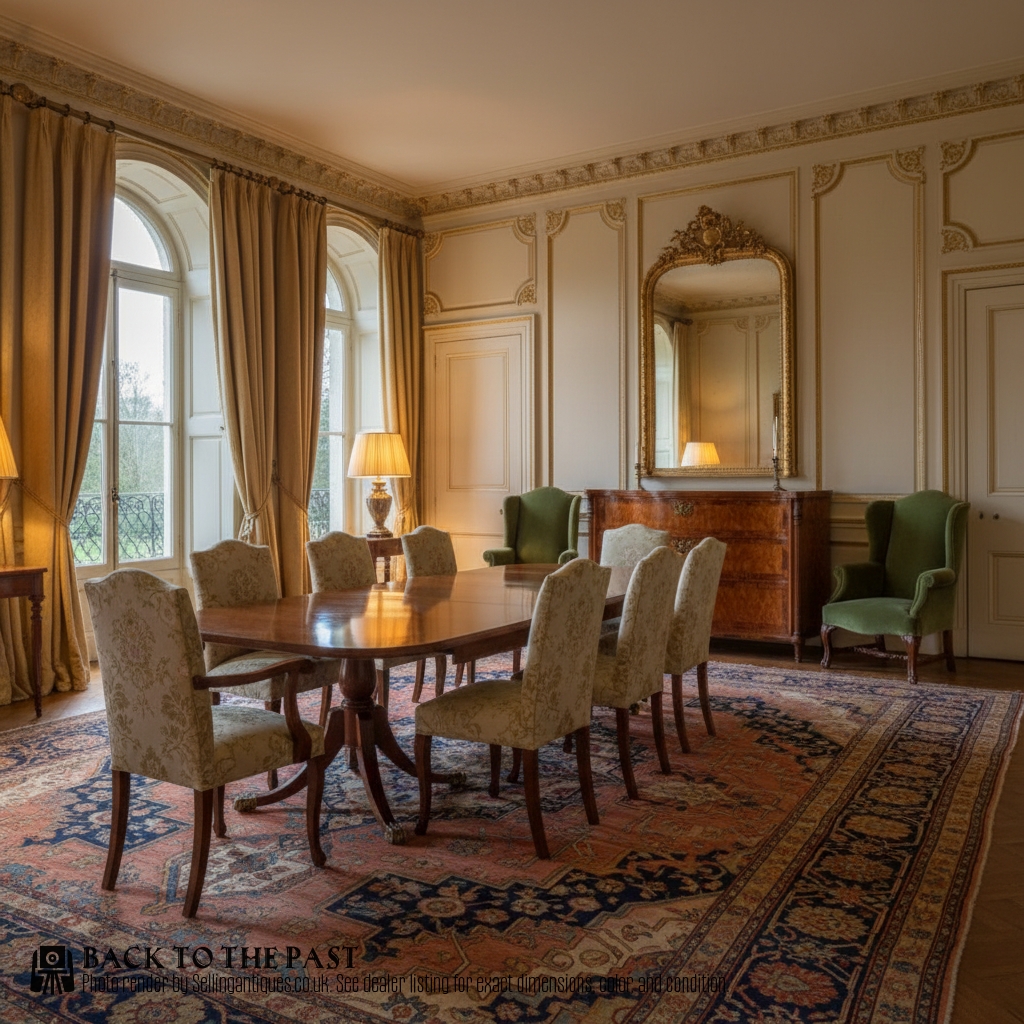
Serpentine Fronted Commode
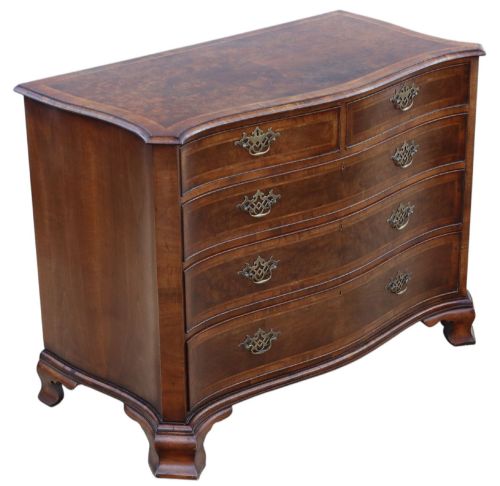
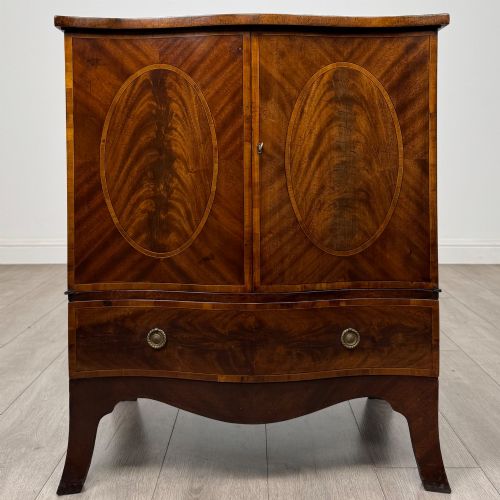
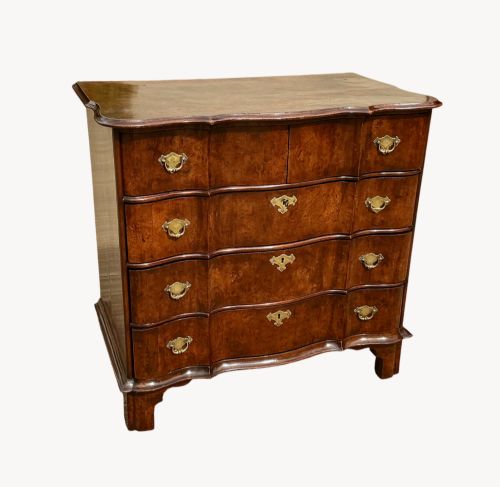
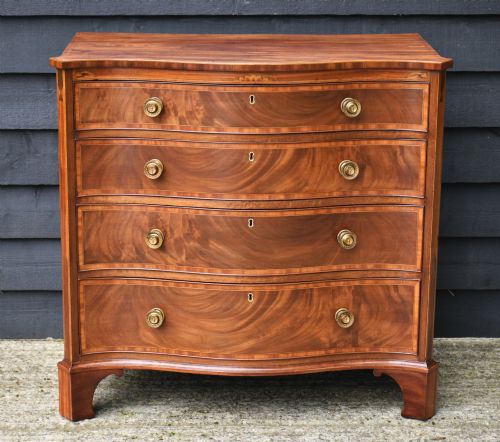
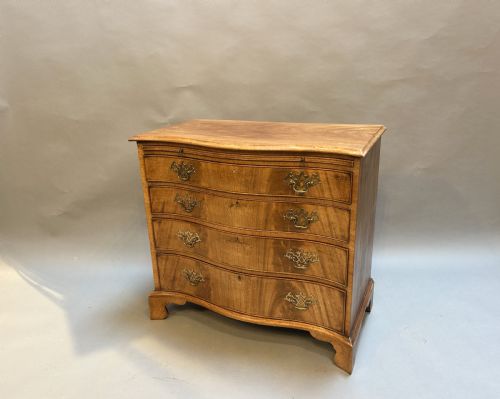
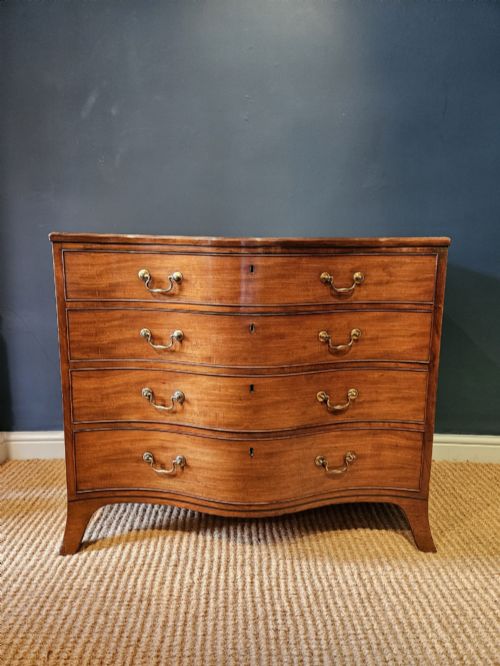
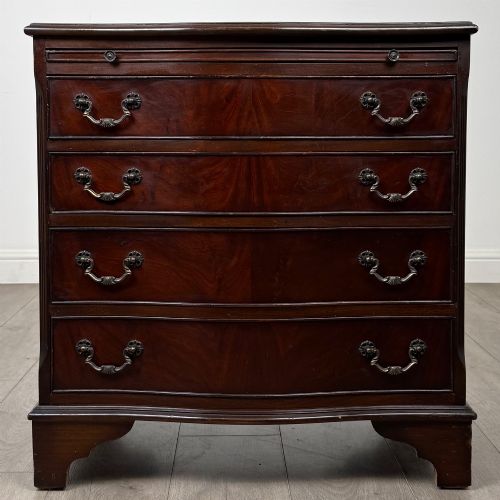
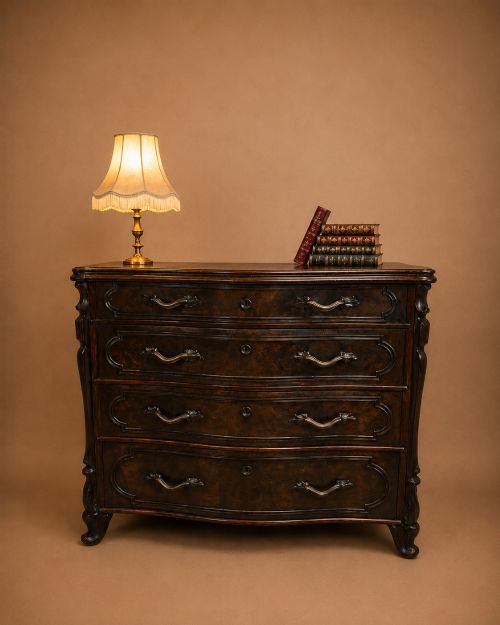
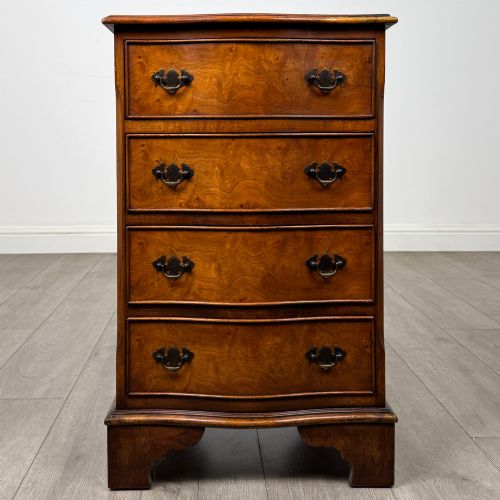
A serpentine fronted commode is a chest of drawers or cabinet featuring a gracefully curved front that sweeps inward and outward in an S-shape. When you search for this phrase, you encounter pieces originating from the eighteenth century onward, spanning Georgian, Victorian, and Edwardian periods.
The versions most commonly met on this page include mahogany and walnut examples from the Georgian era, alongside later revival pieces and continental commodes. These items serve primarily as statement storage furniture for bedrooms and living spaces, constructed in various scales from small bedside tables to large proportions.
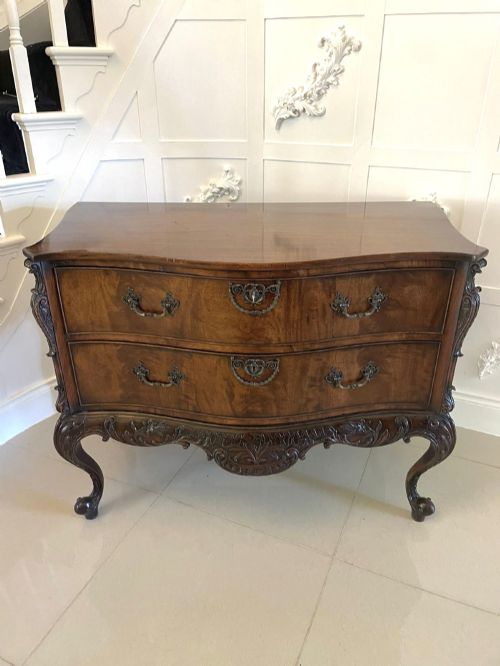
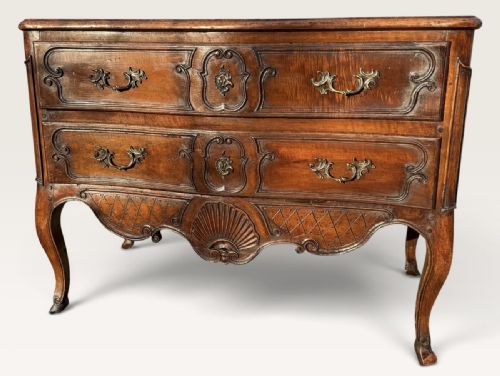
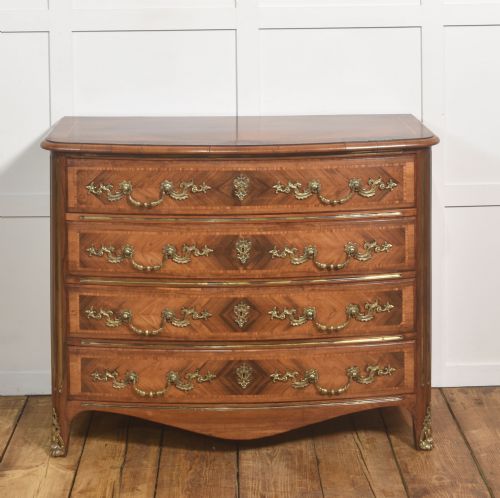
Makers across Britain and continental Europe utilised this form to display fine timber grains and intricate marquetry. The selection ranges from English George III designs to French provincial styles and Dutch baroque or bombe interpretations.
How They Were Made
Cabinet makers constructed these pieces using dense hardwoods such as mahogany, walnut, oak, and cherrywood, often applying burr walnut or figured veneers to the curved surfaces. Crossbanding and marquetry decoration appeared on select examples, adding visual depth to the undulating drawer fronts and tops.
Fittings included cast brass handles and escutcheons, while certain continental and later pieces incorporated marble tops. Carved details and shaped aprons finished the base of the cabinet, aligning with stylistic influences from the Chippendale style and French Louis XV design.
Some eighteen-century commodes include hidden fitted compartments for secrets, proving that past owners loved a clandestine drawer as much as we do.
What Varies in Quality
The standard of a serpentine fronted commode depends heavily on the crispness of the curved woodwork and the selection of timber veneers. Superior examples display carefully matched burr walnut or figured mahogany grains that follow the complex contours of the chest without distortion.
Construction methods also separate standard items from finer works, visible in the dovetail joints of the drawers and the integration of original brass hardware. The presence of hand-painted decoration, finely executed marquetry, or fitted marble tops further distinguishes the upper tier of the range.
The Serpentine Fronted Commode Glossary
- Serpentine
- A shape characterised by a front that curves inward in the centre and outward at the sides. This undulating contour requires skilled woodworking to achieve.
- Commode
- A low cabinet or chest of drawers designed for storage. The term often describes decorative chests originating from continental Europe as well as British pieces.
- Marquetry
- Decorative patterns formed by inserting pieces of wood veneer into a background panel. This technique creates pictorial or geometric designs on drawer fronts and surfaces.
- Crossbanding
- A border of veneer laid around the edges of a panel or drawer front with the grain running perpendicular to the central field. It provides a neat framing effect on quality furniture.
- Bombe
- A bulging or convex swell to the sides and front of a piece of furniture. This profile is frequently seen on continental pieces and Dutch designs.
Serpentine Fronted Commode: Frequently Asked Questions
What is a serpentine fronted commode?
A serpentine fronted commode is a decorative chest of drawers or cabinet featuring an undulating, curved front. The shape typically bows outward at the ends and curves inward at the centre.
These pieces were produced in various timbers, including mahogany, walnut, and oak, across British and continental workshops from the eighteenth century onward.
Where were these commodes used?
They were primarily placed in principal rooms such as bedrooms, drawing rooms, and hallways as functional storage furniture that also displayed status and taste.
Today, they function similarly in domestic interiors, serving as bedside tables, side cabinets, or prominent chests of drawers in living spaces.
How do I identify a Georgian piece?
Georgian examples often feature solid mahogany or figured timber construction with precise bracket feet or shaped aprons. The proportions tend to be balanced and restrained compared to later revival styles.
Examining the drawer construction, timber types, and interior secondary woods helps confirm the eighteenth-century period origin.
What is the difference between English and continental pieces?
English pieces from the Georgian era generally rely on rich mahogany timbers and understated bracket feet or straight legs. Continental examples often incorporate marquetry, painted finishes, marble tops, or pronounced bombe curves.
Regional variations also include specific native timbers such as olive wood, burr elm, and cherrywood.