





18th Century Dressing Chest
An 18th century dressing chest provides a compact workspace and vanity surface with fitted drawers, prized for period craftsmanship and clever internal organisation.
18th Century Dressing Chest
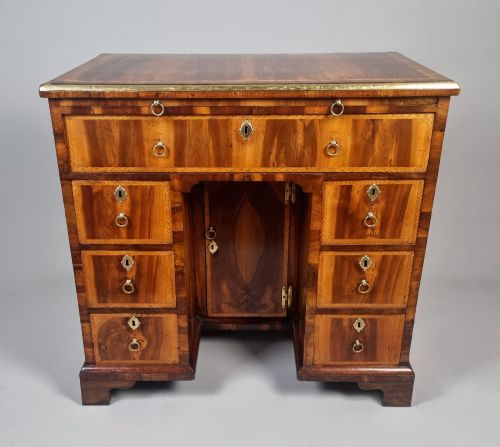
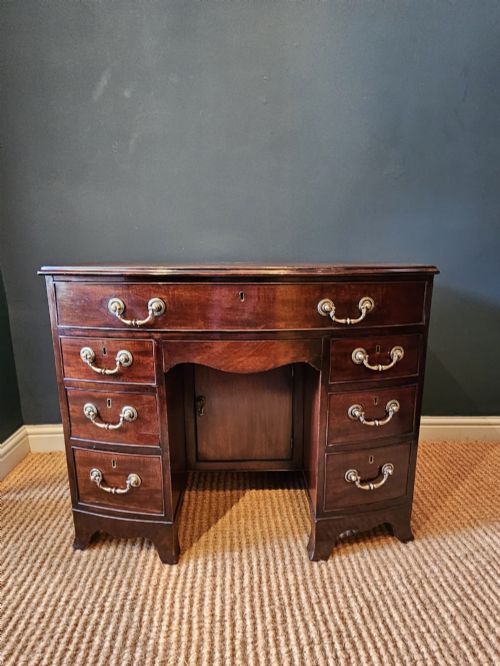
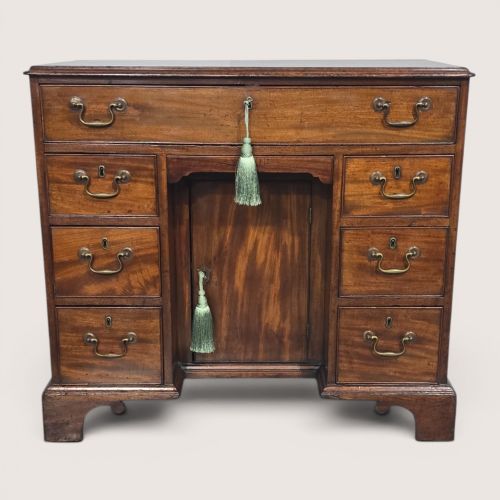
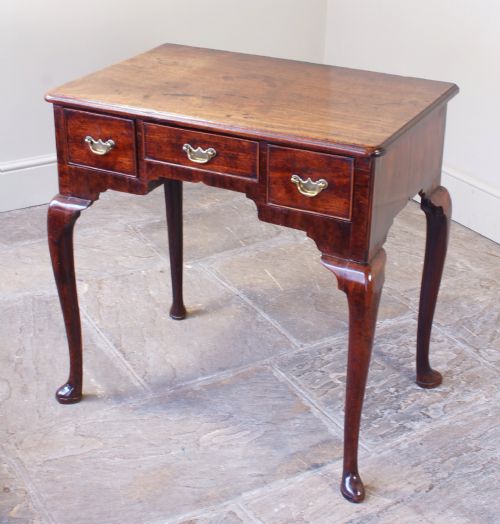
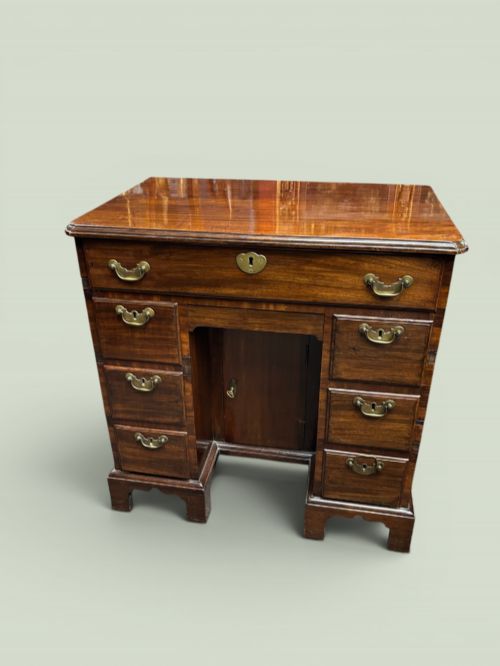
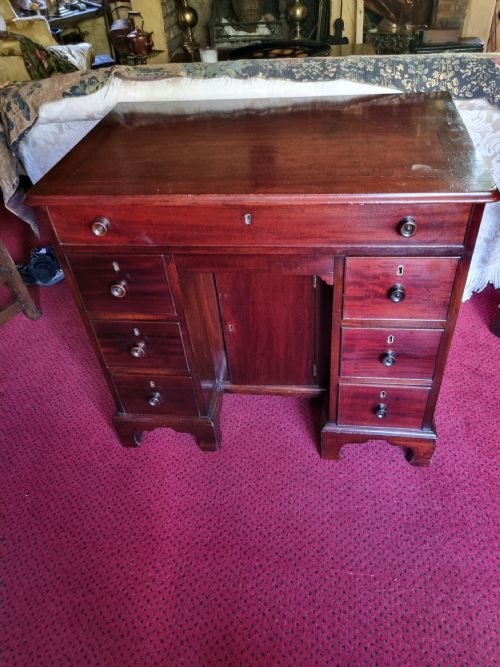
When you search for an 18th century dressing chest, you encounter a variety of forms including kneehole desks, lowboys, and fitted drawer units designed for personal grooming and writing. The selection spans the Queen Anne, George I, George II, and George III periods, reflecting changing tastes in domestic furniture.
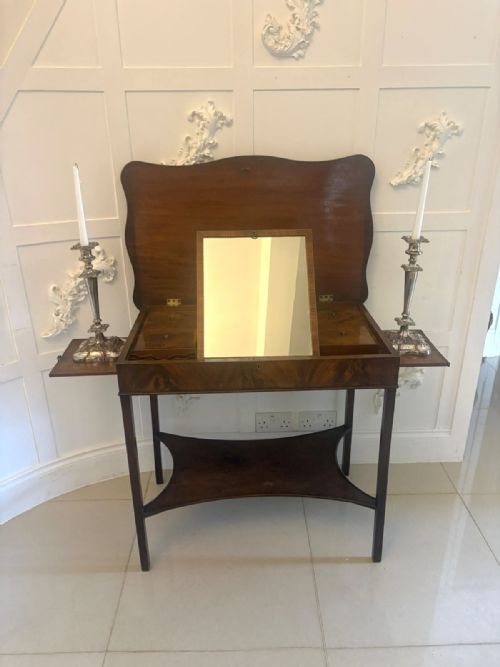
Mahogany is the dominant timber, alongside walnut, oak, cherry, fruitwood, satinwood, and yew. Many examples incorporate fitted interiors with compartments for bottles, brushes, and documents.
The lowboy and the kneehole desk appear frequently alongside dedicated dressing chests, sharing the same low proportions and multiple small drawers.
Materials and Construction
Cabinet makers utilised solid timbers and veneers over secondary woods, employing mahogany, walnut, and oak to construct carcases and drawer linings. Figured veneers, featherbanding, and crossbanding feature on surfaces from the George II and George III eras.
Drawer construction relies on hand-cut dovetails, while brass handles, escutcheons, and sliding boards add functional detail. Secondary woods such as oak support the internal partitions of fitted compartments.
Listings feature mahogany, walnut, oak, cherry, fruitwood, satinwood, and yew timbers across George II and George III periods.
Design and Execution
The distinction between tiers of quality rests on the selection of timber veneers, such as figured walnut or Cuban mahogany, and the crispness of internal drawer fitting. Simpler oak or fruitwood lowboys sit at one end, while serpentine-fronted satinwood or yew chests with complex compartments represent a higher standard of cabinet work.
Survival of original brass hardware and fitted interior components influences the integrity of each piece. The skill involved in matching grain patterns across drawer fronts distinguishes standard production from exceptional examples.
WILLIAM GOMM
The 18th Century Dressing Chest Glossary
- Kneehole desk
- A form of desk or dressing chest featuring a central recessed space for the legs, flanked by pedestals of small drawers.
- Lowboy
- A small table with one or more rows of drawers, commonly used as a dressing table or side table during the eighteenth century.
- Featherbanding
- A decorative inlay technique using veneer strips arranged in a herringbone pattern around the edges of drawer fronts.
- Serpentine
- A curved shape consisting of a convex centre flanked by concave ends, found on drawer fronts and tabletops.
- Secretaire
- A desk containing a pull-down writing flap that conceals small drawers and pigeonholes.
18th Century Dressing Chest: Frequently Asked Questions
What is an 18th century dressing chest?
An 18th century dressing chest is a multi-purpose furniture form combining a writing surface, storage drawers, and internal compartments for personal grooming items. These pieces were designed for bedchambers and dressing rooms during the Georgian era.
Cabinet makers constructed them in forms such as kneehole desks, lowboys, and serpentine chests using timbers like mahogany, walnut, and oak.
How were they used originally?
Owners utilised these chests for morning ablutions, applying cosmetics, writing letters, and storing personal valuables. The top surface held mirrors and toilet services, while fitted interior compartments organised smaller accessories.
The central recess in kneehole configurations allowed a person to sit comfortably while attending to personal correspondence or grooming.
How do I date an 18th century dressing chest?
Dating relies on stylistic markers associated with specific reigns, such as Queen Anne walnut, George II red walnut, and George III mahogany. Construction methods, including hand-cut dovetails and the choice of secondary woods like oak, help confirm the period.
Changes in hardware styles and veneer techniques, such as featherbanding and satinwood inlay, also provide chronological indicators.
Where should I place one at home?
These chests suit bedchambers, hallways, or living spaces where surface area and compact drawer storage are required. Their shallow depth allows them to fit against walls without dominating smaller rooms.
Pairing a dressing chest with a simple chair or mirror preserves its traditional function as a vanity or writing station.