
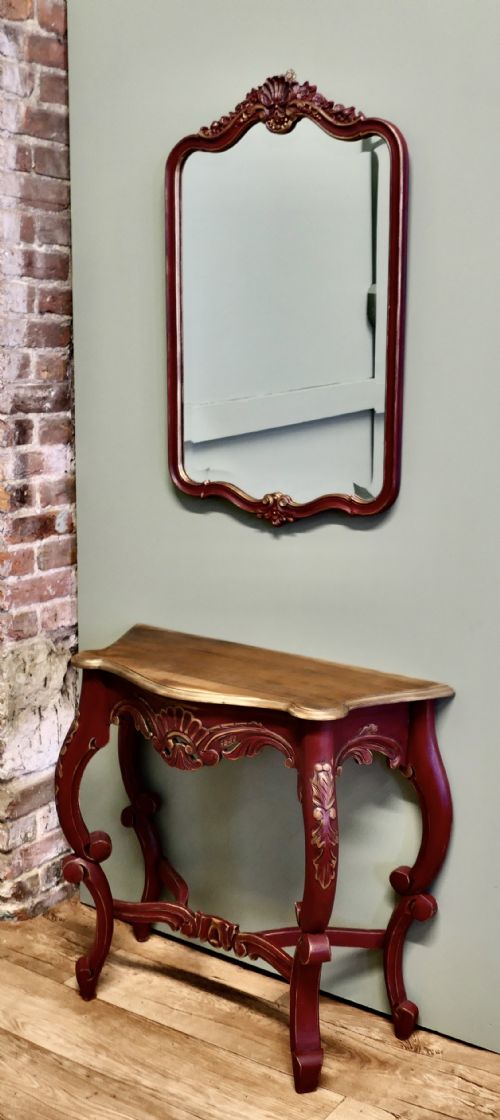
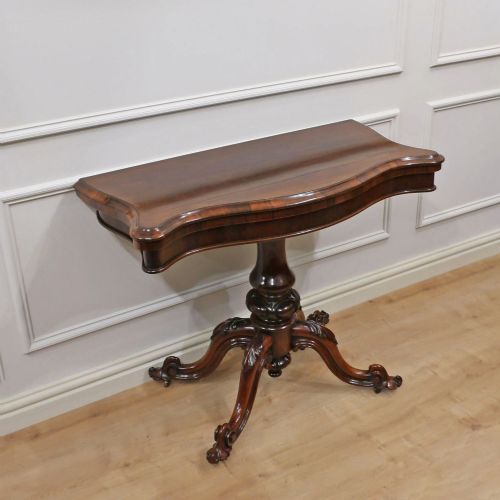
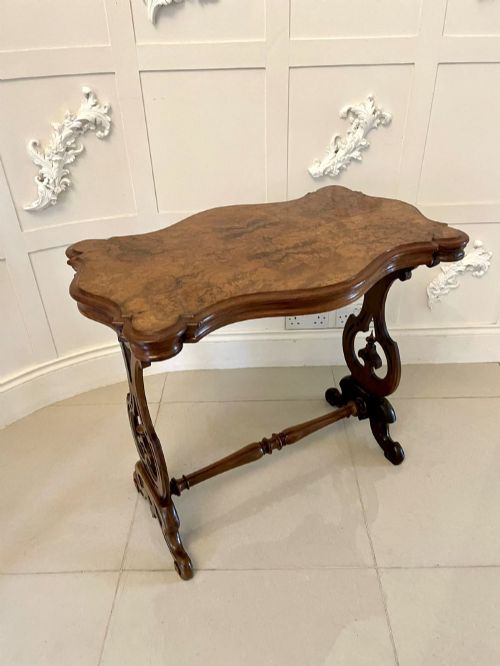
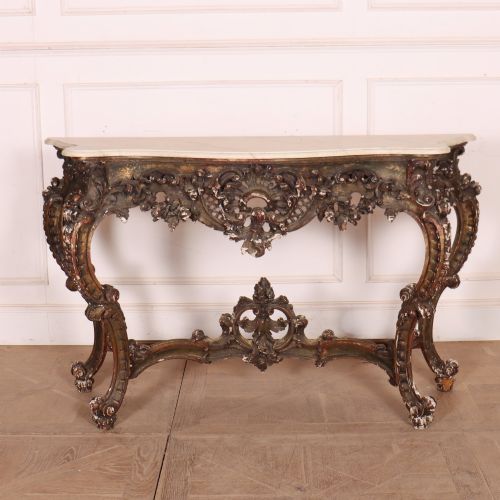
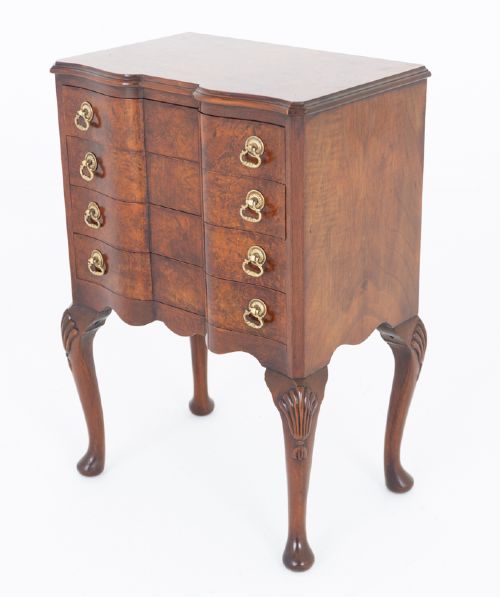
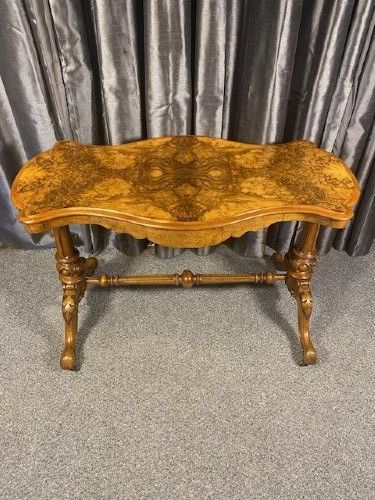
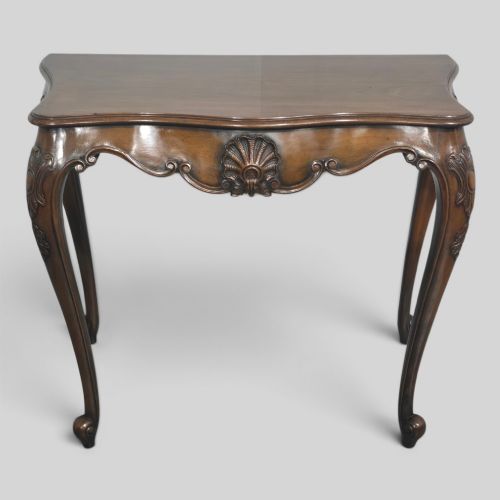
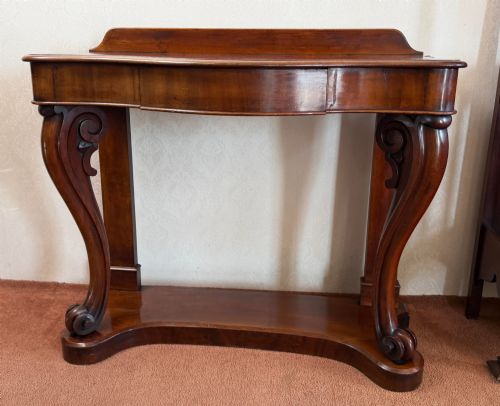
Serpentine Carved Side Table
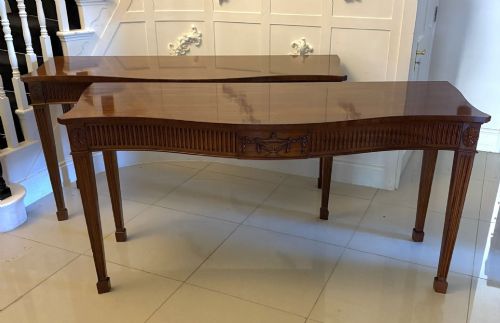
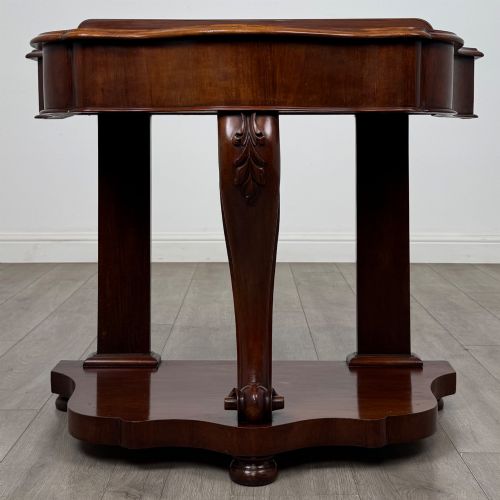
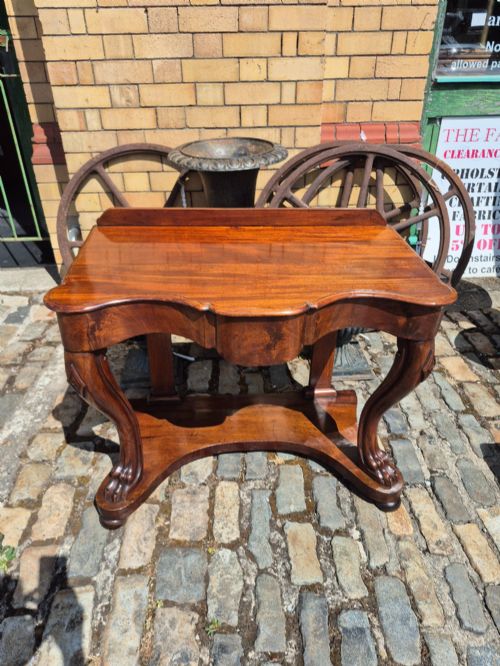
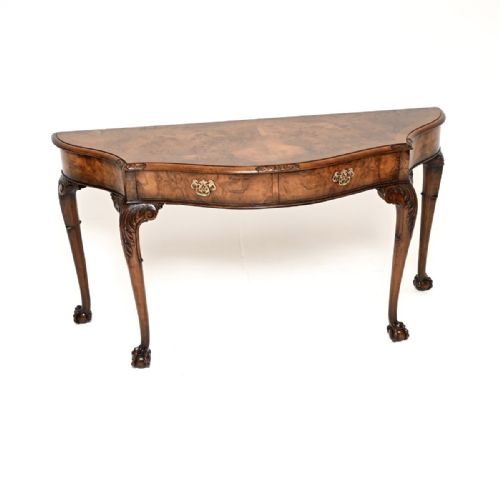
A serpentine carved side table brings an undulating silhouette and tactile carved detail to a room, offering surface space with considerable architectural presence.
Serpentine Carved Side Table
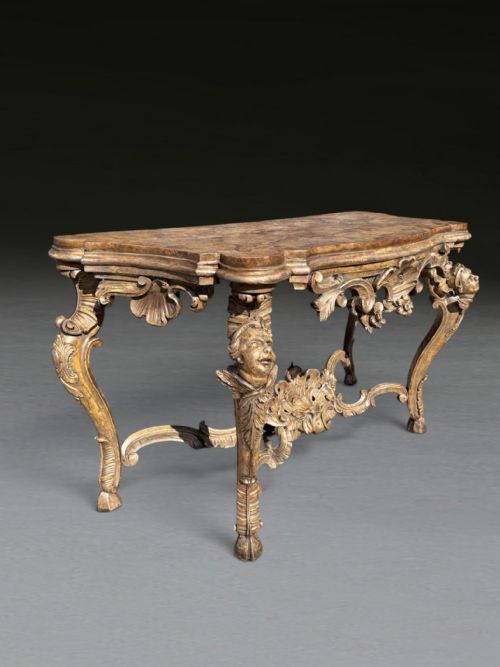
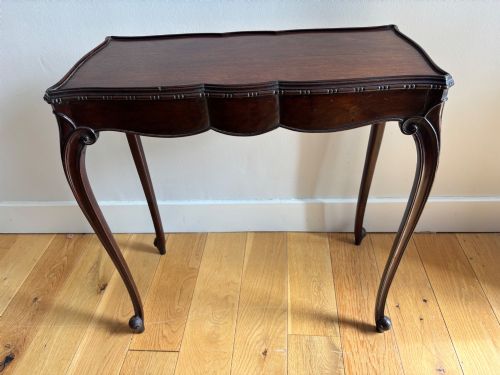
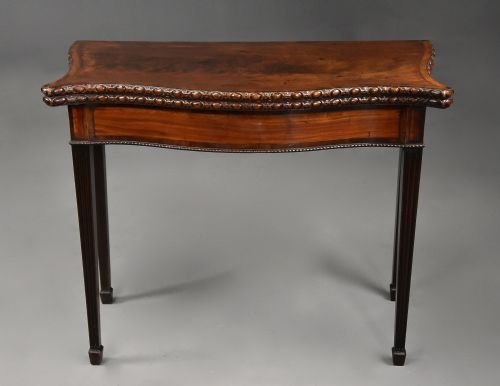
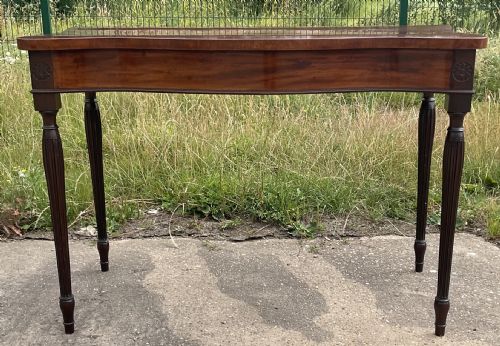
A serpentine carved side table displays a distinctive sweeping front that curves outward at the centre and inward at the sides, or vice versa, creating a rhythmic profile. These pieces most commonly appear as console tables, side tables, and card tables originating from the eighteenth, nineteenth, and early twentieth centuries.
The materials span rich timbers like mahogany, walnut, burr walnut, and rosewood, frequently paired with marble tops, giltwood, or gesso. You will encounter forms ranging from strict Victorian and Georgian proportions to elaborate French Rococo and Queen Anne Revival interpretations.
Materials and construction methods
Cabinetmakers constructed these tables using solid hardwoods such as mahogany and walnut, often applying figured veneers like burr walnut or rosewood to enhance the visual depth of the undulating top. Carving was executed by hand directly into the timber or onto applied gesso, particularly on giltwood and revival pieces.
Marble tops were precision-cut to follow the complex curves of the serpentine wooden frames, resting securely within the moulded rails. Brass hardware and mounts completed pieces designed for formal reception rooms and hallways.
Listings feature mahogany, walnut, and rosewood alongside marble-topped Italian and French console tables.
Distinctions in craftsmanship
The distinction between ordinary and exceptional examples lies in the fluidity of the carved detail and the harmony of the undulating lines. Superior pieces exhibit crisp, deep carving that follows the grain naturally without appearing mechanical or stiff.
Timber selection and veneer matching dictate the visual success of the surface, particularly on burr walnut and mahogany tables where grain patterns must mirror the curves of the frame. Original patination and the precise fit of marble inserts further separate standard production from masterwork execution.
Epstein and Co·Pauly et Cie
The Serpentine Carved Side Table Glossary
- Serpentine
- A furniture front or edge shaped with a central convex curve flanked by concave curves, or the reverse. This undulating form requires precise woodworking to maintain structural integrity along the grain.
- Console table
- A table designed to stand against a wall, frequently secured to it or supported by two front legs. These tables often feature elaborate carving and marble tops.
- Giltwood
- Timber that has been coated with gold leaf or gilt paint. This finish is commonly found on Italian and French revival console tables.
- Card table
- A folding table designed for playing cards, featuring a hinged top that opens to reveal a baize-lined surface. Many examples adopt a serpentine outline to the top and apron.
- Burr walnut
- Timber taken from a walnut tree growth or burl, yielding a swirling, highly figured grain pattern. It is typically utilised as a veneer on high-status tables.
Serpentine Carved Side Table: Frequently Asked Questions
Where should I place a serpentine side table?
These tables suit entryways, hallways, and living rooms where their sculptural front profile can be fully appreciated against a wall. Their shallow depth allows them to function effectively in narrower spaces without obstructing movement.
Console and side variants also serve well beneath large mirrors or paintings, providing a stable surface for lamps, decorative objects, or serving items during gatherings.
How do I care for a marble top?
Marble surfaces require regular wiping with a soft, damp cloth and neutral soap to prevent staining from liquids or oils. Avoid acidic cleaners, vinegar, and citrus, which can etch the polished stone finish over time.
Using coasters and mats under glasses and heavy items protects both the marble and the underlying wooden frame from unnecessary strain or moisture rings.
How can I distinguish Victorian from Georgian examples?
Georgian and eighteenth-century pieces generally display crisp, restrained carving and lighter timber framing built for formal domestic interiors. They often incorporate subtle mahogany figuring and hand-cut joinery.
Victorian and later revival pieces tend to feature heavier proportions, darker rosewood or walnut veneers, and more exuberant decorative carving influenced by Rococo and Renaissance revivals.
Are these tables sturdy enough for daily use?
Solid hardwood construction and traditional joinery make these tables durable for everyday placement, provided they are kept away from direct heat sources and excessive humidity. Console versions meant to stand against walls may benefit from additional stability if placed on uneven flooring.
Tables with hinged tops, such as card tables, should be opened carefully and kept unloaded when expanding the leaf to protect the pivot mechanisms.