






Hand Carved Wine Table
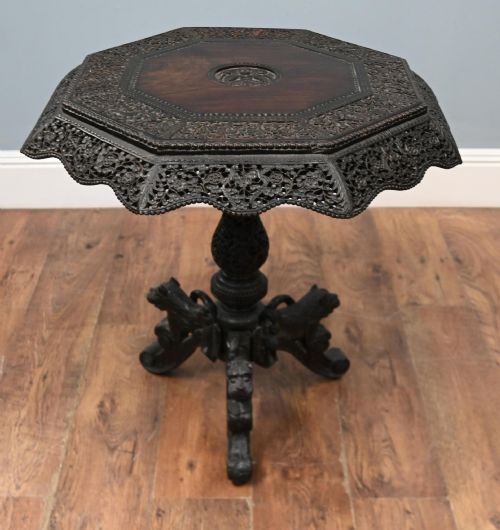
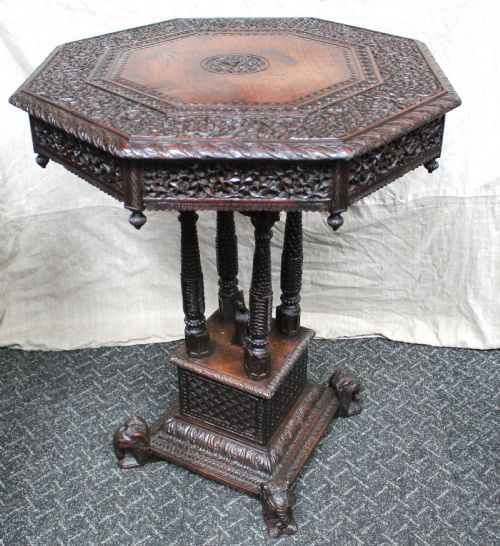
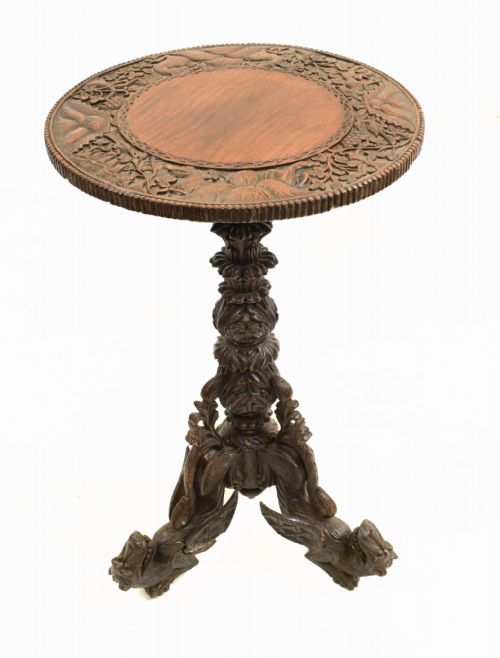
These hand carved wine table examples span nineteenth century Anglo-Indian, Burmese, and Chinese workshops, offering compact occasional surfaces shaped with deep relief ornament.
Hand Carved Wine Table
A hand carved wine table takes the form of a compact occasional table, side table, tilt top table, or pedestal table designed for small spaces. These pieces function as versatile surface furniture intended for holding small objects or drinks.
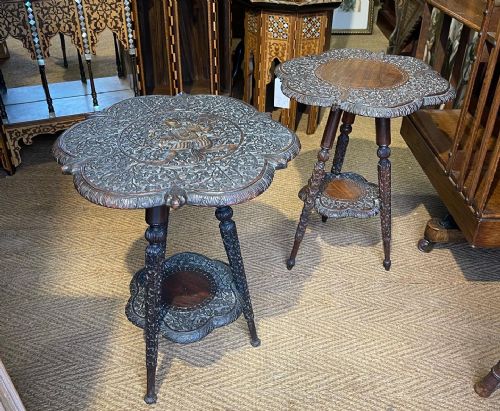
Most examples found in these listings originate from nineteenth century production centres across India, Burma, China, and Japan, alongside British interpretations like Victorian Gothic Revival or Folk Art. Buyers frequently encounter round, octagonal, or tilt top forms executed in heavy tropical hardwoods.
Makers ranged from indigenous craftsmen working in regional styles to commercial retailers like Liberty of London and Chinese export workshops. The resulting objects combine utilitarian domestic furniture with dense floral, animal, or geometric carving.
How they were made
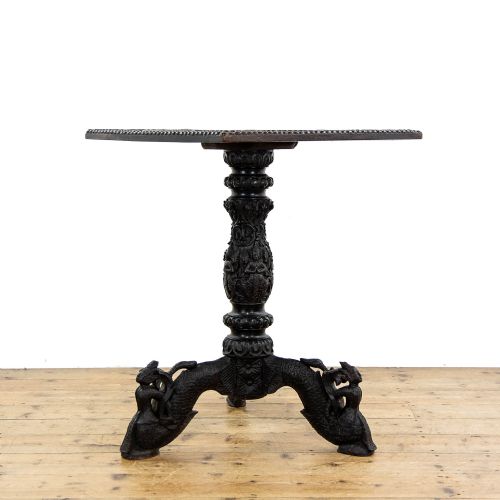
Construction relies heavily on dense timbers such as teak, padauk, rosewood, and general hardwood selected for stability during intricate chisel work. Craftsmen utilised traditional joinery alongside turned central pedestals and tripod or multi-legged bases.
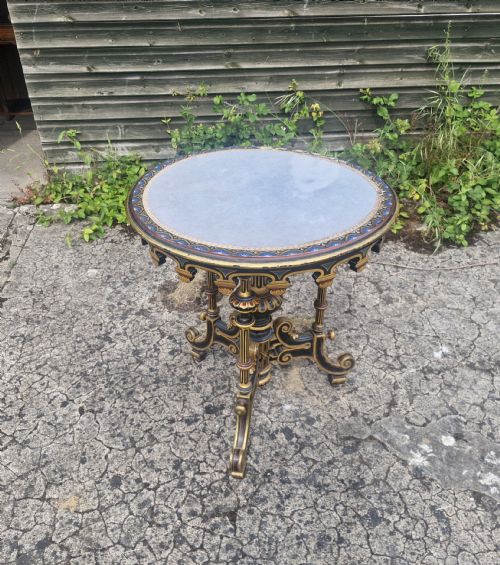
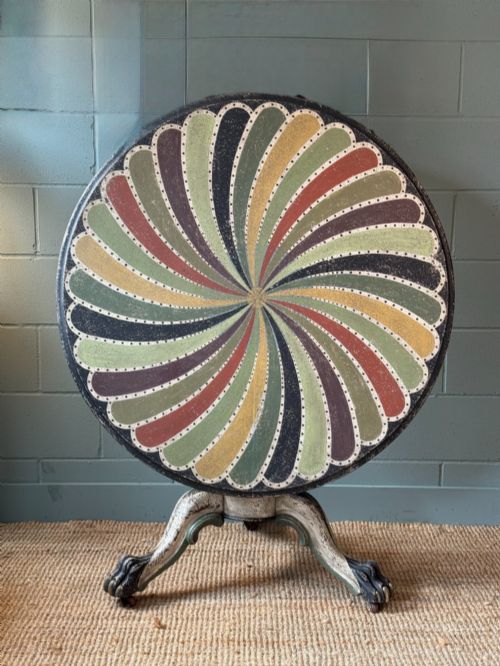
Surface ornament was achieved through deep hand chiselling, piercing, and occasional paint decoration or gilt highlights. Tilt top mechanisms required precise hinge fitting to allow the table top to pivot vertically when not in use.
Elephants carved into nineteenth century Indian tables occasionally sport genuinely surprised expressions.
What varies in quality
Quality rests upon the depth, sharpness, and symmetry of the hand carving across the top and base. Superior pieces exhibit crisp undercutting and well-defined motifs rather than shallow or mechanical pressing.
The choice of material dictates both weight and durability, with dense native teak and padauk outlasting softer woods. Furthermore, structural integrity in the pedestal joints and tilt mechanisms separates everyday utility from finer decorative specimens.
Liberty of London
The Hand Carved Wine Table Glossary
- Tilt top table
- A table featuring a hinge mechanism allowing the top to be stored vertically against the base when not in use. This design saved floor space in period rooms.
- Anglo-Indian
- Furniture made in India during the British colonial period, often combining traditional local carving techniques with European furniture forms. These pieces frequently utilise native teak or padauk.
- Padauk
- A heavy, durable tropical hardwood with a reddish hue used extensively in nineteenth century furniture production. Its density makes it ideal for intricate relief carving.
- Japonisme
- A nineteenth century Western artistic movement influenced by Japanese art and design. Objects in this style incorporate aesthetic principles derived from Japanese export goods.
- Occasional table
- A small, light table intended for sporadic use in various domestic rooms. Common forms include side tables, lamp tables, and small tea tables.
Hand Carved Wine Table: Frequently Asked Questions
What is a hand carved wine table?
A hand carved wine table is a small occasional or pedestal table designed for domestic use, featuring detailed chisel work across the top and base. These pieces emerged from various nineteenth century traditions, including Anglo-Indian, Burmese, and Chinese export workshops.
Buyers select them for their compact footprint and decorative surface carving, which often incorporates floral or animal motifs.
What woods were used for these tables?
Carpenters utilised dense tropical timbers such as teak, padauk, rosewood, and general hardwoods that could support deep, intricate relief carving without splintering. These heavy woods ensure the small tables remain stable despite their slender pedestal legs.
Some examples also feature applied paint or gilt decoration over the timber base.
How do I care for a carved wooden table?
Maintain these tables by dusting the intricate recesses regularly with a soft brush and keeping them away from direct heat sources or strong sunlight. Excessive temperature changes can cause dense hardwoods to dry out or split.
Apply a microcrystalline wax sparingly if the timber appears dry, avoiding any buildup within the carved grooves.