



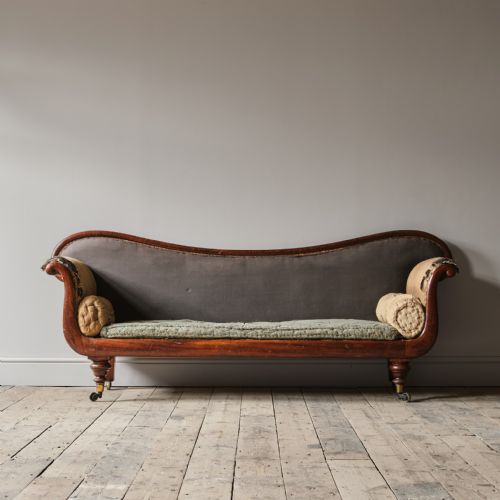


Serpentine Back Mahogany Sofa
A serpentine back mahogany sofa offers deep curves and rich timber grain, bringing classic Georgian elegance and comfortable seating into a traditional home.
Serpentine Back Mahogany Sofa
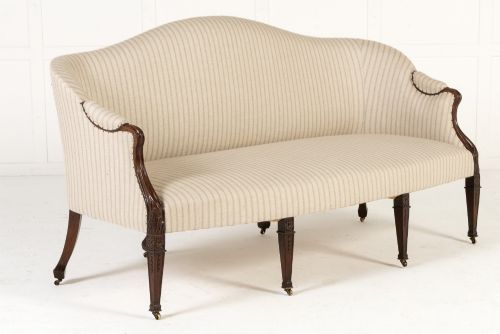
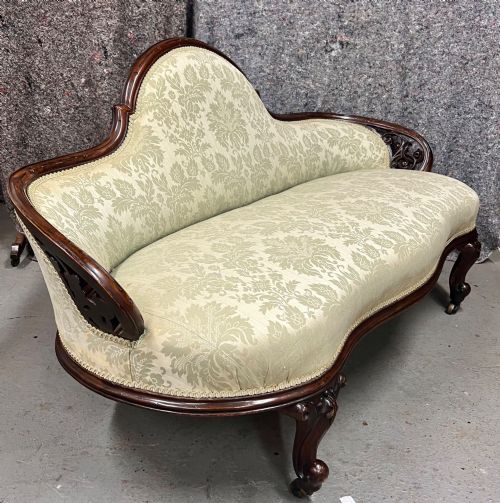
A serpentine back mahogany sofa combines flowing upholstered top rails with dark timber frames, appearing across Georgian, Victorian and Edwardian periods. Buyers investigating a serpentine back mahogany sofa encounter generous proportions designed for formal drawing rooms and country house interiors.
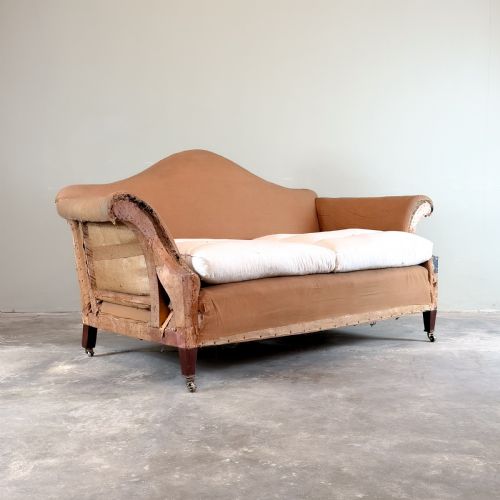
The selection here includes pieces built in the Chippendale and Hepplewhite manners alongside revival examples from the late nineteenth and early twentieth centuries. Many items feature the characteristic camel back shape, whilst others adopt more restrained serpentine curves across the timber framework.
How they were made
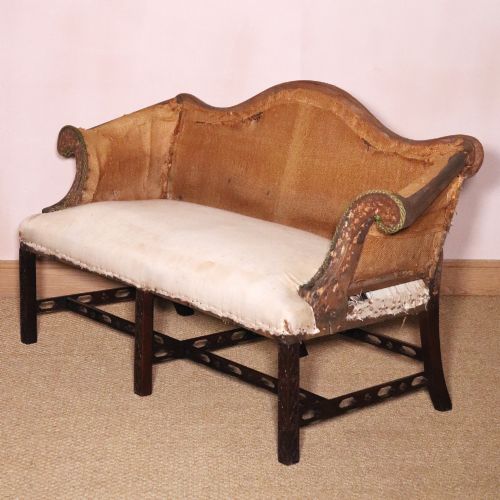
Makers shaped dense mahogany timber to form the structural frames, supporting the upholstery with traditional webbing and natural stuffing materials like jute, hessian and calico. Outer coverings range from plain fabrics to damask, velvet and buttoned upholstery.
Visible woodwork often showcases carved details such as square or cabriole legs, while structural strength relies on sturdy joinery concealed beneath the textile layers.
Serpentine Back Mahogany Sofa Retail Price Guide 2026
Typical asking prices for serpentine back mahogany sofa among the pieces listed under this phrase on Sellingantiques today, from the lower quarter to the upper quarter. They describe what is for sale here now, not the wider market.
Mahogany forms the primary timber across these listings, accompanied by brass fittings and various revival styles dating from the eighteenth to the twentieth century.
What varies in quality
The refinement of the timber carving and the grace of the serpentine sweep dictate the visual success of each piece. Finer examples display balanced proportions that mirror eighteenth-century origins with precision.
Original timber frames retain greater interest than later adaptations, and the quality of the underlying upholstery work influences both longevity and comfort.
The Serpentine Back Mahogany Sofa Glossary
- Serpentine back
- A gently undulating top rail that curves inward and outward in a continuous flowing line. This shape requires careful woodworking to execute smoothly.
- Camel back
- An upholstered sofa back featuring a central rounded hump that slopes down toward the arms. It provides robust lumbar support.
- Showwood
- Timber framework left visible around the upholstered portions of a seat. It allows the grain and colour of the mahogany to contribute to the overall design.
- Damask
- A reversible figured fabric traditionally used for formal upholstery. Its woven pattern catches the light differently across the surface.
Serpentine Back Mahogany Sofa: Frequently Asked Questions
How do I date a mahogany sofa?
Dating relies on examining the timber characteristics, construction methods and stylistic revival cues. Eighteenth-century originals differ subtly from late Victorian or Edwardian interpretations.
Comparing the leg forms and upholstery underpinnings helps clarify the period of manufacture.
Where should I place this sofa?
These sofas work well as focal points in large living spaces or drawing rooms. Their finished backs allow them to sit away from walls if desired.
Pairing them with period furniture enhances the historical aesthetic of the room.
What maintenance do these sofas need?
Regular dusting of the mahogany frame preserves the finish of the timber. Upholstery benefits from gentle vacuuming and professional cleaning when necessary.
Keeping the piece away from direct sunlight protects both fabric colours and wood tones.