



Antique Upholstery Project Settee
An antique upholstery project settee gives you the raw frame and foundation you need to restore a classic seat to its original character.
Antique Upholstery Project Settee
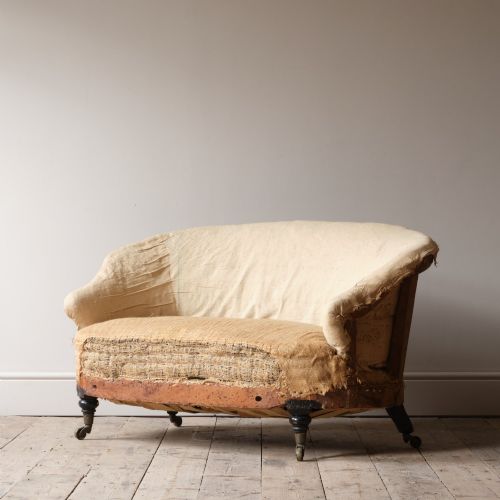
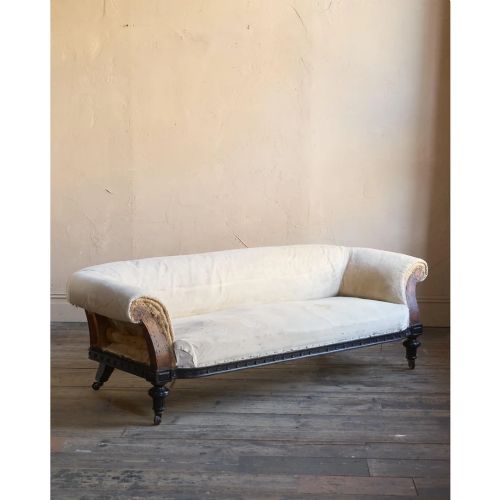
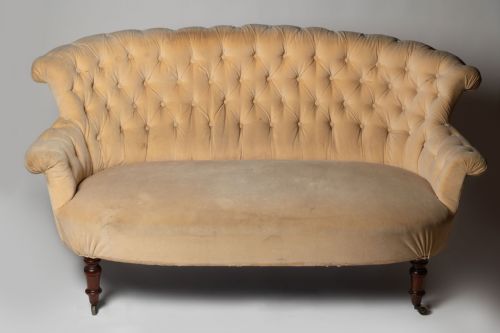
When you search for an antique upholstery project settee, you are looking at frames awaiting restoration across periods from the eighteenth century to the twentieth century. These pieces arrive stripped or ready for re-covering, showing their underlying structure of mahogany, walnut, or simulated rosewood.
The versions you are most likely to meet on this page span Edwardian inlaid salon settees, Victorian Chesterfields, and Regency country house sofas. Many are explicitly designated for re-upholstery, presenting open springs and webbed bases.
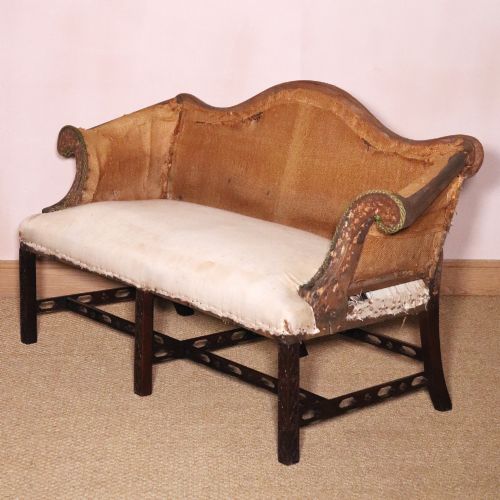
Makers and styles represented range from Chippendale style camel backs to French three-seater sofas and Hampton and Sons pieces. They offer a direct route to owning period seating tailored in your choice of textile.
How they were made
The foundational work relies on sturdy timber frames built from mahogany and walnut, occasionally finished with inlay or simulated rosewood. Joinery includes traditional framing methods designed to support deep seating.
Internal support utilises traditional materials such as hessian, jute, brass tacks, and cotton wadding beneath the top covers. These organic and textile layers provide the suspension and shape before the final calico or decorative fabric is applied.
Antique Upholstery Project Settee Retail Price Guide 2026
Typical asking prices for upholstery project settee among the pieces listed under this phrase on Sellingantiques today, from the lower quarter to the upper quarter. They describe what is for sale here now, not the wider market.
Expect to find decades of old horsehair and stray brass tacks hiding quietly inside the springs.
What varies in quality
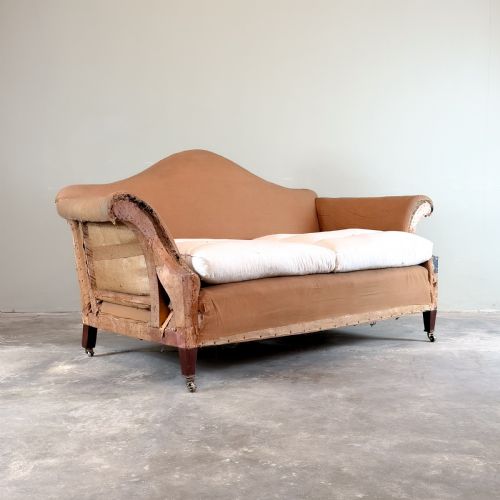
The distinction between ordinary frames and exceptional ones lies in the integrity of the timber work and the sophistication of the silhouette. Finer examples display refined carving, such as Chippendale style details or elegant camel back curves.
Originality of the frame construction dictates value, where untouched joinery and branded maker marks, such as those from Hampton and Sons, elevate a restoration project. The weight and grain of the underlying mahogany or walnut further separate standard workshop pieces from high status salon furniture.
Hampton and Sons
The Antique Upholstery Project Settee Glossary
- Camel back
- A sofa or settee back featuring a characteristic undulating, convex curve resembling a camel's hump. This profile became prominent during the eighteenth century and inspired later revival styles.
- Chesterfield
- A deep-buttoned sofa traditionally featuring arms and back of the same height. This heavy, upholstered form dates back to the nineteenth century.
- Hessian
- A coarse woven fabric, typically made from jute fibres, used historically as an internal foundation for stuffing and springs in upholstery. It provides stable support beneath outer covers.
- Salon settee
- An elegant, lighter seating form designed for formal reception rooms rather than heavy domestic use. These pieces often feature inlaid wood and delicate frames from the Edwardian era.
- Simulated rosewood
- A painted or stained wood finish designed to imitate the rich dark grain and reddish hues of genuine rosewood. This technique was common on nineteenth-century country house furniture.
Antique Upholstery Project Settee: Frequently Asked Questions
What is an upholstery project settee?
An upholstery project settee is a period sofa frame sold without its final fabric cover, often stripped down to the webbing, hessian, and springs. It allows restorers to rebuild the internal padding and apply new textiles.
These pieces range from eighteenth-century George III designs to Edwardian salon suites, offering a solid wooden skeleton ready for bespoke restoration.
How do I choose the right period?
Selecting a period depends on the interior style you want to achieve and the architectural proportions of your room. Regency and Georgian frames offer formal lines and mahogany or simulated rosewood timbers.
Victorian Chesterfields and Edwardian salon settees provide deeper, more relaxed seating options that suit varied living spaces once recovered in calico and top fabrics.
What materials are hidden inside?
Beneath the outer upholstery, traditional frames utilise natural support materials including jute webbing, hessian cloth, cotton wadding, and metal or brass tacks. Coiled springs and horsehair stuffing frequently form the internal cushioning.
Restorers must often replace these foundational layers while preserving the structural wood frame underneath.
Can I use modern fabrics on them?
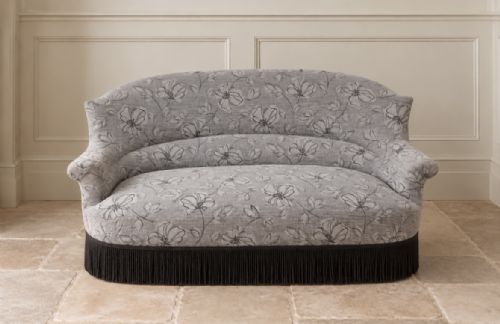
Modern fabrics suit antique frames perfectly, bridging historical silhouettes with contemporary interior colour schemes. Choosing durable textiles ensures the restored piece withstands daily domestic use.
The underlying calico layer provides a clean base for applying any contemporary woven cotton, velvet, or patterned cloth.