

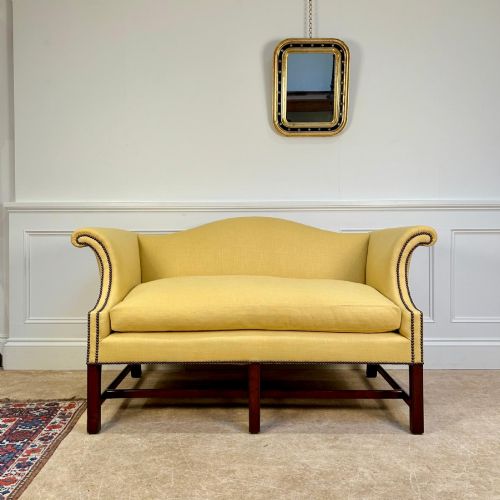
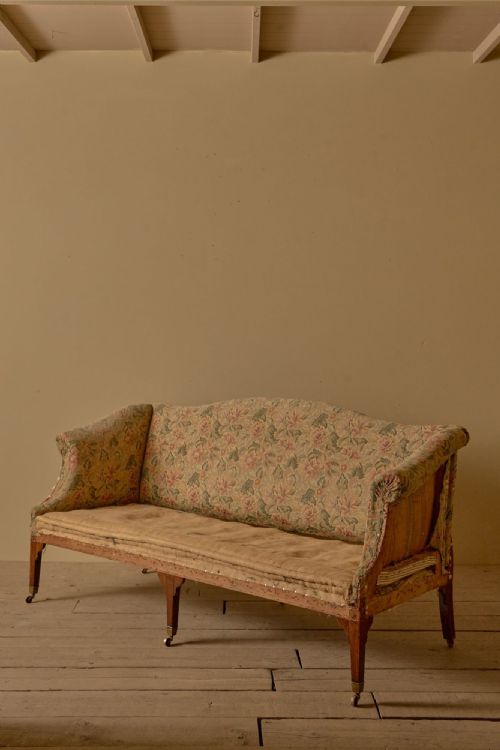
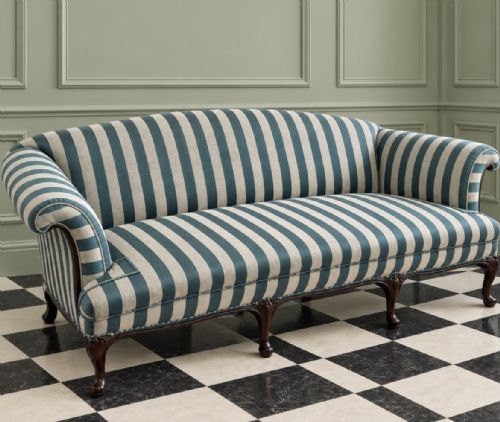
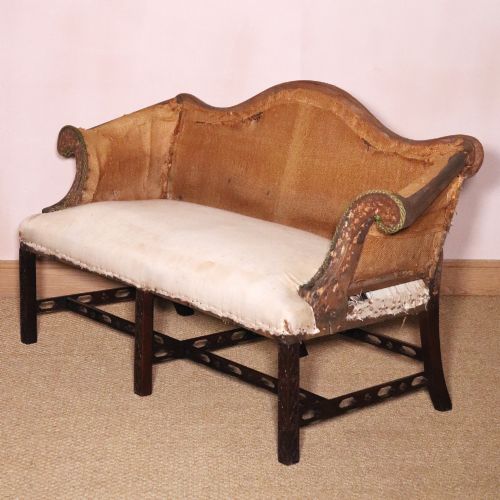
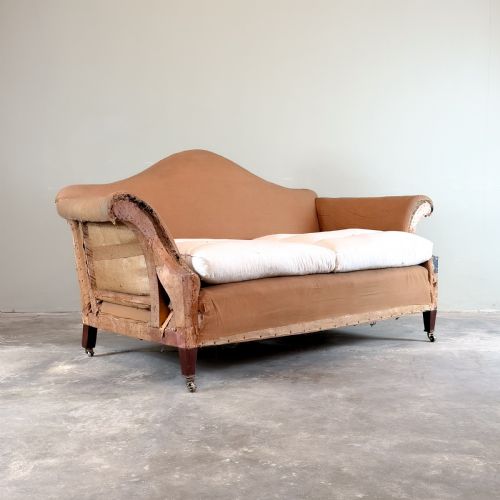
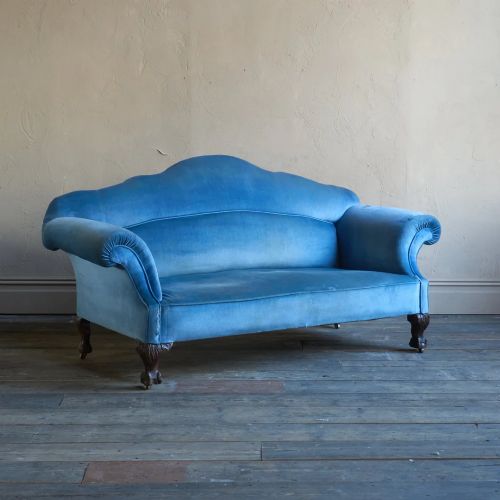


Traditional Upholstered Camelback Settee
A traditional upholstered camelback settee offers distinctive serpentine lines and generous proportions, bringing classic British seating elegance to a room.
Traditional Upholstered Camelback Settee
A traditional upholstered camelback settee is defined by its characteristic arched backrest, reminiscent of a camel's hump, flowing outward into scrolled arms and supported on robust legs. These pieces emerge in various forms across the eighteenth, nineteenth, and early twentieth centuries, drawing heavily upon Georgian and revival aesthetics.
The versions most commonly met on this page span the nineteenth century and the Edwardian era, often exhibiting Chippendale or Hepplewhite style influences. They function primarily as principal living room or parlour seating, combining deep upholstery with architectural wooden frames.
How they were made
Makers constructed the structural frames of a traditional upholstered camelback settee using sturdy timbers such as mahogany and assorted hardwoods, ensuring stability for the sweeping backrest and seat. These wooden supports frequently featured carved detailing along the legs, including ball and claw feet.
The upholstery work relied on traditional textile coverings such as damask, velvet, and standard woven fabrics stretched tightly over padded interiors. Brass elements were occasionally utilised for castors or decorative accents on the structural frame.
Traditional Upholstered Camelback Settee Retail Price Guide 2026
Typical asking prices for traditional upholstered camelback settee among the pieces listed under this phrase on Sellingantiques today, from the lower quarter to the upper quarter. They describe what is for sale here now, not the wider market.
Materials recorded across the inventory include mahogany, assorted hardwoods, brass, and various textile coverings such as damask and velvet.
What varies in quality
The refinement of the wooden frame carves out the distinction between ordinary and superior examples, particularly visible in the crispness of carved details on the legs and arms. Timber selection also dictates grade, with dense, well-figured mahogany representing the higher tier.
Proportion and silhouette govern visual success, where superior pieces maintain balanced serpentine curves in the camel back and front rail that echo authentic eighteenth-century proportions. The execution of the upholstery tension and the fidelity to historical revival styles further separate exceptional items from standard workshop output.
The Traditional Upholstered Camelback Settee Glossary
- Camelback
- A characteristic sofa or settee backrest featuring a continuous convex curve that rises in the centre resembling a hump. This profile became popular during the Georgian period and remained a staple of revival designs.
- Serpentine
- A furniture line or front edge that curves outward in the middle and inward at the sides in a gentle 'S' shape. It adds visual movement and sophistication to the base of the settee.
- Chippendale Style
- A decorative design vocabulary inspired by the eighteenth-century cabinetmaker Thomas Chippendale, notable for intricate carving and ball and claw feet. Revival interpretations of this style appeared frequently in the nineteenth and early twentieth centuries.
- Hepplewhite Style
- A refined aesthetic associated with cabinetmaker George Hepplewhite, characterised by elegant proportions, shield backs, and tapered supports. Settees in this manner display lighter frames and graceful curves.
- Damask
- A reversible figured fabric traditionally woven in silk, wool, or cotton, frequently utilised for formal upholstery. Its patterned surface catches the light and complements historic frame designs.
Traditional Upholstered Camelback Settee: Frequently Asked Questions
What is a camelback settee?
A camelback settee is an upholstered seating form characterised by a distinctive arched backrest that curves smoothly downward to the arms. This classic silhouette provides both strong lumbar support and a formal aesthetic.
Originating in the eighteenth century, these settees gained renewed popularity during Victorian and Edwardian revival periods. They remain versatile seating options for drawing rooms and hallways.
How do I date a camelback sofa?
Dating these settees involves examining the timber species, the sharpness of the frame carvings, and the underlying construction methods. Earlier examples from the eighteenth century typically display hand-carved mahogany frames with authentic period joinery.
Later pieces from the nineteenth and early twentieth centuries often reflect revival movements, incorporating machine-assisted joinery alongside traditional upholstery techniques. Comparing the leg style, such as ball and claw feet versus tapered supports, also clarifies the period.
Where should I place a settee?
A traditional settee fits well in a living room as a companion to larger sofas or positioned opposite a fireplace. Its modest depth allows it to sit comfortably in hallways or large bedrooms.
Because the rear profile is often shapely, placing a settee where the back is partially visible can highlight its silhouette. Ensuring adequate clearance around the piece allows its curves to be fully appreciated.
How do I care for antique upholstery?
Caring for historic upholstery requires gentle vacuuming with a soft brush attachment to remove surface dust without straining the fabric. Keeping the piece away from direct sunlight prevents the textile colours from fading.
Professional cleaning is recommended for delicate materials like silk damask or antique velvet to preserve the fibres. Inspecting the underside webbing periodically helps maintain the structural integrity of the seat.