
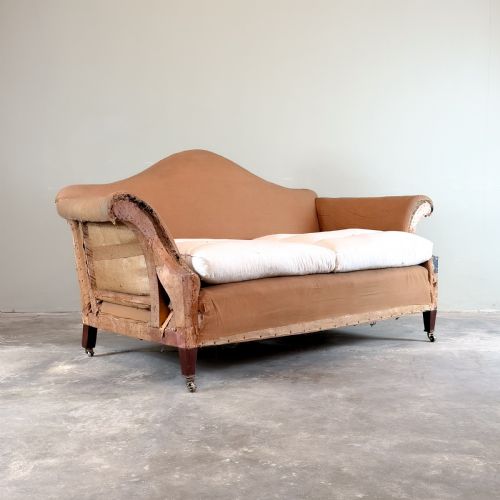
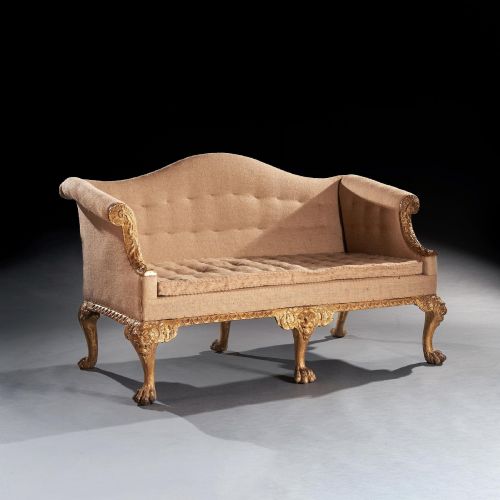


Camel Back Couch
A camel back couch is a graceful seating form with a distinct undulating crest rail, prized for its classic silhouette and enduring elegance.
Camel Back Couch
A camel back couch presents a distinctive serpentine back profile that rises and falls in gentle curves, echoing the classic forms developed during the eighteenth century. When searching for a camel back couch, buyers encounter pieces spanning from the mid-eighteenth century through the Edwardian era and into mid-twentieth revivals.
The pieces listed on this page include examples from the 18th Century, 19th Century, and Edwardian period, alongside later interpretations such as 1940 pieces. Forms range from traditional sofas and settees to substantial three-seat versions displaying Georgian proportions.
Makers and designers drew upon established historical idioms, resulting in styles that reference George II, George III, Chippendale, Hepplewhite, and Queen Anne. The most frequently met variations combine traditional mahogany or walnut frames with serpentine fronts and upholstered bodies.
How they were made
Frames are constructed from sturdy timbers such as mahogany and walnut, providing the structural integrity required to support complex upholstered shapes. Skilled joiners shaped the wooden skeletons to follow the rhythmic contours of the crest rail and seat front.
Listings feature pieces spanning the 18th Century, 19th Century, 1910, 1940, and 1750, utilising mahogany, walnut, brass, and damask.
What varies in quality
The distinction between standard examples and the finest pieces lies in the fluidity of the timber frame's carved details and the precision of the serpentine silhouette. Superior pieces exhibit confident lines in the crest rail and harmonious proportions across the entire frame.
Giles Grendey
The Camel Back Couch Glossary
- Serpentine
- A curved line that turns inward and outward in a smooth, undulating wave. This profile is frequently seen along the front rails and crests of these couches.
- Hepplewhite
- A neoclassical furniture style characterised by elegant, light proportions and shield or camel back designs. It takes its name from the notable eighteenth-century cabinet maker.
- Chippendale
- A mid-eighteenth-century English style known for intricate carving, cabriole legs, and robust proportions. Pieces in this tradition often feature substantial mahogany frames.
- Giltwood
- Timber that has been coated with a thin layer of gold leaf or gilt powder. This finish appears on high-status decorative frames and carved details.
- Crest rail
- The top horizontal member of a chair or sofa back. On these pieces, it forms the signature arched camel back profile.
Camel Back Couch: Frequently Asked Questions
What is a camel back couch?
A camel back couch is a traditional upholstered seating form defined by a serpentine wooden frame and a crest rail that curves upward in gentle humps resembling a camel's back. These pieces evolved as sophisticated drawing room furniture during the Georgian period.
Over subsequent centuries, makers continued to interpret the form through revivals and Edwardian variations, maintaining the characteristic arched silhouette while adapting seat proportions for changing domestic interiors.
How do I style a camel back couch?
Styling a camel back couch involves placing it as a focal point within a traditional or transitional interior where its distinctive silhouette can be viewed without obstruction. Pairing the piece with period-appropriate side tables allows the classic proportions to anchor the room.
Because the design relies on clean upholstered surfaces and curved woodwork, keeping surrounding decor balanced lets the undulating crest rail remain the primary visual feature of the seating arrangement.
How do I date a camel back couch?
Dating these pieces requires examining the timber species, joinery techniques used within the hidden frame, and the specific stylistic vocabulary of the carving. Eighteenth-century examples display hand-cut joinery and period-specific wood choices, whereas nineteenth-century and Edwardian pieces often incorporate revival characteristics.
Comparing the exact curve of the serpentine back and the form of the legs against documented examples from periods like George II or Hepplewhite helps narrow down the probable decade of manufacture.
Were these couches used in bedrooms?
While primarily manufactured as principal seating for formal reception rooms and parlours, smaller settees and couches occasionally found placement in large dressing rooms or private chambers. Their elegant profiles made them suitable for any domestic space intended for entertaining or refined relaxation.
The majority of surviving examples, however, reflect the grand scale and substantial upholstery required for main living areas in period homes.