
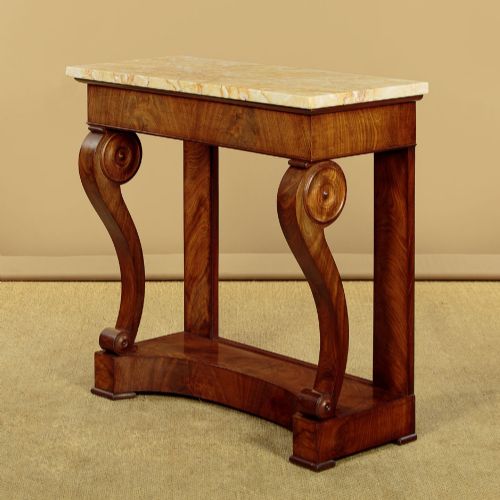
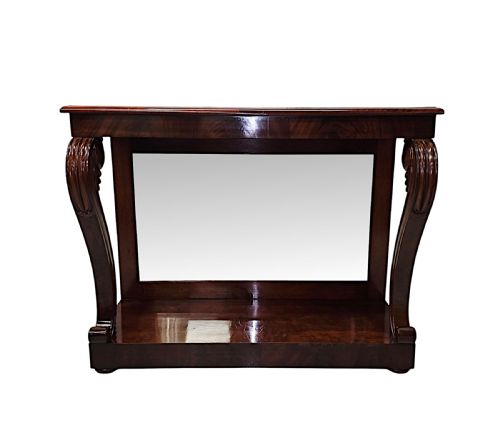
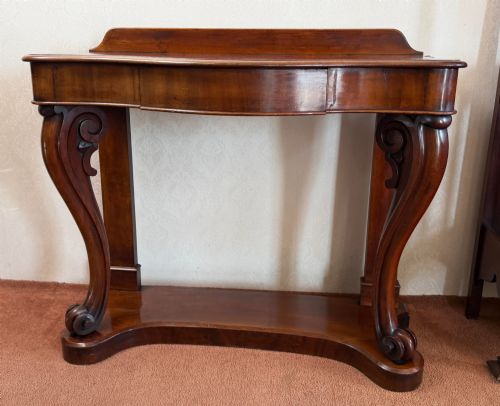
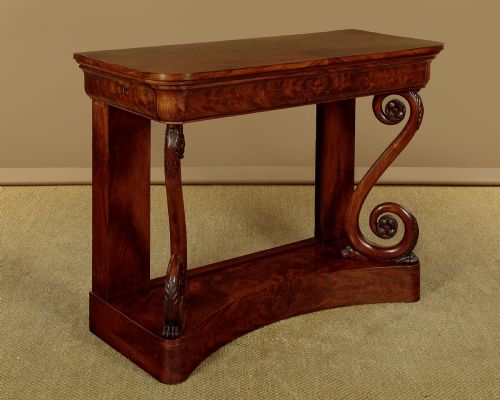
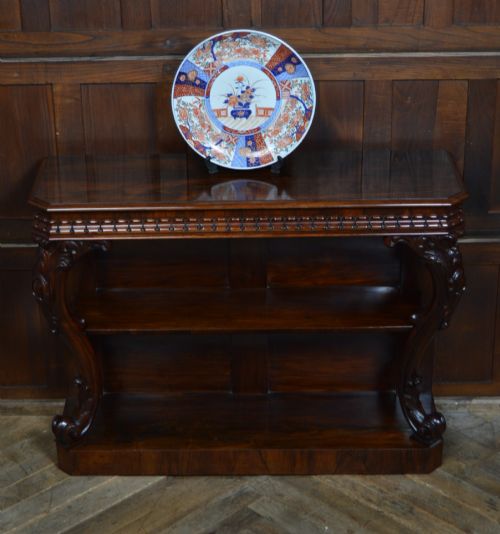
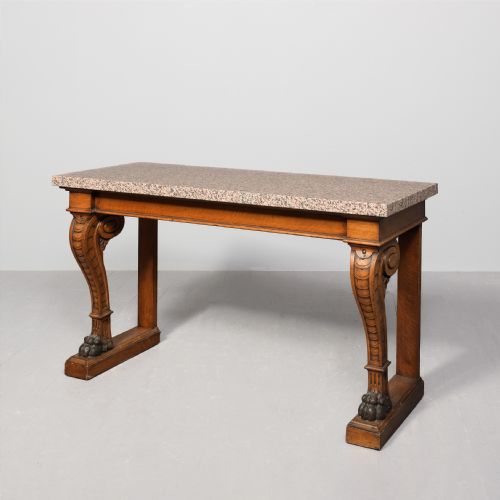

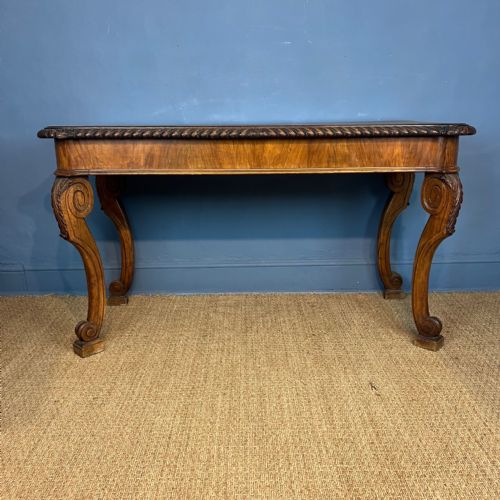


Scrolled Leg Console
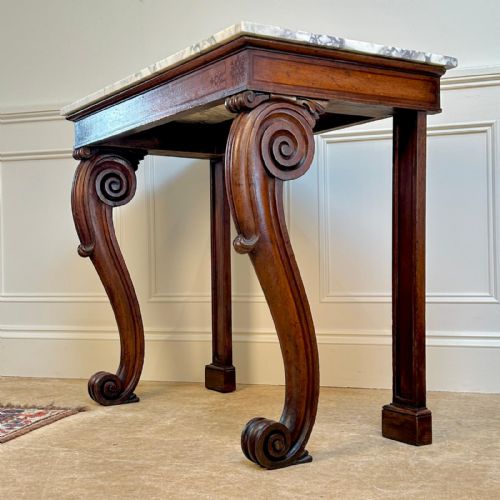
These scrolled leg console examples bring together marble tops, timber frames and striking curves across the nineteenth century and beyond.
Scrolled Leg Console
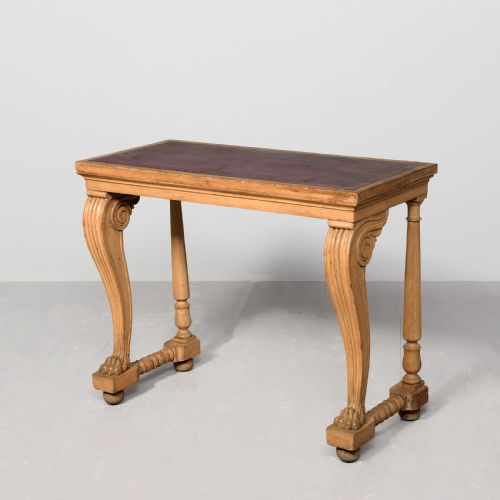
A scrolled leg console stands against a wall or serves as a centre table, drawing the eye with curved supports and substantial timber or iron frames. Buyers searching for a scrolled leg console encounter pieces spanning the Georgian, Regency, William IV and Victorian eras, alongside French, Anglo-Indian and Chinese examples.
Mahogany and rosewood dominate the listings, frequently paired with white or grey marble slabs or detailed with brass mounts and glass elements. Alongside standard console tables, the selection includes pier tables, altar tables and serving tables sharing similar architectural lines.
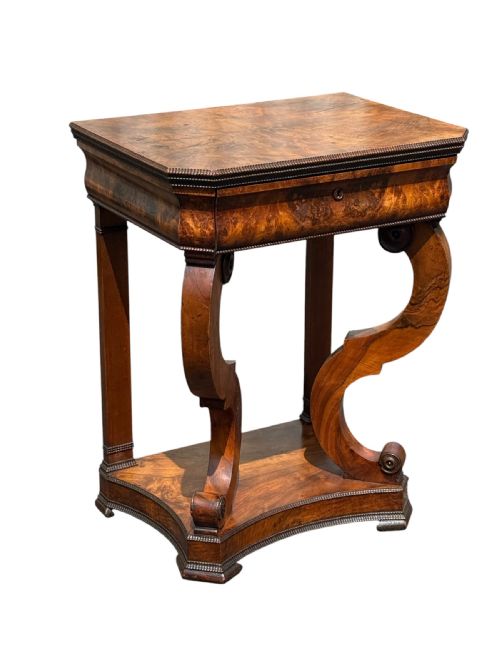
The nineteenth century provides the bulk of the stock, incorporating regional British variations from Irish workshops as well as continental French Louis Philippe and provincial designs. These tables range from compact side pieces to large freestanding centre tables built for formal reception rooms.
Materials and Construction
Cabinetmakers utilised dense timbers like mahogany, rosewood, walnut, padouk and oak for the structural frames, often highlighting figured grain patterns across the frieze and top. Heavy stone surfaces including marble and granite rest upon these wooden bases, requiring robust joinery to support the weight.
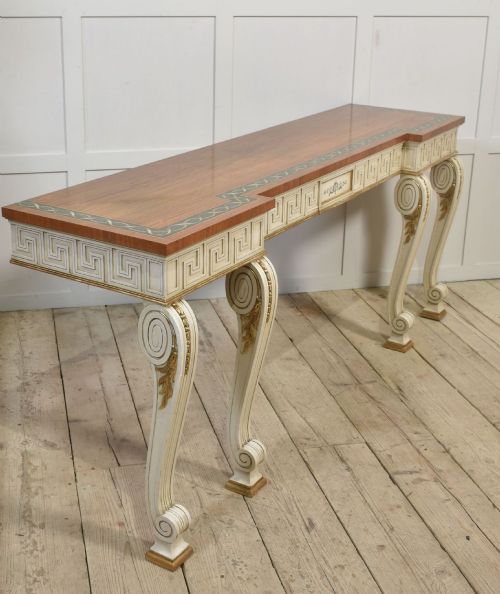
Carved wooden scrolls form the characteristic legs, sometimes complemented by brass mounts, gilt details or painted finishes on wrought iron and wooden structures. Platform bases and lower shelves frequently anchor the scrolled supports beneath the main table surface.
Several tables arrive with heavy marble slabs that likely required a team of strong Victorian footmen just to shift them across the parlour.
Judging the Workmanship
The distinction between standard commercial output and exceptional cabinetwork lies in the crispness of the carved scrolls and the selection of figured veneer. Superior examples display seamless joins, well-matched timber grains and substantial stone slabs properly fitted to the frieze.
Attribution to documented workshops or specific regional centres elevates certain pieces, particularly where proportion and carving depth exceed basic production standards. The integration of secondary woods and the finish applied to the brass or iron elements further distinguish finer tables.
Gillingtons of Dublin·James Mein of Kelso·Robert Strahan·Alexander McKenzie of Glasgow·Gillows·Whytock and Reid
The Scrolled Leg Console Glossary
- Console table
- A table designed to stand against a wall, traditionally supported by brackets or scrolled legs rather than four standard vertical posts. They frequently feature decorative stone tops.
- Pier table
- A low table specifically created to stand against the wall beneath a pier glass or mirror between two windows. These share many forms with standard console tables.
- Frieze
- The broad horizontal band running directly beneath the tabletop, which often houses a single drawer or displays decorative wood veneers.
- Platform base
- A solid flat plinth or low shelf resting near the floor between the lower legs, providing structural stability and display space.
- Padouk
- A heavy tropical hardwood with a reddish brown colour, utilised in Anglo-Indian furniture production during the nineteenth century.
Scrolled Leg Console: Frequently Asked Questions
Where should a scrolled leg console be placed?
These tables fit naturally in entrance halls, reception rooms or along long corridors where a shallow footprint is required. Their decorative front supports make them suitable for display against plain walls.
Freestanding centre table variants can also sit in the middle of a room, provided the floor space allows movement around the curved legs and platform base.
How do I care for a marble top table?
Marble surfaces require regular wiping with a soft, damp cloth and neutral soap to prevent staining from liquids. Avoid placing acidic items directly on the stone to protect the polish.
The wooden base benefits from occasional polishing with suitable beeswax, keeping the timber nourished without building up excess residue.
What is the difference between a console and a pier table?
Pier tables were historically manufactured to fit the narrow wall space specifically between two windows, often placed directly beneath a matching wall mirror. Console tables serve a broader function against any wall in a room.
In practice, makers often used the terms interchangeably during the nineteenth century, and many share identical scrolled leg designs.
How do I identify a Regency period table?
Regency tables typically display classical architectural influences, featuring dark timbers like rosewood and mahogany often accented with brass mounts or inlay. The legs incorporate bold scrolls, reeding or carved animal forms reflecting early nineteenth-century taste.
Construction details such as secondary pine framing and hand-cut dovetails in the drawer construction help confirm the period of manufacture.